- Freeze-dried fruit quality is shaped by more than the freeze dryer itself.
- A lower price per ounce does not always mean better value.
- Ingredient labels matter — some products include added sugar, starch, syrups, or flavoring.
- Texture, piece size, moisture level, packaging, and breakage all affect the eating experience.
- A better metric is true fruit value per ounce.
Freeze-dried fruit looks simple from the outside: fruit goes in, crunchy fruit comes out. But anyone who has compared a few bags knows the category varies dramatically.
Some pieces are light, crisp, aromatic, and full of real fruit flavor. Others are sticky, powdery, overly sweet, broken, or surprisingly heavy for the amount of fruit inside.
That variation is not random. It usually comes from a combination of fruit sourcing, ripeness, processing method, ingredient choices, piece format, moisture control, and packaging.
This guide explains how to compare freeze-dried fruit more like a buyer, not just a casual shopper.
1. Start With the Ingredient Label
A bag that says "freeze-dried fruit" may contain only fruit. But some products include added sugar, syrup, starch, maltodextrin, citric acid, natural flavor, or oil. That does not automatically make the product bad — but a 100% fruit product and a sweetened fruit crisp should not be evaluated as if they are the same thing.
If the ingredient list is short and only names the fruit, the product is likely closer to plain freeze-dried fruit. If it includes sugar, syrup, starch, or fruit juice concentrate, the product may be heavier, sweeter, or more processed. As a format example, OhCrisp's individually wrapped whole freeze-dried bananas let you compare a whole-fruit snack with a mixed-fruit bag. Check the current ingredient panel and serving size on the product page before comparing products.
2. Compare Real Fruit Content, Not Just Bag Weight
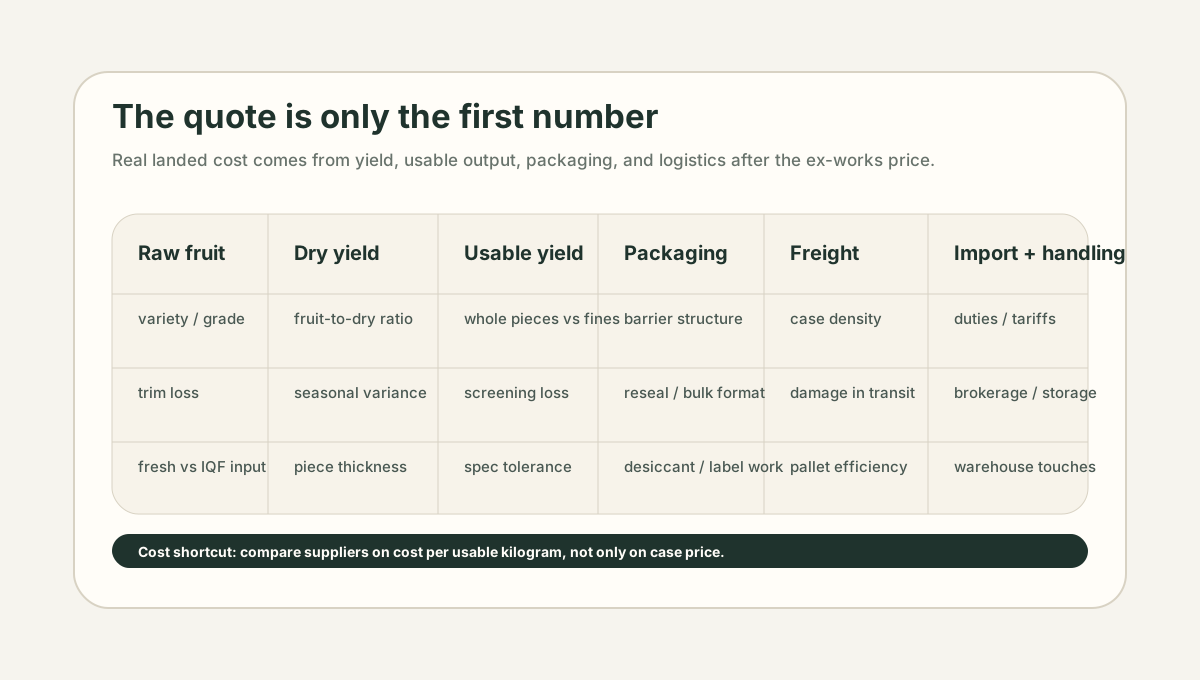
Price per ounce can be misleading. Freeze-dried fruit is lightweight because most of the water has been removed. If a product includes added sugar, starch, or coatings, the bag may weigh more without containing more fruit.
Instead of asking how much it costs per ounce, ask how much real fruit value you are getting per ounce.
That includes fruit content, fruit type, ingredient list, piece size, texture, moisture control, breakage level, and eating experience. That is the idea behind true fruit value per ounce.
3. Understand Product Format
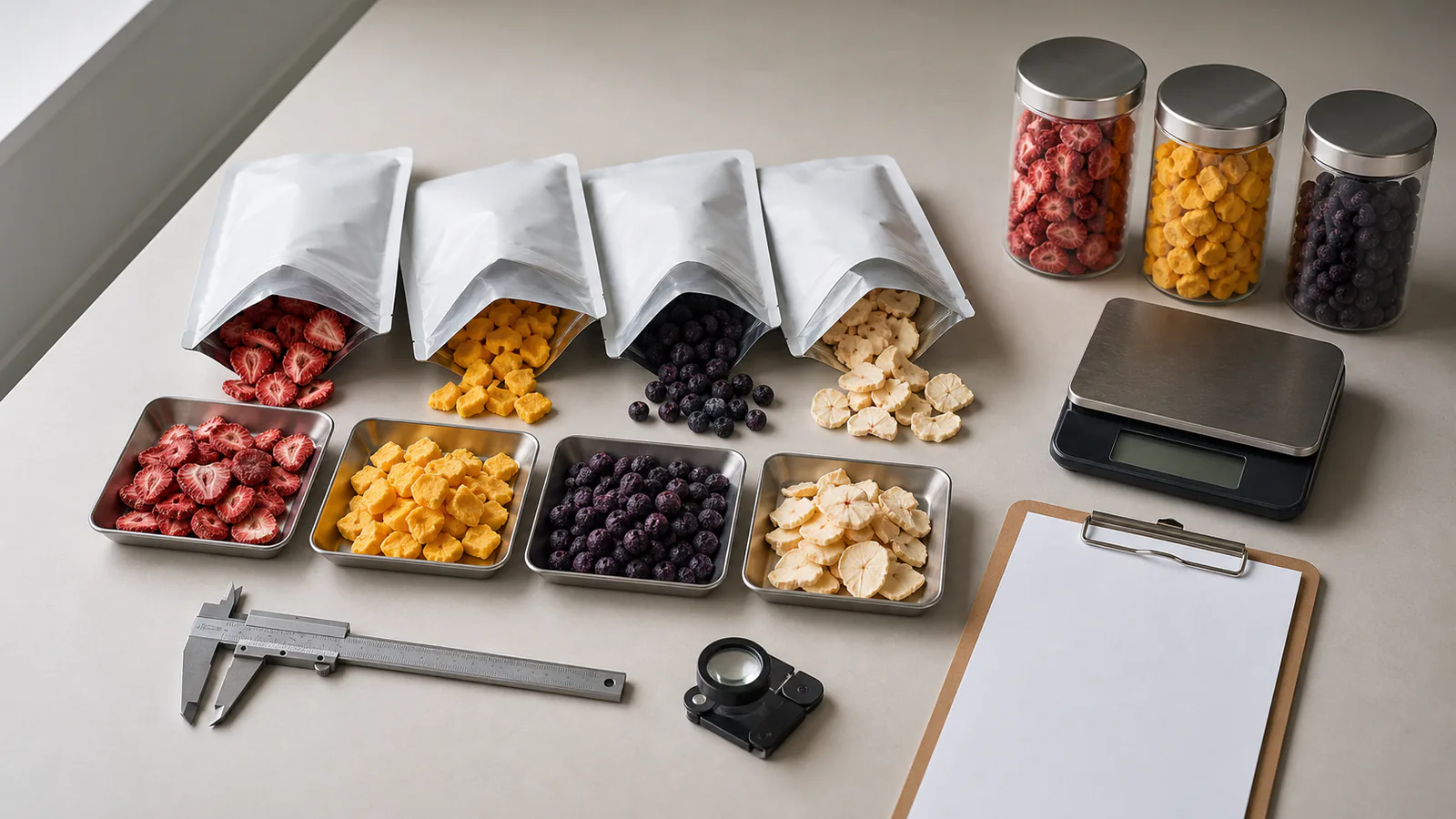
Whole pieces usually feel more premium but can be harder to ship without breakage. Slices are common for strawberry, banana, apple, and mango — thickness affects crispness. Cubes are efficient for cereal, baking, yogurt toppings. Crumbles work as toppings but feel less premium standalone. Powder is valuable for smoothies and baking but should not be compared to whole pieces. Crisps and bites are formulated snacks, not always plain freeze-dried fruit.
4. Evaluate Texture
Good freeze-dried fruit has a clean, crisp texture — dry and crunchy, not leathery, sticky, damp, or stale. Sticky pieces may indicate moisture exposure or insufficient drying. Powdery pieces may come from over-handling or breakage. Soft pieces suggest moisture pickup after production.
5. Check Moisture Sensitivity and Packaging
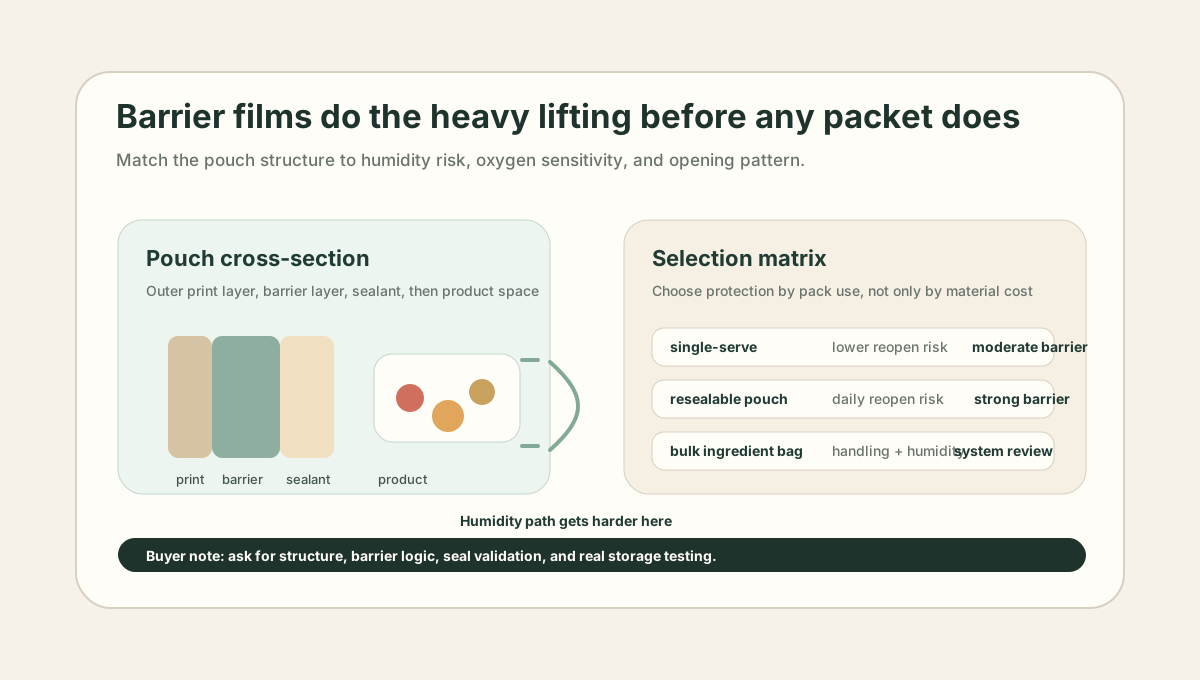
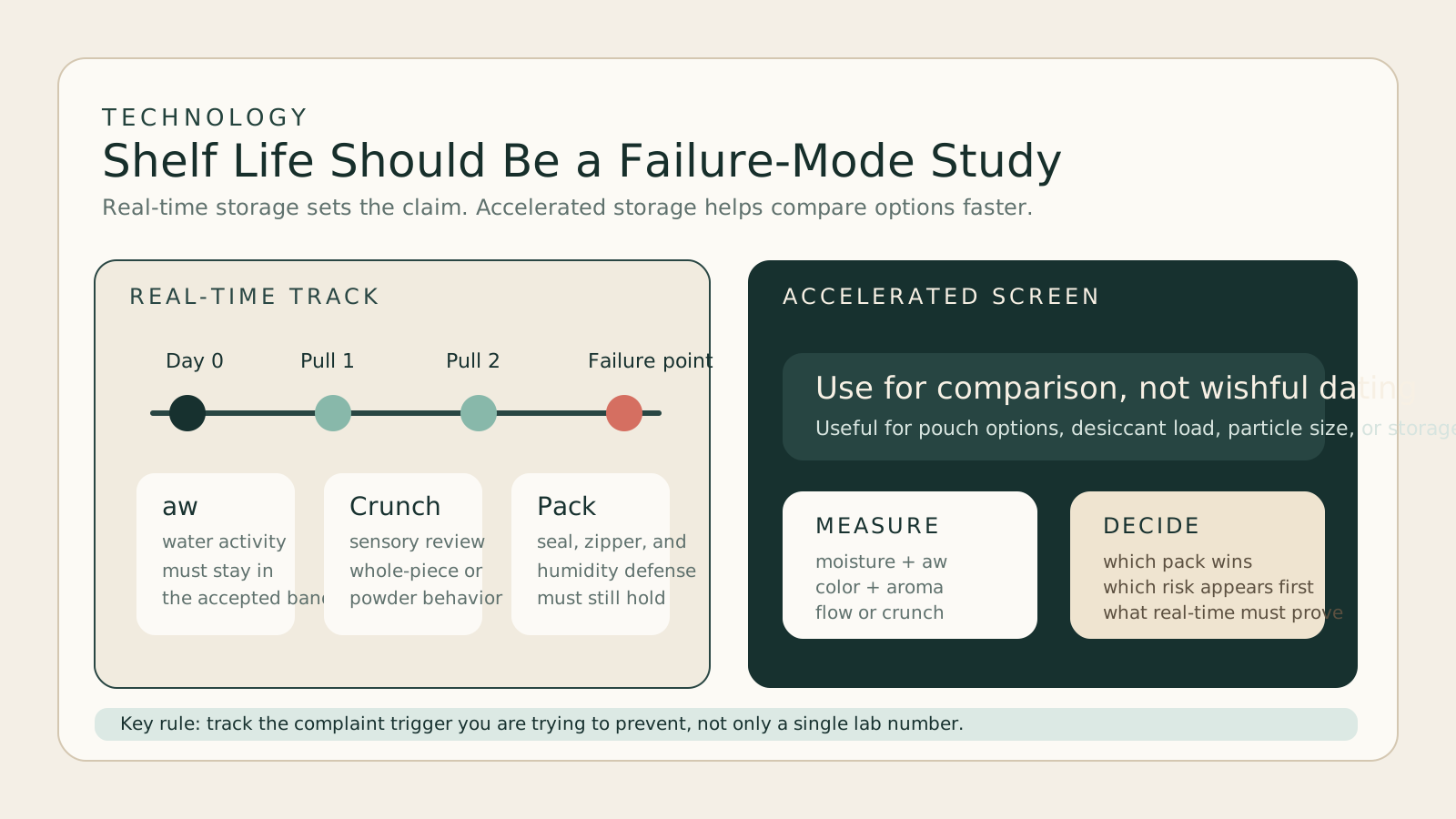
Freeze-dried fruit is extremely sensitive to moisture. Once exposed to humid air, it can absorb water quickly and lose crunch. Barrier materials, seal quality, desiccants, pouch size, and headspace all matter.
Buyers should ask about final moisture target, water activity target, packaging material, desiccant use, seal integrity, shelf-life testing, and breakage rate during shipping.
6. Consider Fruit Type and Ripeness
Freeze-drying does not magically fix low-quality fruit. Variety, maturity, sweetness, acidity, fiber structure, skin thickness, and aroma all affect the final result. Mango can be rich and aromatic, but cultivar and ripeness make a big difference. Strawberry is colorful but fragile. Blueberry can be difficult because skin affects drying. The best products are built around fruits that work well in both flavor and structure.
7. Fresh Fruit vs Frozen Fruit
Fresh fruit can offer strong aroma but can be harder to source consistently. Frozen fruit can make production more stable, but freezing, thawing, and handling can affect texture and structure.
The better question is whether the raw material is appropriate for the fruit, format, and target quality — not simply fresh vs frozen.
8. Added Sugar, Fillers, and Weight
Common additions include sugar, syrup, fruit juice concentrate, maltodextrin, starch, citric acid, natural flavor, or oil. A product with added ingredients may be heavier per bag — making the price per ounce look attractive while delivering less plain fruit. When comparing, ask: Is it 100% fruit? Is the weight from fruit or added ingredients?
9. Breakage, Aroma, and Flavor
Some breakage is normal. But excessive powder reduces perceived quality. Inspect both the top and the bottom of the bag — the bottom reveals the real breakage level. A good product should smell recognizable and natural, and taste like the fruit. A dull aroma suggests lower-quality raw material or poor packaging. An overly sweet taste may come from added sugar rather than natural fruit character.
10. Match Use Case to Format
For snacking, look for large pieces, clean crunch, strong aroma, low breakage, simple ingredients. For yogurt and smoothie bowls, look for pieces that hold color but soften pleasantly. For baking, powders or smaller pieces. For cereal or granola, uniform cubes. For ingredient manufacturing, consistency, specification, and supply reliability matter most.
11. Ask Better Questions When Sourcing
If evaluating a supplier, ask questions that reveal quality control:
- What raw material — fresh, frozen, or IQF? What variety or origin?
- Any added sugar, syrup, starch, or maltodextrin?
- Final moisture or water activity target?
- Available formats — whole, sliced, cube, crumble, powder?
- Typical breakage rate? Packaging options? Desiccants?
- Certifications, COA, supply stability, MOQ, private label support?
12. The Better Way to Compare
True fruit value per ounce = fruit content + fruit quality + format + texture + moisture control + eating experience.
This is not a formal industry metric — it is a practical way to think. A product may be more expensive per ounce but offer better value if it contains high-quality 100% fruit, large pieces, better texture, lower breakage, and stronger aroma.
Conclusion
Freeze-dried fruit is not one simple category. To compare products well, look beyond the front of the package. Start with the ingredient list. Then evaluate fruit content, format, texture, moisture control, packaging, breakage, aroma, use case, and true fruit value per ounce.
The best freeze-dried fruit is not always the cheapest, the heaviest, or the prettiest. It is the product where the fruit, process, format, and price make sense together.
See the formats at OhCrisp
Compare a mixed-fruit bag with an individually wrapped single-fruit format. Use the product pages to check current ingredients, pack size and availability.
Freeze-Dried-Fruit.com is published by the team behind OhCrisp. These links lead to our own products.

Classic Fruit Mix
Seven fruits in one bag, including strawberry, mango, apple and banana. Add a few pieces just before serving for a fruit topping.
View at OhCrisp
Individually Wrapped Whole Bananas
Whole freeze-dried bananas in individual wrappers. Open one for a snack, or break a portion into pieces for your bowl.
View at OhCrispFrequently Asked Questions
Is all freeze-dried fruit just plain fruit?
No. Some freeze-dried fruit products contain only the named fruit, but others include added sugar, syrups, maltodextrin, starches, citric acid, natural flavor, or oils. Always read the ingredient list — a short list that names only the fruit is the strongest signal of a plain product.
Does a lower price per ounce mean better value?
Not necessarily. Bag weight is not the same as fruit content. A heavier bag can include added sugar, fillers, or higher moisture, while a lighter bag may be closer to 100% fruit. The more useful metric is true fruit value per ounce — what you pay for the actual fruit after accounting for ingredients, breakage, format, and packaging quality.
What does the texture of high-quality freeze-dried fruit feel like?
Properly freeze-dried fruit is light, crisp, aromatic, and dissolves cleanly in the mouth. Sticky, chewy, or rubbery pieces usually indicate excess residual moisture or process issues. Powdery, broken, or fine-only bags often signal rough handling, over-thin slicing, or shipping damage.
Why does freeze-dried fruit go soft after opening the bag?
Freeze-dried fruit is hygroscopic — it pulls moisture from the air. Once the pouch is opened, ambient humidity rapidly migrates into the pieces unless the bag is resealed tightly or transferred to an airtight container with a desiccant. Soft pieces inside a freshly opened bag usually point to packaging or barrier-film failure rather than user storage.
Is fresh fruit better than frozen fruit for freeze-drying?
Neither is automatically better. What matters is whether the raw material, pre-treatment, and freeze-drying parameters are matched to the fruit and the final format. Well-handled IQF fruit can outperform poorly-handled fresh fruit, and vice versa.
What ingredients on a freeze-dried fruit label should I watch for?
Sugar, cane sugar, syrups, fruit juice concentrate, maltodextrin, modified starches, citric acid, natural flavor, and added oils. None of these are inherently bad, but they change what the product is. A sweetened freeze-dried crisp and a 100% fruit product should not be compared as if they are the same item.
What questions should a buyer ask a freeze-dried fruit supplier?
Ask for the ingredient statement, fruit variety and origin, format (whole, slice, dice, powder), target moisture content and water activity, breakage and fines spec, packaging barrier type, MOQ, lead time, and applicable certifications (SQF, BRCGS, USDA Organic, FSSC 22000).
How should freeze-dried fruit be stored after opening?
Reseal the original pouch as tightly as possible, or transfer to an airtight jar or zip-seal bag. For longer storage, add a food-safe desiccant packet and keep the container away from heat, light, and humidity. Refrigeration is not required and can actually increase moisture pickup when the container is opened in a warm room.
Primary sources & further reading
- Guidance for Industry: A Food Labeling Guide U.S. Food & Drug Administration FDA's foundational labeling reference — useful when interpreting ingredient lines and serving sizes on freeze-dried fruit packs.
- Labeling Organic Products USDA Agricultural Marketing Service — National Organic Program The federal definition for what 'organic' may and may not signal on a finished fruit pack.
- Global Food Safety Initiative — Recognized Programs Global Food Safety Initiative Defines SQF, BRCGS, FSSC 22000 — the certifications most large freeze-dried fruit buyers require their suppliers to hold.
- Water Activity (aw) in Foods U.S. Food & Drug Administration — Inspection Technical Guide FDA's reference for how residual water activity relates to shelf stability — the engineering reason crunch holds.
External links open in a new tab. We do not receive compensation from any organization listed; sources are referenced because they are primary, current, and publicly verifiable.