- Carrier and anti-caking ingredients are not automatically a problem, but they do change how the product should be compared.
- Powders and high-aroma fruit formats are more likely to use added support ingredients than plain whole-piece snacks.
- The ingredient line tells you what was added; it does not always tell you the ratio, functional reason, or tradeoff.
- Buyers should ask whether the product is plain fruit, fruit plus carrier, or a formulated ingredient designed for flow and handling.
A pouch can say freeze-dried fruit on the front and still be a meaningfully different product once carriers, starches, or flow aids enter the ingredient line.
That does not make the product dishonest or low quality. It means the buyer needs to read it as the product it actually is, not as the product the front panel might loosely suggest.
The direct answer
Carrier and anti-caking ingredients in freeze-dried fruit are added to help with drying, powder flow, handling, or stability. They are most common in powders, drink blends, and difficult-to-handle fruit systems rather than in plain whole-piece snacks. The practical question is not simply whether they exist. It is what job they are doing and whether the resulting product should still be compared to 100% fruit.
That distinction matters for both value and label clarity.
Why carriers show up in the first place
Some fruit formats are naturally harder to handle than others.
Powders made from aromatic, sugary, or acidic fruits can be prone to:
- clumping
- poor flow through filling equipment
- sticking to surfaces
- uneven dispersion in blends
In those cases, a processor may add a carrier or support ingredient so the powder behaves more predictably. That is especially common when the commercial goal is not a premium snack pouch but a functional ingredient that must run cleanly through a system.
Common ingredients and what they usually signal
The label may name ingredients such as:
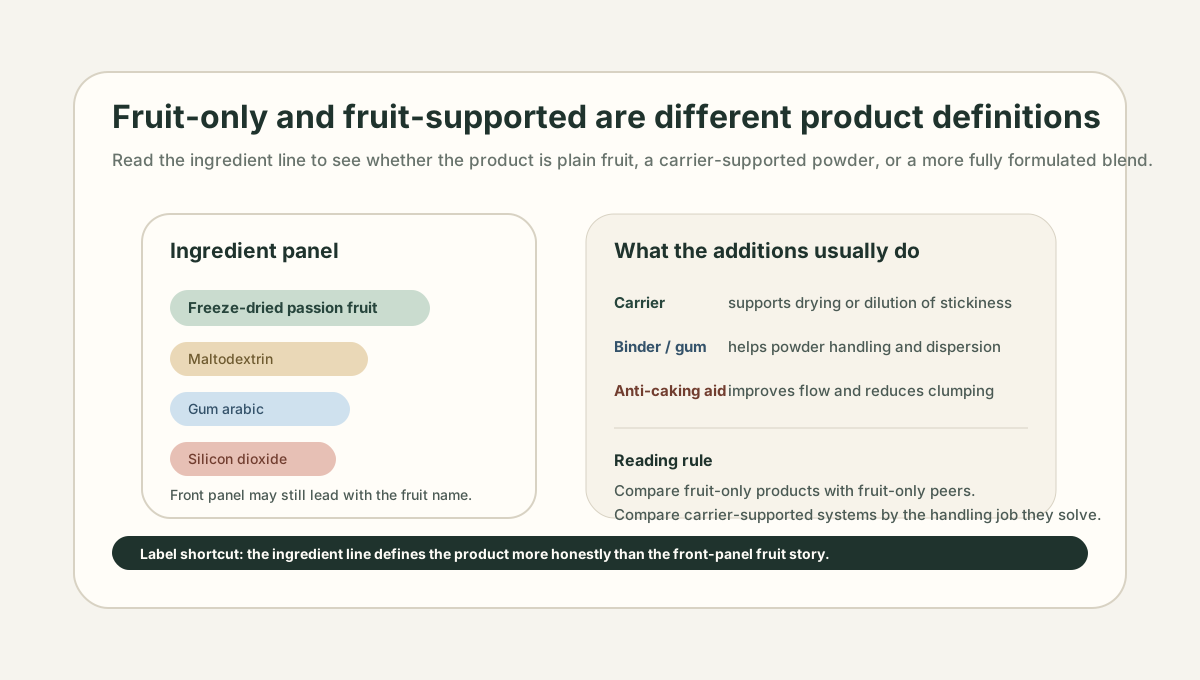
- maltodextrin
- modified starch or tapioca starch
- gum arabic or other gum systems
- silicon dioxide or other flow aids
- acids or flavor supports in formulated blends
These ingredients do not all do the same job. Some act as bulk or drying support. Some help powders resist caking. Some change flavor shape or improve process stability.
The important point is that their presence changes the product definition. A fruit powder supported by carrier is not the same commercial object as pure freeze-dried fruit powder, even if both start from the same fruit name.
Why whole-piece shoppers and ingredient buyers read this differently
A consumer buying strawberry slices for snacking usually expects a simple ingredient line. In that context, added support ingredients may be surprising and often undesirable.
An ingredient buyer sourcing passion fruit, cherry, or citrus powder may see the issue differently. The target may be:
- better flow
- lower caking risk
- more consistent batching
- easier storage and handling
So the same added ingredient can feel unnecessary in one context and rational in another. The mistake is to collapse those use cases into a single quality judgment.
What the ingredient line tells you and what it does not
The ingredient statement is still the strongest first filter. It tells you whether the product is:
- fruit only
- fruit plus carrier
- a more fully formulated blend
For U.S. packaged foods, the ingredient statement generally lists ingredients by common or usual name in descending order of predominance by weight. That makes it a reliable way to identify whether an added carrier or flow aid is present. It is not, however, a formula sheet: ingredients at two percent or less can be grouped under an appropriate qualifying statement, and a sequence cannot tell a buyer the exact percentage, the processing history, or the performance target.
But the ingredient line does not always tell you everything a buyer wants to know.
It may not explain:
- the ratio of fruit to carrier
- whether the carrier is essential or just convenient
- how strongly the addition affects flavor intensity
- whether a fruit-only version could be supplied in another format
That is why two products with similar labels can still perform quite differently in use.
A label is a starting point, not a process claim
It is reasonable to read maltodextrin, a starch, gum, or silicon dioxide as evidence that the finished product is not simply one-ingredient fruit. It is not reasonable to infer the exact ratio or declare that the ingredient was unnecessary from the label alone.
For example, federal rules recognize maltodextrin for direct food use and set conditions for silicon dioxide as an anticaking agent. Those rules establish permitted food uses; they do not certify that a particular powder has the best fruit concentration, flavor, or flow for a buyer's application. That distinction keeps the review fair: read the label precisely, then ask for the specification when the purchase decision depends on concentration, flow, or a claimed fruit-only format.
Why comparison gets distorted
Comparison problems usually start when products with different identities get treated as direct substitutes.
For example:
- a fruit-only powder may be compared to a carrier-supported powder on price per kilogram
- a snack product may be compared to a drink-mix ingredient as if both were plain fruit
- a label that leads with fruit can hide how much of the finished system is there for handling rather than fruit identity
That does not mean carrier-supported products lack value. It means the value has to be judged against the right job.
Questions buyers should ask
When carriers or anti-caking ingredients appear, useful questions include:
- Why was this ingredient added?
- Is the product intended for direct snacking or ingredient use?
- How much does the addition change fruit concentration?
- Does it improve flow enough to justify the tradeoff?
- Is a fruit-only version available?
If the comparison is commercial rather than casual, ask the supplier to answer in writing whether the product is a plain-fruit powder, a carrier-supported powder, or a formulated blend; name each added ingredient; and provide the relevant fruit-content or solids specification where they can share it. That avoids treating label order as a substitute for a fit-for-use brief.
- Which applications is this format actually built for?
Those questions bring the commercial purpose back into focus.
A practical reading rule
One simple rule works well:
Read the front panel for positioning, then read the ingredient line to learn the real product definition.
If the product is fruit only, compare it against fruit-only peers. If it includes carrier or flow support, compare it against products designed for the same handling outcome.
That prevents a very common buying error: paying ingredient-system money while expecting snack-pouch purity, or paying snack-pouch premiums for a product that is really optimized for process behavior.
Bottom line
Carrier and anti-caking ingredients in freeze-dried fruit are tools, not automatic disqualifiers. They can solve real handling and flow problems, especially in powder formats. But they also change what the product is and how it should be compared.
The strongest reading habit is simple: identify the added ingredients, ask what job they are doing, and decide whether that job matches the use case you are actually buying for.
Frequently Asked Questions
What is a carrier ingredient in freeze-dried fruit?
A carrier is an added ingredient used to support drying, improve flow, dilute stickiness, or stabilize a powder format. Common examples include maltodextrin, starches, or gum-based support systems.
What do anti-caking ingredients do?
They help powders resist clumping and flow more evenly during packing, shipping, and use. They are more common in powder or drink-mix style formats than in plain whole-fruit pieces.
Does a carrier mean the product is low quality?
Not by itself. It may simply mean the product was designed for a specific handling or formulation need. The problem is when that added support is not read clearly and the buyer compares it to 100% fruit as if they were the same item.
Where should I look on the label first?
Start with the ingredient statement. That is the fastest way to see whether the product is only fruit or whether it includes carriers, acids, starches, flavors, or anti-caking support.
What should buyers ask suppliers about carriers?
Ask which ingredient was added, why it was added, whether the ratio is fixed, how it changes flow and flavor, and whether a fruit-only version is available.
Primary sources & further reading
- 21 CFR 101.4 — Food; Designation of Ingredients Electronic Code of Federal Regulations Requires most packaged-food ingredients to be listed by common or usual name in descending order of predominance by weight; it supports the article's label-reading guidance but does not disclose exact percentages.
- 21 CFR 184.1444 — Maltodextrin Electronic Code of Federal Regulations Lists the conditions under which maltodextrin is generally recognized as safe for direct addition to food, including use as a formulation aid.
- 21 CFR 172.480 — Silicon Dioxide Electronic Code of Federal Regulations Defines permitted food uses and limits for silicon dioxide, a common anticaking agent; a listed ingredient should be read as an ingredient, not assumed to reveal the complete process or formula.
- Guidance for Industry: Food Labeling Guide U.S. Food & Drug Administration FDA's practical labeling guide, used here to distinguish what the required ingredient statement can establish from details that require a supplier specification.
External links open in a new tab. We do not receive compensation from any organization listed; sources are referenced because they are primary, current, and publicly verifiable.