- MOQ and lead time are operating constraints, not side notes on a quote.
- The right supplier fit depends on forecast confidence, channel mix, packaging complexity, and the cost of running short.
- Private label, custom packaging, and seasonal fruit dependence usually stretch both commercial commitment and replenishment timing.
- Buyers should convert MOQ and lead time into a practical reorder plan before comparing suppliers on price alone.
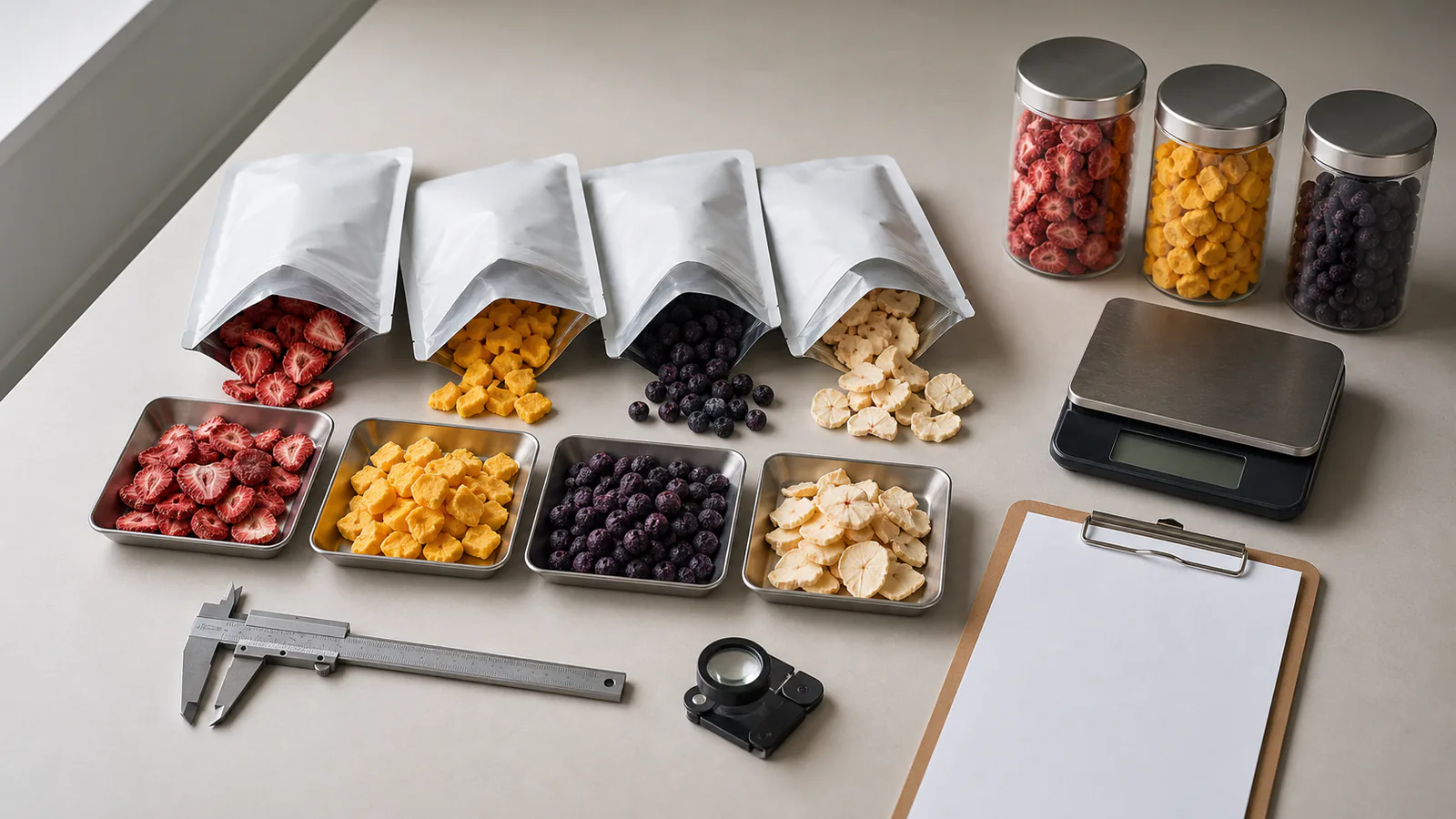
A supplier can look strong on sample quality and still be the wrong commercial fit if the order floor and replenishment window do not match the buyer's operating rhythm.
That mismatch creates a familiar pattern: the first sample wins the room, the quote looks acceptable, and only later does the team realize the MOQ is too heavy for the launch plan or the lead time is too long for the sales cadence.
The direct answer
MOQ and lead time shape freeze-dried fruit buying because they determine how much inventory a buyer must commit, how early replenishment decisions need to be made, and how resilient the program will be when demand changes. They are not administrative details. They are core parts of the commercial fit.
The best supplier is not only the one with strong fruit quality. It is the one whose operating model matches the buyer's risk tolerance and channel reality.
MOQ is a commitment signal
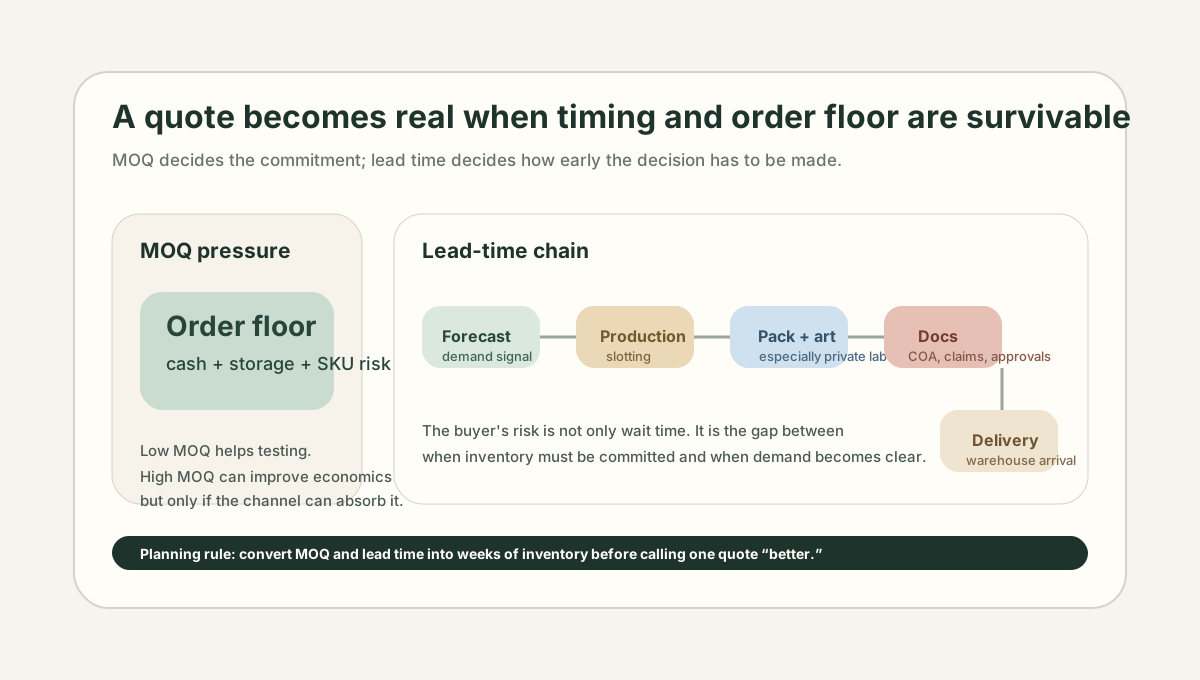
Minimum order quantity is often treated as a nuisance line on the quote. In practice, it reveals how the supplier wants to run the business.
MOQ may reflect:
- the efficiency of a production lot
- packaging setup cost
- custom pouch or print economics
- warehouse handling preference
- how much complexity the supplier is willing to absorb
A low MOQ can make a launch easier, but it does not automatically make the supplier stronger. Sometimes it simply means the supplier is offering a flexible entry point with higher unit cost or a narrower menu of formats.
Lead time tells you how quickly the system can recover
Lead time is not only the time spent drying fruit. It may include:
- raw-material staging
- production slot scheduling
- screening and packing
- custom packaging readiness
- documentation and approvals
- domestic or international logistics
That matters because a good forecast is never perfect. If demand moves faster than expected, the lead-time structure decides whether the program bends or breaks.
Why private label changes the equation
Private-label projects often compress the team's attention onto artwork and sample signoff. But the bigger operational risk usually sits underneath.
Private label can raise complexity through:
- printed packaging commitment
- separate MOQ for each SKU
- label review and revision cycles
- channel-specific pack formats
- more documentation and approval checkpoints
A brand that can manage a plain bulk ingredient program comfortably may still struggle with the same fruit once it becomes a consumer-ready private-label line.
When a high MOQ is rational
High MOQ is not automatically a red flag. It can be rational when the supplier is:
- holding a specialized fruit format
- allocating premium retail-grade selection
- setting up custom packing materials
- dedicating line time to a small-SKU customer
The mistake is to accept the MOQ without translating it into business exposure.
Ask:
- Can the channel absorb that quantity before quality risk rises after opening or repacking?
- Does the order floor force too much capital into one SKU?
- Will the team be tempted to sell the wrong format just to move inventory?
If the answer is yes, the MOQ may be commercially wrong even if it is technically understandable.
When a long lead time is more dangerous than a high price
Buyers often negotiate unit price aggressively while underestimating the cost of slow replenishment.
Long lead times can force:
- larger safety stock
- earlier forecast commitments
- more conservative promotions
- more stockout risk during demand spikes
- rushed substitutions that weaken product consistency
In other words, slow supply can quietly become an expensive supply model even when the invoice price looks attractive.
Supplier fit depends on channel
Different channels tolerate MOQ and lead-time pressure differently.
Retail launch programs usually need careful inventory pacing because shelf resets, promotions, and packaging commitments can move at different speeds. Ingredient buyers may be able to absorb more volume if usage is steady and the format is flexible. Foodservice sits somewhere in the middle, especially when menu demand is seasonal or site-by-site adoption is uneven.
That is why there is no universal good MOQ or universal acceptable lead time. The question is always: good for whom, and under what selling pattern?
Convert the quote into a reorder model
Before choosing a supplier, turn MOQ and lead time into a practical planning exercise.
Useful questions include:
- How many weeks of demand does one MOQ represent?
- When must the reorder decision be made relative to stock on hand?
- What happens if one major customer order lands unexpectedly?
- Which SKUs are carrying the most inventory risk?
- Does custom packaging create a second commitment on top of the fruit itself?
This is where teams often discover that the cheapest quote is not the safest program.
What strong buyers clarify early
Serious buyers do not ask only for MOQ and lead time as stand-alone numbers. They also ask:
- what causes them to change
- whether they apply by fruit, by SKU, or by packaging format
- how much flexibility exists for repeat orders
- which part of the timeline is most variable
- what the supplier expects from the buyer's forecast
Those questions expose whether the relationship can scale cleanly or whether it will remain a series of exceptions and urgent workarounds.
Bottom line
MOQ and lead time shape freeze-dried fruit buying because they decide how much inventory the business must carry and how quickly it can respond when demand changes. Quality, price, and certifications still matter, but they do not cancel a bad operating fit.
The disciplined move is to compare suppliers through the reorder plan, not only through the sample table.
Frequently Asked Questions
What does MOQ mean in freeze-dried fruit buying?
MOQ means minimum order quantity, the smallest order a supplier is willing to produce or pack under the quoted terms. It may apply to the fruit itself, a packaging format, or a private-label SKU.
Why does lead time matter so much for freeze-dried fruit?
Lead time affects when inventory has to be committed, how much safety stock a buyer needs, and how exposed the business becomes to stockouts or rushed substitutions.
Do lower MOQs always make a supplier better?
No. Lower MOQs can help early-stage brands or test programs, but they may come with weaker economics, fewer format choices, or less production priority.
What usually stretches lead time?
Seasonal fruit availability, custom packaging, production slotting, documentation, import handling, and private-label approval cycles are common causes.
How should buyers compare suppliers on MOQ and lead time?
Compare them against forecast accuracy, working capital, channel demand swings, and the real cost of being out of stock. The right answer is operational, not only numerical.