- Whole pieces usually support premium visual positioning, but they also carry more fragility, packaging burden, and delivered-cost risk.
- Broken pieces can be the smarter buy for bakery, toppings, inclusions, and blends when the format is sold honestly and specified clearly.
- The real comparison is not beauty versus damage; it is application value versus usable yield.
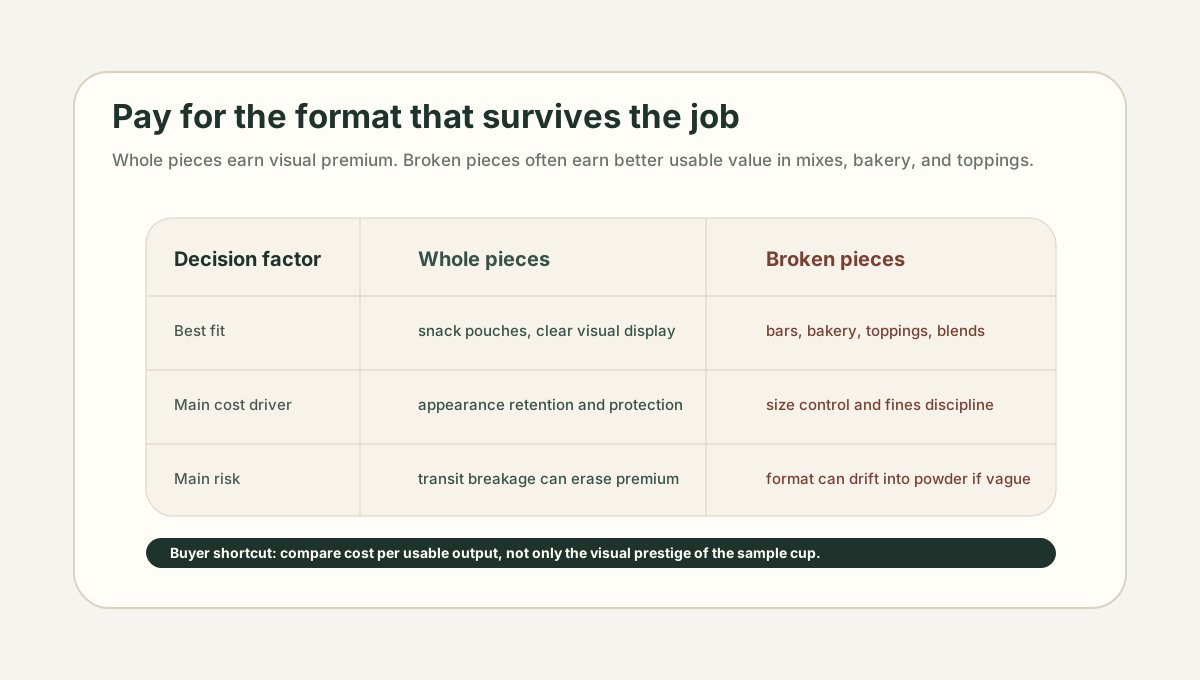
- Buyers should compare cost per usable output, not assume a whole-piece quote is automatically the best product.
One of the most common buying mistakes in freeze-dried fruit is paying for showroom-quality whole pieces when the application only needs flavor, color, and clean handling.
That mistake happens because buyers often collapse several different questions into one. They ask whether whole pieces are "better," when the real issue is where the fruit earns its value.
The direct answer
Whole pieces are usually worth paying for when the fruit is meant to be seen, recognized, and judged visually by the customer. Broken pieces are often the better buy when the fruit will be mixed, baked, layered, or used as an inclusion where exact piece perfection is not the main value driver.
The useful comparison is not whole versus broken as a moral hierarchy. It is cost, fragility, and visual payoff relative to the application.
What whole pieces are actually buying you
Whole pieces usually signal:
- premium appearance
- cleaner fruit identity at first glance
- more snack-like eating experience
- stronger merchandising value in clear windows or bowls
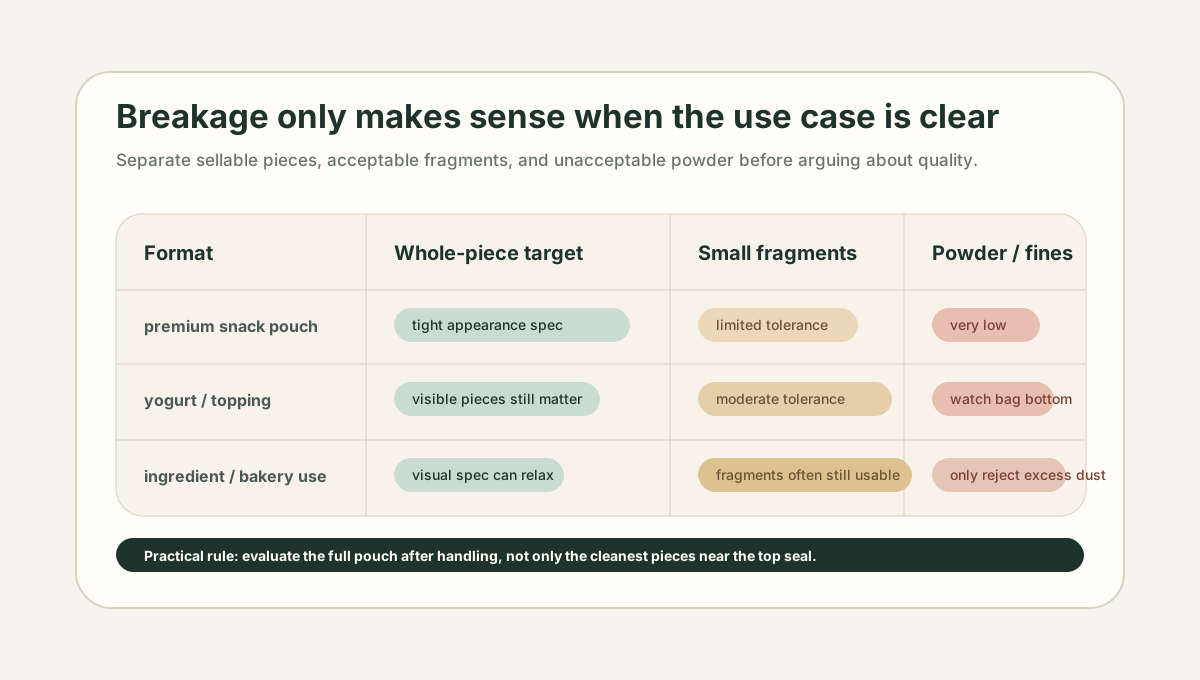
Those benefits are real. A consumer retail pouch built around visible strawberry slices or whole blueberry pieces often does need a more intact format.
But those benefits come with operating consequences:
- more protection needed in packaging
- more transit sensitivity
- tighter tolerance at sorting and packing
- higher risk that a good top layer hides damage lower in the bag
In other words, whole pieces are a premium format because they are harder to preserve all the way to the user.
What broken pieces can do well
Broken pieces are often misunderstood because the term sounds like failure. In many cases, it is simply a different commercial format.
Broken pieces can be the right choice for:
- cookie and snack bar inclusions
- yogurt, oatmeal, and cereal toppings
- bakery mixes
- chocolate or confectionery use
- foodservice garnish where even scattering matters more than perfect shape
In those uses, smaller pieces may actually improve distribution, reduce handling damage, and lower the cost of paying for beauty that will be lost during mixing.
Where buyers go wrong
The biggest mistake is comparing formats only on quoted price per case.
A whole-piece quote can look expensive but still make sense if the finished product sells on visible fruit identity. A broken-piece quote can look efficient but disappoint if the bag carries too much powder, too broad a size spread, or a format that reads messy rather than intentional.
The buying failure is not choosing one or the other. It is buying either format without defining the use case.
A better way to compare the formats
Ask four questions:
1. Does the customer need to recognize the fruit immediately?
If yes, whole pieces or larger cuts usually matter more.
2. Will the process destroy piece integrity anyway?
If the fruit will be folded into dough, pressed into bars, or tumbled through a blend, the premium paid for highly intact pieces may not survive the line.
3. What level of fines is acceptable?
Broken pieces can be excellent. Powder-heavy bottoms of bag are different. Buyers should separate those conditions clearly.
4. What does the packaging have to protect?
Whole pieces need more defensive packaging discipline. If the pack system is weak, the delivered product may not justify the whole-piece premium.
Why cost per usable output matters more
This is where the conversation gets practical.
Suppose one quote offers premium whole strawberry slices at a high price and another offers controlled broken pieces at a lower price. The right answer depends on what proportion of each format remains useful by the time it reaches the product.
For some applications:
- whole pieces create visible value the consumer notices
- smaller fragments reduce perceived quality
For others:
- slightly smaller pieces distribute more evenly
- intact showpieces add cost but not performance
That is why buyers should compare cost per usable kilogram or cost per finished serving, not only the nominal format description.
Questions worth asking suppliers
Useful questions include:
- Is this a deliberate broken-piece specification or a downgraded whole-piece lot?
- What size range is normal and what is guaranteed?
- How are powder and fines defined?
- What does the product usually look like after normal shipping?
- Which channels buy this format most successfully?
- What packaging protection sits behind the quote?
Those questions separate an intentional commercial format from a vague description of damage.
Bottom line
Whole pieces and broken pieces are not competing moral categories. They are different products that create value in different ways. Whole pieces usually earn their premium when recognition and presentation matter. Broken pieces often win when distribution, handling efficiency, and application cost matter more than showroom beauty.
The smart buy is the one matched to the finished job, not the one that sounds most premium in isolation.
Frequently Asked Questions
Are whole pieces always better in freeze-dried fruit?
No. Whole pieces are often better for premium snack presentation, but they are not automatically better for every application. In many bakery, topping, and ingredient uses, well-controlled broken pieces can deliver the same fruit identity with better value and less waste.
Why do whole pieces cost more?
They usually require tighter cut control, gentler handling, lower acceptable breakage, and more protective packaging. Buyers are paying for appearance retention as much as for fruit solids.
When are broken pieces the smarter choice?
They are often the smarter choice when the fruit will be mixed, baked, blended, or scattered across a surface where exact piece perfection is less important than color, flavor, and predictable cost.
Do broken pieces mean poor quality?
Not by themselves. Broken pieces can come from a deliberately sold format or from uncontrolled damage. The difference is whether the size range, fines level, and intended use are defined clearly before purchase.
How should buyers compare the two formats?
Compare them on usable yield, appearance requirements, transit risk, package protection, and the role the fruit plays in the finished product. A cheaper broken-piece quote is not better if powder loss rises too far, but a whole-piece quote is wasteful if the application destroys the pieces anyway.