- Fruit-equivalent claims usually describe how much fresh fruit went in before drying, not the full quality story of the finished bag.
- Serving size, added ingredients, and piece format can change what the claim means in practice.
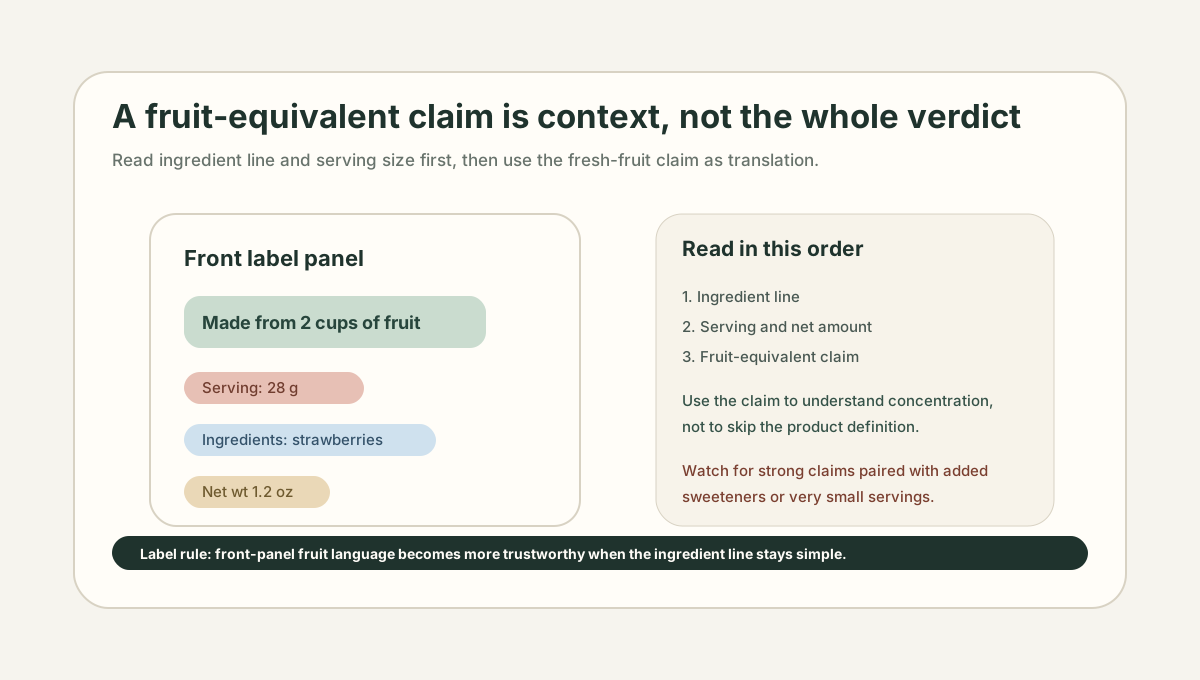
- A stronger label read starts with the ingredient line and net serving, then treats the fruit-equivalent claim as supporting context.
- Regulatory wording varies by market, so exact claim structure should be checked against the applicable labeling rules.
Fruit-equivalent language sounds simple, yet it often compresses several different facts into one line that shoppers and buyers can easily overread.
That is especially true in freeze-dried fruit, where the product is physically much smaller and lighter than the fresh fruit that produced it. A dramatic-sounding claim may be directionally useful while still leaving out important context.
The direct answer
Fruit-equivalent claims on freeze-dried fruit labels usually describe the amount of fresh fruit used before drying removed most of the water. They help explain concentration, but they do not by themselves tell you whether the bag is plain fruit, how large the serving is, how the texture will perform, or whether the product is a good value for your use.
Read them as one data point, not as the entire verdict.
What the claim is trying to communicate
Freeze-drying removes water while preserving most of the fruit's visible structure. That means a relatively small serving can originate from a much larger fresh weight or fresh volume.
A fruit-equivalent claim is trying to translate that concentration effect into familiar language:
- how much fresh fruit went into the dried product
- why the bag looks lighter than people expect
- why flavor can seem intense in a small portion
That can be helpful. Without this kind of explanation, some shoppers assume the bag contains less fruit simply because it weighs less.
What the claim does not tell you
This is where reading discipline matters.
A fruit-equivalent statement does not automatically tell you:
- whether sugar or other ingredients were added
- whether the serving size is small or generous
- whether the bag is mostly whole pieces or mostly fragments
- how much of the fruit remains usable in the way you intend to eat it
- whether the finished product feels premium or commodity-grade
Two products can make similarly impressive claims and still deliver very different real experiences.
Start with the ingredient line
If the goal is plain freeze-dried fruit, the ingredient statement is still the strongest first filter.
Look first for:
- fruit only
- fruit plus sugar or syrup
- fruit plus oils, carriers, or flavor additions
That does not mean added ingredients are automatically wrong. It means the fruit-equivalent claim should not distract from what the product actually is.
Then check serving size and net amount
A claim can sound large, but the useful question is how much product is being discussed.
Serving size changes interpretation because:
- a concentrated product may come in a small serving
- one bag may be designed for snacking while another is intended as a topping or ingredient
- price comparison gets distorted when consumers compare front-panel fruit language but ignore how much edible product is inside
This is why a disciplined read connects three lines together:
- ingredient statement
- serving size and net amount
- fruit-equivalent claim
That sequence prevents the claim from doing more work than it should.
Why this matters for buyers too
The issue is not only consumer confusion. Retail buyers and private-label teams can also overuse fruit-equivalent language as a shorthand for product quality.
A strong commercial review still needs:
- confirmation of whether the formula is plain fruit
- a visual read on piece integrity and fines
- texture and flavor evaluation
- pack format and freshness logic
The label can support the sale, but it cannot replace the product brief.
How to interpret the claim pragmatically
The best practical approach is simple:
- treat the claim as a concentration cue
- use the ingredient line to define what kind of product it really is
- use serving size to understand the claim's scale
- use price and format to judge whether the product fits the intended use
This keeps the claim in proportion. It can be informative without becoming a shortcut to conclusions it does not actually support.
A final caution on wording
Exact front-panel language is a compliance question as well as a marketing one. Requirements differ by market and by the way the claim is calculated or presented.
That means brands should not copy a competitor's phrasing casually. Buyers should also avoid assuming that a dramatic claim means two products were measured in exactly the same way.
Bottom line
Fruit-equivalent claims on freeze-dried fruit labels can be useful, because they remind shoppers that drying concentrates fruit into a smaller physical format. But the claim is only part of the story. Ingredient line, serving size, format, and overall product honesty still matter more when you are deciding what the bag really offers.
Read the claim as translation, not proof.
Frequently Asked Questions
What does a fruit-equivalent claim mean on freeze-dried fruit?
It usually means the product was made from a stated amount of fresh fruit before water was removed. It is a way of translating the concentration effect of drying into language shoppers can picture more easily.
Does 'made from two cups of fruit' mean I am eating two cups of fresh fruit?
Not in a simple one-to-one sense. The claim usually points to fresh-input equivalence, while the actual portion eaten depends on serving size, added ingredients, and how the product is used.
Why can two bags make similar fruit-equivalent claims but still be very different products?
Because the claim does not automatically explain ingredient additions, piece size, sweetness level, powder content, or packaging and freshness quality. It is only one part of the label.
Should shoppers read the ingredient list before the fruit-equivalent claim?
Yes. The ingredient line tells you whether the product is plain fruit or whether sugar, oils, flavor systems, or other additions changed the product you are comparing.
Are fruit-equivalent claims regulated the same way everywhere?
No. Labeling expectations differ by market, retailer, and jurisdiction. Brands should review the exact wording with the rules that apply where the product is sold.
Primary sources & further reading
- Guidance for Industry: A Food Labeling Guide U.S. Food & Drug Administration FDA's comprehensive labeling reference — including what may and may not be claimed about ingredient content.
- 21 CFR 101.13 — Nutrient Content Claims, General Principles Electronic Code of Federal Regulations The regulatory basis for what kinds of quantitative comparison claims (including fruit-equivalent statements) are allowed.
- MyPlate — What Counts as a Cup of Fruit? USDA Center for Nutrition Policy & Promotion The federal reference for serving-size equivalents — useful when reading 'made from X cups of fruit' style claims.
- 21 CFR 101.12 — Reference Amounts Customarily Consumed (RACC) Electronic Code of Federal Regulations Defines the federal reference serving sizes that anchor U.S. nutrition label calculations for dried fruit products.
External links open in a new tab. We do not receive compensation from any organization listed; sources are referenced because they are primary, current, and publicly verifiable.