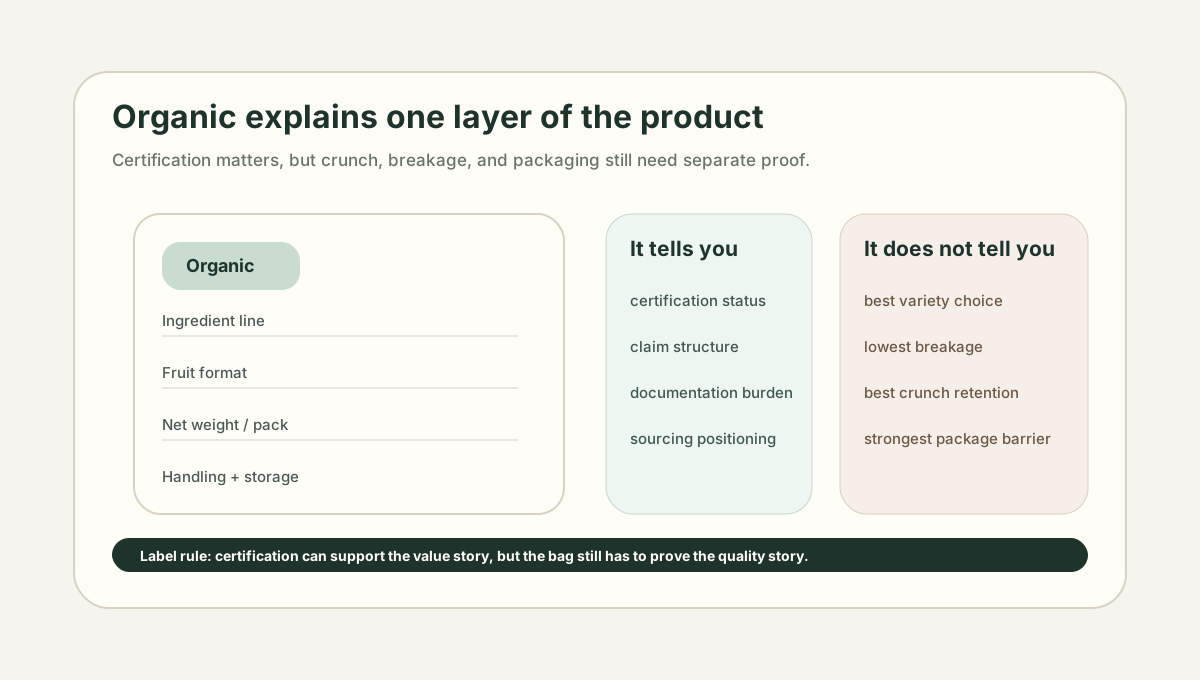
- An organic label helps define how the fruit was certified and handled under organic rules.
- It does not automatically confirm the best variety, strongest crunch, lowest powder, or most protective packaging.
- Buyers still need to review ingredients, spec lines, and delivered product behavior separately from certification.
- The most credible organic product is the one where certification, product identity, and actual bag performance all agree.
Organic is a useful label signal in freeze-dried fruit, but it becomes misleading when people treat it as a shortcut for every other quality question.
That confusion shows up in both consumer and buyer conversations. Some shoppers assume organic automatically means better fruit. Some procurement teams assume an organic SKU is interchangeable with a conventional one except for price. Neither shortcut is very reliable.
The direct answer
An organic freeze-dried fruit label tells you something important about certification and handling under organic rules. It does not automatically tell you that the fruit has the best flavor, best texture, lowest breakage, or strongest moisture protection.
The label answers one set of questions. The bag still has to answer the others.
What the organic label does tell you
At a practical level, the organic callout is a certification and product-identity signal.
It can help buyers confirm that:
- the product is positioned within an organic certification framework
- ingredients and processing aids should align with that framework
- handling and documentation need to support the claim
- the label promise is not simply a loose marketing phrase
That matters for brands, retailers, and consumers who specifically need organic positioning.
It can also affect sourcing complexity, supplier choice, and commercial pricing because the supply pool may be narrower.
What the organic label does not tell you
The label does not guarantee:
- better variety selection
- better ripeness at harvest
- lower breakage
- cleaner whole-piece presentation
- stronger crunch retention
- better packaging barrier
- tighter process control in the freeze dryer
Those outcomes depend on the same operational realities that matter in conventional product.
An organic strawberry can still be pale, dusty, or fragile. A conventional strawberry can still outperform it on visual quality if the sourcing and process discipline are stronger.
Why ingredient reading still matters
Organic does not remove the need to read the ingredient statement.
Some freeze-dried fruit products are simply fruit. Others are more formulated. Depending on the product type, a buyer may still need to check for:
- added sweeteners
- flavor systems
- acids
- carrier ingredients in powder formats
- blended inclusions beyond the named fruit
If the business question is "Is this a plain fruit product?" the ingredient line still matters as much as the certification badge.
Organic can change the supply conversation
The most useful difference often appears upstream.
Organic product can mean:
- fewer supplier options
- different crop planning pressure
- narrower substitution flexibility
- different documentation expectations
- pricing that reflects both fruit supply and certification structure
That is one reason buyers should not compare an organic quote with a conventional quote as if only the label changed. The sourcing system behind the quote may be meaningfully different.
How retail and B2B users should interpret the claim
In retail
Organic often matters as a trust and merchandising signal. Shoppers may be willing to pay more, but they still expect the bag to look and eat well. If the product arrives dusty or soft, certification alone rarely protects repeat purchase.
In B2B buying
Organic may be a hard requirement for a customer brief, but it should not replace normal technical review. The supplier still needs to show:
- product identity
- moisture control logic
- breakage tolerance
- packaging performance
- documentation discipline
That combination is what makes the product credible.
A practical reading order
When evaluating an organic freeze-dried fruit product, read in this order:
- Confirm the product identity and claim.
- Read the ingredient statement.
- Review the texture and breakage spec.
- Check moisture or water activity logic.
- Review package protection.
- Decide whether the organic premium fits the market need.
That sequence prevents a common mistake: paying for the claim first and checking performance later.
Warning signs to watch
Be cautious when:
- the organic claim is prominent but the product definition stays vague
- the bag performance does not support the premium price
- ingredients are less plain than the front of pack implies
- the supplier can discuss certification but not physical quality
The strongest organic products are not just certified. They are also clearly specified and honestly presented.
Bottom line
An organic freeze-dried fruit label tells buyers something real about certification and product positioning. It does not settle the bigger quality questions on its own. Texture, breakage, flavor, packaging, and spec discipline still need to be judged directly.
The best interpretation is simple: organic can be part of the value story, but it is not the whole quality story.
Frequently Asked Questions
Does organic freeze-dried fruit mean the product is higher quality?
Not automatically. Organic status can be important, but quality still depends on variety, ripeness, drying control, breakage, and packaging. An organic bag can still be soft, dusty, or underwhelming if those basics are weak.
What does the organic label actually tell buyers?
It indicates that the product was produced and handled under an organic certification framework and that the labeling should align with that framework. It is a sourcing and compliance signal, not a complete eating-quality signal.
Can organic freeze-dried fruit still contain non-fruit ingredients?
Some organic products are plain fruit, while others may include other permitted organic ingredients depending on the product format. The ingredient statement still needs to be read carefully.
Should buyers pay more for organic freeze-dried fruit automatically?
Only when the organic claim matters to the market or customer and the rest of the product still performs. Paying more for certification without checking texture, breakage, and packaging can create disappointment.
What should be checked besides the organic claim?
Check the ingredient statement, piece format, breakage tolerance, moisture or water activity logic, packaging system, and whether the delivered product still matches the premium implied by the label.
Primary sources & further reading
- Labeling Organic Products USDA Agricultural Marketing Service — National Organic Program Defines the four labeling tiers (100% Organic, Organic, Made with Organic, Specific Ingredients) and the rules behind each callout.
- National Organic Program — Standards USDA Agricultural Marketing Service The authoritative source for what 'organic' means under U.S. federal regulation.
- 7 CFR Part 205 — National Organic Program Electronic Code of Federal Regulations The full regulatory text — including allowed ingredients, processing aids, and labeling claims.
- Certified Organic Operations Search USDA Organic Integrity Database Buyer verification tool: confirm a supplier's organic certificate status before approving the SKU.
External links open in a new tab. We do not receive compensation from any organization listed; sources are referenced because they are primary, current, and publicly verifiable.