- The most useful spec sheets connect lab numbers to visible product behavior.
- Moisture, water activity, breakage, size distribution, and ingredients should be read together, not as isolated lines.
- Origin, raw-material state, and pack format help explain why two similar-looking quotes can represent very different products.
- If a spec sheet avoids definitions or tolerance ranges, the buyer is still carrying hidden quality risk.
A spec sheet is where freeze-dried fruit stops being a vague sample and becomes a product with measurable expectations.
That is important because this category often looks simpler than it is. Two samples may both be labeled freeze-dried mango, yet one is a clean whole-piece snack in a protective pouch and the other is a topping-grade product with broader size spread, more fragments, and a looser moisture-control system. The difference is usually visible on the spec sheet long before it becomes obvious in a complaint.
The direct answer
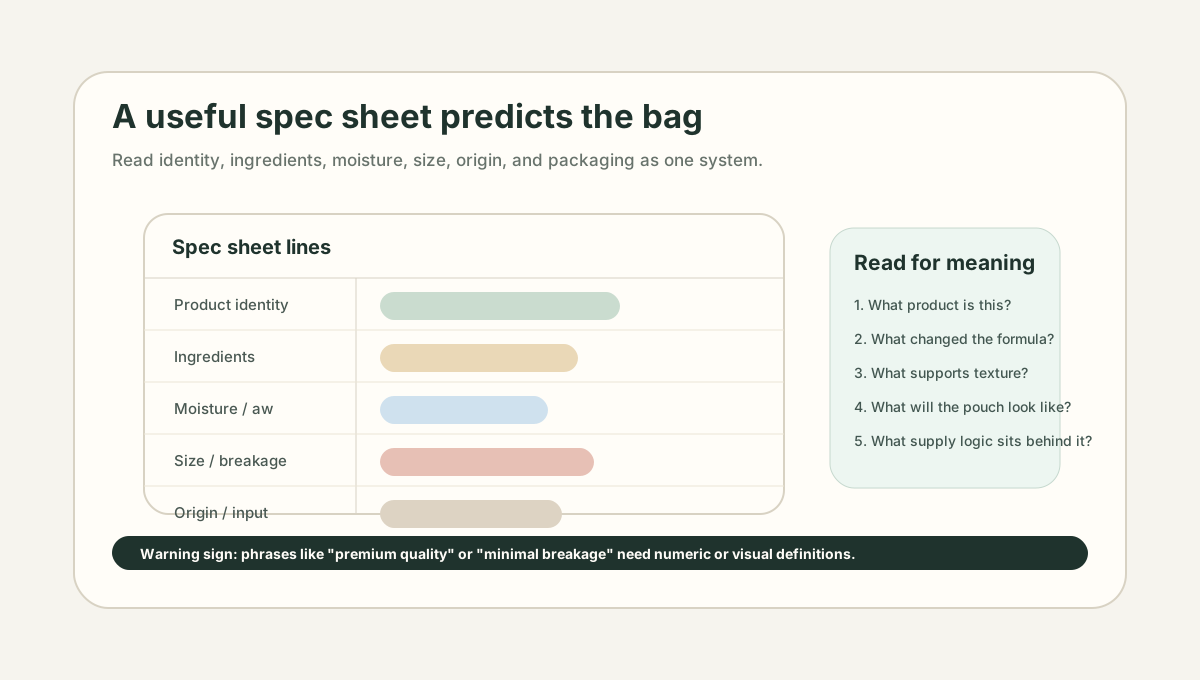
To read a freeze-dried fruit spec sheet well, start with six areas: product identity, ingredients, moisture logic, size and breakage, raw-material and origin notes, and packaging format. Then check whether each line is defined with usable ranges rather than vague adjectives.
The best spec sheets help a buyer predict what will show up in the bag, not just what name will appear on the invoice.
1. Product identity should be precise
The first line should tell you more than the fruit name.
Look for:
- whole fruit, slices, dices, halves, crumbles, or powder
- conventional or organic status where relevant
- 100% fruit versus sweetened or flavored product
- retail snack format versus ingredient format
If the identity is broad, the rest of the sheet becomes harder to interpret. A breakage tolerance that is acceptable for topping pieces may be unacceptable for a premium snack pouch.
2. Ingredients explain what product you are really comparing
Ingredient language matters because freeze-dried fruit can be plain or built into a more engineered product.
Read carefully for:
- sugar
- syrups
- fruit juice concentrate
- starches or carriers
- acids
- flavor systems
- oils or anti-caking support
Those additions may be commercially valid. The point is not to reject them automatically. The point is to avoid comparing a 100% fruit product with a sweetened fruit crisp as if they were the same thing.
3. Moisture numbers need context
Most buyers now know to check moisture. Fewer ask whether the number is enough on its own.
A strong spec sheet should clarify:
- target moisture range
- whether water activity is also tracked
- test timing
- lot-to-lot tolerance
- how the supplier links the result to texture stability
A single dry-looking number can sound reassuring, but without a range, method, or packaging context, it still leaves room for confusion. The real question is not just whether the fruit is dry on paper. It is whether the dryness control supports the intended storage and eating experience.
4. Size and breakage define what the bag will look like
This is where many spec sheets are too vague.
Helpful lines include:
- target piece dimensions or sieve bands
- percent whole pieces
- acceptable small-fragment range
- powder or fines limit
- whether the standard applies at packout or upon receipt
If the spec only says minimal breakage or premium appearance, the buyer still does not know what the bottom of the pouch is allowed to look like.
5. Raw material and origin notes change the meaning of the quote
A credible spec sheet often gives at least some context on the raw material:
- fresh or IQF input
- origin country or origin program
- variety where commercially relevant
- seasonal substitution logic if applicable
Those details matter because they influence flavor, color, yield, and consistency. They also help explain why two suppliers can offer similar fruit names at very different prices.
6. Packaging belongs in the quality conversation
Freeze-dried fruit is highly sensitive to humidity and mechanical damage, so the packaging line is not just an operational note.
Check for:
- pouch or bulk-bag structure
- resealable versus non-resealable format
- liner and case language
- desiccant use where relevant
- net weight and case pack
If the product is being sold on crunch and appearance, the packaging system needs to defend both.
What vague wording usually means
Spec sheets often use language that sounds professional but still avoids commitment:
- premium quality
- standard moisture
- good color
- minimal breakage
- export grade
Those phrases are not useless, but they are not enough. Ask what they mean numerically or visually. A real spec should reduce ambiguity, not preserve it.
A practical buyer reading order
When reviewing a new supplier sheet, use this order:
- Confirm what the product actually is.
- Check whether the ingredient statement matches the commercial positioning.
- Review moisture and water activity logic.
- Review size and breakage tolerances.
- Check origin and raw-material notes.
- Check packaging assumptions.
That sequence helps prevent a buyer from being distracted by a good price before noticing that the product definition changed underneath it.
Bottom line
A freeze-dried fruit spec sheet should tell you what product you are buying, how dry and stable it is meant to be, what the bag should look like, and what packaging system is protecting it. If the sheet avoids ranges, definitions, or context, the buyer is still carrying hidden risk.
In this category, the spec sheet is not paperwork after the real decision. It is the real decision.
Frequently Asked Questions
What should a freeze-dried fruit spec sheet include?
At minimum it should identify the fruit and format, ingredients, moisture or water activity targets, size or breakage tolerances, packaging format, origin or raw-material description, and the inspection or testing framework.
Why is a simple product description not enough?
Because two products called freeze-dried strawberry can differ in ingredients, piece size, breakage, dryness control, and packaging protection. The spec sheet is what separates a label name from a real buying standard.
Should buyers ask for both moisture and water activity?
Yes when possible. They describe different things. Moisture shows how much water remains; water activity helps explain how available that water is and how the fruit may behave in storage.
What is a warning sign on a spec sheet?
Vague wording such as premium quality, minimal breakage, or standard moisture without definitions or numeric ranges usually means the buyer still has room for disagreement later.
Does the packaging line on a spec sheet matter?
Yes. Freeze-dried fruit is sensitive to humidity and crush damage, so the pouch or bulk format is part of the product performance, not just a shipping detail.
Primary sources & further reading
- FRUITS, FREEZE DRIED (A-A-20365) U.S. Department of Agriculture Agricultural Marketing Service A concrete USDA procurement reference for freeze-dried fruit style, size, quality characteristics, packaging, and moisture-test requirements.
- Water Activity (aw) in Foods U.S. Food & Drug Administration Defines water activity and explains why a reading depends on equilibrium and controlled sample temperature, so it should be interpreted alongside the product and test method.
- 21 CFR Part 101 — Food Labeling Electronic Code of Federal Regulations Current federal labeling rules for the consumer-facing identity, ingredient, nutrition, and net-quantity information that does not replace a buyer's product specification.
External links open in a new tab. We do not receive compensation from any organization listed; sources are referenced because they are primary, current, and publicly verifiable.