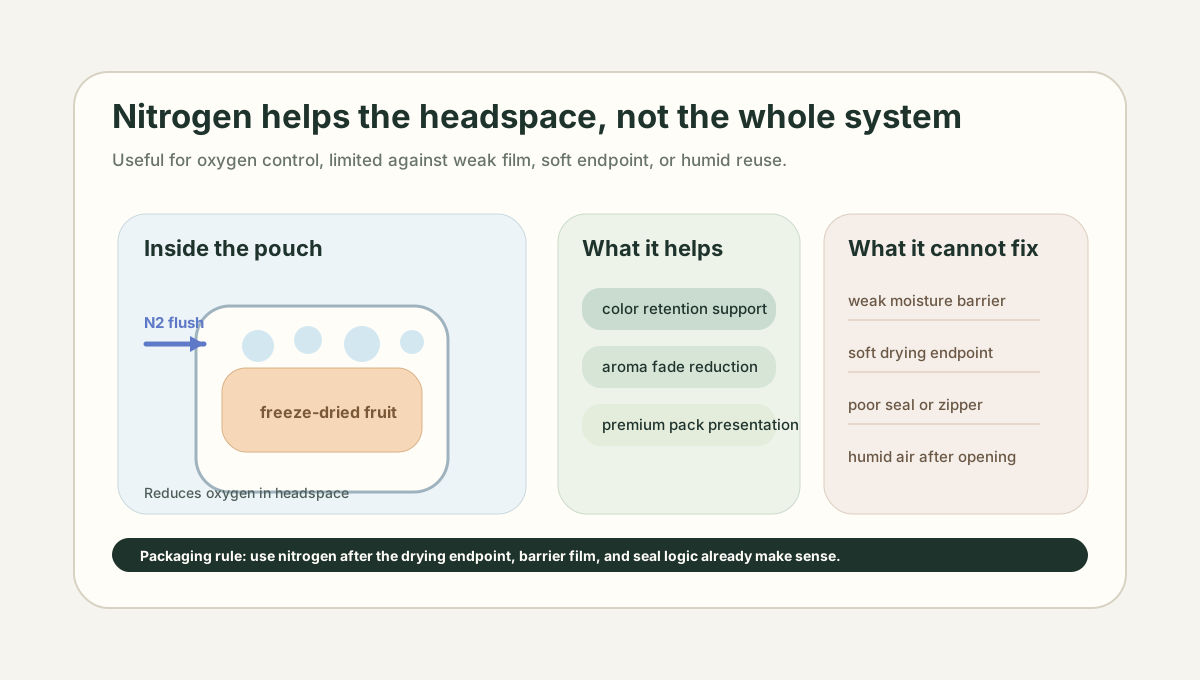
- Nitrogen flushing mainly helps control oxygen in pack headspace; it does not remove moisture already left in the fruit.
- Weak film, poor seal integrity, oversized pouches, and sloppy zipper performance can erase the benefit quickly.
- Color-sensitive and aroma-sensitive fruits are more likely to benefit than already-stable, fast-turn products.
- Buyers should ask what packaging problem nitrogen is solving before treating it as a premium signal.
Nitrogen flushing sounds advanced, but in freeze-dried fruit it is only useful when it supports the real packaging risks instead of distracting from them.
That distinction matters because the phrase can make a pouch sound more protective than it really is. A well-flushed bag with weak barrier film, a poor zipper, or a soft drying endpoint may still disappoint faster than a simpler pack with stronger fundamentals.
The direct answer
Nitrogen flushing helps freeze-dried fruit by reducing oxygen in the package headspace before sealing. That can support color retention, aroma stability, and overall pack presentation. It does not fix excess residual moisture, weak barrier film, bad seals, or repeated humidity exposure after opening.
In other words, it is a packaging support tool, not a substitute for process and package discipline.
What nitrogen flushing is actually doing
Most freeze-dried fruit pouches trap some air when they are sealed. Air contains oxygen, and oxygen can contribute to:
- aroma fade
- color dulling in sensitive fruits
- oxidation pressure in mixed products with fat-containing inclusions
- a less controlled pack environment over time
Nitrogen flushing lowers that oxygen load by displacing some of the air before final seal.
That is useful, but it is also limited. The flush only changes the headspace environment. It does not change the internal moisture left in the fruit or the permeability of the package.
Why oxygen control is not the same as texture control
In freeze-dried fruit, shoppers often experience the first quality failure as texture loss rather than oxidation notes. The fruit turns less crisp, less brittle, or uneven after exposure.
That usually points first to moisture, not oxygen.
If the fruit exits drying with too much residual moisture, or if the pouch allows humidity ingress, nitrogen flushing will not rescue the crunch. A bag can have excellent headspace gas control and still go soft if:
- the moisture endpoint is too loose
- the film moisture barrier is weak
- the zipper leaks after opening
- the headspace is oversized for the fill
- the product sits in humid conditions for repeated use
That is why nitrogen should be discussed alongside moisture control, not instead of it.
When nitrogen flushing is more likely to help
Some freeze-dried fruit formats gain more from nitrogen than others.
It is more likely to add value when:
- the fruit's color is an important buying cue
- aroma fade would weaken the product quickly
- the pouch format has meaningful headspace
- the product travels through longer distribution windows
- the brand is selling a premium visual experience
Examples include strawberries, berries, and mixed-fruit products where bright appearance and top-note aroma matter to the sale.
It may matter less when:
- the product turns quickly
- the format is bulk ingredient use rather than shelf-facing snack sale
- the fruit is already relatively visually stable
- the packaging system's bigger weakness is moisture rather than oxygen
What usually matters more than the flush itself
Nitrogen can be helpful, but several packaging choices usually have a bigger day-to-day effect:
Film structure
If the film has poor moisture barrier properties, the package can still lose texture performance regardless of the gas used at sealing.
Seal integrity
A beautiful gas-flush specification is not very meaningful if seals vary from pouch to pouch.
Zipper performance
For consumer packs, the post-opening environment often matters more than the initial pack environment. Repeated opening introduces humid air every time.
Headspace discipline
Oversized pouches can dilute the practical benefit of flushing because there is simply more internal volume to manage.
How nitrogen relates to desiccants and oxygen absorbers
These tools are often discussed together, but they do different jobs.
- Nitrogen flushing lowers oxygen in the headspace at the time of packout.
- Oxygen absorbers continue scavenging oxygen after sealing when the pack system supports them.
- Desiccants help control humidity inside the package.
A product might use only one of these. Another might use two. The right choice depends on the fruit, the pack format, and the failure mode the supplier is trying to control.
The weak approach is adding multiple tools without a clear reason. The better approach is naming the specific risk: oxidation, moisture pickup, aroma fade, or post-opening softness.
What buyers should ask suppliers
If a supplier highlights nitrogen flushing, useful follow-up questions include:
- What residual oxygen target do you pack to?
- How is that target verified?
- Is the flush applied consistently or only on some SKUs?
- What film and seal system supports the pack?
- What quality problem is nitrogen intended to solve here?
- What changes if the buyer removes the flush to save cost?
Those questions force the conversation out of marketing language and into packaging logic.
A practical way to interpret the claim
Treat nitrogen flushing as a positive supporting detail when the rest of the system is credible. Do not treat it as proof of premium quality on its own.
The strongest packaging conversation usually sounds like this:
- The fruit is dried to a controlled endpoint.
- The pouch has a credible barrier structure.
- The seals and zipper are reliable.
- The headspace is appropriate for the fill.
- Nitrogen is used because oxygen control still matters after those basics are covered.
That sequence makes sense. The reverse sequence does not.
Bottom line
Nitrogen flushing can help freeze-dried fruit, especially when the product is sensitive to oxygen-related color or aroma loss. But it is not a stand-alone quality solution. Moisture control, barrier film, seal integrity, and realistic pouch design still decide whether the fruit arrives crisp and stays credible after opening.
If a pack relies on nitrogen to sound premium, ask what problem it solves. The answer should be technical, not decorative.
Frequently Asked Questions
What does nitrogen flushing do for freeze-dried fruit?
It replaces some of the oxygen in pouch headspace with nitrogen before sealing. That can help reduce oxidation-related risks such as color fade or aroma loss, especially in products that spend time in distribution.
Does nitrogen flushing keep freeze-dried fruit crunchy?
Only indirectly. Crunch loss is driven much more by moisture pickup than by oxygen alone. If the fruit leaves the dryer too wet or the package lets humidity in, nitrogen flushing will not protect texture by itself.
Is nitrogen flushing better than a desiccant?
They solve different problems. Nitrogen is used for headspace oxygen control; a desiccant is used for moisture management. Some products may use one, the other, or both depending on fruit sensitivity and pack design.
When is nitrogen flushing worth asking about?
It is most worth asking about when color, aroma retention, long distribution time, or premium visual appearance matter. It is less meaningful if the pack barrier and sealing system are weak.
What should buyers ask suppliers about nitrogen flushing?
Ask what residual oxygen target they aim for, how they verify it, whether the flush is consistent across production, and what film and seal system the pouch uses. Without that context, the claim is incomplete.
Primary sources & further reading
- Nitrogen GRAS Affirmation — 21 CFR 184.1540 Electronic Code of Federal Regulations Confirms nitrogen as Generally Recognized as Safe for food contact and modified-atmosphere packaging.
- Modified Atmosphere Packaging — FDA Inspection Guide U.S. Food & Drug Administration FDA's reference for reduced-oxygen packaging — including the food-safety controls that should accompany MAP claims.
- Modified Atmosphere Packaging of Fresh Produce Institute of Food Technologists — Food Technology Magazine Background reading on residual-oxygen targets and how MAP interacts with film barrier properties.
External links open in a new tab. We do not receive compensation from any organization listed; sources are referenced because they are primary, current, and publicly verifiable.