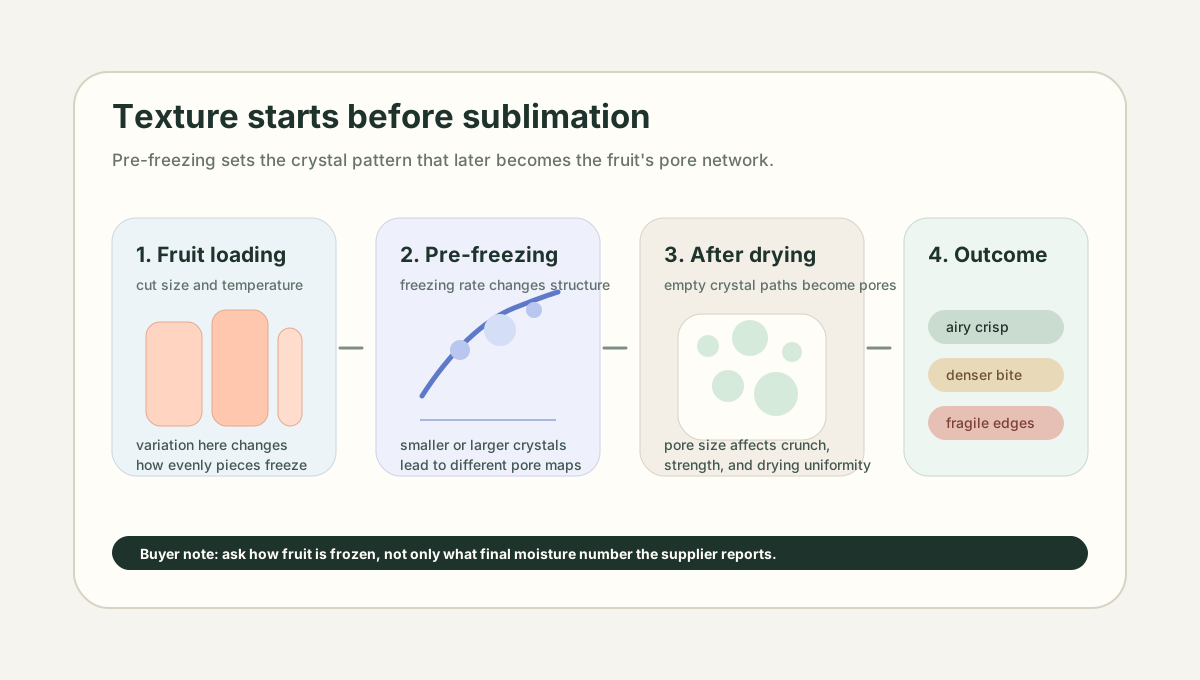
- Pre-freezing influences ice crystal pattern, which later becomes the fruit's pore structure.
- Freezing rate, piece size, and fruit composition all change how crisp or fragile the finished fruit feels.
- A good freeze-dried texture target is not just dry enough. It also needs the right internal structure for the intended format.
- Buyers should ask suppliers how fruit is frozen before the main drying cycle, not only what the final moisture number is.
Freeze-drying does not start when the chamber warms up. Texture is already being shaped when the fruit is first frozen.
That matters because freeze-dried fruit is not just dry fruit with water removed. Its crunch comes from a fragile internal structure created by freezing and then preserved by sublimation. If the freezing stage is poorly controlled, the finished fruit may still test dry but feel denser, weaker, or less consistent than expected.
The direct answer
Pre-freezing shapes freeze-dried fruit texture by determining the size and arrangement of ice crystals inside the fruit. When those crystals leave during drying, they become the pores that control crunch, fragility, and how evenly the piece dries.
In other words, the freezing step helps design the texture before the drying step finishes it.
Why the frozen state matters so much
Inside fresh fruit, water sits in cells, between cells, and around dissolved sugars, acids, and solids. Once that water freezes, it does not do so in a neutral way. The freezing path changes:
- where ice forms first
- how large the crystals become
- whether the structure stays uniform
- how much stress the fruit tissue experiences
Later, under vacuum, those frozen pathways become the channels through which vapor leaves the fruit. That is why freezing affects more than throughput. It affects the structure the customer eventually bites into.
Ice crystal pattern becomes pore structure
One of the simplest ways to understand this is to think in sequence:
- Fruit is cut and loaded.
- Water freezes into crystals.
- The crystals occupy space inside the fruit.
- Sublimation removes the ice.
- The empty spaces become the pore network.
That pore network is what gives freeze-dried fruit its light, brittle, crisp character.
If the pores are well distributed, the fruit often dries more evenly and eats more cleanly. If the structure is inconsistent, the result may be mixed: crisp in one area, dense in another, or easy to shatter during handling.
Faster and slower freezing do different jobs
It is tempting to say fast freezing is always better. That is too simple.
Faster freezing usually creates smaller ice crystals. That can preserve a finer structure and help maintain visual identity in some fruits. But a very fine structure is not always the commercial target if the finished piece becomes too delicate or if the application benefits from a slightly sturdier bite.
Slower freezing can produce larger crystals and a more open structure, but it can also increase tissue stress and inconsistency if the process is not well controlled.
The right answer depends on:
- the fruit type
- sugar level
- acid level
- piece thickness
- whole piece versus slice versus dice
- snack use versus topping use versus powder use
The question is not "fast or slow?" in isolation. The question is "what freezing pattern supports the final texture and process reliability we want?"
Why fruit type changes the outcome
Pre-freezing does not act on every fruit the same way.
A watery fruit with thin tissue behaves differently from a denser fruit with more fiber or sugar solids. Mango, apple, strawberry, banana, and blueberry all carry water differently. Their cell walls, skin behavior, and soluble solids change the way freezing stress moves through the piece.
That is one reason a good freeze-dried strawberry and a good freeze-dried banana should not be expected to crunch in the same way. The starting structure is different before the freeze dryer ever begins its main work.
Where inconsistency usually begins
When buyers see uneven texture, they often blame only the drying endpoint or the package. Sometimes they are right. But inconsistency can begin upstream in pre-freezing.
Common risk points include:
- variable slice thickness
- overloaded trays
- mixed fruit temperatures at loading
- irregular airflow or contact freezing
- switching between fresh and IQF raw material without adjusting the process
Those variables can create pieces that look similar from the outside but behave differently once dried. A lot may contain some pieces that feel airy and crisp and others that feel tighter or more brittle.
What good suppliers should be able to explain
Suppliers do not need to reveal every proprietary setting to sound credible. They should, however, be able to explain the logic of their pre-freezing system.
Useful questions include:
- Is the fruit frozen in-house or purchased frozen?
- Is the raw material loaded fresh, chilled, or already IQF?
- How is thickness or cut geometry controlled?
- Is freezing batch, blast, tunnel, or plate based?
- How is the frozen state checked before the drying cycle begins?
- How does the chosen freezing method support the intended final format?
If the answer is only a final moisture number, the explanation is incomplete.
What this means for buyers and product developers
For snack brands and ingredient buyers, the practical lesson is simple: texture is a system. Final moisture matters, but structure matters too.
A supplier may hit the requested dryness target and still miss the intended eating experience if the freezing stage creates the wrong internal architecture. That can show up as:
- too much fragility in shipping
- denser-than-expected bite
- inconsistent piece-to-piece crunch
- hollow-looking but weak pieces
- variable bowl performance in toppings
The better sourcing conversation connects process choices to the use case.
Bottom line
Pre-freezing shapes freeze-dried fruit texture because it determines the ice crystal pattern that later becomes the fruit's pore structure. That structure affects crunch, strength, drying uniformity, and the way the fruit performs after packaging.
When a supplier talks about texture quality, the conversation should start before the drying curve. It should start with how the fruit was frozen.
Frequently Asked Questions
Why does pre-freezing matter in freeze-dried fruit?
Pre-freezing determines how water solidifies inside the fruit. That affects ice crystal size and distribution, which later influence pore structure, drying behavior, and the final eating texture.
Does faster freezing always make better freeze-dried fruit?
Not automatically. Faster freezing can create a finer internal structure, but the best result depends on the fruit, cut style, and whether the target is a delicate crisp, a stronger piece, or a powder-ready format.
What happens if fruit freezes unevenly before drying?
Uneven freezing can produce uneven pore structure and inconsistent moisture removal. That may show up later as mixed texture, fragile edges, denser centers, or variable piece performance in the same lot.
Can buyers see pre-freezing quality from the final product?
Sometimes indirectly. Very collapsed pieces, inconsistent crunch, unusual breakage, or dense centers can all point to upstream freezing and structure issues, though they are not proof on their own.
What should buyers ask suppliers about pre-freezing?
Ask whether the fruit is frozen in-house or sourced frozen, how piece thickness is controlled, whether freezing is batch or continuous, and how the supplier connects freezing conditions to the final texture target.
Primary sources & further reading
- Ice Crystal Formation in Freezing of Foods Institute of Food Technologists — Journal of Food Science Peer-reviewed reference on freezing rate, ice nucleation, and resulting crystal morphology in plant tissue.
- Recommendations for the Processing & Handling of Frozen Foods International Institute of Refrigeration Reference handbook on freezing curves and how they affect downstream product structure.
- Frozen Food Manual — USDA Guide USDA Food Safety & Inspection Service USDA reference on safe freezing practices for raw fruit before processing.
External links open in a new tab. We do not receive compensation from any organization listed; sources are referenced because they are primary, current, and publicly verifiable.