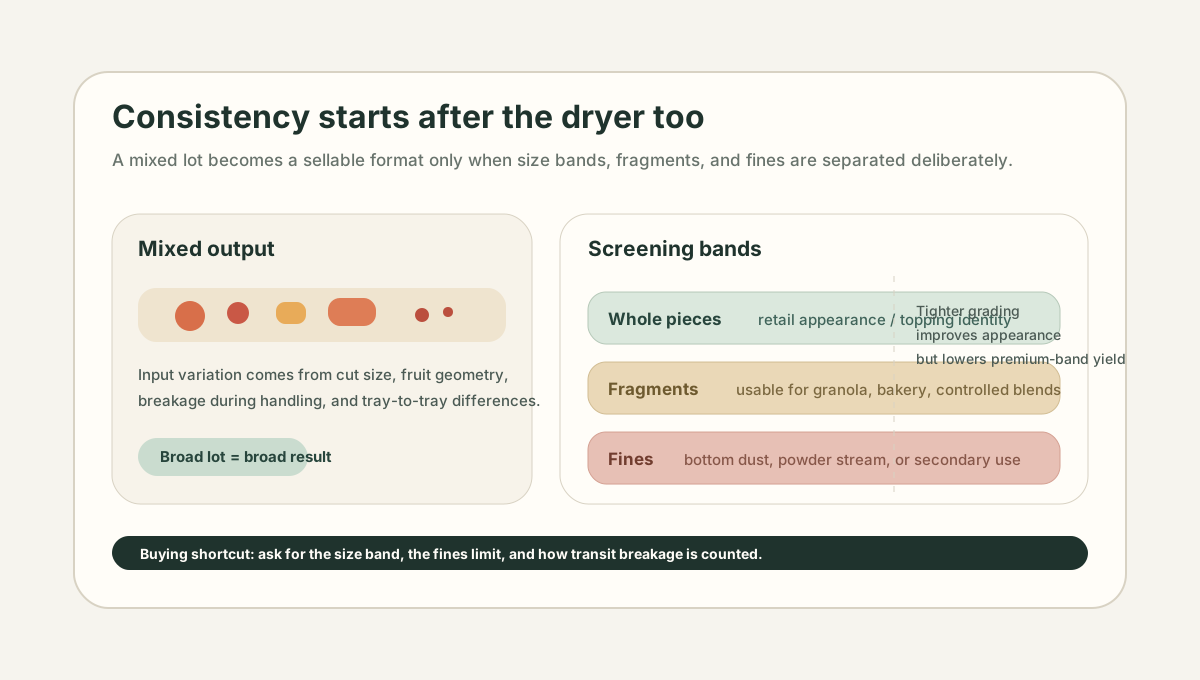
- Size grading separates usable pieces, small fragments, and fines into clearer commercial formats.
- Post-drying screening improves visual consistency, handling, and quote accuracy, especially for retail and topping applications.
- The right grading target depends on the use case; tighter screens can improve appearance while lowering usable yield.
- Buyers should ask how the lot is screened, what size bands are guaranteed, and how fines are measured after packing.
A freeze dryer can remove water well and still leave a lot that feels inconsistent if piece size, fragments, and fines are not sorted with intent.
That is why screening and size grading matter more than many buyers expect. They do not change the fruit itself, but they do change how consistently the finished product performs in a bag, on a topping line, or inside a production system.
The direct answer
Size grading and screening improve freeze-dried fruit consistency by separating mixed output into clearer commercial bands: saleable whole pieces, smaller usable fragments, and unacceptable fines. That sorting step helps the delivered product match the application more closely, whether the buyer needs retail-looking pieces, controlled topping format, or ingredient-grade crumble.
Without grading, a lot can be technically dry but commercially uneven.
Why one dried lot rarely comes out perfectly uniform
Freeze-dried fruit is shaped by variation long before the screen deck appears.
Differences can come from:
- cutting thickness
- fruit geometry and seed structure
- tray position and loading density
- brittleness after drying
- handling during discharge, packing, and transit
Even a well-run batch can produce a distribution rather than a single neat size. Strawberry slices chip at the edges. Blueberries can split. Mango chunks may hold shape better at the center than at the corners. Screening is the step that decides how that natural variability gets commercialized.
What screening actually does
In practical terms, screening uses defined openings or sieve bands to sort the lot into categories. A test sieve retains material larger than its opening while smaller material passes through; stacked screens make the resulting size distribution visible rather than subjective.
A supplier may separate:
- premium whole pieces within a narrow target band
- smaller fragments that are still usable
- bottom-end fines or powder
That sounds simple, but it has real consequences. A bag sold as premium snack fruit should not contain the same amount of undersize material that would be perfectly acceptable in granola or bakery use. Screening makes that distinction visible and enforceable.
Why retail buyers care so much
Retail is the most appearance-sensitive channel. Consumers do not empty the pouch onto a grading table. They judge what they see through the window, what lands in the hand, and what collects at the bottom.
Good screening helps retail product deliver:
- more uniform piece appearance
- less visible dust
- cleaner portion perception
- less argument between what the spec promised and what the pouch shows
This is one reason a quote for tightly graded fruit usually costs more than a quote for an unsorted or broad-range lot. The supplier is not only drying fruit. The supplier is selecting what part of the lot belongs in that retail promise.
Why ingredient buyers should still care
Ingredient applications are usually more flexible, but flexibility is not the same as indifference.
A cereal, bar, coating, or topping line still benefits from controlled size bands because they affect:
- dosing consistency
- visual distribution
- blend uniformity
- breakage during downstream handling
- dust accumulation in the process
If the line expects a stable small-dice format, a broad mix of chunks and powder can create a process problem even if the fruit tastes fine. The question is not whether the product looks premium. The question is whether the size distribution matches how the line uses it.
Where buyers overpay
Some buyers pay for grading they do not need. Others skip grading and then pay for the inconsistency later.
Overpaying usually happens when:
- an ingredient application buys a retail-style whole-piece spec
- a topping application pays for ultra-tight sizing where moderate variation would work
- fines that could be sold honestly into another use are treated as hidden waste
Under-specifying happens when:
- a premium pouch is packed from a broad mixed lot
- the buyer asks for "whole pieces" without defining a size band
- bottom-of-bag powder tolerance is never written down
The right balance depends on what the fruit has to do after it leaves the case.
Screening is also a yield decision
This is the commercial tradeoff many teams miss.
Every tighter grading rule leaves more product outside the premium band. That does not mean the outside material is bad. It means the supplier now has to place it somewhere else: a secondary grade, an ingredient stream, or internal loss.
That is why tighter grading can:
- reduce usable yield in the sold format
- raise cost per kilogram of the premium band
- improve pack appearance and consistency
A buyer should decide deliberately which side of that tradeoff matters more.
Questions buyers should ask suppliers
Useful questions include:
- What size band is being sold?
- What percentage is allowed below that band?
- How are fines defined and measured?
- Is the product screened after drying, after packing, or both?
- Does the quoted spec reflect normal transit breakage?
- Is off-size material sold into a secondary grade?
Those questions push the conversation beyond vague words such as "nice pieces" or "premium quality." They turn appearance into a measurable purchasing term. The most useful specification identifies the size-band boundaries, the unit used, the sampling plan, and whether the reported figure is mass retained, mass passing, or a maximum fines percentage.
Bottom line
Size grading and screening do not make freeze-dried fruit better by magic. They make the finished lot more intentional. That matters because a mixed-size product behaves differently in retail, foodservice, and ingredient use.
The strongest buying approach is simple: define the format the application really needs, then ask how the supplier screens the lot to deliver it.
Frequently Asked Questions
What is size grading in freeze-dried fruit?
Size grading is the step where a dried lot is separated into defined piece-size bands, usually to distinguish saleable whole pieces, smaller usable fragments, and unacceptable fines or dust.
Why does screening matter after freeze-drying?
Because one drying run can still produce mixed sizes from cutting variation, breakage, and tray position. Screening makes the delivered format more predictable for the buyer.
Does tighter grading always mean better quality?
Not automatically. Tighter grading often improves consistency and appearance, but it can also lower usable yield and raise cost if the application would have accepted more variation.
Are fines always waste?
No. Fines can still be useful for coatings, bakery, powder blends, and flavor applications. They become a problem when they are sold as if they were premium whole-piece product.
What should buyers ask about screening?
Ask for the target size band, the method used to measure fines, whether screening happens before or after final packing, and how transit breakage is accounted for in the commercial spec.
Primary sources & further reading
- Particle Size Characterization National Institute of Standards and Technology Technical reference for what a test sieve measures, stacked-sieve practice, and reporting material retained by aperture size.
External links open in a new tab. We do not receive compensation from any organization listed; sources are referenced because they are primary, current, and publicly verifiable.