- Storage instructions describe the conditions the shelf life was actually tested against — treat them as the terms of the best-by date.
- A 'keep dry' or desiccant note is a direct signal that moisture, not spoilage, is the product's main enemy.
- Vague or missing instructions on a moisture-sensitive product are themselves a small quality flag.
The storage line on a freeze-dried fruit bag looks like filler. "Store in a cool, dry place. Reseal after opening." It is easy to read past. But for a product whose entire quality rests on staying dry, those few words are doing real work — and reading them carefully tells you what the maker knows about their own product.
Why storage instructions exist at all
A best-by date is not a standalone promise. It is a claim about how long the product stays good under the conditions the label describes. Storage instructions are the conditions attached to that claim.
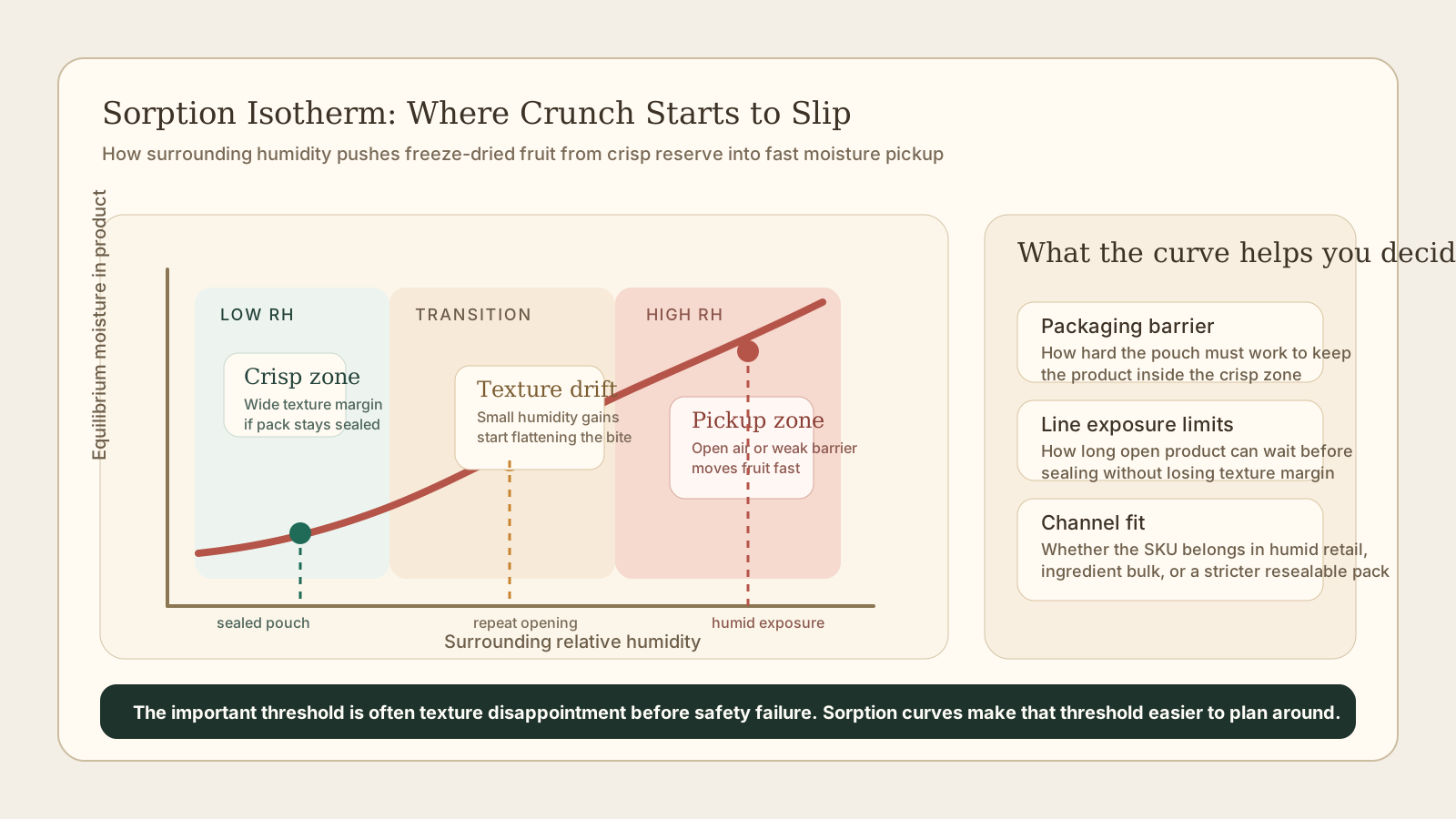
Freeze-dried fruit is stable because it holds very little water. Its crunch, color, and flavor depend on keeping it that way. So the storage line is essentially a short summary of what the maker's shelf-life testing assumed: a certain temperature range, protection from humidity, and a resealed or intact package. Read that way, the instruction is the fine print of the date, not decoration.
If a product is held far outside those conditions — a hot car, a steamy kitchen counter, an open bag in a humid pantry — the best-by date no longer means what it says. That is not a loophole; it is how the date was defined.
Decoding the common phrases
A few lines show up again and again, and each one points at a specific vulnerability.
"Cool, dry place" is the baseline. Cool addresses temperature-driven changes like slow color browning and aroma loss, which speed up in heat. Dry addresses the bigger risk — moisture pickup that softens the crunch. Together they name the two conditions that most affect the product on a shelf.
"Keep away from direct sunlight" or "store away from heat and light" appears more on clear or lightly protected packaging. Light fades color and can drive oxidation of pigments and oils. The presence of this line often correlates with packaging that does not fully block light on its own.
"Reseal after opening" or "press to close" tells you the package expects to be opened and used over time rather than in one sitting. It is also a reminder that the barrier protection largely depends on the seal being closed again — a resealable zipper only helps if you actually use it.
"Contains desiccant — do not eat" or "oxygen absorber enclosed" is one of the most informative lines on the bag. It means the maker is actively managing moisture or oxygen inside the pack, which is a direct statement that the product is sensitive to both. It also tells the consumer to leave the packet in place, not throw it out.
"Refrigerate after opening" is worth a second look on freeze-dried fruit. A properly dry, well-packaged product usually does not need refrigeration, and a fridge can actually be a humid environment. If a bag insists on refrigeration, it may contain a higher-moisture or coated product, or the instruction may be overly cautious — either way, it is a prompt to read the rest of the label.
If you store a product against its stated conditions and it degrades early, that is expected behavior, not a defect. The date and the storage line are a package deal. Judge quality by whether the product held up under the conditions it asked for.
What the instructions imply about packaging
Storage language and packaging quality are linked, and the pairing can be revealing.
A high-barrier, opaque, well-sealed pouch may carry only a light "store in a cool, dry place" note because the packaging is doing most of the protective work. A thinner or clearer pack often piles on more cautions — keep dry, keep cool, keep out of light, reseal tightly — because more of the responsibility has shifted onto the person storing it.
This is not a hard rule, but it is a useful instinct: when a moisture-sensitive product leans heavily on the consumer to control conditions, the packaging may be doing less of that job than a sturdier pack would. The instruction line is quietly telling you where the protection lives.
Red and yellow flags
A few patterns are worth noticing when comparing products.
Missing storage instructions on a clearly moisture-sensitive product is a small yellow flag. Even a simple "keep dry" is expected; its absence suggests the label was not fully thought through. Instructions that contradict the packaging — "reseal after opening" on a bag with no reseal feature — are another. And overly dramatic or catch-all storage language can be a sign the maker is hedging against a product they are not fully confident will stay stable.
None of these is disqualifying on its own. But taken with the rest of the label, they help separate a product engineered for shelf stability from one that is hoping the consumer's pantry does the work.
How to act on what you read
For everyday buyers, the practical move is simple: read the storage line as the actual instructions for keeping the best-by date valid. Keep the bag cool, keep it dry, keep it closed, and leave any desiccant or absorber packet inside unless told otherwise. If a product needs unusual handling like refrigeration, take that as a cue to check what kind of product is really in the bag.
For anyone comparing products more seriously, treat the storage line as a small window into the maker's own understanding of the product's weaknesses. A clear, sensible instruction set on well-matched packaging is a modest but real quality signal — and a vague or mismatched one is worth a second look before you buy in volume.