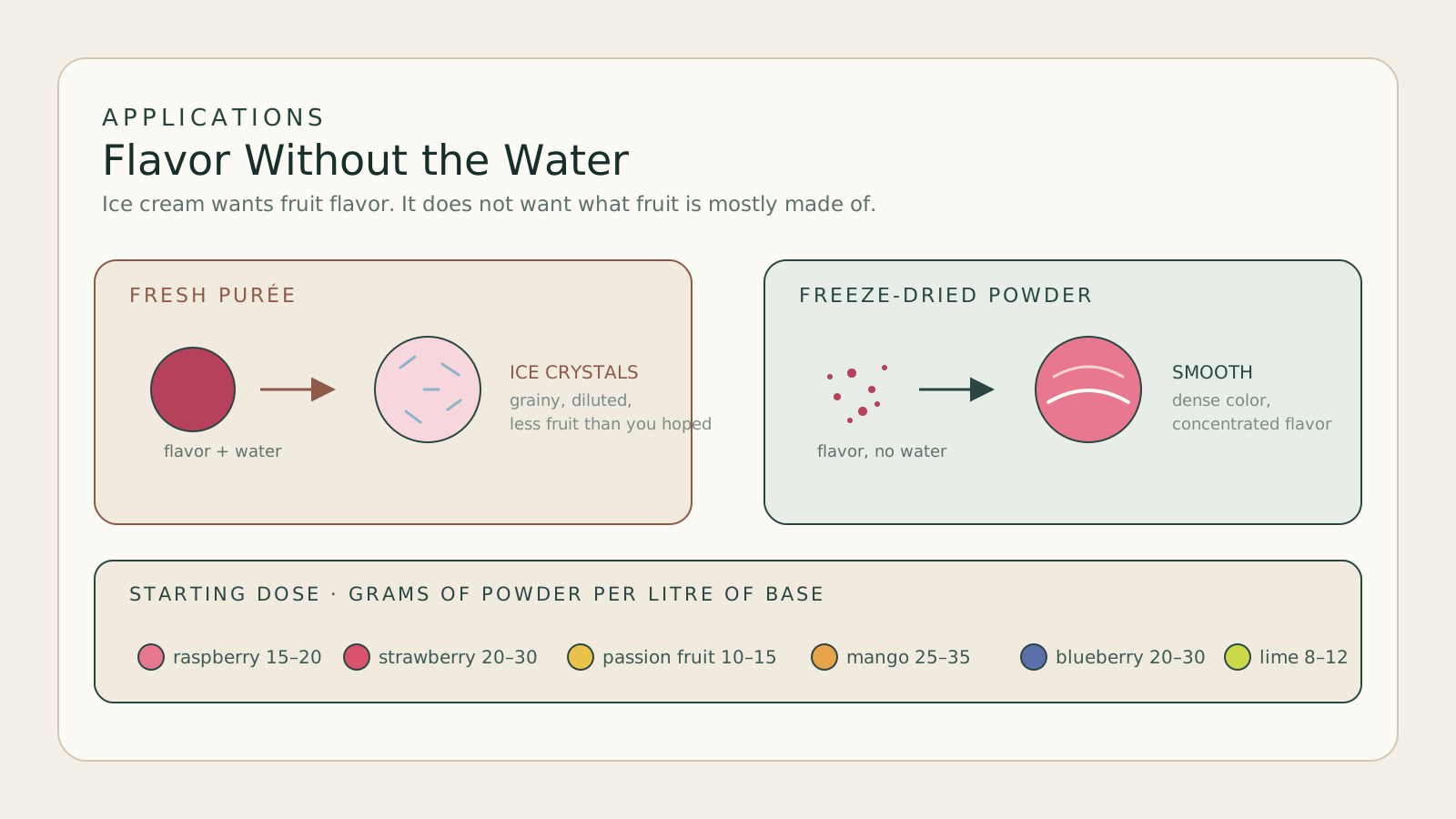
- Water is the enemy of texture in frozen desserts; freeze-dried fruit adds concentrated flavor and color with almost none of it, which is why powders work where purées make ice crystals.
- Blitz to a powder and whisk it into the warm base or the liquid before churning — added as pieces, it will rehydrate into soft chewy specks rather than dispersing.
- Start around 15–25 g of powder per liter of base and adjust; freeze-dried fruit is intensely flavored and it is easy to overshoot into something that tastes like candy.
- Freeze-dried fruit also brings acidity and natural sugar, both of which affect how hard the finished dessert freezes — taste and adjust sugar rather than treating it as a neutral flavoring.
Home ice cream has one persistent enemy, and it is not technique. It is water. Water forms ice crystals, ice crystals make ice cream grainy, and fresh fruit is mostly water. This is why the strawberry ice cream people make at home is so often icy and so much less strawberry-flavored than they hoped.
Freeze-dried fruit solves this problem almost by definition. It is the flavor and color of the fruit with the water removed — which is precisely the trade you want to make in a frozen dessert.
The direct answer
Blitz the freeze-dried fruit to a powder and whisk it into the base before churning. That is the whole technique.
Everything else — how much, which fruits, whether to also fold in pieces — is refinement. But the key move is to treat freeze-dried fruit as a flavoring ingredient in the base, not as a mix-in on top. Sprinkling it over a finished scoop is fine and delicious, but it is a garnish. Putting it in the base is what changes the ice cream.
Freeze-dried fruit is hygroscopic — it pulls in moisture. Drop pieces into a liquid base and they will hydrate, but slowly and unevenly, ending up as soft, chewy fragments suspended in an otherwise plain ice cream. Ground to a powder, the same fruit dissolves and disperses, and its flavor goes everywhere.
The method
1. Make the powder. A food processor, spice grinder, or blender will do it in twenty seconds. A sealed bag and a rolling pin works too, though you will get a coarser grind. Some fruits (mango, banana) have enough natural sugar and residual oil to clump slightly — that is fine.
2. Sieve if you care about smoothness. Berries with seeds — raspberry, blackberry, strawberry, passion fruit — will leave seed fragments that survive churning and read as grit. Sieve the powder through a fine mesh and discard what stays behind. For a rustic result, skip it.
3. Add the powder to the base.
- For a custard base, whisk the powder into the warm base after cooking, before chilling. Warmth helps it dissolve, and the chill time lets it fully hydrate.
- For a no-cook or Philadelphia-style base, whisk it directly into the cream and milk and let it stand 20–30 minutes so the powder rehydrates rather than staying gritty.
- For sorbet, whisk into the sugar syrup while it is still warm.
4. Chill fully, then churn as normal. No other adjustments to the process.
5. Optionally, fold in pieces at the end. Add whole or broken freeze-dried pieces in the last few seconds of churning if you want textural contrast. Accept that they will soften within a day.
How much to use
This is where most people overshoot. Freeze-dried fruit is concentrated by roughly the same factor as the water it lost, and berry powders in particular are startlingly potent.
A workable starting point per liter of finished base:
| Fruit | Starting dose | Notes |
|---|---|---|
| Raspberry | 15–20 g | Very potent; sieve the seeds |
| Strawberry | 20–30 g | Milder than raspberry; more is fine |
| Passion fruit | 10–15 g | Extremely acidic; go slowly |
| Mango | 25–35 g | Mild and sweet; needs volume |
| Banana | 25–35 g | Very mild once frozen |
| Blueberry | 20–30 g | Great color, moderate flavor |
| Dragon fruit | 20–30 g | Mostly color; flavor is subtle |
| Lemon / lime | 8–12 g | Acid-forward; use as an accent |
Two adjustments to make against your palate:
- Cold mutes flavor. A base that tastes correctly fruity at room temperature will taste underpowered frozen. Aim for a base that tastes slightly too strong warm.
- Fat mutes flavor too. A rich custard base needs more fruit powder than a lean sorbet syrup to reach the same perceived intensity.
What the fruit does to the freeze
Freeze-dried fruit is not a neutral flavoring. It brings two things that change how the dessert sets.
Sugar. Fruit sugar depresses the freezing point, giving a softer scoop. At normal doses this is negligible; at heavy doses of a sweet fruit like mango or banana it is real. If you are pushing 40 g/L of a sweet powder, trim the recipe's added sugar by a corresponding amount or you will end up with something that never firms up properly.
Acid. Berries, citrus, and passion fruit bring meaningful acidity. In a dairy base, high acid can cause the mixture to look slightly curdled or grainy, particularly if added to a hot base. Two defenses: add the powder to the base after cooking rather than during, and do not push acidic fruits past the doses above without tasting.
Dragon fruit powder delivers spectacular magenta color and very little flavor. This makes it a genuinely useful tool — you can color a base intensely without changing how it tastes, and pair it with a fruit that has flavor but no color. It also means that if you are relying on dragon fruit to taste like something, you will be disappointed.
Sorbet is a different problem
Ice cream and gelato benefit from freeze-dried fruit because they need flavor without water. Sorbet is the opposite case: it is fruit and water, and it needs the body that fruit solids provide.
So in sorbet, freeze-dried fruit is best used as an intensifier rather than a base. The situations where it earns its place:
- Rescuing off-season fruit. Supermarket raspberries in February make a thin, pale sorbet. Ten grams of raspberry powder in the syrup restores the flavor and color the fruit did not have.
- Building a flavor that has no good purée. Passion fruit, lychee, and dragon fruit are easier to source freeze-dried than as good-quality purée, at least outside their season.
- Adding acidity and aroma without thinning. Any time you want more fruit character but adding more juice would make the sorbet icy.
A sorbet made entirely from reconstituted freeze-dried fruit is possible but rarely worth it. You are adding water back to something that had water removed at considerable expense, and the result lacks the pulp and pectin that give real sorbet its body.
Combinations worth trying
- Strawberry powder in a buttermilk base. The acidity of buttermilk and the acidity of strawberry reinforce each other; the result tastes brighter than strawberry ice cream usually does.
- Raspberry powder rippled, not mixed. Whisk raspberry powder into a small amount of the base to make an intensely concentrated paste, then ripple it into the churned ice cream. You get streaks of near-black raspberry against pale cream.
- Mango powder in a coconut base. Mango's mildness gets lost in dairy; coconut fat carries it well and the flavors are naturally aligned.
- Lemon or lime powder in a vanilla gelato. A small dose reads as brightness rather than as lemon — it lifts the vanilla instead of competing with it.
- Banana powder for banana ice cream that is not brown. Fresh banana oxidizes and the ice cream turns grey. Freeze-dried banana does not, so the colour stays clean.
The practical read
Freeze-dried fruit is not a shortcut in frozen desserts. It is a solution to a specific structural problem: you want fruit flavor, and fruit brings water, and water ruins the texture.
Grind it, sieve it if there are seeds, whisk it into the base, and start conservatively. Then taste the base warm and push it further than feels right — because the freezer is about to take a third of that flavor away.
Frequently Asked Questions
Can I just stir chunks of freeze-dried fruit into ice cream?
You can, but understand what happens: the pieces will pull moisture from the base and turn soft and chewy within hours. That can be pleasant — chewy strawberry pieces in vanilla are a legitimate result — but it is not the same as flavoring the ice cream. For flavor, use powder in the base. For texture contrast, fold pieces in at the very end and eat it soon.
How much freeze-dried fruit powder should I use?
A reasonable starting range is 15 to 25 grams of powder per liter of finished base, though it varies enormously by fruit. Raspberry and passion fruit are extremely potent; banana and pear are mild. Make the base, add powder incrementally, and taste — remembering that frozen dessert tastes noticeably less flavorful cold than it does warm.
Does freeze-dried fruit make ice cream freeze harder or softer?
Slightly softer, generally, because it adds sugar and acid to the base, and both depress the freezing point. The effect is small at typical doses. If you go heavy on a very sweet fruit powder, consider trimming the added sugar in the recipe so the total does not push the mixture into a texture that will not set.
Is freeze-dried fruit good for sorbet, where you actually want fruit flavor to dominate?
It works, but it is usually a supplement rather than a replacement. Sorbet needs fruit solids and body, which purée provides. Freeze-dried powder is excellent for intensifying an existing purée-based sorbet — boosting a mediocre off-season raspberry sorbet, for example — without thinning it further.