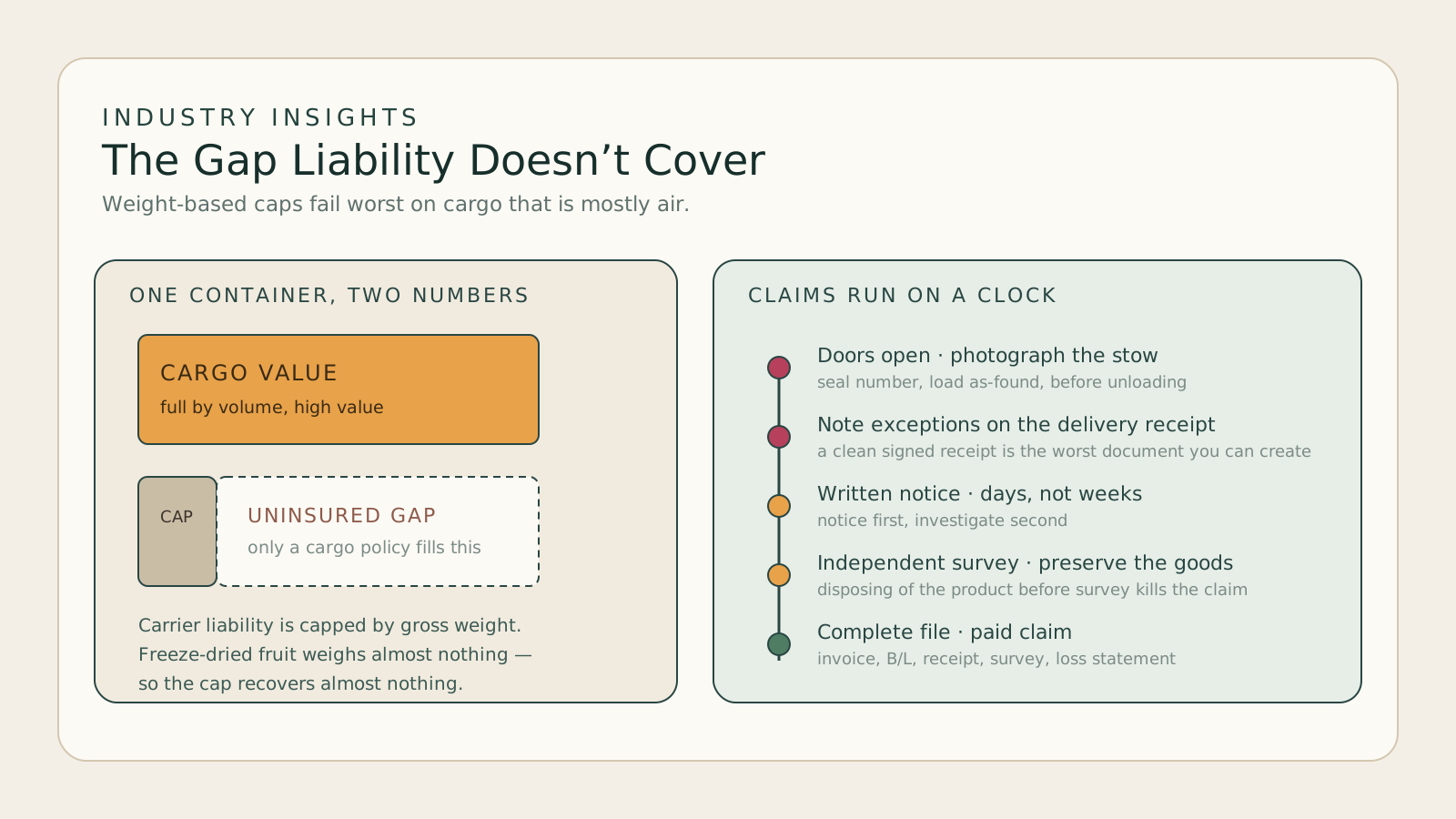
- Carrier liability under standard sea-freight rules is capped by weight — which is close to worthless for freeze-dried fruit, one of the lowest-density food cargoes there is.
- The Incoterm decides who bears risk of loss at each point, but it does not decide who is insured; only a policy does that.
- The two claims that actually happen are moisture ingress and crush damage, and both are provable only if someone documents the container at the moment it is opened.
- Claims are usually lost on paperwork and timing, not on merit — notice deadlines and survey timing are unforgiving.
A container of freeze-dried mango arrives at the warehouse. The doors open, and the smell is wrong — faintly damp, and the top layer of cartons is stained. Inside, the fruit has gone from crisp to leathery. The cargo is worth six figures. The carrier's liability, calculated under the standard rules, might be a small fraction of that.
This is the moment most buyers discover that carrier liability and cargo insurance are entirely different things, and that they only had one of them.
The direct answer
Carrier liability is not insurance. It is a capped, fault-based obligation that a carrier owes under the contract of carriage and the governing convention or statute. The cap is typically calculated per package or per kilogram of gross weight — and freeze-dried fruit is one of the lightest high-value food cargoes in commerce.
That mismatch is the whole problem. Freeze-dried fruit fills a container by volume long before it fills it by weight. A weight-based liability cap therefore recovers a small fraction of the cargo's value. Insurance is the only mechanism that covers the gap.
Most cargo-liability regimes were designed around dense goods — machinery, metals, packed foodstuffs. A cargo that is mostly air by weight sits at the far end of the value-to-weight curve, exactly where weight-based caps fail worst. Freeze-dried fruit, freeze-dried powders, and lightweight packaging are all in this category.
Incoterms decide risk, not cover
Buyers routinely conflate these. The Incoterm in the contract answers one question: at what point does risk of loss transfer from seller to buyer?
- Under EXW and FOB, risk passes to the buyer early — at the seller's premises or when goods are loaded on board. Almost the whole ocean voyage is the buyer's risk.
- Under CIF and CIP, the seller must arrange insurance, but risk still passes to the buyer at loading. The seller is buying a policy for the buyer's benefit.
- Under DDP, the seller bears risk almost all the way to the buyer's door.
The trap sits inside CIF. The default insurance obligation under the ICC's rules for CIF is minimum cover — a narrow named-perils policy, not an all-risks policy. It may not respond to the kind of gradual moisture damage that a damp container produces. Buyers who assume "CIF means I am covered" often find their claim falls outside the policy's scope.
If you want all-risks cover on a CIF shipment, it has to be specified in the sales contract, and you should ask to see the certificate of insurance before the goods sail — not after they arrive.
The two claims that actually happen
Freeze-dried fruit fails in two characteristic ways in transit.
Moisture ingress
This is the big one. The mechanisms:
- Container rain. Warm, humid air trapped in the container condenses on the ceiling as the vessel passes through temperature changes, and drips onto the cargo. It is common enough on long ocean routes that desiccant bags are standard practice for hygroscopic cargo.
- Door seal and roof panel failures. Old containers leak. A hairline crack in a roof panel will find its way into a carton in a rainstorm.
- Wet floors at loading. A container loaded onto a damp floor, or with wet pallets, brings its own moisture with it.
Freeze-dried fruit does not need much. Water activity rises, crunch disappears, and the product is unsellable even though it looks intact from the outside. It is a total-value loss without a dramatic visual, which makes documentation critical.
Crush and compression damage
Because the cargo is light, it invites bad stowage. Pallets get stacked higher than the cartons are rated for, heavier freight gets loaded on top in an LCL consolidation, and the boxes deform. The fruit inside fractures into fines. A carton that arrives visibly intact can hold a bag of powder.
In a less-than-container-load consolidation, your pallets share space with someone else's freight. You do not control what gets stacked on top of a light, crushable cargo. If you are shipping LCL, carton compression rating and stack-height labelling stop being paperwork and start being the only thing protecting the product.
Claims are won and lost on process
The underlying merits of a claim matter less than most people expect. What decides outcomes is whether the claimant did the right things in the right order, quickly.
1. Note the damage on the delivery receipt. Before the driver leaves. A clean receipt signed at delivery is the single most damaging document in a later dispute — it is evidence you accepted the goods in apparent good order.
2. Give written notice immediately. Notice periods are short and unforgiving, sometimes as little as three days from delivery for damage that was not apparent on inspection. A missed notice deadline can extinguish an otherwise valid claim. Send notice first; investigate second.
3. Photograph the container before unloading. Doors closed, seal number visible, then doors open, then the load in place. A photograph of the stow as-found is far more persuasive than photographs of damaged cartons on the warehouse floor, because it shows how the cargo was loaded.
4. Get a survey. For anything material, an independent surveyor's report is the document underwriters actually rely on. Call the insurer's claims line and ask them to appoint one; do not unload the container in the meantime if you can avoid it.
5. Preserve the evidence. Keep damaged cartons and product until the claim resolves. Disposing of the goods before the surveyor sees them is a common, and fatal, mistake.
6. Assemble the paper. Commercial invoice, packing list, bill of lading, delivery receipt with exceptions noted, temperature or humidity logs if any, the survey report, and a calculated loss statement. Claims that arrive as a complete file get paid; claims that arrive as an email complaint get questions.
What to actually buy
For most freeze-dried fruit importers, the practical answer is a marine cargo policy on all-risks terms, either an open cover for regular shipments or a per-shipment certificate.
Things worth checking in the policy:
- Basis of valuation. Usually invoice value plus freight plus a markup (commonly 10%). Confirm it, because it determines your recovery.
- Warehouse-to-warehouse clause. Cover that ends at the port is not cover that ends at your door.
- Named exclusions relevant to your cargo. Inherent vice, insufficient packing, and delay are common exclusions. A moisture claim can be resisted on "insufficient packing" grounds if desiccants were not used and the cargo is known to be hygroscopic.
- Deductible. On a high-value, low-weight cargo, a deductible set as a percentage of value can be substantial.
That last exclusion is worth dwelling on. If your supplier ships a hygroscopic product in an ocean container with no desiccant and no moisture barrier, an underwriter may well argue the loss was caused by inadequate packing rather than a fortuitous peril. Good packing is not just product protection — it is claim protection.
The practical read
Three questions to answer before your next container sails:
- Who bears the risk during the ocean leg? Read the Incoterm, not the sales pitch.
- Is there an all-risks policy on this cargo, and have I seen the certificate? If the answer is "the supplier handles it," you do not know.
- Does the packing specification anticipate moisture? Desiccant, liner bags, moisture-barrier cartons, and a container inspection at loading are cheap. A rejected container is not.
The freeze-dried fruit trade is unusually exposed here because the product is valuable, light, and destroyed by exactly the thing containers are worst at keeping out. Carrier liability will not save the shipment. A policy and a documented process might.
Frequently Asked Questions
Why is carrier liability so low for freeze-dried fruit specifically?
Because standard sea-freight liability limits are calculated per package or per kilogram of gross weight, whichever is higher, and freeze-dried fruit is extraordinarily light for its value. A container that is full by volume may weigh very little, so a weight-based cap recovers a small fraction of what the cargo is actually worth.
Does buying CIF mean I am fully insured?
Not necessarily. CIF requires the seller to arrange insurance, but the default level of cover under the Incoterms rules is a minimum-cover policy, which is narrower than most buyers assume. If you want broader cover, it has to be specified in the contract — otherwise you may be relying on a policy that does not respond to the damage you actually suffer.
What is the single most common cause of a freeze-dried fruit cargo claim?
Moisture. Container rain from condensation, a leaking door seal, or a damaged roof panel will soften an entire pallet, and freeze-dried fruit is unusually sensitive to it. Crush damage from poor stowage is second — the product is light, so pallets get stacked, and the pieces fracture.
How long do I have to file a claim?
It depends on the mode and the contract, but notice periods are short and often measured in days from delivery — sometimes as little as three. Missing a notice deadline can bar a claim regardless of how strong the underlying evidence is, which is why the first action on a suspect container is written notice, not investigation.
Primary sources & further reading
- Incoterms 2020 Rules International Chamber of Commerce Referenced for the allocation of risk of loss and the insurance obligations that attach to CIF and CIP terms.
- Carriage of Goods by Sea Act (46 U.S.C. § 30701 note) U.S. Government Publishing Office Referenced for the statutory package limitation on ocean carrier liability that applies to U.S. inbound and outbound shipments.
External links open in a new tab. We do not receive compensation from any organization listed; sources are referenced because they are primary, current, and publicly verifiable.