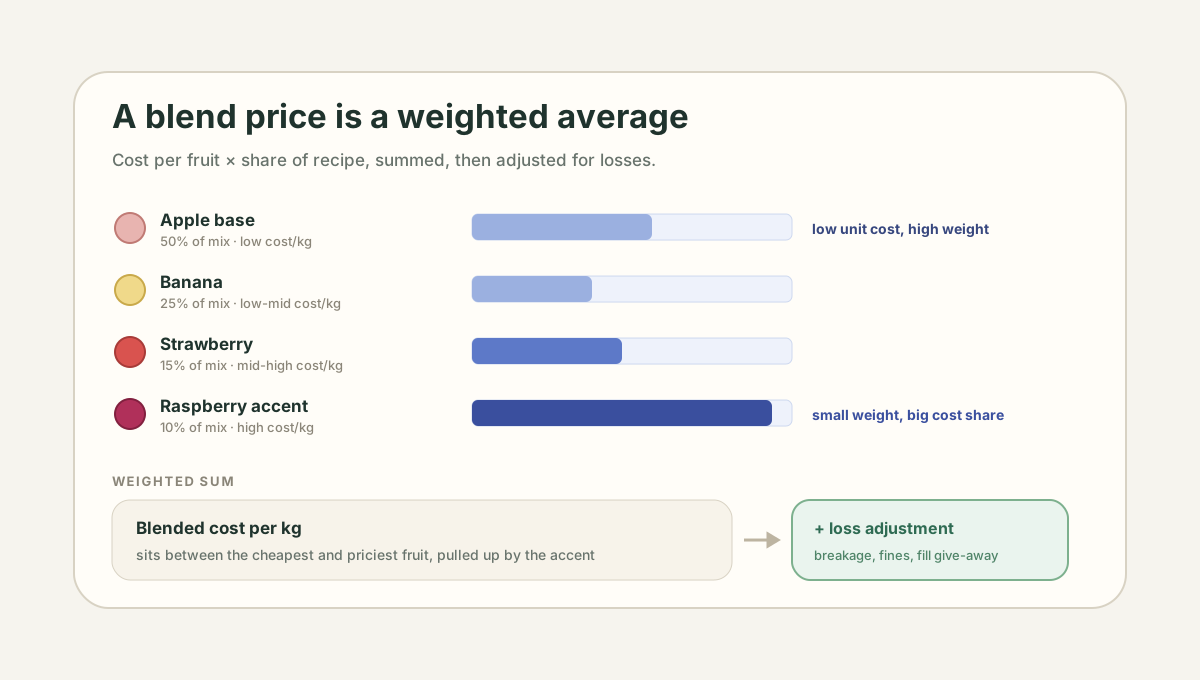
- A blend's cost is a weighted average of each fruit's landed cost times its share of the recipe, adjusted for blending and packaging losses.
- Because fruits differ widely in yield and price, shifting a few points of ratio toward or away from a premium fruit can move the whole blend's cost noticeably.
- Buyers should ask for the blend ratio and the basis of each fruit's cost, not just a single blended price, so they can see what is driving the number.
On the shelf, a mixed-berry or tropical freeze-dried blend looks like a single product with a single price. Behind that price is a small spreadsheet: several fruits, each with its own cost, combined in a specific ratio, then adjusted for the losses that happen when you mix and pack them.
Buyers who treat a blend as one opaque number are often surprised by quotes that seem high or by price changes that seem arbitrary. Understanding the underlying math makes both easier to interpret and to negotiate.
The direct answer
The cost of a freeze-dried fruit blend is a weighted average: each fruit's landed cost multiplied by its share of the recipe, summed across all fruits, then adjusted upward for blending and packaging losses.
That means the blend price is driven less by any single fruit and more by the combination. A modest share of an expensive fruit can dominate the number, and a change in ratio can move the cost more than a change in any one fruit's price.
Why the fruits differ so much to begin with
Before the ratio even matters, the individual fruits arrive at very different costs, and two factors explain most of the gap.
The first is yield. Freeze-drying removes water, so the fresh-to-dried ratio depends on how much water the fruit carried. A high-water fruit can require many kilograms of fresh input for a single kilogram of finished product, while a denser fruit needs less. That yield ratio is baked directly into the finished cost.
The second is raw price and fragility. Some fruits are simply more expensive fresh, more seasonal, or more prone to breakage during processing. A delicate berry that shatters into fines carries more effective cost than a sturdy fruit that survives handling cleanly.
The result is a lineup where a base fruit might be inexpensive and a feature fruit might cost several times more per finished kilogram. The blend recipe then decides how much of each cost the buyer actually pays for.
The weighted-average math in plain terms
Blend costing is easier to reason about with a simple illustration. Imagine a four-fruit mix built from a cheap base and a premium accent.
Suppose the recipe is 50 percent apple, 25 percent banana, 15 percent strawberry, and 10 percent raspberry. Each fruit has its own finished cost per kilogram. The blend cost is each fruit's cost times its percentage, added together.
The instructive part is what happens at the edges of the recipe. The 50 percent apple share contributes a lot of weight at a low cost, holding the average down. The 10 percent raspberry share is small by weight but, because raspberry is expensive, it can contribute a disproportionate slice of the total cost. That is why the "little bit of premium fruit" in a blend is often the line that moves the price.
In many blends, the most expensive fruit is a minority of the weight but a major share of the cost. When a quote rises, that ingredient is often the reason, even though it is the smallest part of the recipe.
Where losses quietly raise the number
The clean recipe math assumes every kilogram blended becomes a kilogram shipped. In practice it does not.
Blending mixes fragile pieces together, and every transfer, screen, and fill step generates some breakage and fines. Material that falls below the size spec, or that ends up as powder at the bottom of a tote, does not sell as premium blend. That shrinkage means the effective cost per saleable kilogram is a little higher than the raw ratio suggests.
Packaging adds its own small overheads: give-away from fill-weight tolerance, rejected packs, and the handling loss of moving a hygroscopic product through a controlled environment. None of these are large individually, but together they explain why a blend's real cost sits above the tidy weighted average.
A supplier who understands their process can quantify these losses. One who cannot may be absorbing them invisibly, which usually means they are priced in anyway.
How ratio changes become a lever
Because the cost is a weighted average, the blend ratio is the most powerful cost lever a buyer and supplier have, short of changing the fruits themselves.
Shifting a few points of weight from an expensive accent fruit toward a stable base fruit can lower the blended cost meaningfully while keeping the general character of the mix. Conversely, increasing the premium share to improve appearance or flavor raises the cost quickly.
This is a design decision, not just a cost trick. Push the ratio too far toward cheap filler and the blend starts to look and taste like a lower-tier product, which can cost more in lost sales than it saves in ingredients. The point is to make the tradeoff on purpose, with the math visible, rather than discovering later that a price cut hollowed out the product.
What buyers should ask for
The practical takeaway is to refuse to treat a blend as a single number. A useful quote request asks for the fruit ratio, the cost basis for each fruit, the yield assumptions behind those costs, and how breakage and fines are handled.
With that breakdown, a buyer can compare two suppliers fairly, see whether a price gap comes from the recipe or the processing, and identify which fruit to adjust if the target cost is missed. Without it, every negotiation is guesswork against an opaque average.
A supplier confident in their costing will usually share this structure, even if they hold exact input prices close. A supplier who resists any breakdown at all is worth a second look.
What this means for product developers
For brands building a blend, the lesson is that the recipe is a financial document as much as a sensory one. The fruits you feature for color and flavor are often the ones setting your cost floor, and the base fruits you barely think about are doing the quiet work of keeping the average affordable.
Designing a blend well means deciding, deliberately, how much premium character you are buying and where a base fruit can carry weight without dragging down the product. Getting that balance right is what separates a blend that hits its margin from one that constantly fights its cost.
Bottom line
A multi-fruit freeze-dried blend is priced as a weighted average of its ingredients, adjusted for the losses that come with mixing and packing them. The cheapest fruit holds the average down, the most expensive fruit often drives the price, and the ratio is the lever that connects the two. Buyers who ask for the recipe and cost basis behind a blend quote can read the number instead of just reacting to it.
Frequently Asked Questions
Why does a freeze-dried fruit blend cost more than the cheapest fruit in it?
Because the blend's cost is a weighted average across all its fruits. Even a small share of an expensive, low-yield fruit like raspberry or mango pulls the average up well above the cost of a cheaper base fruit like apple or banana.
What makes some fruits so much more expensive to freeze-dry?
The biggest drivers are the fresh-to-dried yield ratio and the raw fruit price. High-water, low-solids fruits need much more fresh input per kilogram of finished product, and delicate or seasonal fruits carry higher raw costs and more breakage.
How do losses affect blend cost?
Every handling step adds a little loss. Blending, screening, and filling create fines and breakage that do not make it into a saleable pack, so the effective cost per shipped kilogram is slightly higher than the raw recipe math suggests.
What should a buyer ask about a blend quote?
Ask for the fruit ratio, the cost basis for each fruit, the yield assumptions, and how breakage and fines are handled. A single blended price with no breakdown makes it hard to compare quotes or negotiate.
Can changing the blend ratio lower the cost without hurting quality?
Often yes, within limits. Shifting a few points toward a stable base fruit can reduce cost while keeping the visual and flavor character, but pushing too far can make the blend look and taste like a cheaper product, so the tradeoff should be deliberate.