- Force majeure excuses a party from performing when an event outside its control makes performance impossible, but the definition and the list of covered events vary widely between contracts.
- A generic force majeure clause may not clearly cover a poor harvest, so freeze-dried fruit contracts often add explicit crop-failure or short-crop language.
- The real questions are what counts as a triggering event, whether it excuses or only delays performance, and how scarce supply gets allocated among a supplier's customers.
- Buyers can strengthen their position with allocation priority, notice requirements, and the right to source elsewhere if a shortfall runs long, rather than relying on the boilerplate.
A freeze-dried fruit contract can be precise about price, specification, and delivery and still leave the single biggest risk half-defined. That risk is the crop. Strawberries, mangoes, and blueberries do not arrive on a schedule set by purchase orders; they arrive when the season and the weather allow, in the quantity and quality the growing year produced. When a harvest comes up short, the contract's force majeure and crop-failure language decides who absorbs the gap.
Most buyers skim past that clause because it reads like boilerplate that never matters. In an agricultural supply chain, it is the opposite. It is the clause that governs the years you most need the contract to work.
The direct answer
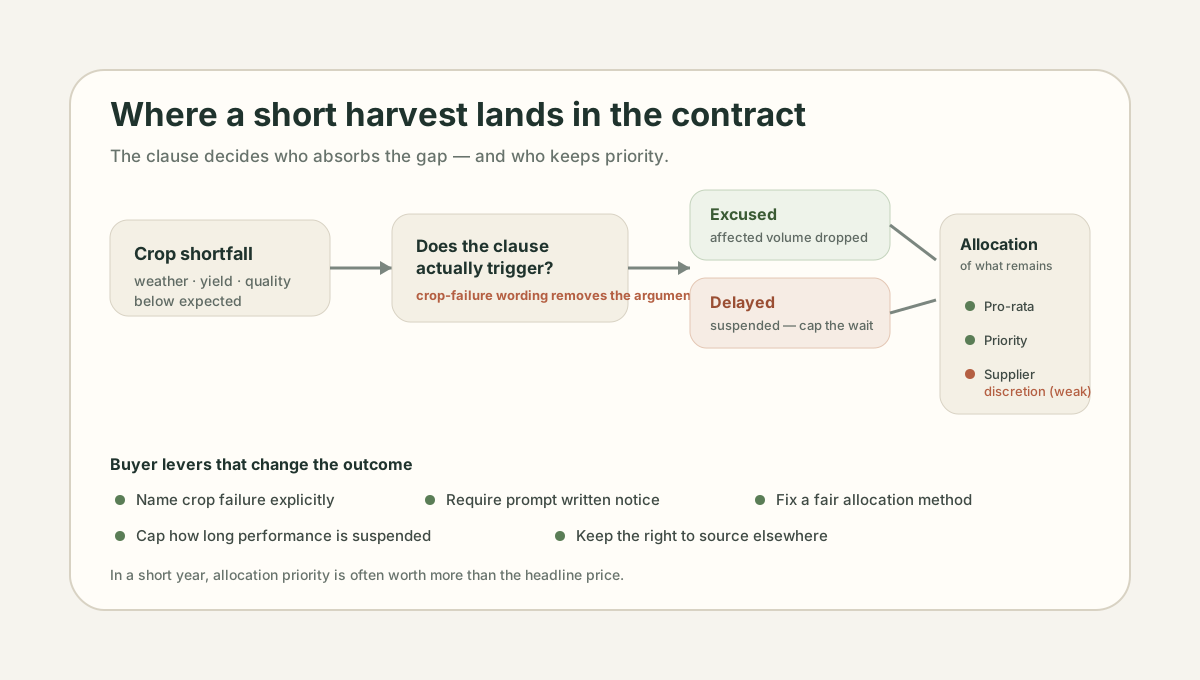
Force majeure excuses a party from performing when an event outside its reasonable control makes performance impossible or impracticable. In freeze-dried fruit, the clause matters because the raw material is a weather-dependent crop, and the practical questions are three: does a poor harvest actually trigger the clause, does triggering it delay performance or cancel it, and how is whatever supply exists divided among the supplier's customers.
Get those three answers wrong and a "protected" buyer can still be left short in exactly the year they needed cover.
What force majeure does and does not do
The Legal Information Institute describes force majeure as a contract provision that frees a party from liability when an extraordinary event beyond its control prevents it from performing, with the crucial caveat that whether an event qualifies depends on how the clause is drafted. There is no universal list.
That last point is where freeze-dried fruit buyers get surprised. A clause that lists "floods, fires, storms, earthquakes, war, and acts of God" reads comprehensive, but it may not clearly answer whether a below-average but not catastrophic harvest counts. A cool spring that cuts yield by a third is not obviously an "act of God" in the way a hurricane is. If the clause is vague, both sides can argue, and argument is the last thing a buyer wants when inventory is running out.
Why crop-failure language is added on purpose
Because the general clause can be ambiguous about harvests, well-built agricultural contracts add explicit crop-failure or short-crop wording. This language names the specific risk: if the relevant crop fails, or falls below a defined level of yield or quality, the supplier's obligation for the affected volume is excused or reduced.
"Crop failure" can mean total loss, or it can mean a shortfall below a stated threshold. A supplier prefers a loose definition that is easy to invoke. A buyer prefers a specific one, tied to a named crop and region and a measurable shortfall, so the excuse cannot be stretched to cover ordinary market tightness.
The difference is not academic. A tightly written crop-failure clause protects the supplier from genuinely impossible situations while preventing the same clause from becoming a convenient exit whenever the spot market moves against them.
Excuse versus delay
The second question is what the clause actually does once triggered. Two common structures behave very differently:
- Suspension. Performance is paused for the duration of the event, then resumes. The order is not cancelled; it is late. For a seasonal crop, "resume after the event" can mean waiting until the next harvest, which may be a year away.
- Termination. If the disruption continues beyond a defined period, one or both parties may cancel the affected volume. This gives the buyer a clean exit to source elsewhere rather than waiting indefinitely.
A buyer who assumes force majeure means "the deal is off, I'll buy elsewhere" can be trapped by a suspension clause that keeps the contract technically alive while delivering nothing. The safest arrangements pair suspension with a time cap: performance is suspended, but if it is still suspended after a set number of days, the buyer may terminate and cover the shortfall on the open market.
Allocation is often the clause that really matters
Suppose the harvest is not zero, just short. The supplier has product, but less than its customers collectively ordered. Now the decisive question is not whether force majeure applies but how the remaining supply is split.
The Uniform Commercial Code's excuse provision reflects this directly: a seller whose capacity is impaired may allocate production among customers in a manner that is fair and reasonable. But "fair and reasonable" is a floor, not a formula, and contracts frequently spell out their own method. The options a buyer faces include:
- Pro-rata allocation, where every customer's shipment is cut by the same percentage.
- Priority allocation, where certain contracts are filled first and others absorb the shortfall.
- Supplier discretion, where the supplier decides, which is the weakest position for a buyer.
A buyer who negotiated a strong price but accepted "supplier discretion" allocation can watch their volume get cut while larger or higher-priority customers are kept whole. In a short year, allocation priority is frequently worth more than the headline price.
What buyers can actually negotiate
Force majeure is treated as untouchable boilerplate far more often than it needs to be. Practical, reasonable asks include:
- A definition of triggering events that explicitly names crop failure or short crop, tied to a specified crop, region, and measurable threshold.
- A prompt written-notice requirement, with supporting evidence, so a buyer learns of a shortfall early enough to react rather than at the missed delivery date.
- A stated allocation method, ideally pro-rata or priority, rather than open supplier discretion.
- A time cap on suspension, after which the buyer may terminate the affected volume.
- The right to cover, meaning the buyer can source the shortfall elsewhere during the disruption without breaching the contract or owing penalties.
None of these are exotic. They are the difference between a clause that protects both sides fairly and one that quietly shifts all the crop risk onto the buyer.
The practical takeaway
In freeze-dried fruit, the supply chain begins in a field, so the contract clause that handles bad harvests is not boilerplate; it is core risk management. Force majeure only helps a buyer if it clearly covers crop failure, states whether a shortfall delays or cancels the order, and defines how scarce supply gets allocated. The strongest position comes from reading that clause before signing, not during a shortage: name the crop risk explicitly, require early notice, pin down a fair allocation method, cap how long performance can be suspended, and keep the right to buy elsewhere. The year the clause matters is the year you cannot renegotiate it.
Frequently Asked Questions
What is force majeure?
Force majeure is a contract provision that excuses a party from performing its obligations when an extraordinary event outside its reasonable control prevents performance. Typical examples include natural disasters, war, and government action. What actually counts depends on how the specific clause is written.
Does force majeure automatically cover a bad harvest?
Not always. A general clause listing floods, storms, or 'acts of God' may or may not clearly apply to a below-average crop or poor quality year. Because freeze-dried fruit depends on agriculture, contracts often add specific crop-failure or short-crop wording so there is no argument about whether a weak harvest qualifies.
Does the clause cancel the order or just delay it?
It depends on the wording. Some clauses only suspend performance for the duration of the event, after which the obligation resumes. Others allow termination if the disruption lasts beyond a set period. A buyer needs to know which applies, because a long suspension can be as damaging as a cancellation.
What is allocation and why does it matter?
When a supplier has less product than its customers ordered, an allocation clause governs how the remaining supply is divided. Without a fair, defined method, a buyer can find their volume cut disproportionately while other customers are kept whole. Allocation priority is often more valuable than the force majeure definition itself.
What can a buyer negotiate?
Buyers can push for a clear definition of triggering events including crop failure, prompt written notice with evidence, a pro-rata or priority allocation method, a cap on how long performance can be suspended before the buyer may terminate, and the right to buy the shortfall elsewhere without penalty.
Primary sources & further reading
- Force Majeure Clauses — Checklist and Sample Language Legal Information Institute, Cornell Law School Referenced for the general legal definition of force majeure as excusing performance for events beyond a party's control, and the point that coverage depends on the specific clause.
- Uniform Commercial Code § 2-615, Excuse by Failure of Presupposed Conditions Legal Information Institute, Cornell Law School Referenced for the concept of commercial impracticability and for the rule that a seller with limited supply may allocate among customers in a fair and reasonable manner.
External links open in a new tab. We do not receive compensation from any organization listed; sources are referenced because they are primary, current, and publicly verifiable.