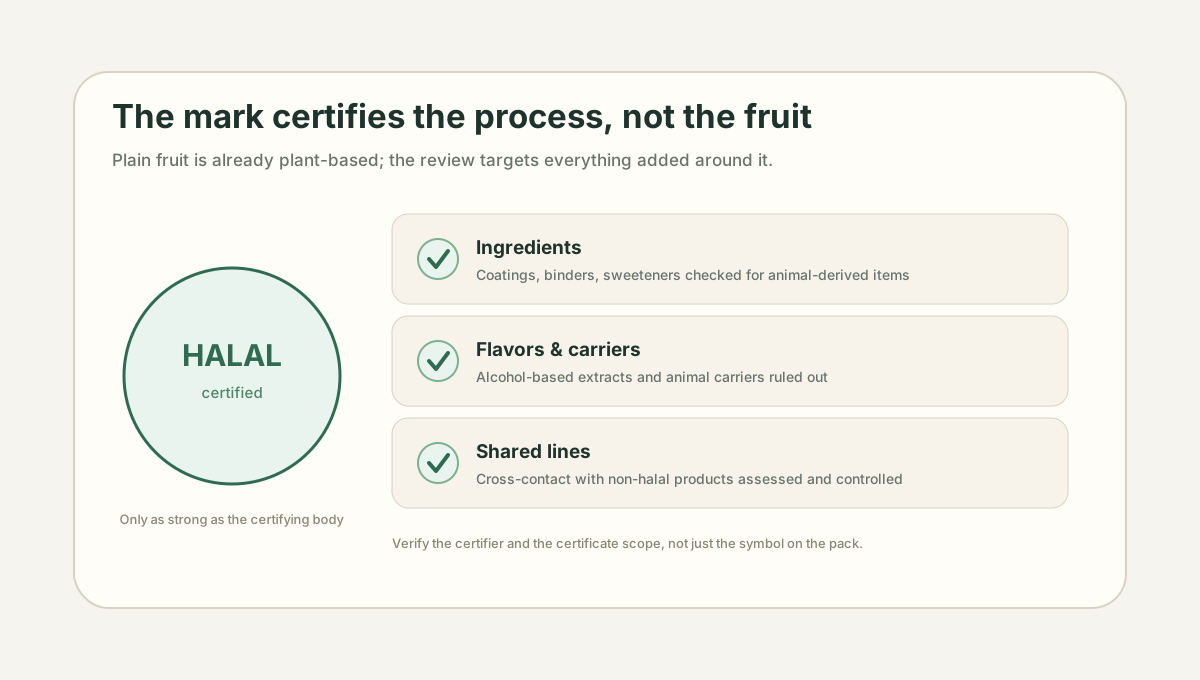
- A halal mark certifies that a qualified body reviewed the ingredients, processing aids, and facility practices, not that the fruit itself needed permission to be halal.
- For freeze-dried fruit the real questions are added ingredients, carriers, flavorings, and shared equipment with non-halal products, not the fruit.
- The mark is only as strong as the certifier behind it, so buyers who need halal status should confirm the certifying body and the scope of the certificate.
Fruit is a plant, and freeze-drying only removes its water, so a halal mark on a bag of freeze-dried strawberries can look redundant at first glance. If the fruit was always permissible, what is the symbol certifying?
The answer is that the mark is rarely about the fruit itself. It is about everything else that could have entered the product during processing, and about the formal verification that a qualified body looked for those things and did not find them.
The direct answer
A halal certification mark on freeze-dried fruit means that a recognized certifying body reviewed the product's ingredients, processing aids, and facility practices against its halal standard, and confirmed they comply. For plain fruit, that review focuses on additives, carriers, flavorings, and shared equipment rather than on the fruit, which is already plant-based.
In other words, the mark does not make the fruit halal. It documents that nothing in the process compromised a status the fruit already had.
Why plain fruit still gets certified
If single-ingredient fruit is generally considered halal on its own, buyers reasonably ask why the certification exists at all. There are a few practical reasons.
The first is buyer requirement. Many retailers, distributors, and manufacturers in halal-sensitive markets require certification on everything they stock, regardless of how obvious the status seems. Certification is the paperwork that lets the product into those channels.
The second is that "plain" is not always as plain as it looks. Once a product moves beyond a single fruit, ingredients and processing aids can appear that do raise real questions, and a certifier is positioned to catch them.
The third is trust at a distance. A buyer sourcing across borders cannot inspect every line personally. A credible mark is a way of transferring a facility audit into a symbol the buyer can rely on.
What the certifier actually reviews
For freeze-dried fruit, the substance of a halal review lands on a short list of process realities rather than on the fruit.
Added ingredients are the first area. A blend, a sweetened crisp, or a coated piece may include ingredients beyond fruit, and each has to be checked. Most plant ingredients are straightforward, but some coatings, glazes, or binders can be animal-derived.
Flavorings and carriers are the second. Natural and added flavors are sometimes carried on or extracted with substances that a halal standard scrutinizes, including alcohol-based extracts or animal-derived carriers. On plain fruit these are usually absent, but the certifier confirms rather than assumes.
Shared equipment is the third. If the same line also runs products containing non-halal ingredients, cross-contact becomes a question. The certifier assesses cleaning, scheduling, and segregation to decide whether the halal product is adequately protected.
On freeze-dried fruit, a halal review almost never turns on the fruit. It turns on additives, flavor carriers, and whether the line is shared. That is where the mark earns its value.
Why the certifying body matters
A halal mark is not a single global standard administered by one authority. Different certifying organizations apply different rule sets, and standards can vary between regions and market expectations.
This means two products can both display a halal mark and still reflect different levels of scrutiny. The symbol is only as meaningful as the organization behind it and the standard that organization enforces.
For a buyer, the implication is direct. If halal status is a genuine requirement for your market, the useful question is not simply "is it certified?" but "who certified it, and does that body meet the expectations of my customers?" A mark that satisfies one market's regulators or retailers may not automatically satisfy another's.
Reading the mark on a spec sheet
On the label, the mark is a symbol. On the spec sheet, it should correspond to a certificate, and that certificate is where the real information lives.
A useful certificate names the certifying body, identifies the specific product or facility covered, and carries a validity period. Scope matters: a certificate covering one product line or one facility does not automatically extend to everything the supplier makes. A buyer should confirm that the certificate actually covers the product being purchased, not a sibling product from the same company.
Validity matters too. Certification is time-limited and subject to renewal and re-audit. A current certificate is meaningful; an expired one is a flag to resolve before relying on the mark.
What buyers should ask suppliers
Because the value of the mark depends on details behind it, the practical path is to ask for those details rather than accept the symbol at face value.
Sensible requests include a copy of the current halal certificate, confirmation of the certifying body, and clarity on which products and facilities the certificate covers. For products beyond plain fruit, it is worth asking specifically about flavor carriers, coatings, and whether the line is shared with non-halal products.
A supplier serving halal markets should handle these questions routinely. Hesitation or an inability to name the certifier is itself informative.
What this means for product developers
For a brand deciding whether to pursue halal certification, the calculus is mostly about market access. If your channels or customers expect the mark, certification is the cost of entry, and for plain fruit it is usually straightforward to obtain because the underlying product is already compliant.
The complexity rises with the recipe. The moment you add coatings, flavor systems, or run on shared lines, certification stops being a formality and starts being a genuine review. Designing those elements with halal compatibility in mind from the start is far easier than retrofitting a product later.
Bottom line
A halal mark on freeze-dried fruit certifies that a recognized body reviewed the ingredients, processing aids, and facility practices and found them compliant. For plain fruit the fruit is not the concern; additives, flavor carriers, and shared equipment are. The mark is valuable when the certifier is credible and the certificate genuinely covers the product, which is why buyers who need halal status should verify the body and scope rather than rely on the symbol alone.
Frequently Asked Questions
Is freeze-dried fruit halal by default?
Plain, single-ingredient freeze-dried fruit is generally considered halal because fruit is plant-based and freeze-drying only removes water. A certification mark adds formal verification that no problematic additives, carriers, or cross-contact were introduced during processing.
What does a halal certifier actually check on freeze-dried fruit?
A certifier reviews the ingredient list and any processing aids, checks flavorings and carriers for animal-derived or alcohol-based components, and assesses whether the line is shared with non-halal products. It then audits the facility against its standard before issuing the mark.
Could freeze-dried fruit ever not be halal?
Yes, in specific cases. Added ingredients such as certain gelatin-based coatings, some flavor carriers, or alcohol-based flavor extracts could raise concerns, as could cross-contact on shared equipment. These are the situations a halal mark is designed to rule out.
Does a halal mark mean the same thing on every product?
Not exactly. Standards vary between certifying bodies and regions, so the rigor and scope can differ. The mark is only as meaningful as the organization behind it, which is why the specific certifier matters.
How is a halal mark different from a kosher mark on freeze-dried fruit?
Both certify that a qualified body reviewed ingredients and facilities against a religious standard, and for plain fruit both mostly address additives and shared lines. They follow different rule sets and different certifiers, so a product may carry one, both, or neither.