- 'Single-ingredient' has a checkable meaning: the ingredient statement should list exactly one item, the fruit itself.
- 'Just fruit,' 'nothing but fruit,' and similar front-of-pack phrases are marketing language, so confirm them against the ingredient list rather than trusting the slogan.
- Common additions that break a true single-ingredient claim include added sugar, juice concentrate, oil or anti-stick coatings, acidity or color agents, and fruit-based 'natural flavor.'
- For blends, single-ingredient applies per fruit: a strawberry-and-banana mix can still be clean if each fruit is listed with nothing added.
Two bags of freeze-dried strawberries can carry very similar promises on the front. One says "single ingredient." The other says "just fruit." They sound interchangeable, and shoppers treat them that way. But only one of those phrases points at something you can actually verify, and the difference is worth understanding before you decide a product is as clean as it looks.
The front of a package is designed to sell. The ingredient statement on the back is designed to be accurate, because that is the part the label is legally required to get right. When those two disagree, the back wins, and knowing how to read it turns a slogan into a fact you can confirm.
The direct answer
"Single-ingredient" means the product contains exactly one ingredient, the fruit, and you confirm it by checking that the ingredient statement lists only that fruit and nothing else. "Just fruit," "nothing but fruit," and similar phrases are front-of-pack marketing language with no fixed legal definition, so they are only as reliable as the ingredient list behind them. In practice you should treat the slogan as a claim to be checked and the ingredient statement as the evidence.
Why the ingredient statement is the anchor
FDA labeling rules require packaged foods to declare every ingredient by its common name, listed in descending order by weight. That requirement is what makes the ingredient statement trustworthy in a way a front-of-pack slogan is not. A marketing phrase can be crafted for impression; the ingredient list has to name what is actually in the bag.
So the reliable read of any "clean" claim is mechanical:
- Turn the pack over and find the ingredient statement.
- Count the items listed.
- For a true single-ingredient product, there should be exactly one: the fruit.
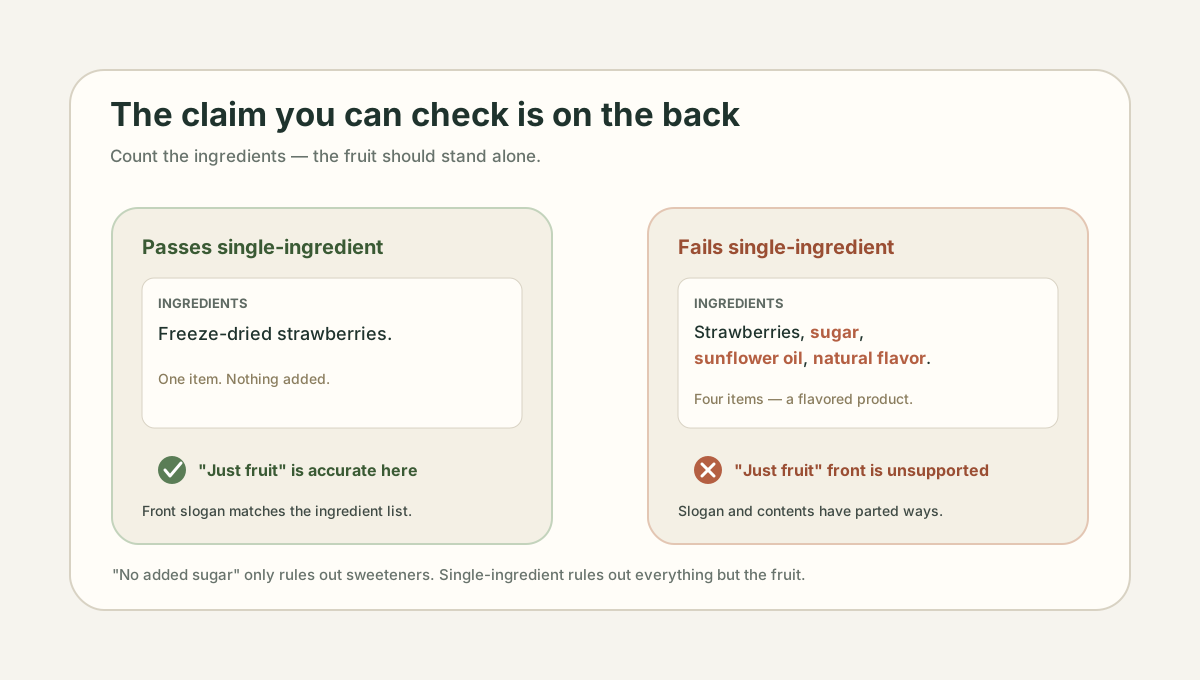
If the statement reads "Freeze-dried strawberries" and stops, the single-ingredient claim holds. If it reads "Strawberries, sugar, sunflower oil, natural flavor," the front-of-pack impression and the actual contents have parted ways.
What quietly breaks a single-ingredient claim
Most products that fail a strict single-ingredient test do not fail dramatically. They add one or two things that are easy to overlook:
- Added sugar or sweeteners. The most common addition, sometimes to offset a tart lot. Any added sugar makes the product multi-ingredient.
- Juice or juice concentrate. Fruit-juice concentrate used to sweeten still counts as an addition, and FDA treats sugars from added juice concentrates as added sugars. "Sweetened with fruit juice" is not the same as just fruit.
- Oils and anti-stick coatings. A light oil or coating is sometimes used to reduce sticking or clumping. It is a second ingredient.
- Acidity regulators. Citric acid or similar agents may be added for tartness or to protect color.
- Added color. Used to boost or standardize appearance, and a clear break from single-ingredient.
- "Natural flavor." This is the sneakiest one, because it sounds like it belongs in fruit. Even fruit-derived natural flavor is a separate declared ingredient, and its presence means the product is not single-ingredient.
Shoppers often skim past "natural flavor" because it sounds harmless and fruit-like. For the purpose of a single-ingredient claim it is not harmless: it is a second ingredient. A bag that lists "Freeze-dried mango, natural flavor" is a flavored product, not just mango.
"Just fruit" is a claim, not a guarantee
Because "just fruit" has no standardized legal definition, it lives or dies on the ingredient list. This does not make it dishonest. Plenty of "just fruit" packs are exactly that, and the phrase is a fair summary of a one-line ingredient statement. The point is simply that the phrase does not do the verifying for you. It is a headline; the ingredient statement is the article.
The practical habit is to let the two check each other. If the front says "just fruit" and the back lists only fruit, the claim is sound. If the front says "just fruit" and the back lists fruit plus anything else, the front is doing marketing work the contents do not support, and the ingredient statement is the version to believe.
Blends: single-ingredient applies per fruit
A mixed bag complicates the wording but not the logic. A strawberry-and-banana mix is obviously not "a single ingredient" as a whole. But it can still be a genuine "just fruit" product if the ingredient statement lists only the fruits, each with nothing added: "Freeze-dried strawberries, freeze-dried bananas." What you are checking is that no sugar, oil, flavor, or coating appears alongside the fruit names. The claim to apply to a blend is "nothing but fruit," verified fruit by fruit, rather than a literal single ingredient.
How this differs from "no added sugar"
It helps to keep these claims in their lanes, because they are not the same size. "No added sugar" addresses only sweeteners. A product can truthfully say "no added sugar" and still contain oil, natural flavor, or an anti-caking agent, which would fail a single-ingredient test. Single-ingredient is the stricter, narrower claim: it rules out everything, not just sugar. A shopper who wants nothing but fruit should read for single-ingredient, not stop at no added sugar.
The practical takeaway
"Single-ingredient" and "just fruit" aim at the same idea, but only the ingredient statement makes it checkable. Read the back of the pack, count the ingredients, and confirm the fruit stands alone; watch specifically for added sugar, juice concentrate, oils, acidity regulators, color, and "natural flavor," any of which turns a single-ingredient impression into a multi-ingredient product. For blends, apply the test per fruit. The slogan on the front is a starting point, not proof, and the ingredient list is the part of the label built to tell you the truth.
Frequently Asked Questions
What does 'single-ingredient' mean on freeze-dried fruit?
It means the product contains one ingredient, the fruit, with nothing added. The way to confirm it is the ingredient statement on the information panel, which for a true single-ingredient product should list only that fruit, for example 'Freeze-dried strawberries' and nothing else.
Is 'just fruit' a regulated term?
'Just fruit' and similar phrases are front-of-pack marketing claims, not standardized terms with a fixed legal definition. They are not automatically false, but they are only as accurate as the ingredient list behind them, which is the part the label is required to state truthfully.
What additions would break a single-ingredient claim?
Anything beyond the fruit itself: added sugar or sweeteners, juice or fruit-juice concentrate used to sweeten, oils or coatings to reduce sticking, acidity regulators such as citric acid, added colors, and 'natural flavor,' even if it is fruit-derived. Any of these makes the product multi-ingredient.
Can a fruit blend still be single-ingredient?
The phrase applies per component. A mixed bag of strawberry and banana is not a single ingredient overall, but it can still be a clean 'just fruit' product if the ingredient statement lists only the fruits, each with nothing added. The thing to check is that no sugar, oil, or flavor appears alongside them.
Does 'no added sugar' mean single-ingredient?
No. 'No added sugar' only addresses sweeteners. A product can carry that claim and still contain oil, natural flavor, or an anti-caking agent, which would make it multi-ingredient. Single-ingredient is a stronger, narrower statement than no added sugar.
Primary sources & further reading
- Ingredient Lists on Food Labels (Guidance) U.S. Food & Drug Administration Referenced for the requirement that packaged foods declare all ingredients by common name in descending order of predominance on the label.
- Added Sugars on the Nutrition Facts Label U.S. Food & Drug Administration Referenced for the definition of added sugars, including sugars from added juice concentrates used to sweeten, which is relevant to whether a product is truly just fruit.
External links open in a new tab. We do not receive compensation from any organization listed; sources are referenced because they are primary, current, and publicly verifiable.