- The allergen section covers two different things: allergens present as ingredients and allergens present in the facility that could reach the product through cross-contact.
- For plain freeze-dried fruit, the ingredient side is usually clean; the facility and shared-equipment side is where the real questions live.
- A 'may contain' or 'produced in a facility that also processes' statement is a cross-contact disclosure, not a guarantee, and its absence does not prove absence of risk.
- Buyers serving allergic consumers should ask for the supplier's allergen control program and, where needed, cleaning validation or testing evidence rather than relying on the label line alone.
A bag of plain freeze-dried strawberries looks like the safest thing in the world for an allergic customer. One ingredient, no coating, no additives. So the allergen section on the supplier's spec sheet can feel like boilerplate — a formality to skim past on the way to moisture and breakage limits.
It is not boilerplate. For a single-ingredient fruit, the allergen section is often the most important part of the sheet, because it describes something the ingredient list cannot: what else the facility handles, and how likely those other allergens are to reach the fruit.
Two questions hiding in one section
The allergen section answers two separate questions that are easy to blur together.
The first is about ingredients: does the product deliberately contain a major allergen? For plain freeze-dried fruit the answer is usually no. It becomes yes the moment the product is more than fruit — a yogurt-coated piece contains milk, a fruit-and-nut blend contains tree nuts, and some crisps use additives derived from allergen sources.
The second is about cross-contact: could an allergen that is not an ingredient still end up in the product because of the facility, the equipment, or the line it shares? This is where plain fruit gets interesting, because the fruit itself is clean but the room around it may not be.
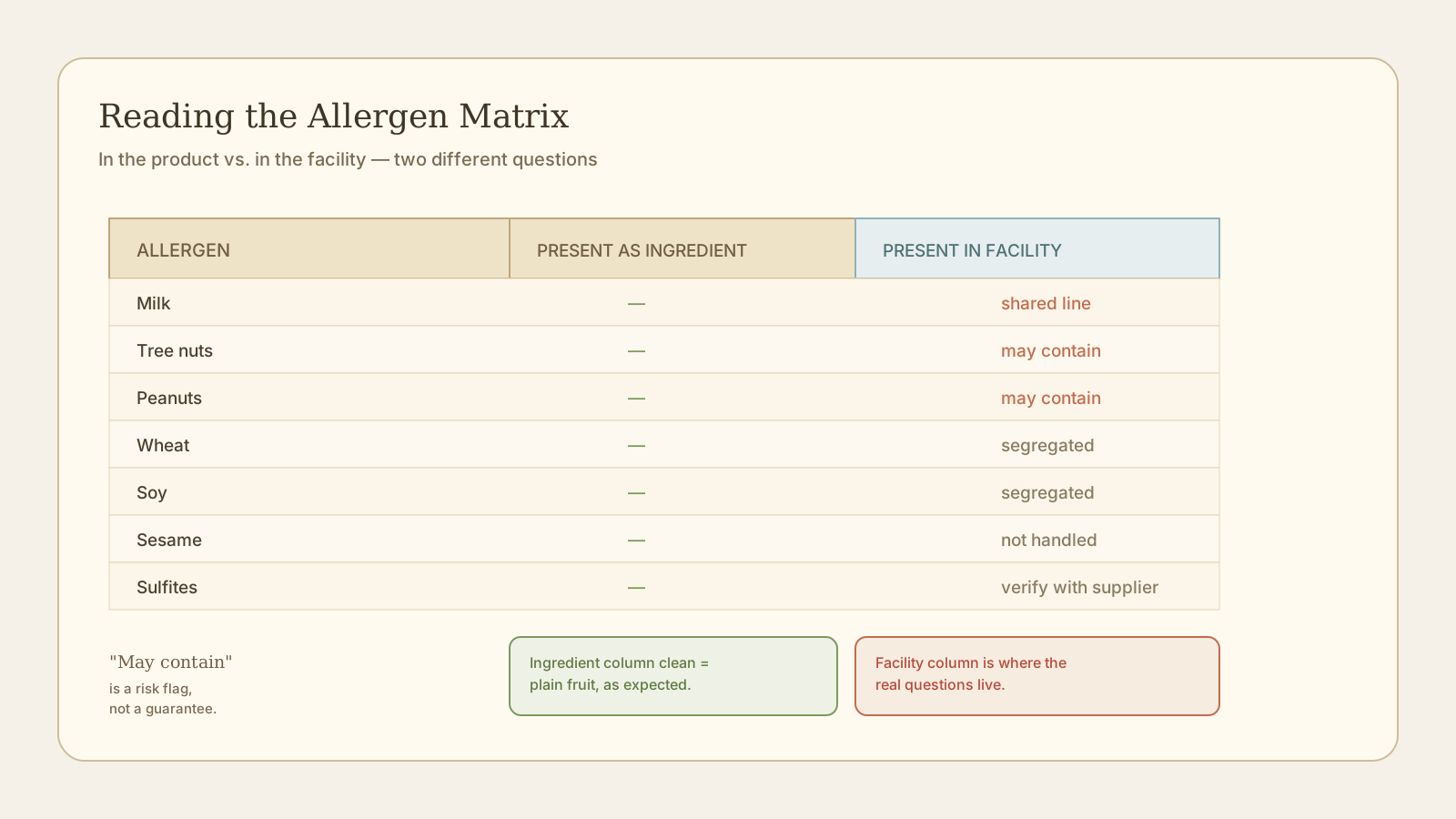
A well-built spec sheet keeps these two questions visually separate, often as an allergen matrix with columns for "present as ingredient" and "present in facility" or "on shared equipment." When you read the section, the first job is to figure out which question each entry is answering.
The major allergen groups to scan for
U.S. labeling recognizes a defined set of major allergens, and most spec-sheet matrices are organized around them: milk, eggs, fish, crustacean shellfish, tree nuts, peanuts, wheat, soybeans, and sesame, which was added as the ninth major allergen. Suppliers selling internationally may also list others recognized in their export markets, such as certain seeds, sulfites above a threshold, or specific tree species.
For freeze-dried fruit, the entries that most often light up on the facility side are tree nuts, peanuts, milk, wheat, and soy — because the same co-packers and warehouses that run fruit frequently run granolas, trail mixes, coated snacks, and bakery inclusions. Sulfites deserve a specific look too, since they appear in some dried-fruit contexts even when they are not intended in a given freeze-dried product.
What "may contain" really tells you
The advisory line — "may contain tree nuts," "produced in a facility that also processes peanuts," "made on shared equipment with milk" — is a cross-contact disclosure. It signals that the supplier believes there is a possibility of unintended allergen presence, usually because the facility or line also handles that allergen.
Two things about these statements matter for buyers:
- They are advisory, not quantitative. They do not tell you how much, how likely, or how well the risk is controlled. Two suppliers with identical wording may run very different levels of actual risk.
- Their use is largely voluntary and not standardized. A supplier may choose wording conservatively or omit it. That means the absence of a "may contain" line is not proof the risk is absent — it may only mean the supplier chose not to state it.
So the advisory line is a starting point, not an answer. It flags where to ask more questions.
An empty facility-allergen column can mean a genuinely segregated, fruit-only operation — or it can mean the supplier has not assessed cross-contact at all. The two look identical on paper. Treat a blank as a prompt: ask how the facility maps and controls allergens before reading it as good news.
Reading the matrix, row by row
When you have an allergen matrix in front of you, a practical reading order helps:
- Confirm the ingredient column is clean for a plain-fruit product. Anything present as an ingredient should match the ingredient statement exactly. A mismatch is a red flag worth resolving before anything else.
- Scan the facility and shared-equipment columns for the high-frequency fruit-facility allergens: tree nuts, peanuts, milk, wheat, soy, and sesame.
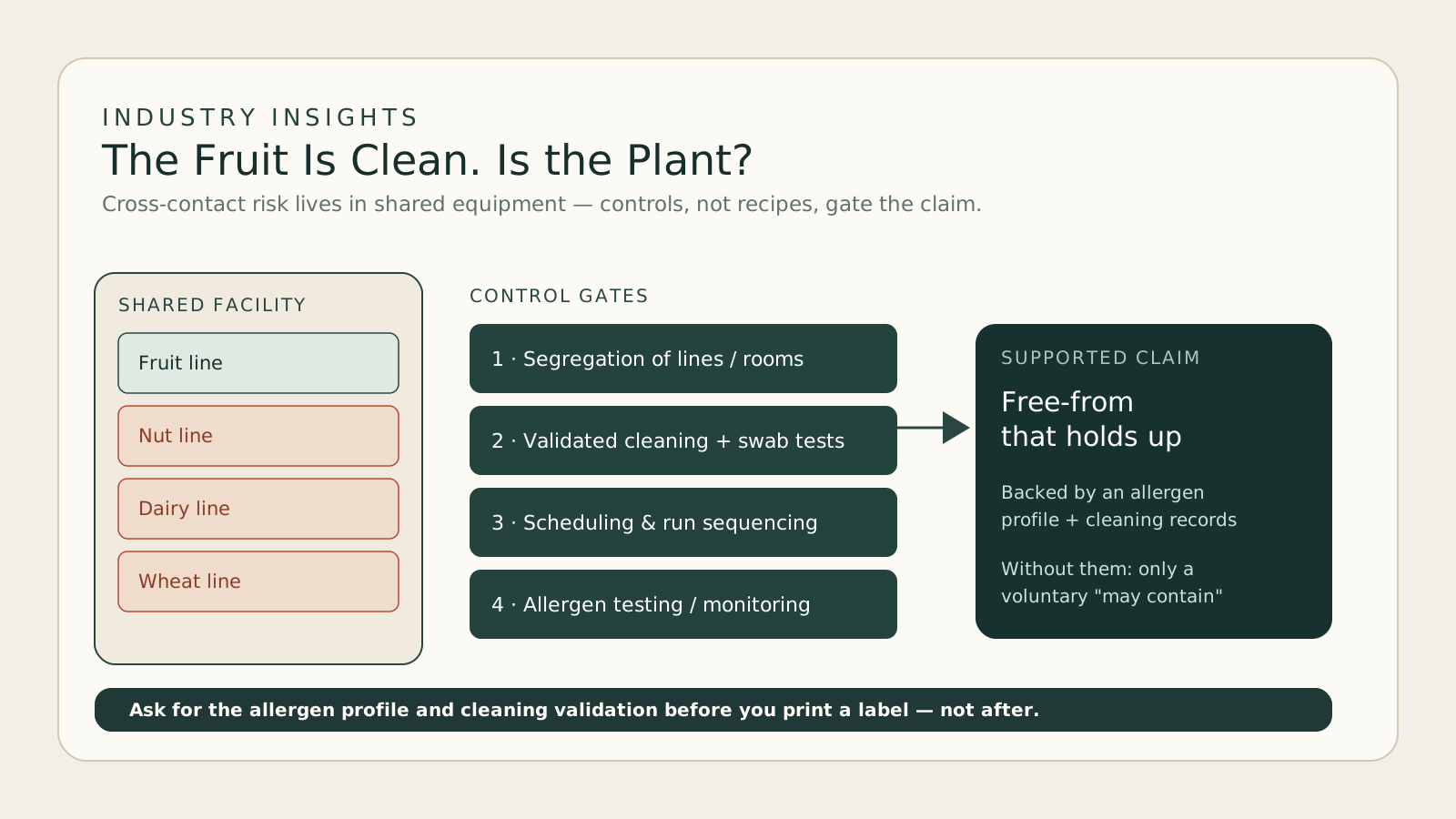
- Note how cross-contact is controlled, if the sheet says. Good sheets reference segregation, scheduling (running allergen-free product first), validated cleaning between allergen and non-allergen runs, or dedicated lines.
- Check the date and revision. An allergen statement is only as current as the facility's product mix. A sheet that predates a new coated-snack line the co-packer added last quarter may be quietly out of date.
When the label line is not enough
For most uses — a topping bar, a bakery inclusion for general consumers — a clear allergen section on a current spec sheet is adequate. The stakes rise sharply when the product is aimed at allergic consumers, young children, schools, or healthcare settings.
In those cases the label line is a summary, and buyers should ask for the substance behind it:
- the written allergen control program and the facility's allergen map
- cleaning and changeover validation between allergen and non-allergen runs on the relevant line
- allergen testing evidence on that line where the risk and use case justify it
- confirmation of how the supplier handles new products introduced into the facility
None of this replaces the buyer's own labeling responsibility on the finished product. It informs it. A supplier who can produce these documents is demonstrating an actual control system; one who can only point back to the "may contain" line is showing you a disclaimer, not a program.
Bottom line
On a freeze-dried fruit spec sheet, the allergen section is not describing the fruit — it is describing the factory. The ingredient side of a plain-fruit product is usually clean, and the real information lives in the facility and shared-equipment columns.
Read the advisory statements as risk flags rather than guarantees, treat a blank box as a question, and for anything sold to allergic consumers, ask for the control program and validation behind the label. The line on the sheet is a summary; the discipline behind it is what actually protects the customer.
Frequently Asked Questions
If freeze-dried fruit is just fruit, why does it have an allergen section at all?
Because a spec sheet covers the whole production context, not only the recipe. Even single-ingredient fruit can be exposed to allergens through shared equipment, shared lines, or a facility that also handles tree nuts, milk, soy, or wheat. The allergen section documents both what is in the product and what is around it during processing.
What is the difference between an ingredient allergen and a cross-contact allergen?
An ingredient allergen is deliberately part of the product, like milk in a yogurt-coated fruit. A cross-contact allergen is not an intended ingredient but can end up in the product unintentionally, through shared equipment or airborne dust. The allergen section, or an allergen matrix, usually separates these two so a buyer can tell intended composition from facility risk.
Does 'may contain nuts' mean the product has nuts?
No. It is a precautionary cross-contact statement indicating the supplier believes there is a possibility of unintended presence, usually because the facility or line also handles that allergen. It is an advisory about risk, not a declaration that the allergen is present. Its use is largely voluntary and not standardized, which is exactly why buyers should look behind it at the control program.
Is a blank allergen section a good sign?
Not by itself. A truly clean, allergen-segregated facility is one explanation. A supplier who simply has not assessed cross-contact is another. A blank or missing allergen section is a prompt to ask how the facility manages allergens, not a reason to assume there is nothing to manage.
What extra evidence should a buyer request for high-risk uses?
For products aimed at allergic consumers or children, ask for the written allergen control program, the facility's allergen map, cleaning and changeover validation between allergen and non-allergen runs, and, where justified, allergen testing results on the relevant line. The label line is a summary; these documents are the substance behind it.
Primary sources & further reading
- Food Allergen Labeling and Consumer Protection Act (FALCPA) Questions and Answers U.S. Food and Drug Administration Explains U.S. major food allergen labeling requirements and the distinction between ingredient declaration and advisory cross-contact statements.
- Food Allergies: What You Need to Know U.S. Food and Drug Administration Overview of the major allergen categories recognized in U.S. labeling, including the later addition of sesame.
- Current Good Manufacturing Practice, Hazard Analysis, and Risk-Based Preventive Controls for Human Food Electronic Code of Federal Regulations FDA rule requiring food allergen preventive controls, including protection against allergen cross-contact during manufacturing.
External links open in a new tab. We do not receive compensation from any organization listed; sources are referenced because they are primary, current, and publicly verifiable.