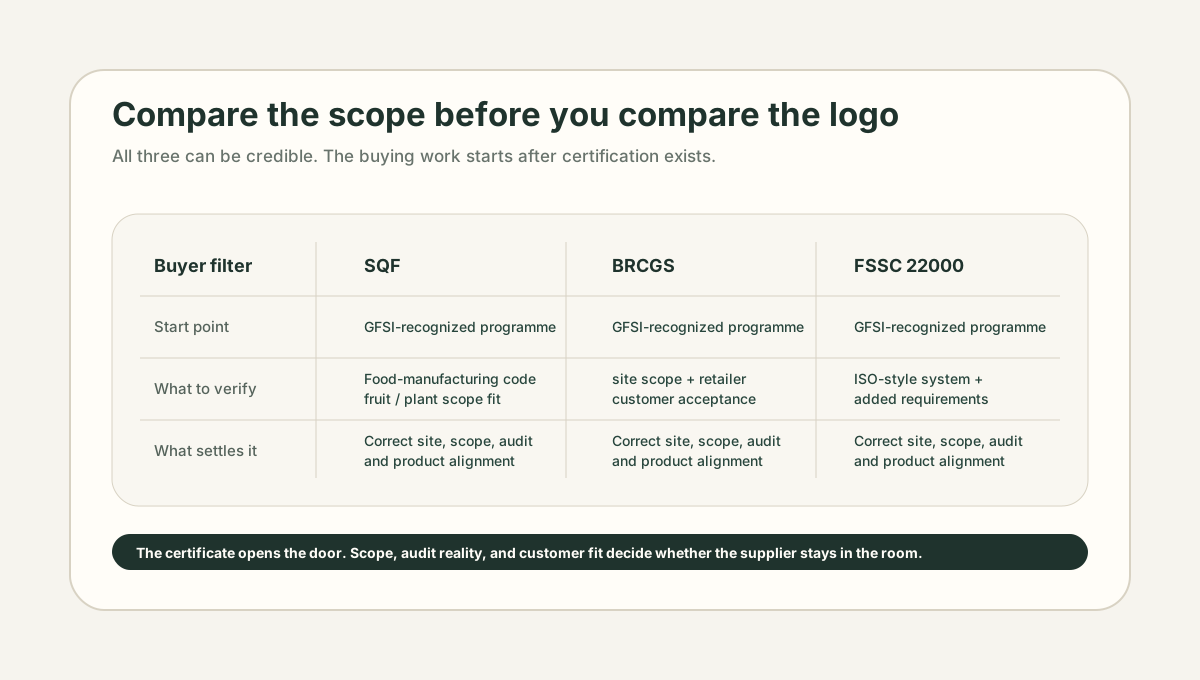
- GFSI recognition is the first filter because it places SQF, BRCGS, and FSSC 22000 inside a comparable benchmark framework rather than leaving buyers to compare unrelated claims.
- Scope matters as much as the scheme name. Freeze-dried fruit buyers should check whether the site's certificate actually covers plant-product processing, handling, packaging, storage, or broker activity as needed.
- BRCGS, SQF, and FSSC 22000 each bring different structural emphases and market familiarity, but none should override the actual audit history, corrective-action discipline, and product fit of the supplier.
- The strongest buying decision usually comes from matching the certificate to the customer requirement and then verifying whether the supplier's real operations deserve the trust the certificate implies.
A certificate can get a supplier onto the shortlist. It should not decide the shortlist by itself.
That is especially true in freeze-dried fruit, where suppliers may process fruit, repack finished goods, broker product from another site, or run a mixed operation that looks broader on paper than it really is. The scheme name matters, but the scope and the site's actual operating role matter more.
The direct answer
To compare SQF, BRCGS, and FSSC 22000 when buying freeze-dried fruit, start with GFSI recognition, then match the certificate scope to the supplier's real activity, then compare how the scheme fits your customer's expectations and the supplier's actual audit discipline.
The practical rule is simple: do not compare logos before you compare scope.
Start with GFSI recognition
GFSI's recognized certification-programme page is the cleanest first filter because it explains what GFSI recognition is and shows the recognized scopes attached to each programme owner. That matters because buyers are not trying to compare abstract food-safety philosophies. They are trying to decide whether a certificate belongs to a benchmarked system that the market already understands.
For freeze-dried fruit, that common benchmark matters in two ways:
- it reduces the noise from private, non-comparable supplier claims
- it helps buyers focus on scope and execution instead of arguing whether certification exists at all
GFSI recognition does not make every certified supplier equal. It makes the comparison more rational.
Scope is the first real filter
The GFSI scope list is where the comparison becomes useful. BRCGS, FSSC 22000, and SQF all show recognized relevance to plant-product handling and processing, but buyers still need to ask what the certificate actually covers at the quoted site.
Useful freeze-dried-fruit questions include:
- Does the site process perishable plant products, or only repack them?
- Is the certificate for storage, distribution, or broker activity rather than manufacturing?
- Does the supplier quote finished pouches from one site but provide a certificate from another?
- Is packaging production certified separately from food production?
Those are not administrative details. They decide whether the certificate is aligned with the commercial risk.
What each scheme tends to signal
The next step is not ranking. It is understanding the structural emphasis of each scheme.
SQF
SQFI's Food Manufacturing Code is explicitly framed for food-manufacturing categories that include fruit, vegetables, nuts, and fruit juices. That makes SQF easy to map to freeze-dried fruit manufacturing in a direct way.
In practice, SQF often reads as:
- a clear manufacturing-code fit
- a familiar option in North American supplier conversations
- a usable framework when the site genuinely manufactures or repacks the quoted food
That does not make SQF lighter or weaker by default. It means the code structure is legible for plant-food manufacturing buyers.
BRCGS
BRCGS describes its Food Safety Global Standard as a long-established retailer-accepted benchmark, used by more than 22,000 sites across more than 130 countries. Its own overview also highlights food safety culture, food fraud, and added modules as part of the standard's evolution.
In practical buying language, BRCGS often signals:
- broad retailer familiarity
- strong market recognition for branded and private-label programmes
- a standard many buyers already know how to read
Again, that does not mean every BRCGS-certified site is automatically superior. It means the scheme is highly legible to the market.
FSSC 22000
FSSC 22000 tends to be read through its ISO-based management-system structure plus the added Version 6 requirements published by the scheme. FSSC's own materials emphasize that food defense, food fraud mitigation, allergen management, environmental monitoring, and cross-contamination controls remain integral requirements in Version 6.
In buyer terms, FSSC often signals:
- an ISO-style management-system backbone
- strong emphasis on documented systems and governance
- a broader systems view that can fit larger or more complex operations well
That can be a strong fit, especially when the supplier has multiple operating interfaces and mature documentation habits.
The certificate is not the same thing as the site
This is where many buying teams get lazy.
A certificate should trigger more questions, not fewer:
- What site is actually certified?
- What activity is included in scope?
- When was the last audit?
- Were there major nonconformities?
- How were they closed?
- Does the certificate belong to the factory making the quoted product or a parent group entity?
Two suppliers can both say "certified" while presenting very different levels of operational confidence.
Customer acceptance often decides the commercial answer
Some customers settle the scheme debate before the buyer does.
Private-label retail, export accounts, and larger foodservice or ingredient customers may already have internal preferences for accepted schemes, supplier-approval language, or audit expectations. In those cases, the smart move is not to defend a favorite certification. It is to map the supplier to the customer's actual acceptance rule.
That means the real sequence is often:
- confirm the customer requirement
- confirm GFSI recognition
- confirm site scope
- review audit reality
Anything beyond that is secondary.
When one scheme may fit better than another
There are still practical tendencies worth noting.
- If the buyer wants a straightforward manufacturing-code fit for a fruit-processing site, SQF may read cleanly.
- If the buyer is serving retail customers that already understand BRCGS deeply, BRCGS may reduce friction.
- If the supplier operates inside a broader ISO-style management environment, FSSC 22000 may integrate more naturally.
Those are fit observations, not quality verdicts.
What buyers should request before approving
Before treating any of the three schemes as sufficient, request:
- the current certificate
- the exact scope statement
- the certified site address
- the last audit date
- any recent major findings and closure status
- confirmation that the quoted product is produced or handled within that certified scope
That package usually reveals far more than arguing over which logo sounds most rigorous in the abstract.
If the scheme is strong but the scope is vague, the certificate is still weak for your decision. Freeze-dried fruit buyers should approve the real operating activity, not the logo alone.
Bottom line
SQF, BRCGS, and FSSC 22000 can all be credible supplier signals in freeze-dried fruit when they are GFSI-recognized, correctly scoped, current, and backed by a site that actually deserves the certificate.
The best comparison starts with recognition, gets serious at scope, and ends with supplier execution. That is a better buying method than trying to crown one scheme as universally best.
Frequently Asked Questions
Which certification is best for freeze-dried fruit suppliers: SQF, BRCGS, or FSSC 22000?
There is no universal winner. All three can be credible when they are GFSI-recognized, correctly scoped, current, and backed by a supplier that actually runs a disciplined food-safety system.
Why does GFSI recognition matter so much?
Because it puts the certification programme inside a common benchmarking framework. That does not make every supplier equal, but it does make the comparison more coherent than weighing unrelated private claims.
Is the scheme name more important than the certificate scope?
No. A strong-sounding certificate with the wrong scope is less useful than a less fashionable one that clearly covers the plant-product processing, packaging, or storage activity you are actually buying.
Can a buyer rely on the certificate alone?
No. Buyers still need to review the audit status, nonconformity follow-up, product form, supplier responsiveness, and whether the site actually makes or handles the freeze-dried fruit format being quoted.
When do customer requirements settle the question?
Often. If a retailer, distributor, or private-label customer already names an accepted certification scheme or supplier standard, the commercial question becomes fit to that requirement rather than abstract ranking.
Primary sources & further reading
- GFSI-Recognised Certification Programme Owners Global Food Safety Initiative Referenced for the role of GFSI recognition and for the recognized scopes attached to BRCGS, FSSC 22000, and SQF.
- SQF Food Safety Code - Food Manufacturing, Edition 10 SQF Institute Referenced for SQF's food-manufacturing code applicability, including fruit, vegetables, nuts, and fruit juices.
- BRCGS Food Safety BRCGS Referenced for BRCGS Food Safety Issue 9 positioning, market adoption, and its emphasis on food safety culture and food fraud.
- FSSC 22000 Additional Requirements Foundation FSSC Referenced for the additional Version 6 requirements around food defense, food fraud mitigation, allergen management, environmental monitoring, and cross-contamination controls.
External links open in a new tab. We do not receive compensation from any organization listed; sources are referenced because they are primary, current, and publicly verifiable.