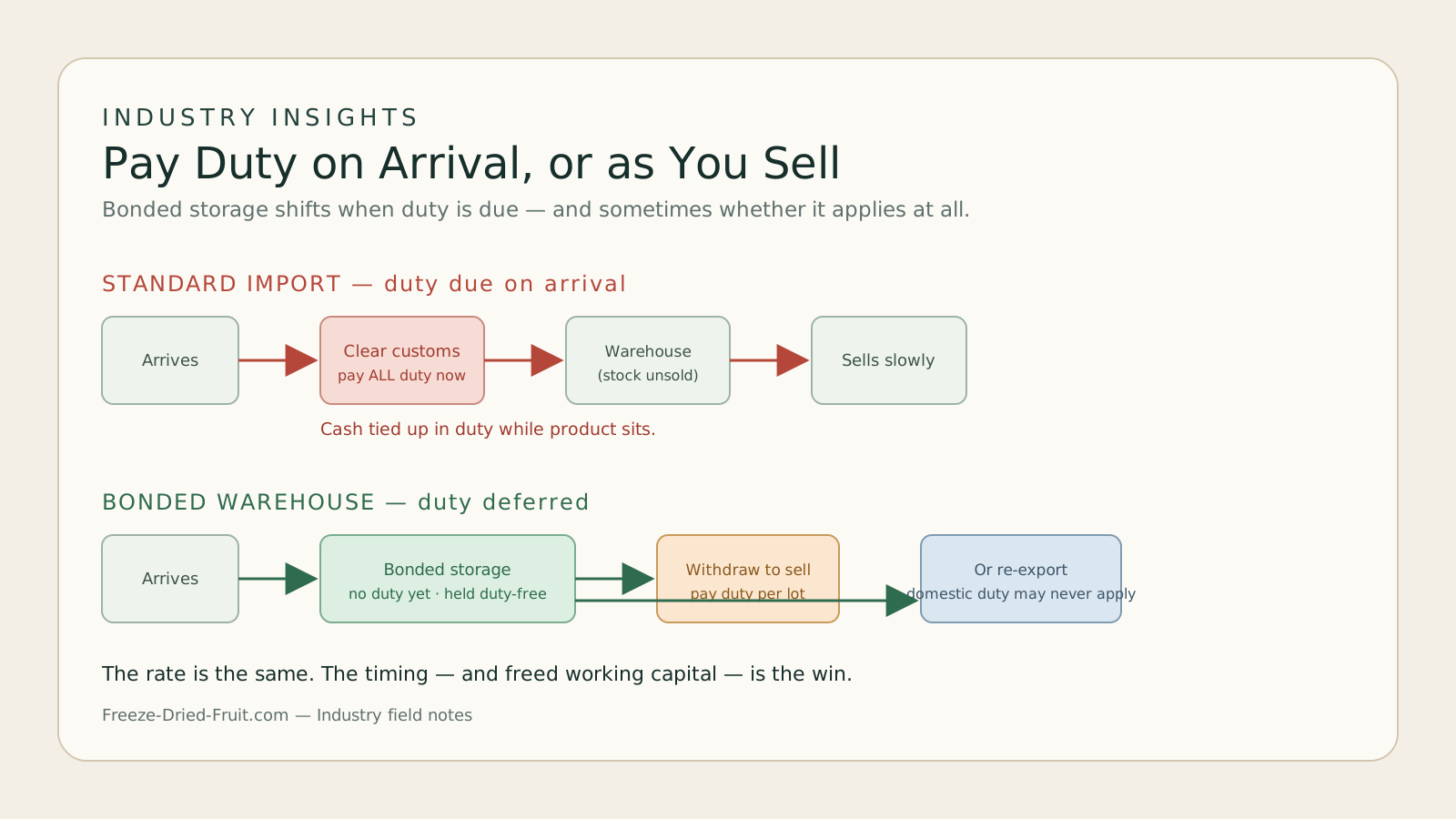
- A customs bonded warehouse lets imported freeze-dried fruit be stored without paying duty and certain taxes until the goods are withdrawn for domestic sale.
- The main benefit is cash-flow timing: you pay duty as you sell or release stock, not all at once on arrival, which frees working capital.
- Bonded and foreign-trade-zone programs can also cut cost on re-exported goods or lots that are scrapped, since duty may never apply to product that never enters the domestic market.
- The tradeoff is storage fees, compliance overhead, and recordkeeping, so bonded storage pays off mainly for larger, slower-moving, or re-export inventory.
Importers tend to fixate on the duty rate: the percentage stamped against a tariff line. But the rate is only half the story. The other half is timing. Paying duty the day a container clears is very different, for a business, from paying it as the product actually sells.
That is the lever a bonded warehouse pulls. It does not lower the rate on freeze-dried fruit. It changes when you have to hand over the money, and in some cases whether you owe it at all. For an importer holding significant inventory, that timing shift can matter as much as a point or two on the rate.
The direct answer
A customs bonded warehouse is a facility authorized by customs where imported goods can be stored without immediately paying import duty and certain import taxes. The liability does not disappear; it is deferred. Duty generally comes due only when the goods are withdrawn for domestic consumption — that is, released to be sold in the country of import.
Two consequences follow. First, you pay as you sell, not all at once on arrival, which keeps cash in the business longer. Second, if the goods are re-exported straight from the bonded facility rather than sold domestically, the domestic duty may never apply at all.
Neither of those changes the tariff classification or the rate. They change the timing and, sometimes, the applicability.
Why timing is the real prize
Picture a full container of freeze-dried fruit arriving in one shipment but selling down over several months. In a standard flow, duty is assessed and paid when the goods clear customs on arrival. You have now spent cash on duty for product that is still sitting on a shelf, unsold.
With bonded storage, the same container can sit in the bonded facility, and you pay duty in pieces as you withdraw stock to fill orders. The money that would have been locked up in duty on day one stays available as working capital — to buy the next lot, cover freight, or simply reduce borrowing.
For a growing brand or distributor, that freed-up working capital is often worth more than a small reduction in the rate itself.
The re-export and scrap angle
The second benefit is narrower but real. Because duty attaches when goods enter domestic commerce, product that never enters it can avoid the charge.
If you import into one market as a hub and re-export part of the stock to buyers in other countries, moving that inventory through a bonded facility can keep it out of domestic duty entirely. Similarly, a lot that fails inspection and is destroyed under customs supervision before withdrawal generally does not incur the domestic duty it would have owed on release.
The specifics — how long goods can stay, what activities are allowed inside, how destruction is documented — differ between customs regimes. Treat the mechanics here as the shape of the tool, and confirm the exact rules for your import country with a licensed customs broker.
Bonded warehouse vs foreign-trade zone
These two often get conflated. Both defer duty, but they are not identical.
A bonded warehouse is primarily for storage. You hold goods, and you can do limited handling, but the model is essentially "park it duty-deferred until you sell or re-export."
A foreign-trade zone — called a free zone in many countries — typically allows more activity: manipulation, relabeling, repackaging, kitting, and sometimes light processing. For freeze-dried fruit, that can matter if you import bulk and repack into retail pouches, or blend multiple imported fruits into a mix. Zones can also change how duty is calculated on the processed output. Which structure fits depends on whether you are simply storing or actively transforming product.
Where the costs come in
Duty deferral is not free. Bonded facilities charge storage, and the compliance burden is higher than ordinary warehousing. You need accurate inventory records tied to customs entries, controlled withdrawals, and clean documentation for anything re-exported or destroyed. Errors can trigger penalties that erase the benefit.
That overhead sets the break-even. For small, fast-moving lots that sell within weeks, the storage fees and paperwork usually outweigh the timing gain — pay the duty and move on. The math turns favorable for larger inventories, slower-moving SKUs, seasonal buys you are deliberately holding for later demand, and any stock with a real chance of being re-exported.
How buyers should think about it
Treat bonded storage as a cash-flow and risk tool, not a discount. Before assuming it helps, look at how fast your freeze-dried fruit actually sells, how much duty is tied up on arrival, and whether any of it leaves the country again.
If you carry meaningful inventory and it turns slowly, model the working capital freed by paying duty on withdrawal instead of arrival, then set that against the bonded storage quote and the added compliance effort. If you re-export, add the duty you would avoid on those units. When those numbers clear the overhead, bonded storage earns its place; when they do not, ordinary warehousing and paying duty on arrival is the simpler, cheaper path.
Bottom line
A bonded warehouse does not cut the duty rate on freeze-dried fruit — it moves when you pay and, for re-exported or scrapped goods, whether you pay at all. The payoff is working capital freed by paying duty as stock sells rather than all at once on arrival, plus avoided duty on product that never enters the domestic market. Against that sits storage cost and compliance overhead, which is why the tool fits larger, slower-moving, or re-export inventory rather than small fast-turning lots. Model the timing, not just the rate, and confirm the mechanics with a customs broker for your import country.
Frequently Asked Questions
What is a bonded warehouse in simple terms?
It is a secure facility authorized by customs where imported goods can be stored without immediately paying import duty and certain taxes. Duty generally becomes due only when the goods are withdrawn for domestic consumption. If they are re-exported instead, that duty may never apply.
Does a bonded warehouse lower the duty rate on freeze-dried fruit?
No. It changes the timing of when duty is paid, not the rate. The classification and rate still apply when goods enter domestic commerce. The savings come from cash-flow timing and from avoiding duty on product that is re-exported or never sold domestically.
How long can freeze-dried fruit stay in a bonded warehouse?
Rules vary by country, but bonded storage typically allows goods to be held for an extended period, often several years, before they must be withdrawn or re-exported. Confirm the exact limit and any conditions with your customs broker for the country of import.
Is a bonded warehouse the same as a foreign-trade zone?
They overlap but differ. Both can defer duty. Foreign-trade zones (called free zones in some countries) often allow more activity such as manipulation, relabeling, or kitting, and can change how duty is calculated on processed goods. A customs broker can advise which fits your operation.
When is bonded storage not worth it?
For small, fast-moving lots the storage fees and compliance work usually outweigh the timing benefit. Bonded storage pays off most for larger inventories, slow-moving stock, seasonal buys held for later sale, or goods likely to be re-exported.
Primary sources & further reading
- Bonded Warehouse U.S. Customs and Border Protection Referenced for the definition of bonded warehouses, duty deferral until withdrawal, and permitted storage periods in the U.S. context.
- Foreign-Trade Zones U.S. Customs and Border Protection Referenced for how foreign-trade zones differ from bonded warehouses in permitted activity and duty treatment.
- Customs Warehousing European Commission — Taxation and Customs Union Referenced for the equivalent customs warehousing procedure and duty suspension in the EU context.
External links open in a new tab. We do not receive compensation from any organization listed; sources are referenced because they are primary, current, and publicly verifiable.