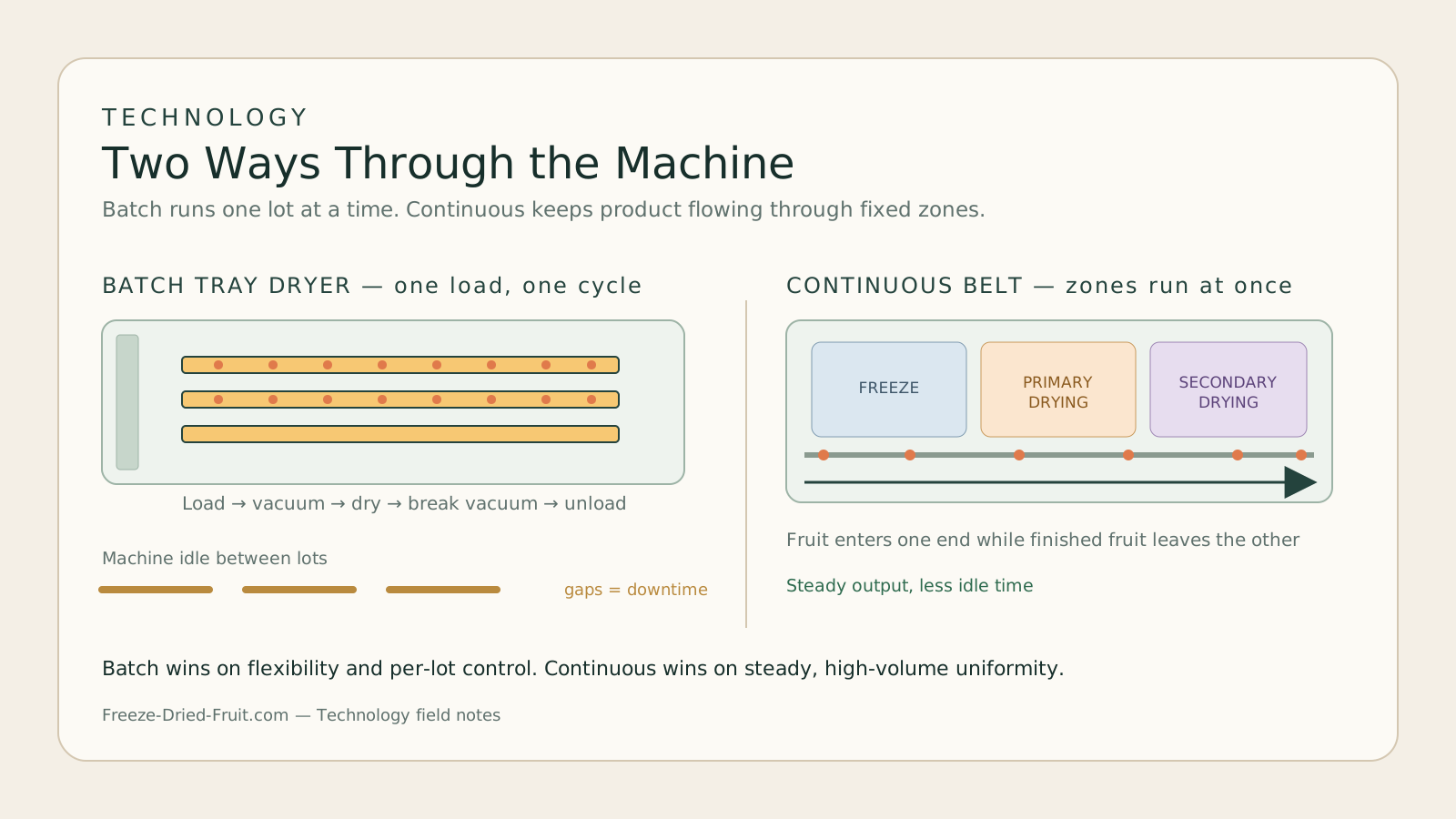
- Batch tray dryers process one fixed load per cycle; continuous belt or tunnel systems feed product through zones so material is entering and leaving at the same time.
- Continuous systems can lift throughput and uniformity for high-volume, uniform pieces, but they cost more up front and are less flexible across many small SKUs.
- Batch dryers stay dominant in fruit because crop volumes, piece variety, and recipe changes favor flexibility over a fixed continuous line.
- For buyers, the machine type behind a product mostly shows up indirectly as lot-to-lot consistency, minimum order size, and price at volume.
Ask how freeze-dried fruit is made and the mental picture is almost always a batch: trays of frozen fruit slide into a chamber, the door closes, a cycle runs for the better part of a day, and the finished lot comes out together. That picture is correct for most of the industry.
But there is a second design. In a continuous freeze-dryer, product does not sit still as one lot. It moves through the machine on a belt or through connected zones, so fruit is entering one end while finished fruit leaves the other. The physics of sublimation are the same. The logistics are very different.
Understanding the difference explains a lot about why a supplier quotes the volumes and prices they do, and why lot-to-lot consistency varies between vendors.
The direct answer
A batch tray dryer treats one load as one job. You freeze or load frozen fruit, pull vacuum, run primary and secondary drying, break vacuum, and unload. Every piece in that chamber experiences the same cycle at the same time, and the machine is unavailable until the lot is done.
A continuous system breaks the cycle into fixed zones along a path. Instead of changing conditions over time for a stationary load, it holds each zone at set conditions and moves the product through them. A given piece of fruit sees freezing, then primary drying, then secondary drying as it travels, rather than as the clock advances.
Batch trades throughput for flexibility. Continuous trades flexibility for steady, high-volume output. Neither is simply "better."
How a batch cycle behaves
In a batch dryer, the whole load shares one timeline. That has real advantages. You can tailor the shelf-temperature ramp and pressure to the exact fruit and cut size in the chamber, and you can hold the cycle longer if endpoint checks say the centers are not done.
The cost is the stop-start rhythm. Loading, pulling vacuum, running, breaking vacuum, and unloading all consume time when the machine is not actively drying new product. Capacity is capped by the chamber, and switching fruits means waiting for the current lot to finish.
For a processor running mango one week, strawberries the next, and a custom dice for a snack brand after that, this flexibility is exactly what the business needs.
How a continuous system behaves
A continuous line aims to remove the dead time between lots. Because product flows through dedicated zones, the machine is drying, freezing, and finishing at the same time in different sections. Output becomes a stream rather than a series of discrete lots.
Done well, this can improve two things. Throughput rises because the machine is not idling between cycles. And uniformity can improve, because every piece passes through the identical sequence of zones rather than depending on where it happened to sit on a tray.
A continuous line is tuned around one product profile running for a long stretch. Its strengths appear when you feed it a steady, uniform material. Frequent changes in fruit, cut size, or moisture behavior work against the design.
Why fruit still favors batch
Fruit is a difficult candidate for continuous processing for reasons that have nothing to do with drying physics.
Crops are seasonal and variable. Sugar content, ripeness, and piece geometry shift between origins and lots, and each shift can call for a different cycle. Processors also handle many fruits and many customer specs, often in modest volumes. A continuous line that pays off by running one product for weeks is a poor match for that reality.
Capital cost reinforces the point. Continuous freeze-drying equipment is expensive and complex, and it earns its keep only at sustained high volume on a stable product. Most fruit processors get better economics from several flexible batch chambers they can load independently.
That is why, despite continuous systems existing and being used for some very high-volume items, batch tray drying remains the backbone of freeze-dried fruit.
What actually differs, side by side
The practical contrasts come down to a handful of levers. Batch offers per-lot control and easy switching between products, at the price of idle time and chamber-limited capacity. Continuous offers steadier output and potentially tighter uniformity, at the price of high capital cost and low flexibility.
There is also a subtle uniformity nuance. In a batch, tray position matters: edges and corners can dry differently from the center. In a continuous line, position along the belt is standardized, but you inherit whatever gradients exist across the belt width and between zones. Neither design removes the need to manage uniformity; they just move where the variation lives.
What this means for buyers
You will rarely choose equipment, and you usually cannot tell from a finished bag which machine made it. What you can do is read the downstream signals.
Consistency is the main one. If lot-to-lot color, crunch, and piece integrity are tight across large orders, the supplier has a controlled process, whatever the machine. Ask for a spec sheet and a COA rather than equipment marketing.
Volume and price are the other signals. A vendor able to hold consistent quality at large, steady volumes may be running high-capacity equipment suited to that; a vendor strong on many small custom runs is likely leaning on flexible batch capacity. Match the supplier's natural strength to your order pattern, and the machine question mostly takes care of itself.
Bottom line
Batch tray drying and continuous belt drying are two answers to the same problem: moving water out of frozen fruit by sublimation without wrecking its structure. Batch wins on flexibility and per-lot control, which is why it dominates fruit. Continuous wins on steady throughput and uniformity for a single high-volume product. For buyers, the equipment matters less than the evidence of control it produces: consistent lots, clear specs, and volumes that fit how you actually order.
Frequently Asked Questions
Is most freeze-dried fruit made in batch or continuous dryers?
The large majority is made in batch tray dryers. Continuous freeze-drying exists and is used at scale for some high-volume, uniform products, but batch remains the standard for fruit because of crop seasonality, piece variety, and frequent recipe changes.
Does continuous freeze-drying make better fruit?
Not automatically. A well-run batch cycle and a well-run continuous line can both produce excellent fruit. Continuous systems can improve uniformity for a single steady product, but they do not change the underlying physics of sublimation or fix a poorly designed cycle.
Why don't more processors switch to continuous systems?
Cost and flexibility. Continuous lines carry high capital cost and are optimized around one product profile running for long stretches. Fruit processors often run many fruits, cut sizes, and customer specs, which suits the load-and-swap nature of batch equipment better.
Can I tell which machine made a bag of freeze-dried fruit?
Usually not from the bag alone. The machine type shows up indirectly through lot-to-lot consistency, available volumes, and pricing at scale. A spec sheet and COA tell you more about quality than the equipment name.
Primary sources & further reading
- Practical Advice on Scientific Design of Freeze-Drying Process: 2023 Update National Library of Medicine / AAPS PharmSciTech Referenced for the mechanics of the freeze-drying cycle stages and equipment capability limits shared by batch and continuous systems.
- The Freeze-Drying of Foods—The Characteristic of the Process Course and the Effect of Its Parameters on the Physical Properties of Food Materials National Library of Medicine / Foods Referenced for how cycle parameters shape physical properties and why uniform heat and vapor handling matter.
- Freeze-Drying of Plant-Based Foods National Library of Medicine / Foods Referenced for freeze-drying behavior of plant tissue relevant to fruit in both batch and continuous formats.
External links open in a new tab. We do not receive compensation from any organization listed; sources are referenced because they are primary, current, and publicly verifiable.