- Freeze-drying retains aroma mainly because it works cold and mostly by sublimation, so heat-driven reactions and steam stripping are limited compared with hot-air or drum drying.
- The largest aroma losses usually happen at the front and back of the process — during freezing and thawing exposure, and during storage after the bag is opened — not only during the vacuum cycle itself.
- Volatile retention is tied to the sugar matrix: aroma molecules trapped in a glassy, low-water-activity solid stay put, while any softening toward a rubbery state lets them escape.
- You cannot judge aroma retention from a moisture spec alone; it needs sensory panels or headspace analysis, and it should be measured across shelf life, not just at production.
Ask people why they prefer freeze-dried fruit to other dried fruit and most will mention texture. But the quieter reason is smell. Open a bag of well-made freeze-dried strawberry and the aroma jumps out in a way that a chewy, heat-dried piece rarely matches.
That aroma is fragile. It is made of volatile molecules that were never very firmly held in the fruit to begin with, and every processing step is a chance to lose them. Freeze-drying is unusually good at keeping them — but understanding why, and where it still fails, is the difference between a product that smells like the fruit and one that smells like almost nothing.
The direct answer
Freeze-dried fruit retains aroma because the process removes water cold and mostly by sublimation, which limits the two things that destroy aroma in ordinary drying: heat-driven chemical breakdown and steam stripping. The volatiles that survive get locked into a low-moisture, glassy sugar matrix, where they are held in place until something changes the piece's temperature, moisture, or exposure to air.
Losses still happen, but they cluster at predictable points: during freezing and any warm handling, during the removal of the last, tightly held water, and — most of all for the consumer — after the package is opened.
Why aroma survives freeze-drying at all
Fruit aroma is a mixture of dozens to hundreds of volatile compounds: esters, aldehydes, alcohols, terpenes, and others, present at tiny concentrations. Two properties make them hard to keep. They are volatile, so they evaporate readily, and many are chemically reactive, so heat and oxygen change them.
Conventional drying attacks both weaknesses. Hot-air, drum, and even many "gentle" dehydration methods run warm and drive off large volumes of water vapor. That vapor acts like a carrier gas, sweeping volatiles out of the fruit — a steam-stripping effect — while the heat itself accelerates reactions that degrade delicate aroma notes and generate cooked or caramelized ones instead.
Freeze-drying sidesteps much of this. The fruit is frozen first, then dried under vacuum while still cold, with water leaving as vapor directly from ice. Because the process runs cold, heat-driven aroma loss is limited. And because there is far less liquid water turning to steam and moving through the piece, the steam-stripping route is weaker. The result is a finished piece whose aroma profile stays closer to the fresh fruit than almost any other shelf-stable format.
Freeze-drying keeps more aroma than heat drying. It does not keep all of it. The most volatile top notes — the light, immediate smell of cutting into fresh fruit — are the hardest to hold, and some are always lost. A freeze-dried piece that smells intense is concentrated as well as well-preserved: water is gone, so the remaining aroma is packed into a smaller mass.
The three places aroma actually escapes
It helps to stop thinking of aroma loss as a single event during the vacuum cycle. In practice it happens in three phases, and the cycle is often not the biggest one.
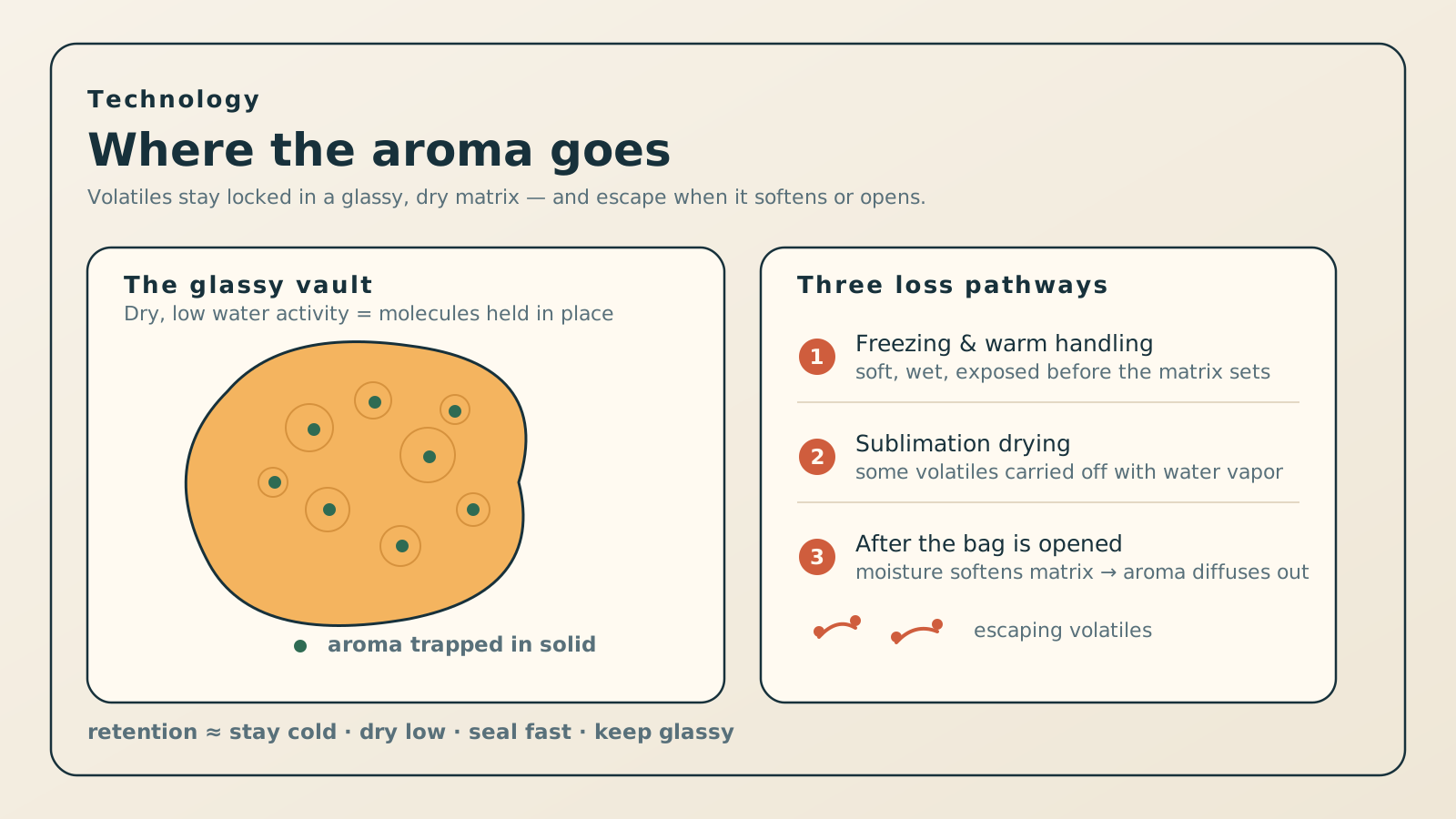
1. Freezing and handling
How the fruit is frozen shapes both texture and aroma. Slow freezing concentrates the unfrozen solution and can push some volatiles out of solution, and any warm holding — fruit sitting on a bench, a slow load into the dryer, a warm thaw at unloading — gives volatiles a chance to evaporate before the protective dry matrix has formed. Aroma is most exposed exactly when the piece is soft and wet.
2. Removing the last water
During drying, some volatiles do leave with the water vapor, particularly early on when there is more mobile water. Retention improves as the matrix dries and stiffens: once the solids drop below their glass transition and go glassy, aroma molecules are effectively frozen in place inside the solid. The practical implication is that pushing to a genuinely low, uniform water activity is an aroma decision as well as a crunch decision. A piece with a soft, under-dried center is a piece still leaking volatiles from that center.
3. After the bag is opened
For the person eating the fruit, this is the dominant loss. A freeze-dried piece is extraordinarily porous, with a large internal surface area. Sealed dry in a barrier pouch, it holds its aroma for a long time. Opened to humid room air, it begins adsorbing moisture within minutes. As water lowers the matrix's glass transition and the solid softens toward a rubbery state, the trapped volatiles regain mobility and diffuse out, while oxygen degrades others. The same open structure that makes the fruit so aromatic on first bite is what lets the aroma bleed away once conditions change.
The matrix is the vault
The single idea that ties this together is the glassy matrix. Aroma retention in freeze-dried fruit is governed by the same physics as stickiness and crunch loss: the state of the sugar-and-fiber solid.
When the solid is glassy — dry, cold, low water activity — molecular movement is so slow that trapped volatiles are essentially immobilized. When the solid warms or takes up water and shifts toward rubbery, diffusion speeds up by orders of magnitude, and aroma that was locked in becomes free to leave. This is why a low, stable water activity and cool storage protect smell and taste, not just texture, and why a piece that has gone slightly soft has usually gone slightly flat as well.
What this means for processors
The levers that protect aroma are mostly the same disciplines that protect a good freeze-dried piece overall:
- Freeze cleanly and handle cold. Minimize warm, soft, exposed time before and after the cycle.
- Dry to a genuinely low water activity, uniformly. Under-dried centers keep releasing volatiles and lower the whole piece toward its glass transition.
- Seal fast into real barrier film. The interval between dryer and seal, and the quality of the pouch, decide how long the aroma is protected.
- Consider oxygen. For aroma-sensitive fruits, controlling residual oxygen slows the oxidation route that dulls certain notes over shelf life.
- Measure aroma, not just moisture. A moisture spec says nothing directly about smell. Sensory panels, and where available headspace or GC analysis, are how you actually know.
What this means for buyers and consumers
If you are sourcing freeze-dried fruit, ask suppliers whether aroma was evaluated across shelf life and under realistic storage, not only at production, and whether any natural flavor is added to standardize the profile. The ingredient list answers the last question directly: single-ingredient fruit is relying on retained aroma, while an added natural flavor may be rebuilding what processing or storage took away.
If you are simply eating it, the practical rule follows from the physics. The aroma is best on the day you open the bag, and it fades fastest once the piece meets humid air. Reseal tightly, keep it cool and dry, and finish an opened pouch sooner rather than later. The smell that makes freeze-dried fruit worth buying is real — it is just held in place by conditions you can either protect or let slip.
Frequently Asked Questions
Does freeze-dried fruit really keep more aroma than dried fruit?
Generally yes. Because freeze-drying removes water by sublimation at low temperature, it avoids much of the heat-driven aroma degradation and steam stripping that hot-air and drum drying cause. The finished piece usually smells and tastes closer to the fresh fruit, though some of the most volatile top notes are still lost.
Where does the aroma actually go?
Some volatile molecules are carried off with water vapor during drying, some are lost during freezing and any warm handling before or after the cycle, and more escape slowly once the package is opened and the piece picks up moisture. A little is also degraded by oxidation over shelf life.
Why does freeze-dried fruit lose its smell after the bag sits open?
Opening the bag exposes the porous piece to humid air and oxygen. As it adsorbs moisture and its matrix softens, trapped aroma compounds become mobile and diffuse out, while oxidation alters others. The huge internal surface area that makes freeze-dried fruit aromatic also makes it leak aroma once conditions change.
Can a processor improve aroma retention?
Yes, mainly by controlling freezing, keeping product temperature low and stable through the cycle, drying to a low water activity, and sealing quickly into a good barrier film. Aroma is protected by the same discipline that protects crunch — a dry, glassy, well-packaged piece.
Is added flavoring a sign of poor aroma retention?
Not always, but it can be. Some blends add natural flavor to standardize aroma across seasons or to rebuild top notes lost in processing. Reading the ingredient list tells you whether the aroma in the bag is coming from the fruit alone or from added flavor.