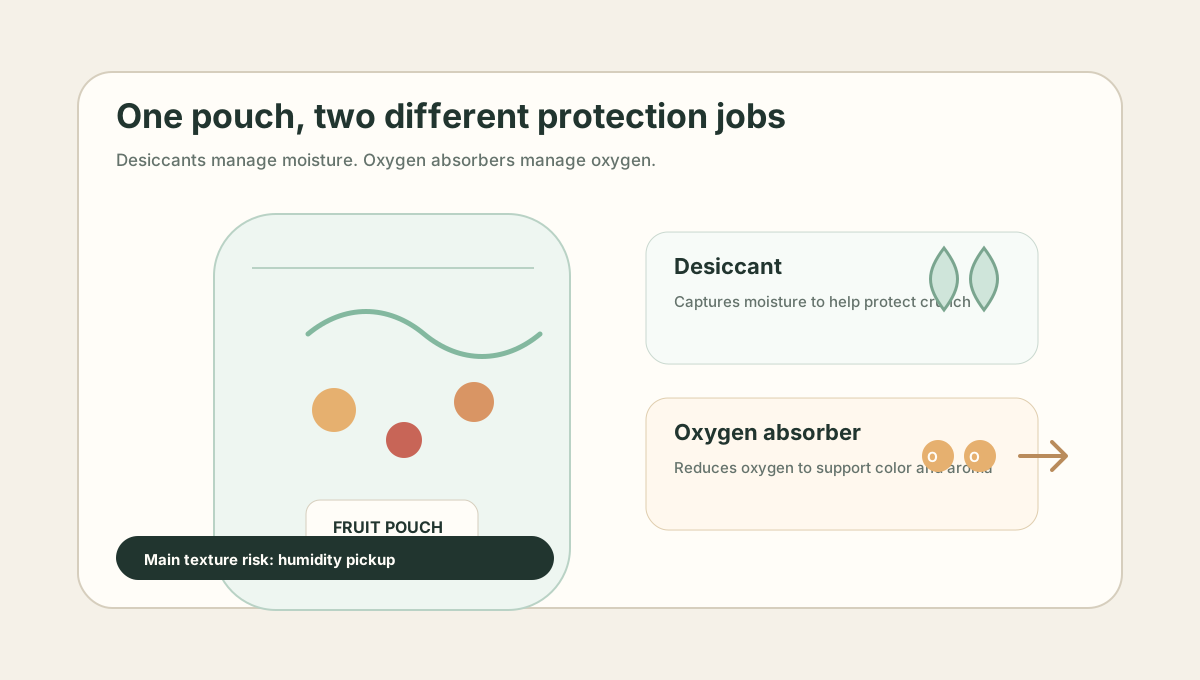
- Desiccants and oxygen absorbers are not interchangeable.
- Desiccants are usually more directly connected to protecting crunch.
- Oxygen absorbers are more relevant to oxidation-sensitive flavor, color, and fat-containing inclusions.
- The right choice depends on fruit type, packaging film, headspace, format, and distribution conditions.
The small packet inside a pouch is easy to ignore, but it can reveal a lot about how a brand or supplier thinks about product stability. In freeze-dried fruit, two packets are commonly discussed: desiccants and oxygen absorbers.
They are often treated as if they do the same job. They do not.
The direct answer
Desiccants help control moisture. Oxygen absorbers help reduce oxygen. For freeze-dried fruit, desiccants are usually tied most directly to preserving crunch, while oxygen absorbers are more relevant when oxidation could affect color, aroma, flavor, or other ingredients in the pack.
The right answer is not always "use both." The right answer depends on the product and packaging system.
What desiccants do
A desiccant is designed to capture moisture. In a freeze-dried fruit pouch, that matters because freeze-dried fruit is highly hygroscopic. It can pull water from humid air after packaging or after repeated opening.
When moisture increases, the eating experience changes:
- pieces soften
- crunch becomes dull
- fruit may clump
- powders cake
- fragile slices break more easily
Desiccants do not fix poor drying or poor packaging. They are a support tool. If the film has weak moisture barrier performance, if the seal is bad, or if the product leaves the dryer with too much residual moisture, a desiccant can only do so much.
What oxygen absorbers do
An oxygen absorber reduces oxygen inside a sealed package. That can be helpful for products vulnerable to oxidation.
In freeze-dried fruit, oxygen can affect:
- color retention
- delicate aroma
- flavor stability
- ingredients that contain fat
- blends with nuts, chocolate, dairy powders, or inclusions
Plain freeze-dried fruit does not always need an oxygen absorber. Some products are more moisture-sensitive than oxygen-sensitive. Others, especially blends or premium fruit with delicate color and aroma, may benefit from oxygen management.
Why the packets are not interchangeable
A desiccant will not remove oxygen in a meaningful way. An oxygen absorber will not keep a humid pouch dry. Using the wrong packet can create a false sense of protection.
For example, if a brand's main problem is soft fruit after two weeks, the first questions should be about moisture content, water activity, seal quality, film barrier, and desiccant strategy. An oxygen absorber alone will not solve that texture problem.
If a brand's main problem is dull color or stale aroma while texture remains crisp, oxygen exposure may deserve more attention.
The packaging film matters first
Packets are only one part of the system. The pouch film, seal, zipper, headspace, and storage conditions often matter more.
A high-barrier pouch with a good seal may need less help from internal packets. A thin pouch with weak barrier performance may overwhelm a desiccant quickly. A large pouch opened daily by consumers faces a different risk than a single-serve pack opened once.
This is why buyers should avoid judging packaging only by whether a packet is present. The better question is: what risk is this packet designed to control?
When a desiccant makes sense
A desiccant may be useful when:
- the product is especially sensitive to humidity
- the pack will be opened and closed repeatedly
- the fruit format is thin, crisp, or powder-prone
- the sales channel includes humid climates
- the brand wants stronger texture protection after opening
For many freeze-dried fruit snacks, moisture is the most obvious enemy of the eating experience. That makes desiccant planning a serious quality topic, not a decorative detail.
When an oxygen absorber makes sense
An oxygen absorber may be useful when:
- color retention is a major quality marker
- aroma loss is a known problem
- the product includes fat-containing ingredients
- the package has meaningful headspace
- the product is positioned for longer unopened storage
Oxygen absorbers need the right packaging environment to work well. They should be matched to headspace and seal integrity, not dropped into a pouch without validation.
Questions buyers should ask
When reviewing a freeze-dried fruit supplier or co-packer, ask:
- Is the packet a desiccant, oxygen absorber, or both?
- What problem is it intended to solve?
- What is the packaging film's moisture vapor transmission rate?
- What is the oxygen transmission rate?
- Has the product been tested with and without the packet?
- How does texture change after opening?
- Are packets food-safe and correctly sized for the pack?
Good suppliers should be able to connect the packaging choice to a specific risk. If the answer is simply "we always use this," keep asking.
Bottom line
Desiccants and oxygen absorbers protect freeze-dried fruit in different ways. Desiccants manage moisture. Oxygen absorbers manage oxygen. Both can matter, but neither replaces strong drying, good barrier film, clean seals, and realistic shelf-life testing.
For buyers, the smartest packaging conversation begins with the failure mode: are you trying to protect crunch, color, aroma, or all three?
Frequently Asked Questions
What's the difference between a desiccant and an oxygen absorber?
Desiccants control moisture. Oxygen absorbers reduce oxygen. They are not interchangeable — a desiccant will not remove oxygen meaningfully, and an oxygen absorber will not keep a humid pouch dry. Using the wrong packet creates a false sense of protection.
Does freeze-dried fruit need both packets?
Not always. The right answer depends on the failure mode. For plain freeze-dried fruit, moisture is usually the bigger problem, so a desiccant is more directly tied to preserving crunch. Oxygen absorbers matter more when color, aroma, or oxidation-sensitive blend ingredients are at risk.
When does an oxygen absorber make sense for freeze-dried fruit?
When color retention is a major quality marker, aroma loss is a known problem, the product includes fat-containing ingredients like nuts or chocolate, the package has meaningful headspace, or the product is positioned for longer unopened storage. They need correct packaging integrity to work — they should be matched to headspace and seal, not dropped into a pouch without validation.
Can a desiccant rescue a poorly sealed pouch?
No. Desiccants are a support tool, not a fix. If the film has weak moisture barrier performance, the seal is inconsistent, or the product leaves the dryer with too much residual moisture, a desiccant can only do so much. The packaging film, seal, zipper, headspace, and storage conditions matter more.
Why are these packets often treated as if they're the same?
Because they look alike and sit in the same place inside a pouch. The actual problems they solve are different. If a brand's main problem is soft fruit after two weeks, an oxygen absorber alone will not solve that texture issue. If the problem is dull color or stale aroma while texture stays crisp, oxygen exposure deserves more attention.
What should buyers ask suppliers about the packets in the pouch?
Ask whether the packet is a desiccant, oxygen absorber, or both; what specific problem it is intended to solve; the film's water vapor and oxygen transmission rates; whether the product has been tested with and without the packet; how texture changes after opening; and whether the packet is food-safe and correctly sized for the pack.
Primary sources & further reading
- Silica Gel as Indirect Food Additive — 21 CFR 172.480 Electronic Code of Federal Regulations FDA's permitted use of silica gel — the most common food-grade desiccant inside dried-fruit pouches.
- Food Contact Substance Notifications — Inventory U.S. Food & Drug Administration Verify that the iron-based chemistry inside oxygen absorbers and the carrier material are legally cleared for food contact.
- Reduced Oxygen Packaging — Inspection Reference U.S. Food & Drug Administration Regulatory context for oxygen-absorber use in finished food packaging.
- Active Packaging Technologies Institute of Food Technologists — Journal of Food Science Peer-reviewed overview of desiccants, oxygen scavengers, and how they interact with package barrier choice.
External links open in a new tab. We do not receive compensation from any organization listed; sources are referenced because they are primary, current, and publicly verifiable.