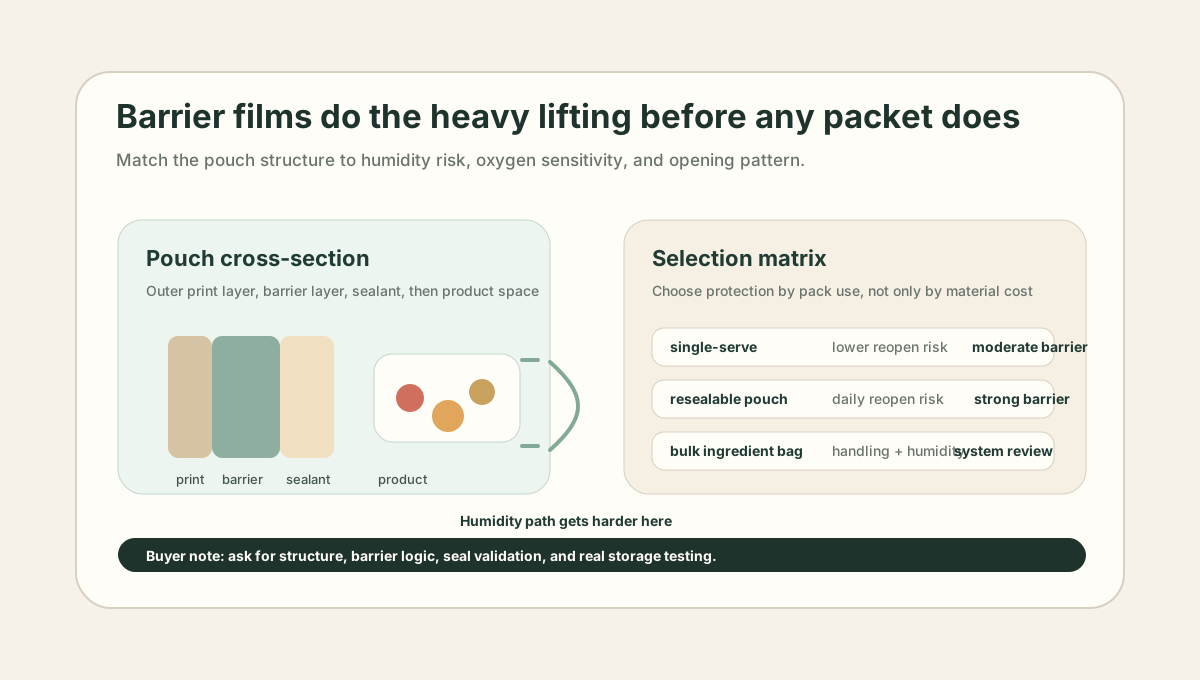
- Barrier film should be matched to humidity risk, pack size, and how often the pouch will be opened.
- Moisture protection is usually the first packaging priority for freeze-dried fruit, but oxygen can still matter for color and aroma.
- A zipper does not compensate for weak film, poor seals, or oversized headspace.
- Buyers should ask suppliers for the film structure, barrier data, and validation method, not just whether the pouch is 'high barrier.'
Packets help, but the pouch film still does most of the protective work in freeze-dried fruit packaging. If a freeze-dried fruit product turns soft quickly, the conversation should not stop at desiccants or oxygen absorbers. The film itself may be the bigger variable.
The direct answer
The best barrier film for freeze-dried fruit is the one that controls moisture pickup first, then matches oxygen sensitivity, pack size, opening pattern, and distribution conditions. A single-serve pouch for plain strawberry pieces does not need the same structure as a large resealable family bag shipping through humid climates.
For most freeze-dried fruit, the main packaging failure mode is still simple: too much water vapor reaches the product.
Why barrier film matters so much here
Freeze-dried fruit is unusually sensitive to ambient humidity. The product is dry, porous, and quick to absorb water once exposed. That means the pouch is not just a container. It is part of the quality system.
When the film is under-specified, a few things tend to show up first:
- crunch becomes muted
- thin slices soften faster than expected
- powder starts to cake
- fruit clumps or feels stale
- texture changes before the end of the labeled storage period
That does not automatically mean the dryer ran the wrong cycle. It may mean the package is allowing too much water vapor in during storage, transport, or repeated opening.
Start with the two barrier questions
Buyers evaluating a pouch should start with two separate questions:
- How well does the structure block water vapor?
- How well does it block oxygen?
For freeze-dried fruit, water vapor transmission is usually the first concern because texture loss is often the most visible complaint. Oxygen becomes more important when color, aroma, or sensitive blend ingredients matter.
Plain apple pieces and a berry-chocolate topping blend may both be sold as freeze-dried fruit products, but the barrier priorities are not identical.
Why "high barrier" is not enough as an answer
Suppliers often describe packaging in shorthand: low barrier, medium barrier, high barrier. That is useful only as a starting point.
Buyers need more detail:
- the film structure
- whether foil or a metallized layer is used
- whether the pouch is a simple seal or a resealable zipper pack
- how much headspace is left in the pouch
- whether the product is intended for one-time use or repeated opening
A pouch can be described as high barrier and still perform poorly if the seal is inconsistent, the zipper leaks, or the package sits open in humid conditions every day.
Common film trade-offs
In practice, freeze-dried fruit packaging usually balances protection, appearance, cost, and machine compatibility.
Clear structures
Clear laminations help the product stay visible on shelf. That can be useful when color and piece identity drive purchase. The trade-off is that clear windows and fully transparent structures often provide less protection than more aggressive barrier builds.
They may work well for:
- small packs with fast turnover
- dry climates
- formats that are consumed quickly after opening
They are less forgiving when the product is sold in larger resealable pouches or exposed to humid distribution.
Metallized structures
Metallized films often improve protection while retaining lower cost and lighter weight than full foil builds. They are common when brands want stronger humidity control without committing to an opaque foil pouch.
These can make sense for:
- mainstream snack pouches
- medium pack sizes
- products that need better texture protection in normal retail conditions
Foil-based structures
Foil laminations are often used when the product needs stronger protection and longer stability margins. They reduce visibility, but they can be a practical choice when humidity protection is non-negotiable.
These are often most relevant for:
- larger family packs
- sensitive premium formats
- export shipments
- humid storage environments
The cost is not only material cost. Foil structures can change the visual presentation and recyclability conversation as well.
Pack format changes the answer
The same fruit can need different packaging depending on the format.
Single-serve pouches
Single-serve packs are opened once and finished quickly. That reduces repeated-exposure risk. A buyer may accept a lighter packaging structure if the product moves fast and the distribution environment is controlled.
Resealable consumer bags
This is where many quality problems appear. A large pouch may leave the plant in good condition, but every opening brings in humid air. A zipper is helpful, but it is not magic. If the film barrier is weak, the product has a long exposure window between first open and final use.
Bulk ingredient bags
Foodservice and industrial buyers often focus on landed cost first, but bulk packs create their own risk. If the bag is opened repeatedly in a production room, moisture protection may need to be more conservative than a buyer expects.
Ask about the full package system
Film should not be evaluated in isolation. A good packaging review also looks at:
- seal consistency
- zipper quality
- pouch size relative to fill
- headspace volume
- desiccant strategy
- case pack compression during transport
- expected storage climate
This matters because an expensive barrier structure can still underperform in a weak system, while a well-designed package can make a moderate structure work better.
If a supplier cannot clearly explain the pouch structure, the moisture-control logic, and how they validated it, treat that as a process signal, not just a packaging gap.
What buyers should ask suppliers
When reviewing freeze-dried fruit packaging, ask:
- What is the exact pouch structure?
- Is the main risk humidity pickup, oxidation, or both?
- What is the intended pack use: single-serve, resealable, or bulk?
- Was the pouch validated with texture checks over time?
- Was testing done in real humidity conditions or only under ideal storage?
- Is the zipper part of the protection strategy or mainly for convenience?
- Is a desiccant included, and if so, what problem is it supporting?
These questions are useful even when you are buying finished goods rather than converting packaging yourself.
A practical way to choose
For freeze-dried fruit, the smartest packaging decision is rarely the cheapest pouch that seals. It is the structure that keeps the product aligned with the promised eating experience.
If the product is sold on crunch, visible fruit identity, and premium quality, the package has to defend those attributes. If the fruit is a short-life topping portion used immediately, the answer may be simpler.
The point is not to default to the most expensive barrier available. The point is to match barrier performance to how the product will actually be stored, shipped, opened, and consumed.
Bottom line
Barrier films matter because freeze-dried fruit is highly vulnerable to moisture pickup after drying. The right film choice depends on water vapor protection first, then oxygen risk, pack format, and real-world opening behavior.
When a supplier says a pouch is "high barrier," the next step is not to nod. The next step is to ask: high barrier against what, and proven how?
Frequently Asked Questions
What does "high barrier" actually mean for freeze-dried fruit packaging?
It is only a starting point. Buyers need the actual film structure, whether foil or a metallized layer is used, whether the pouch is a simple seal or resealable zipper pack, the headspace volume, and whether the pack is intended for one-time use or repeated opening. A pouch can be called high barrier and still perform poorly if the seal or zipper leaks.
Should moisture or oxygen protection come first?
For freeze-dried fruit, water vapor protection is usually the first concern because texture loss is the most visible complaint. Oxygen becomes more important when color, aroma, or sensitive blend ingredients matter. Plain apple pieces and a berry-chocolate topping blend have different barrier priorities even though both are sold as freeze-dried fruit.
When is a clear pouch acceptable for freeze-dried fruit?
Clear laminations help product visibility on shelf, which can drive purchase when color and piece identity matter. They tend to work for small packs with fast turnover, dry climates, and formats that are consumed quickly after opening. They are less forgiving for large resealable pouches or humid distribution.
When is a foil pouch worth the higher cost?
Foil laminations are often used when the product needs stronger protection and longer stability margins — larger family packs, sensitive premium formats, export shipments, and humid storage environments. They reduce visibility and add cost, but they can be necessary when humidity protection is non-negotiable.
Does a zipper alone protect freeze-dried fruit?
No. A zipper helps but is not magic. If the film barrier is weak, the product still has a long exposure window between first open and final use. Resealable consumer bags are where many quality problems actually appear.
What makes a resealable pouch riskier for freeze-dried fruit?
Every opening brings in humid air. A large pouch may leave the plant in good condition and then lose texture over weeks of repeated opening if film, seal, headspace, and desiccant strategy are not designed together.
What should buyers ask suppliers about packaging?
Ask for the exact pouch structure, whether the main risk is humidity or oxidation, the intended pack use, whether the pouch was validated with texture checks over time, whether testing was done in real humidity or only ideal storage, the role of the zipper, and whether a desiccant is included and why.
Primary sources & further reading
- ASTM F1249 — Standard Test Method for Water Vapor Transmission Rate ASTM International The standard method (modulated infrared sensor) most suppliers cite when reporting WVTR/MVTR for barrier films.
- ASTM F1927 — Standard Test Method for Oxygen Transmission Rate ASTM International The reference method for OTR — the metric that defines an oxygen-sensitive product's pouch choice.
- Indirect Food Additives: Substances for Food Contact U.S. Food & Drug Administration FDA's inventory of food-contact substances — the regulatory basis for which polymer layers may legally contact dried fruit.
- Food Packaging — Roles, Materials, and Environmental Issues Institute of Food Technologists — Journal of Food Science Peer-reviewed review of packaging-material selection criteria, including barrier-property tradeoffs.
External links open in a new tab. We do not receive compensation from any organization listed; sources are referenced because they are primary, current, and publicly verifiable.