- WVTR and OTR values are measured under stated test conditions, not in the abstract.
- Comparing two freeze-dried fruit pouches without matching the method, temperature, humidity, and units can produce false conclusions.
- For freeze-dried fruit, WVTR usually deserves the first read because humidity pickup is the fastest route to texture failure.
- A useful packaging spec request includes structure, thickness, seal logic, and the barrier test conditions together.
Barrier numbers are useful only when the buyer knows what question the lab was actually asked.
That is easy to forget in freeze-dried fruit packaging because supplier spec sheets often compress the context into one short line: WVTR or OTR, one number, one unit, done. The number feels objective. The comparison often is not.
The direct answer
WVTR and OTR test conditions matter because barrier performance is reported under defined laboratory conditions, not as a single universal truth. If two freeze-dried fruit pouch specs do not match on method, temperature, humidity, and units, the numbers can mislead even when both are technically correct.
For buyers, that means a barrier comparison should start with the test conditions before it starts with the ranking.
Why the same pouch number can move
Barrier materials do not behave identically across every environment. Test standards exist because permeability has to be measured in a controlled way.
In practice, that means the reported value depends on details such as:
- the test method used
- the test temperature
- the relative humidity used for the test
- whether the reading applies to film or a finished package
- the thickness and structure being tested
For freeze-dried fruit, this matters because the commercial question is never just, "Is this pouch a barrier?" The real question is whether the package keeps a dry, porous product crisp long enough in the storage and opening pattern the channel will impose.
WVTR first, then OTR
When buyers are new to the category, oxygen often sounds like the more sophisticated packaging conversation. For freeze-dried fruit, water vapor is usually the faster problem.
If water vapor protection is weak, the customer tends to feel it quickly:
- crunch softens
- thin pieces go leathery
- powder cakes
- fruit clumps
- the pouch starts tasting tired even before it looks damaged
That is why WVTR usually gets the first read. OTR still matters, especially for color-sensitive berry products or oxidation-sensitive blends, but humidity is commonly the first route to disappointment.
If two pouch specs do not show the same barrier test context, treat the numbers as separate data points, not as a clean ranking.
Why mismatched conditions create bad buying decisions
Imagine two suppliers offering similar resealable pouches for freeze-dried strawberry.
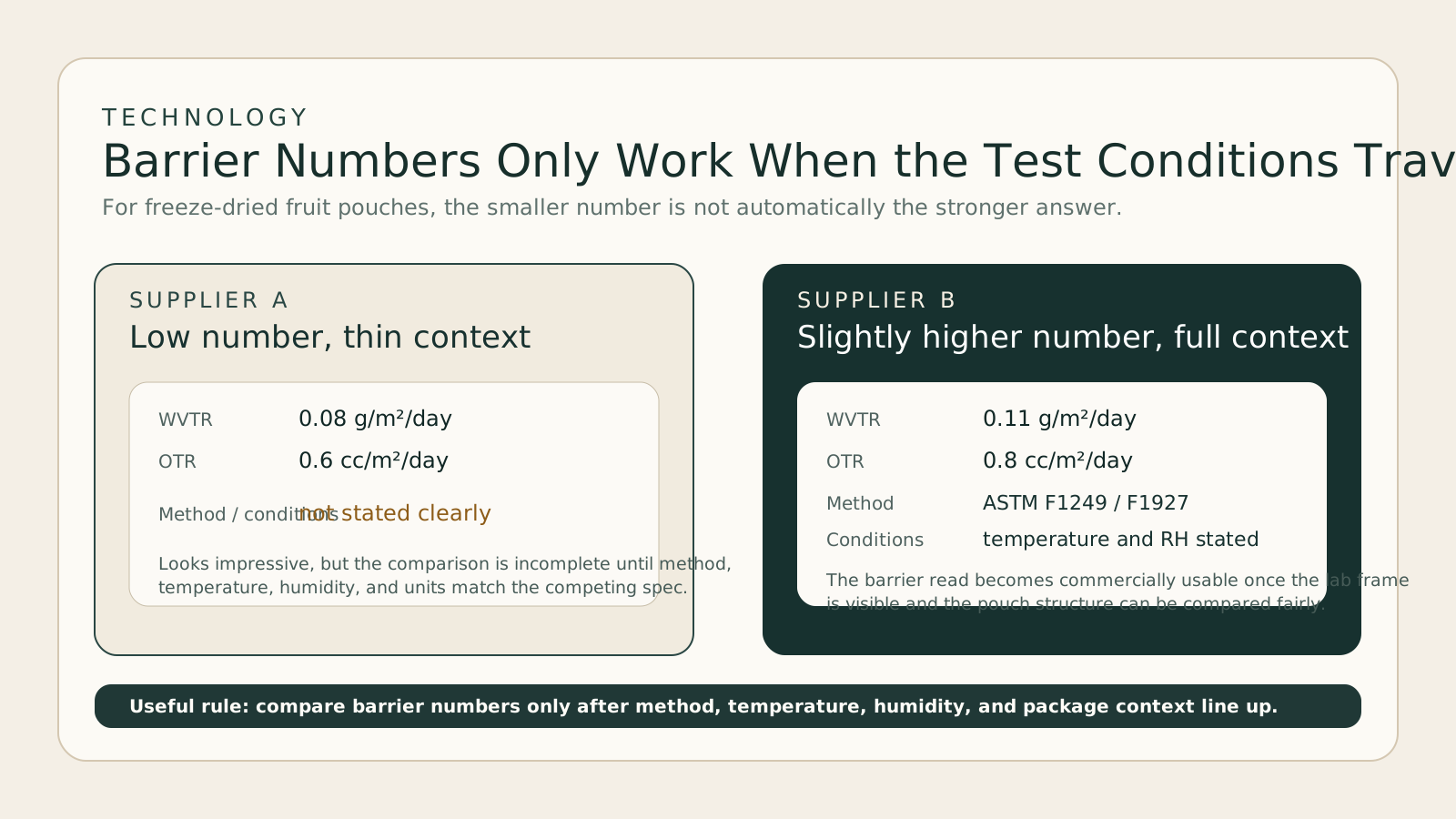
One reports a very low WVTR, but the conditions are not shown clearly. Another reports a somewhat higher number but gives the method, the temperature, the relative humidity, the units, and the full laminate structure.
The second supplier may actually be giving the more usable answer.
The buying error is assuming the smaller number automatically means the stronger commercial pouch. Without matched conditions, the comparison may be no better than comparing two moisture readings taken by different methods and pretending they are identical.
That is especially risky when buyers compare:
- clear versus metallized structures
- single-serve versus family packs
- dry-climate distribution versus humid retail channels
- one-time-use packs versus pouches opened repeatedly over weeks
Those are not the same packaging job, even if the fruit inside is similar.
The spec-sheet questions that make barrier data usable
When reviewing pouch options for freeze-dried fruit, ask for the barrier number and the frame around it:
- What test method was used?
- At what temperature was it run?
- What relative humidity condition applied?
- What units are being reported?
- Is the result for film alone or the finished package?
- What is the actual laminate structure and nominal thickness?
Those questions turn a packaging claim into something that can be audited and compared.
They also make it easier to connect the lab result back to the product reality. A large resealable mango pouch with repeated kitchen exposure is a different risk profile from a small single-serve apple pack sold for immediate use.
Barrier numbers still do not replace the full packaging read
Even perfectly matched test conditions do not finish the job.
Freeze-dried fruit buyers still need to understand:
- seal integrity
- zipper performance
- headspace volume
- fill weight and pack geometry
- whether the product carries a desiccant or absorber
- whether the shelf-life work included texture, not only safety
A pouch can post respectable barrier data and still underperform because the seal is weak or the opening pattern is unrealistic for the barrier build.
Bottom line
WVTR and OTR numbers are worth asking for, but they are worth trusting only when the test conditions come with them. In freeze-dried fruit packaging, the buyer who compares barrier data without matching the context is often comparing paperwork quality, not pouch quality.
Start with the conditions. Then decide whether the pouch is actually built for the fruit, the channel, and the opening pattern you expect.
Frequently Asked Questions
Are WVTR and OTR fixed properties of a pouch?
No. They are measured results tied to a defined test method and stated conditions. The same basic structure can look different when the temperature, relative humidity, or test setup changes.
Why does WVTR usually matter more than OTR for freeze-dried fruit?
Because moisture pickup usually shows up first as lost crunch, softening, caking, or clumping. Oxygen still matters for color and aroma, but water vapor is often the first packaging failure the customer notices.
Can one pouch look worse on paper but still be the better choice?
Yes. If two suppliers report barrier data under different conditions, the comparison may not be fair. Structure, thickness, seal quality, and the intended pack use still have to be read alongside the barrier number.
What should buyers ask for when reviewing a pouch spec?
Ask for the exact film structure, nominal thickness, test method, test temperature, relative humidity if applicable, units, and whether the value applies to film or a finished package.
Primary sources & further reading
- ASTM F1249 — Standard Test Method for Water Vapor Transmission Rate Through Plastic Film and Sheeting Using a Modulated Infrared Sensor ASTM International Referenced for the standard WVTR method commonly cited on flexible-packaging specifications.
- ASTM F1927 — Standard Test Method for Determination of Oxygen Gas Transmission Rate, Permeability and Permeance at Controlled Relative Humidity Through Barrier Materials Using a Coulometric Detector ASTM International Referenced for the OTR method commonly used when flexible-packaging suppliers report oxygen barrier under controlled humidity.
- Measuring Oxygen Transmission Rate of Package Materials Virginia Tech Packaging Systems and Design Referenced for the packaging-program explanation that oxygen transmission is reported under stated test conditions rather than as a context-free property.
- Measuring Water Vapor Transmission Rate of Package Materials Virginia Tech Packaging Systems and Design Referenced for the packaging-program explanation that WVTR depends on defined laboratory conditions and should be read with units and method.
External links open in a new tab. We do not receive compensation from any organization listed; sources are referenced because they are primary, current, and publicly verifiable.