- Anti-dumping duties target imports sold below fair value; countervailing duties target imports helped by foreign government subsidies. They are separate from the ordinary tariff you already pay.
- AD/CVD rates are set by trade agencies, can be far larger than normal tariffs, and are tied to a specific product scope from specific countries and often specific producers.
- Because the duty follows the scope and origin rather than the buyer, a routine sourcing decision can expose you to a case you had nothing to do with.
- Buyers reduce risk by tracking active cases, confirming true country of origin, clarifying who bears new duties in the contract, and keeping qualified alternates in other origins.
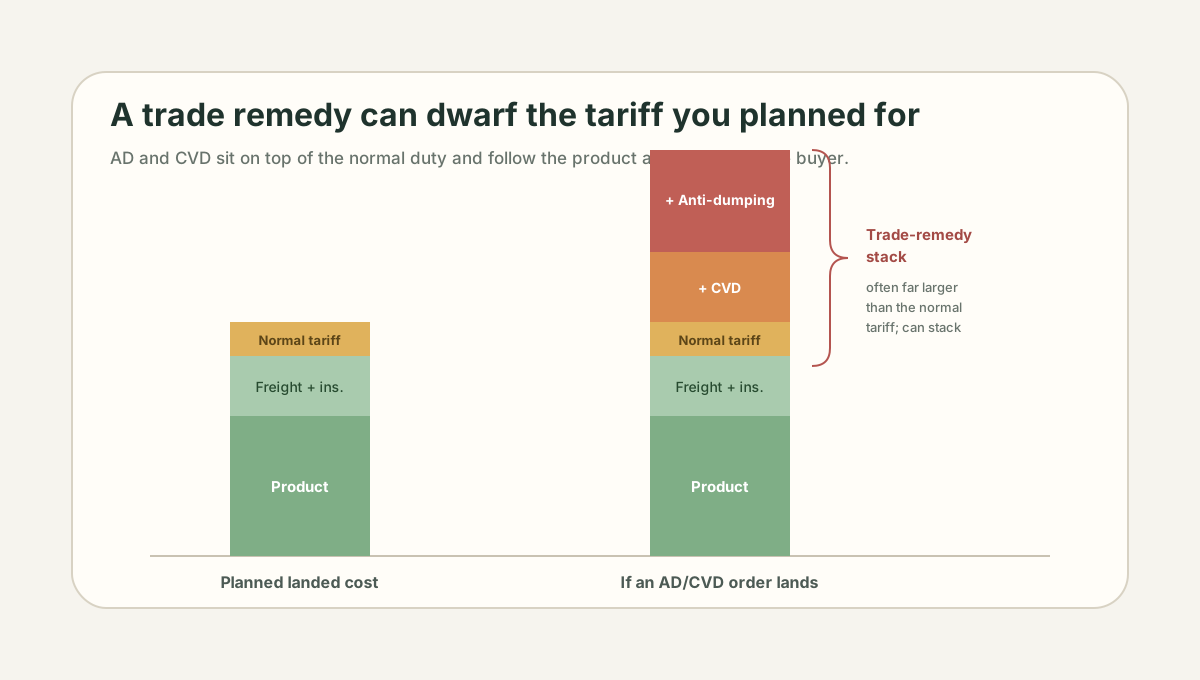
Most freeze-dried fruit buyers build a landed-cost model with the usual blocks: product price, freight, insurance, the ordinary import tariff, and handling. Then one day a trade case is filed on a product that looks a lot like theirs, and a new block appears on top that can be larger than all the tariff planning combined. That block is an anti-dumping or countervailing duty, and it follows rules most buyers never had to learn.
The direct answer
Anti-dumping duties (AD) and countervailing duties (CVD) are trade remedies that a destination market can impose on specific imports from specific countries. Anti-dumping duties target goods sold below fair value; countervailing duties target goods that benefited from foreign government subsidies. They are separate from the normal tariff, they are usually much larger, and they attach to a defined product scope and origin rather than to any particular buyer. That means a routine sourcing choice can expose you to a duty that has nothing to do with your own conduct, simply because your product and origin fall inside the case.
This article explains the mechanism, not a claim that a specific order covers freeze-dried fruit today. Whether any given fruit, origin, and destination is covered can change, so the practical value here is knowing how to see it coming.
Two different problems, two different duties
The two remedies address different complaints, even though buyers often lump them together.
Anti-dumping is about price. The allegation is that a foreign producer is selling into the destination market at a price below what it charges at home or below its cost, injuring domestic producers. If investigators agree, an anti-dumping duty is set to offset that gap.
Countervailing is about subsidy. The allegation is that a foreign government gave producers an unfair advantage through grants, cheap loans, tax breaks, or input subsidies. If investigators agree, a countervailing duty is set to offset the subsidy's benefit.
A product can be hit by both at once, and the two can stack on top of each other and on top of the ordinary tariff. That is how a landed cost can move dramatically rather than by a few points.
Why the numbers are bigger than normal tariffs
Ordinary tariffs on many food products are modest. AD/CVD rates are calculated to offset a measured margin of dumping or subsidy, and those margins are frequently large. Rates in the tens or even hundreds of percent are not unusual across the universe of trade cases. The exact figure is producer-specific: named cooperating producers may receive individual rates, while others fall under a higher country-wide rate.
That producer-specificity has a practical consequence. Two suppliers in the same country, shipping a nearly identical product, can face very different duties depending on whether they participated in the investigation and what rate they were assigned.
Model your worst case as ordinary tariff plus any anti-dumping duty plus any countervailing duty, not just one of them. When a product is covered by both orders, they add together, and both sit on top of the normal duty you already expected to pay.
How the duty finds you
The uncomfortable feature of AD/CVD for a buyer is that liability follows the goods, not fault. The duty is defined by three things working together:
- Product scope. A written description of exactly which goods are covered, sometimes down to form, processing, and packaging.
- Country of origin. The order applies to goods originating in named countries.
- Producer or exporter. Individual rates for named parties, a residual rate for everyone else.
If your product, its true origin, and its producer line up with an active order on the day it enters, the duty applies, regardless of when you signed your purchase order. That is why a buyer who did nothing unusual can still get caught: the case was filed against an industry and an origin, and their shipment simply matched the description.
Country of origin is where mistakes happen
Because origin drives coverage, the temptation is to "solve" a duty by buying from a different country. Sometimes that is legitimate. If an alternate origin genuinely grows, processes, and freeze-dries the fruit and is outside the order, sourcing there is a real answer.
The trap is superficial rerouting. If covered goods are merely shipped through a third country, relabeled, or given trivial finishing to disguise origin, authorities can treat that as circumvention and extend duties or pursue penalties. Substantial transformation in the alternate origin is the line that matters, and it is a factual question about where the real work happened, not where the last shipping label was printed. Buyers should be wary of any supplier offering a suspiciously cheap "origin change" that does not correspond to actual production moving.
What this does to sourcing strategy
The possibility of AD/CVD is an argument against single-origin dependence for any fruit and format where a case is plausible. A few practices lower the exposure:
- Watch the active-case lists. Destination trade authorities publish orders and pending investigations. Checking them for your product and origins is a cheap early-warning system.
- Confirm true origin, on paper and in fact. Know where the fruit was grown and freeze-dried, and keep documentation that would survive a customs review.
- Keep qualified alternates. A backup supplier in a different, uncovered origin is worth qualifying before you need it, because qualification takes time you will not have once an order lands.
- Write the contract for it. Spell out who bears newly imposed duties, how price adjusts, and what happens if a shipment in transit becomes subject to a new order. Incoterms decide who is importer of record and therefore who the duty bill lands on.
- Model the worst case. Include a scenario where an order is imposed mid-program so the finance side is not blindsided.
Why buyers should care even without an active order
It is reasonable to ask why any of this matters if freeze-dried fruit from your origin is not covered today. The answer is timing. Trade cases are filed by domestic industries and can move faster than a buyer's ability to re-source. Preliminary duties can attach before a case is finally decided, and they can apply to goods already on the water. A buyer who understood the mechanism in advance keeps optionality; a buyer who learns about AD/CVD from a customs bill is negotiating from behind.
None of this means treating every origin as risky. It means treating AD/CVD as a known category of supply risk, tracked alongside crop failure, freight disruption, and currency swings, rather than as an exotic event that happens to other people's products.
Bottom line
Anti-dumping and countervailing duties are the part of trade policy most likely to reshape a freeze-dried fruit landed cost without warning, because they are large, origin-specific, and attach to the goods rather than to any wrongdoing by the buyer. You cannot control whether a case is filed, but you can control your exposure: know your true origins, watch the case lists, keep alternates ready, and write contracts that decide in advance who pays if the block on top of your cost stack suddenly gets much taller.
Frequently Asked Questions
What is the difference between anti-dumping and countervailing duties?
Anti-dumping duties address imports sold in the destination market below their fair or home-market value. Countervailing duties address imports that benefited from government subsidies in the exporting country. A single product can face both at once, and the two duties can stack.
Are freeze-dried fruits currently subject to AD/CVD?
That depends on the specific product, origin, and the destination market's active orders at the time you import, and it can change. This article explains the mechanism rather than asserting a current order exists. Always check the destination authority's active-case list for your exact product and country before assuming.
How large can these duties be?
They vary widely by case and by producer, but they are frequently much larger than ordinary most-favored-nation tariffs, sometimes reaching double- or triple-digit percentages. That is why they can reshape a landed cost far more than a normal tariff change.
Can changing the country I buy from avoid a duty?
Sometimes, if the alternate origin is genuinely outside the order's scope. But authorities also pursue circumvention when goods are only lightly transshipped or finished to disguise their true origin. Real, substantive sourcing from an uncovered origin is different from paper rerouting.
Who pays the duty if an order lands after I sign a contract?
Whoever the contract and Incoterms make responsible for import duties, usually the importer of record. That is exactly why the duty-change and cost-responsibility language in the contract matters before anything happens.
Primary sources & further reading
- Antidumping and Countervailing Duties (AD/CVD) U.S. Customs and Border Protection Referenced for the general description of how AD/CVD are administered and collected at import in the United States.
- Enforcement and Compliance: Antidumping and Countervailing Duty Operations International Trade Administration, U.S. Department of Commerce Referenced for the general roles of investigating agencies in determining dumping, subsidies, and duty rates.
- Anti-dumping, anti-subsidy and safeguard measures European Commission — Directorate-General for Trade Referenced for the general framework of trade-defence instruments in another major import market.
External links open in a new tab. We do not receive compensation from any organization listed; sources are referenced because they are primary, current, and publicly verifiable.