- Tariff classification is a legal declaration attached to the entry, not a casual product description on a quote sheet.
- Plain dried fruit, sweetened fruit, and further-prepared fruit products can move through different HTS logic even when commercial teams describe them all as freeze-dried fruit.
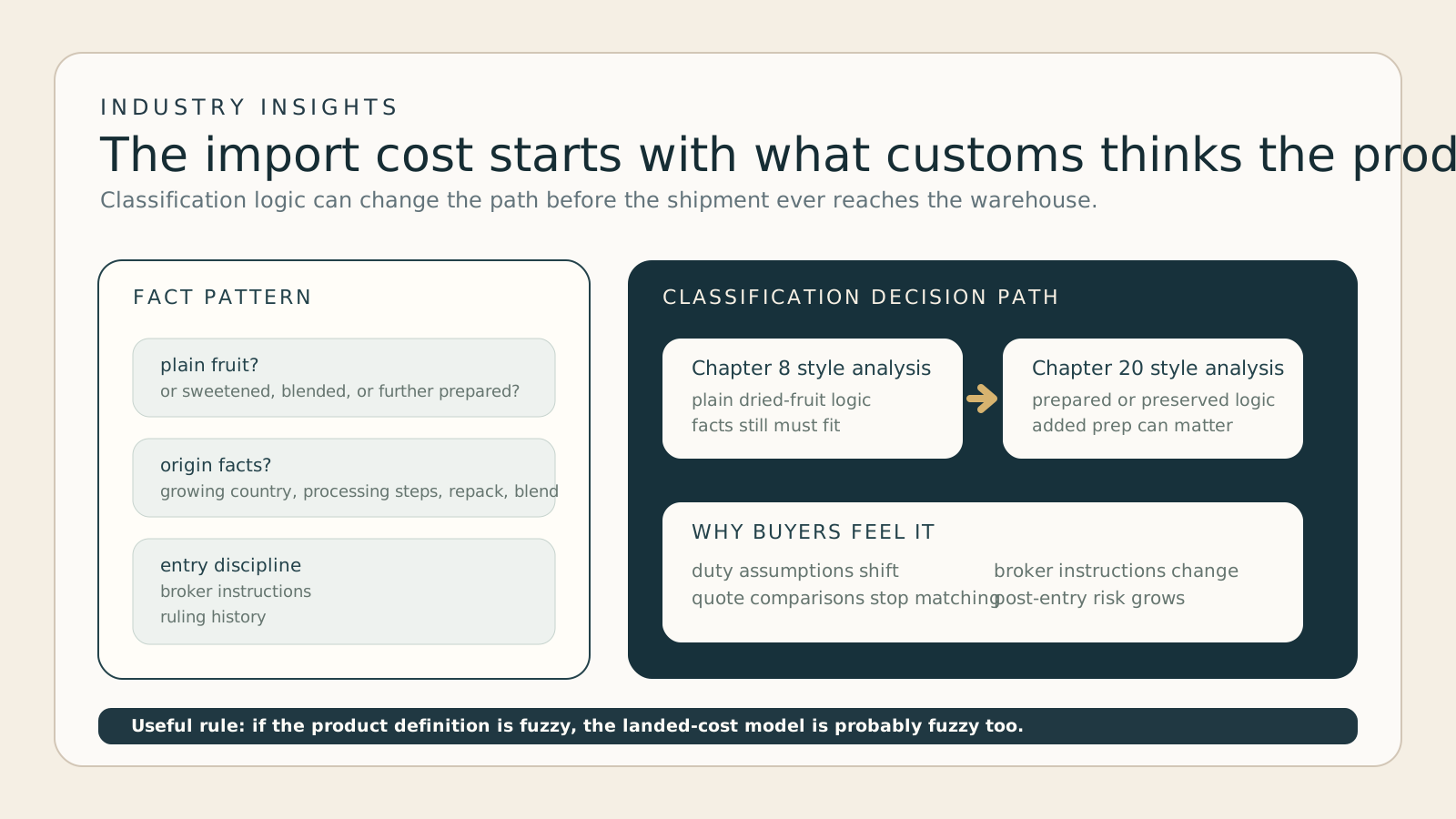
- Classification affects more than duty rate. It can alter costing assumptions, broker instructions, ruling strategy, and the risk of post-entry surprises.
- Freeze-drying does not automatically create a new country of origin or a new tariff result by itself; the factual product description still drives the analysis.
- When a product is even slightly non-standard, a binding ruling can be cheaper than learning the answer through a delayed or corrected entry.
Import teams often spend more time debating price than product definition.
That order is backwards.
The direct answer
Tariff classification changes freeze-dried fruit import costs because the entry classification helps decide the legal tariff treatment attached to the product. If the imported fruit is analyzed under one HTS path rather than another, the landed-cost math, broker instructions, and post-entry risk can change before the bag even reaches the warehouse.
The operational lesson is simple: two items that sound alike in a sales call may not behave alike in customs.
Classification is not a back-office afterthought
CBP's classification guidance puts the responsibility on the importer to declare merchandise correctly. That means the final answer is not "whatever the supplier called it" or "whatever the last shipment used."
For freeze-dried fruit, that matters because procurement language is often loose:
- plain freeze-dried strawberry slices
- sweetened fruit crisps
- freeze-dried fruit powders
- fruit blends with carriers
- fruit snack mixes
Commercially, all of those may get called freeze-dried fruit. Legally, the facts underneath them may point the entry team toward different analysis.
That difference is where costing mistakes start.
Why Chapter 8 versus Chapter 20 logic matters
The current HTS framework distinguishes between fruit that remains in dried-fruit logic and fruit that is treated as more prepared or preserved. For many buyers, that is the first useful mental model.
In practical terms:
- plain dried fruit often starts the conversation in Chapter 8 logic
- further-prepared fruit may pull the analysis toward Chapter 20 logic
- added sugar, other ingredients, or product form can matter
- the exact tariff result still depends on the product facts, not the marketing headline
That last point matters most. Teams get into trouble when they try to classify from a brand deck instead of from the actual product description, ingredient line, process facts, and ruling history.
CBP ruling practice is especially useful here because it reminds buyers that "dried fruit" is not one monolithic answer. Some products stay in dried-fruit treatment. Others do not.
Why classification changes the quote even before final duty is known
The obvious effect is duty exposure.
But the practical business effect is broader:
- budget models can be wrong
- landed-cost comparisons can become distorted
- broker instructions can fail at the last minute
- an importer may discover that its assumed compliance path was incomplete
- post-entry corrections can consume time, fees, and credibility
That is why classification should be settled early enough to influence purchasing, not late enough to become a customs surprise.
Even when the team does not yet know the precise final duty outcome, it still needs to know whether the product is being analyzed as plain dried fruit, a prepared fruit product, a flavored blend, or something else that changes the decision path.
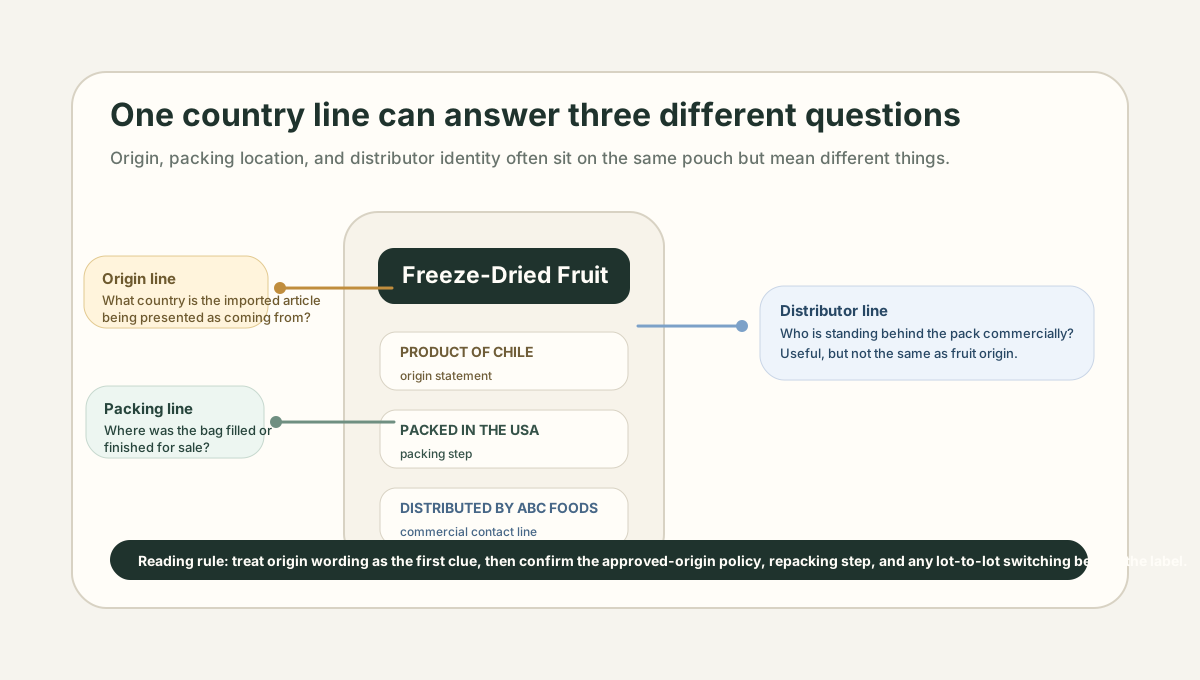
Freeze-drying does not automatically rewrite origin
This is another area where teams over-assume.
CBP ruling N330805 is useful because it shows the agency's reasoning that freeze-drying or dehydration of fruit does not automatically create a substantial transformation. That does not mean every origin question is simple. It means the process name alone does not settle it.
For buyers, the practical takeaway is that three questions stay separate:
- What is the tariff classification?
- What is the origin for customs purposes?
- What label or marketing origin claim is the brand planning to show?
Those are related, but they are not interchangeable.
When teams blur them together, the quote sheet starts looking cleaner than the actual import file.
Why a binding ruling can be the cheapest answer
Many freeze-dried fruit SKUs are ordinary enough that experienced brokers and import teams can work through the classification cleanly.
Some are not:
- products with carriers or anti-caking ingredients
- sweetened crisps
- blends of fruit with other snack components
- powders that sit between ingredient and consumer use
- repacked or processed multi-country products with tricky origin facts
That is when a binding ruling can protect the business from guessing.
A ruling request costs effort up front, but that effort is usually cheaper than:
- a held or corrected entry
- retroactive duty adjustments
- internal disputes over who mis-described the product
- months of using a costing model built on the wrong tariff assumption
The more recurring the SKU and the larger the volume, the stronger the case for getting the answer disciplined early.
What buyers should ask before comparing imported quotes
Do not stop at "What is the case price?"
Ask:
- What exactly is in the product?
- Is it plain fruit or further prepared?
- What HTS logic is the importer expecting?
- Has the product or a close equivalent been classified before?
- Is there a binding ruling, or is the team relying on trade judgment?
- Who is acting as importer of record?
Those questions are not customs trivia. They are part of real procurement discipline.
Bottom line
Tariff classification changes freeze-dried fruit import costs because it defines the legal path the product takes through entry. Plain fruit, prepared fruit, and borderline products do not all carry the same customs logic even when a supplier describes them under one commercial phrase.
If the team wants a quote it can trust, classification has to be part of the costing conversation early enough to matter.
Frequently Asked Questions
Why does tariff classification matter for freeze-dried fruit buyers?
Because classification helps determine the legal tariff line used at entry, which in turn affects duty treatment, costing assumptions, and the risk of delays or corrections.
Is all freeze-dried fruit classified the same way?
No. Plain fruit, fruit with added sugar, fruit blended with other materials, and more heavily prepared products may be analyzed differently under the HTS.
Does freeze-drying itself create a new country of origin?
Not automatically. CBP rulings show that drying or freeze-drying does not by itself necessarily create a substantial transformation.
When should a buyer ask for a binding ruling?
When the product facts are unusual enough that the tariff result is not obvious from ordinary trade practice, especially if the duty consequence or compliance risk is meaningful.
What is the most practical procurement habit here?
Do not compare imported quotes until the team aligns on the factual product description, likely classification logic, origin facts, and who is responsible for the import declaration.
Primary sources & further reading
- Tariff Classification U.S. Customs and Border Protection Referenced for CBP's general classification guidance and the importer's responsibility for declaring classification correctly.
- Harmonized Tariff Schedule U.S. International Trade Commission Referenced for the current U.S. tariff schedule framework and the chapter-level distinction between dried fruit provisions and more prepared fruit provisions.
- CBP Ruling N330805 U.S. Customs and Border Protection Referenced for CBP's discussion that freeze-drying or dehydration of fruit does not automatically create a substantial transformation for origin analysis.
- CBP Ruling N293319 U.S. Customs and Border Protection Referenced as an example of dried berry products being analyzed under fruit-preparation logic rather than assuming every dried fruit belongs in the same tariff outcome.
External links open in a new tab. We do not receive compensation from any organization listed; sources are referenced because they are primary, current, and publicly verifiable.