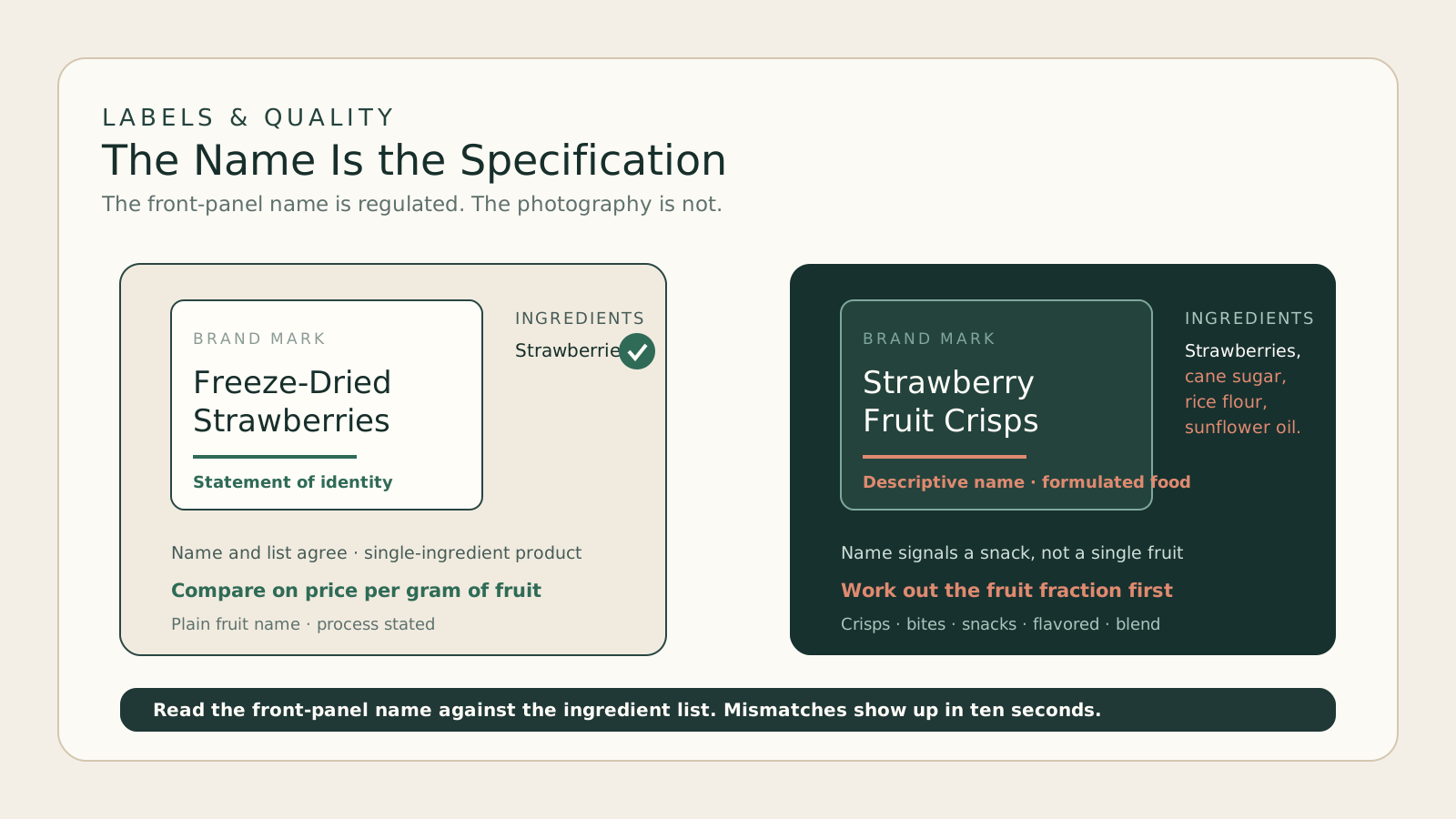
- The statement of identity is the required name of the food on the principal display panel — it must describe what the product actually is, not just what it evokes.
- A plain fruit name ('Freeze-Dried Mango') signals a different product from a fanciful or descriptive name ('Tropical Fruit Crisps'), and the ingredient list will usually confirm it.
- Words like 'flavored,' 'snack,' 'crisps,' 'bites,' and 'blend' are doing real work — they typically signal that the product is not simply the named fruit.
- Reading the front-panel name against the ingredient list takes ten seconds and catches most of the gap between what a bag looks like and what it contains.
Pick up two bags in the dried fruit aisle. Both are pink. Both show whole strawberries in the photography. Both cost roughly the same. One says Freeze-Dried Strawberries. The other says Strawberry Fruit Crisps.
Those are not two ways of saying the same thing. The name of the food on the front of a package is a regulated element with a specific job, and once you know what it is doing, the front panel becomes the fastest quality signal on the bag.
The direct answer
The statement of identity is the required name of the food, and it has to appear on the principal display panel — the part of the package a shopper sees first — in reasonably prominent type. Its purpose is to tell you what the product is.
There are a few acceptable forms. A food can use the name established by regulation, its common or usual name, or an appropriately descriptive term. A fanciful name is allowed only where the food is so well known under that name that it communicates the same information.
The practical upshot for freeze-dried fruit: a product that is simply a fruit, freeze-dried, can and generally does say so plainly. A product that is something else — a formulated snack, a blend, a coated piece, a puffed crisp with added ingredients — needs a name that reflects that, which is why it tends not to be a bare fruit name.
Reading the front panel
A few patterns come up repeatedly, and each one tells you where to look next.
"Freeze-Dried [Fruit]" — a plain, unqualified fruit name with the process stated. This is the strongest signal that the bag contains the named fruit and little else. Confirm on the ingredient list, which should be short.
"[Fruit] Crisps," "[Fruit] Bites," "[Fruit] Snacks" — descriptive names for a fabricated food. The product is a snack made with the fruit, not necessarily only the fruit. Expect a longer ingredient list, and check for added sugar, starch, oil, or a carrier.
"[Fruit]-Flavored [something]" — the "flavored" qualifier is doing specific work. It indicates the characterizing flavor rather than asserting the food simply is that fruit. The named fruit may be present in a small amount, or the flavor may come from elsewhere.
"Fruit Blend," "Mixed Fruit," "Tropical Mix" — a multi-fruit product. The ingredient list will show the components in descending order by weight, which tells you which fruit dominates. The photography on the front rarely reflects those proportions.
"Fruit Powder" or "[Fruit] Powder" — a different physical form with different uses and often different pricing logic. Check whether an anti-caking agent or carrier is present.
Front-panel photography is not the statement of identity and is not held to the same standard of describing the food. A bag showing four whole strawberries may contain a blend in which strawberry is the third ingredient. When the image and the name disagree, the name is the one carrying the regulatory weight.
The ten-second check
Read the front-panel name, then flip to the ingredient list, then read the two together.
They should agree. A bag named "Freeze-Dried Mango" with an ingredient list reading "Mango" agrees. A bag named "Mango Fruit Crisps" with an ingredient list reading "Mango, cane sugar, rice flour, sunflower oil" also agrees — the name told you it was a formulated snack, and the list confirms it.
What you are looking for is a mismatch: a name that reads as a simple fruit paired with a list that contains several other things. That gap is where the misreadings happen, and it is almost always visible in under ten seconds.
Why this matters for price comparison
The statement of identity is the entry point to any honest price comparison, because it establishes whether two products are the same category at all.
A single-ingredient freeze-dried fruit and a fruit crisp made with sugar and starch have different fruit content per gram. Comparing their shelf prices directly is meaningless. Once the front panel has told you which category each product belongs to, you can compare within a category — and, where a formulated snack is in play, work out what fraction of the bag is actually fruit before doing the arithmetic.
This is also why the name matters more than the marketing language surrounding it. Terms like "real fruit," "made with fruit," and "fruit-forward" appear near the statement of identity but are not it. They are claims, and a claim can be true while the product is still mostly something else.
For buyers specifying private label
If you are commissioning product rather than buying it off a shelf, the statement of identity is a specification decision, not a design one.
Deciding early whether the product will be named as a plain freeze-dried fruit or as a formulated snack determines what the formulation can contain, what the ingredient list will look like, and what claims are available downstream. Reversing that decision late — adding a sweetener or a carrier to a product already named as a single fruit — creates a labeling problem, not just a recipe change.
It is worth agreeing the intended name with your co-packer and your regulatory reviewer before the formulation is locked, rather than after artwork is in production.
The short version
The name on the front of the bag is a regulated statement about what the food is, and it is the fastest signal available to a shopper or a buyer. Plain fruit names point to plain products. Words like crisps, bites, snacks, blend, and flavored point to something formulated. Read the name against the ingredient list, and most of the ambiguity in the dried fruit aisle resolves itself before you have looked at the price.
Frequently Asked Questions
Is the statement of identity the same as the brand name?
No. The brand name is the company's mark. The statement of identity is the name of the food itself, and it must appear on the principal display panel in prominent type. A bag can say 'SunRidge' in large letters, but somewhere prominent it also has to say what the food is.
Why do some bags say 'fruit crisps' instead of naming the fruit?
Often because the product is not simply that fruit. It may contain multiple ingredients, added sugar, a coating, or a carrier. 'Crisps' or 'snack' is a descriptive name for a fabricated food, which is a different category from a single-ingredient dried fruit.
Does 'flavored' always mean there is no real fruit?
Not necessarily, but it does mean the flavor is not coming solely from the named fruit as an ingredient. A 'strawberry-flavored' product may contain some strawberry, some added flavor, or no strawberry at all. The ingredient list resolves it.
Where should I look first on an unfamiliar bag?
Front panel name, then ingredient list, then net weight. Those three read together tell you what the product is, what is in it, and how much you are getting — which is most of what matters before comparing prices.
Primary sources & further reading
- Food Labeling Guide U.S. Food and Drug Administration Referenced for the requirement that packaged food bear a statement of identity on the principal display panel and for the treatment of common, usual, and descriptive names.
- Statement of Identity (21 CFR 101.3) U.S. Electronic Code of Federal Regulations Referenced for the specific labeling requirement governing the name of the food.
External links open in a new tab. We do not receive compensation from any organization listed; sources are referenced because they are primary, current, and publicly verifiable.