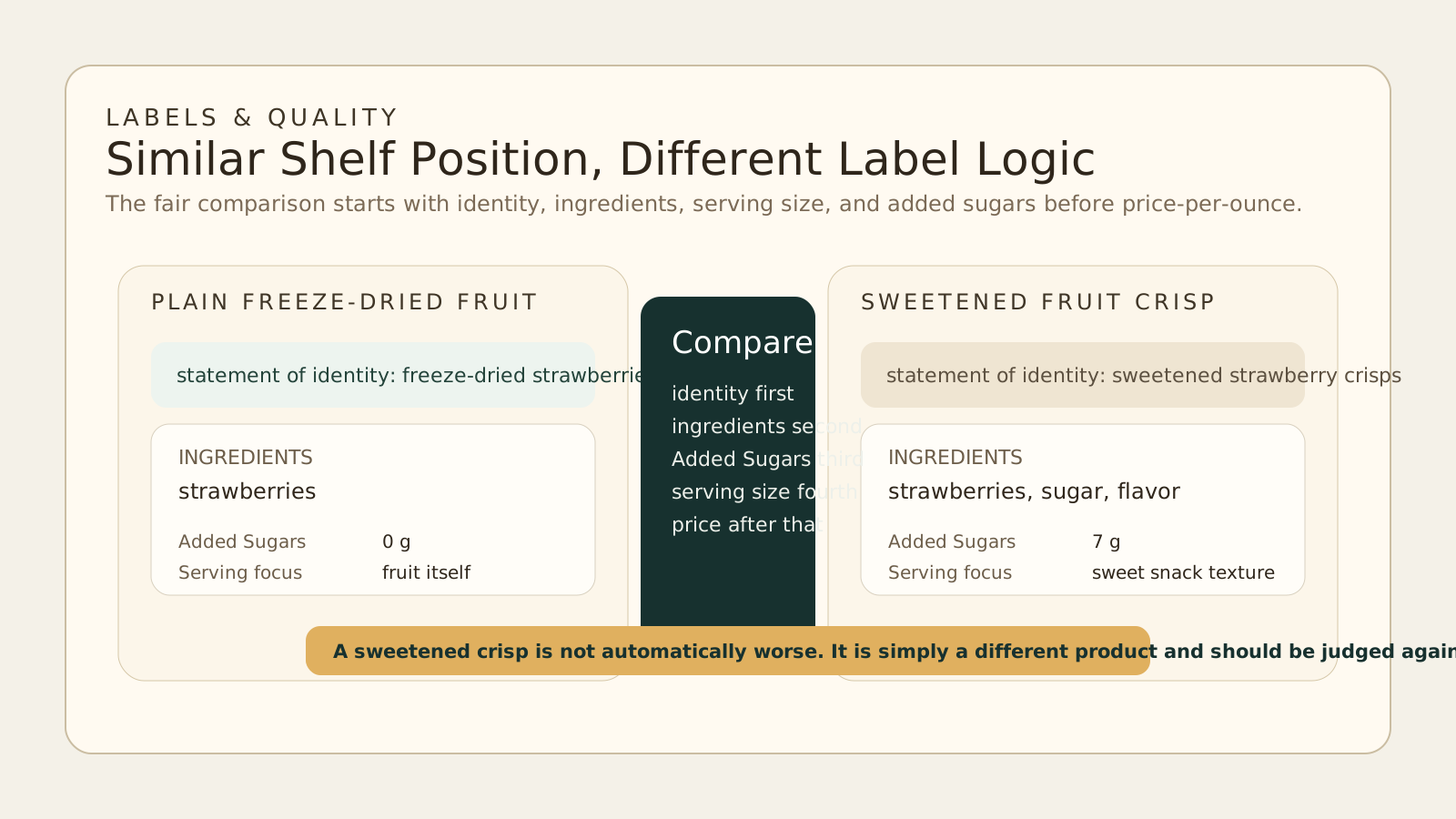
- The statement of identity and ingredient list should be read before price, flavor callouts, or front-of-pack claims.
- Plain freeze-dried fruit and sweetened fruit crisps can serve different jobs, which means the fair comparison is function first, not marketing first.
- Added sugars, ingredient order, and serving size often explain why two bags that look similar eat very differently.
- A heavier or sweeter bag is not automatically a better fruit value; sometimes it is simply a different product.
Plain freeze-dried fruit and sweetened fruit crisps often sit close enough together on a shelf that they look like direct substitutes.
Sometimes they are not.
The direct answer
To compare plain freeze-dried fruit and sweetened fruit crisps fairly, start with the product identity, then the ingredient list, then the Added Sugars line and serving size. Only after those checks does price-per-ounce become meaningful.
That is because the two products may be doing different jobs.
One bag may be trying to deliver:
- plain fruit identity
- recognizable fruit texture
- a one-ingredient label
The other may be trying to deliver:
- sweeter flavor consistency
- a more snack-like crunch
- a dessert-adjacent or candy-adjacent eating experience
Both can be legitimate. They are simply not the same purchase.
Start with the statement of identity
FDA's Food Labeling Guide is useful here because it reminds buyers that the statement of identity is the name of the food on the principal display panel. When no standard identity controls the wording, the common or usual name or a non-misleading descriptive name should do that job.
That matters because the front name frames the rest of the label read.
If one bag says:
- freeze-dried strawberries
and the other says:
- strawberry crisps
- sweetened freeze-dried strawberry crisps
- strawberry-flavored fruit crisps
the products may already be telling you they are not equivalent.
The fair next question is not "Which sounds nicer?" It is "Are these actually the same kind of food?"
Then read the ingredient list in order
FDA also states that the ingredient list is presented in descending order of predominance by weight.
That single rule does a lot of work in this category.
A plain fruit product may read:
- strawberries
A more formulated crisp may read:
- strawberries, sugar
- apple puree concentrate, strawberry puree, sugar
- fruit, syrup, oil, natural flavor, acidulant
Those differences are not small. They change sweetness, density, texture behavior, and what the consumer is really paying for.
This is the point where buyers should stop comparing the bags as if both were simply "freeze-dried fruit."
The Added Sugars line is the fastest reality check
FDA's Added Sugars guidance gives the clearest shortcut in the aisle.
If the product contains added sugars, the Nutrition Facts panel will show grams and percent Daily Value for Added Sugars. That line does not tell you whether the product is bad. It tells you the product is not a plain unsweetened fruit equivalent.
This is the cleanest reason a sweetened fruit crisp should not be compared directly against a one-ingredient freeze-dried fruit pouch.
The two bags may look similar on shelf. Their sugar logic may be completely different.
Serving size changes the picture more than people expect
Serving size is the next trap.
A sweeter or denser crisp can make the panel look dramatic partly because the serving is structured differently. A plain fruit product can also look intense because freeze-dried fruit is concentrated by nature.
So the right read is not just:
- total sugars
- added sugars
It is:
- serving size
- servings per container
- added sugars per serving
- ingredient list context
Without that combination, a buyer may over-penalize one label or over-credit another.
Why a sweetened crisp can still be a valid product
This article is not an argument that sweetened fruit crisps are fake.
They can make sense when the commercial goal is:
- candy-like snacking
- dessert topping
- stronger immediate sweetness
- more uniform flavor from batch to batch
A shopper may prefer that experience. A retailer may want that price point. A brand may want that texture profile.
The problem begins only when the product is marketed, sampled, or compared as if it were functionally the same as plain freeze-dried fruit.
How to compare value honestly
The honest comparison sequence is:
- Identify the product type.
- Read the ingredient list in order.
- Check Added Sugars.
- Check serving size.
- Ask what job the product is trying to do.
Only then should you compare:
- price
- bag weight
- front-of-pack claims
A heavier bag is not always more fruit. A sweeter bag is not always better value. A bright package is not evidence of plain-fruit quality.
A practical buyer checklist
If two bags look close at first glance, ask:
- Are both actually plain fruit products?
- Is one bag carrying added sweeteners or formulation aids?
- Is the texture job snack fruit, topping fruit, or sweetened crisp?
- Are we comparing the same serving basis?
- Does the product match the use case we actually care about?
That checklist usually resolves the confusion fast.
Bottom line
Plain freeze-dried fruit and sweetened fruit crisps can both belong in the category, but they should not be compared as if they were interchangeable by default.
The fair comparison starts with the statement of identity, ingredient order, Added Sugars line, and serving size. Once those are clear, the rest of the value conversation gets much more honest.
Frequently Asked Questions
What is the first thing to compare on two freeze-dried fruit bags?
Start with the statement of identity and then the ingredient list. Those two lines tell you whether the bags are actually the same kind of product.
Does a fruit crisp always mean added sugar?
Not always, but often enough that it should trigger a careful label read. The ingredient list and Added Sugars line decide the answer, not the word crisp by itself.
Why can two similar-looking bags have very different sugar numbers?
Because one may be plain fruit while the other includes sugar, syrup, juice concentrate, flavor systems, or other formulation aids. Serving size can also amplify how the Nutrition Facts panel looks.
Is a sweetened fruit crisp automatically a worse product?
No. It may be the right product for a dessert topping, a candy-adjacent snack, or a more uniform flavor profile. The mistake is pretending it is the same thing as plain freeze-dried fruit.
How should buyers compare value fairly?
Compare product identity, ingredient list, added sugars, serving size, texture role, and actual use case before comparing weight or shelf price.
Primary sources & further reading
- Food Labeling Guide U.S. Food & Drug Administration Referenced for FDA's explanation of the statement of identity and ingredient-list rules, including the requirement that ingredients appear in descending order of predominance by weight.
- Added Sugars on the Nutrition Facts Label U.S. Food & Drug Administration Referenced for FDA's explanation of how added sugars appear on the Nutrition Facts panel and how the Added Sugars line should be used in label comparison.
- How to Understand and Use the Nutrition Facts Label U.S. Food & Drug Administration Referenced for FDA's consumer-facing guidance on serving size and label comparison habits.
External links open in a new tab. We do not receive compensation from any organization listed; sources are referenced because they are primary, current, and publicly verifiable.