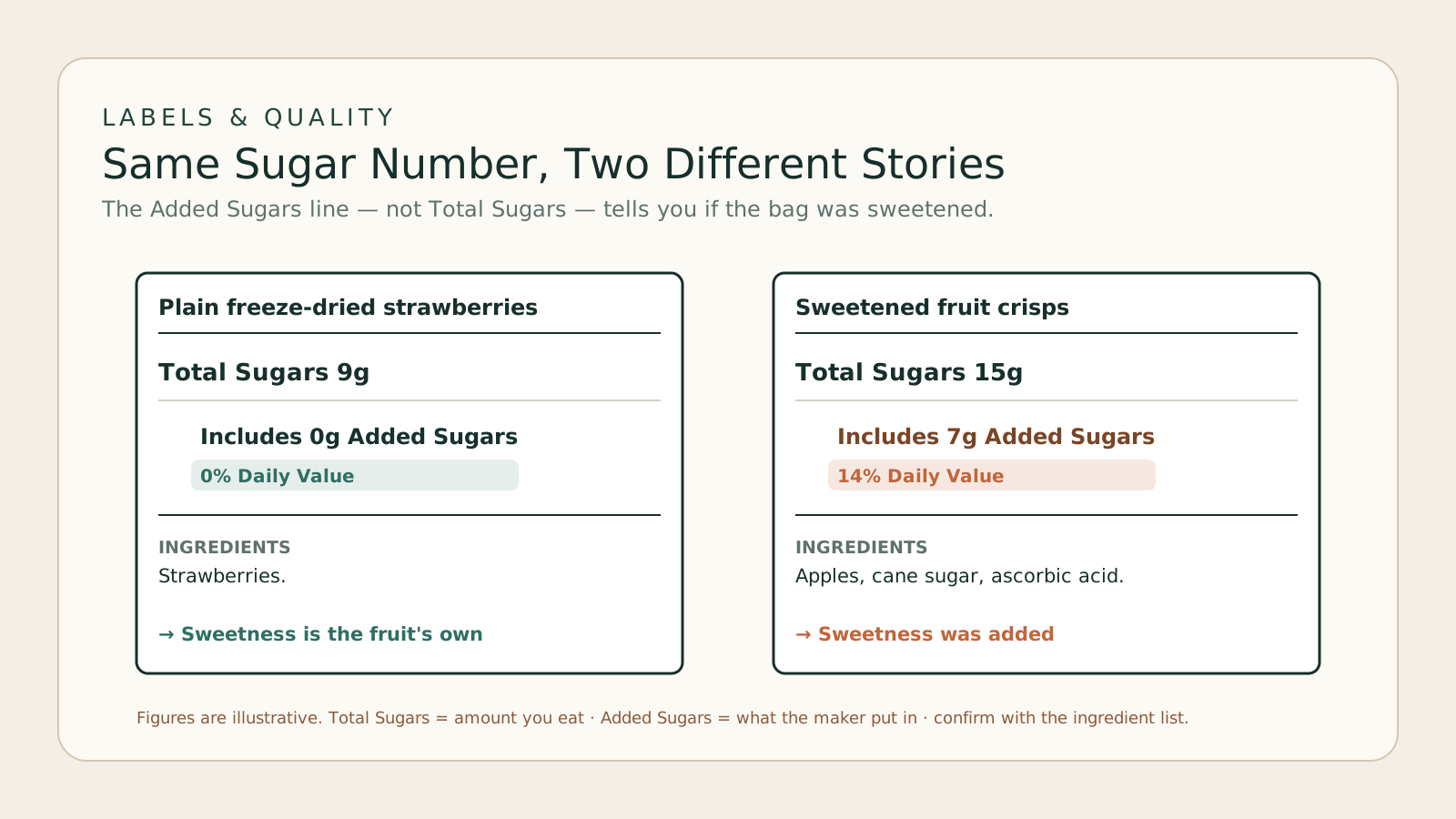
- Total Sugars counts every sugar in the serving, natural and added together; the indented 'Includes Xg Added Sugars' line breaks out only what was added during processing. Plain freeze-dried fruit often shows high Total Sugars and 0g Added Sugars.
- Freeze-drying removes water, not sugar, so the fruit's own sugars concentrate into a small serving — which is why the Total Sugars figure can look alarming on a product that is nothing but fruit.
- Read the Added Sugars line and the ingredient list together: 0g added with a single fruit ingredient means the sweetness is natural, while an Added Sugars figure above zero — or sugar, cane juice, or syrup in the ingredients — means the sweetness was built in.
Turn a bag of freeze-dried strawberries over and the sugar number on the Nutrition Facts panel can stop you short. It often looks high — higher, gram for gram, than the fresh fruit you started with. The instinct is to assume someone dumped sugar in. Usually no one did. The panel has two sugar lines that answer two different questions, and reading them together is the difference between panicking at a plain-fruit product and correctly spotting one that has actually been sweetened.
The direct answer
Total Sugars counts all the sugar in a serving — the fruit's natural sugar and any added sugar, lumped together. The indented line beneath it, "Includes Xg Added Sugars," breaks out only the sugar that was added during processing. Plain freeze-dried fruit commonly shows a high Total Sugars figure and 0g Added Sugars, because freeze-drying removes water and leaves the fruit's own sugars behind, concentrated into a small serving. So the number to check for "did they sweeten this?" is Added Sugars, not Total Sugars — and you confirm it against the ingredient list.
Why the total looks so high
Freeze-drying takes water out and leaves everything else in place. The sugar that was dissolved in a fresh strawberry does not go anywhere; it just ends up packed into a much smaller, lighter piece. A serving of freeze-dried fruit represents far more fresh fruit than it looks like, so its natural sugar — reported in Total Sugars — reads high compared with the same weight of fresh fruit.
That is not a red flag by itself. It is the arithmetic of removing water from something that was naturally sweet. The Total Sugars line is doing its job: reporting all the sugar present. What it cannot tell you on its own is where that sugar came from. For that, you drop to the next line.
What the Added Sugars line is telling you
Under current US labeling rules, the panel must break out added sugars as an indented sub-line reading "Includes Xg Added Sugars," sitting directly under Total Sugars. This line counts only sugar introduced during processing — table sugar, cane sugar, cane juice, honey, syrups, and juice concentrates used to sweeten. Sugars that occur naturally in the fruit are deliberately excluded from it.
For genuinely plain freeze-dried fruit, this line reads 0g. That single figure is the clearest signal on the whole panel that the sweetness is the fruit's own. When it reads anything above zero, the maker put sugar in, and you are looking at a sweetened product — a fruit crisp, a candied piece, or a blend — even if the front of the bag leans on words like "made with real fruit."
You will see a percent Daily Value next to Added Sugars, based on a reference of 50 grams per day, but no Daily Value beside Total Sugars. That asymmetry is a clue to the label's intent: dietary guidance sets a budget for added sugar specifically, so the panel is built to flag it. Natural fruit sugar shows up in Total Sugars but is not scored against a daily target.
Reading the two lines together
The two sugar lines make sense only as a pair. Total Sugars tells you how much sugar you are actually eating in a serving — the number that matters if you are tracking total intake. Added Sugars tells you how much of that was the manufacturer's choice rather than the fruit's nature. A product can be high on the first line and zero on the second, and that combination is exactly what pure, unsweetened freeze-dried fruit looks like.
This is why "0g Added Sugars" should not be read as "low sugar." It is a statement about processing, not about quantity. If your reason for checking is total sugar consumption, keep your eyes on Total Sugars. If your reason is avoiding sweetened products, the Added Sugars line is your answer. They are complementary, and confusing one for the other leads people to either fear plain fruit or overlook a sweetened one.
Confirm it against the ingredient list
The panel and the ingredient list should agree, and checking both closes the loop. Unsweetened freeze-dried fruit lists only the fruit, sometimes with a small amount of an anti-browning aid such as ascorbic acid or citric acid, and nothing else. Its Added Sugars line reads 0g. When those two signals line up, you can trust that the sweetness is natural.
If the Added Sugars line is above zero, expect the ingredient list to name the source — sugar, cane sugar, cane juice, syrup, or a juice concentrate used as a sweetener. Occasionally a front-of-pack claim will imply purity while the ingredients tell a fuller story, so the ingredient list is the tiebreaker. When the two sugar lines and the ingredient list all agree, you know precisely what you are buying: fruit whose sweetness is its own, or fruit that has been sweetened on purpose. For anyone managing sugar intake for a health reason, the honest move is to read Total Sugars for the amount, use Added Sugars and the ingredients to judge the type, and treat medical questions as questions for a qualified professional rather than for the front of the bag.
Frequently Asked Questions
Why does plain freeze-dried fruit show so much sugar?
Because the Total Sugars line counts the fruit's own natural sugars, and freeze-drying has removed the water those sugars were dissolved in. A cup of fresh strawberries becomes a small handful of freeze-dried pieces with the same sugar packed into far less volume and weight. So a serving of pure freeze-dried fruit can list a Total Sugars number that looks high next to fresh fruit, even though nothing was added — it is the same fruit sugar, just concentrated.
What exactly is the difference between Total Sugars and Added Sugars?
Total Sugars is the whole amount of sugar in a serving, combining the sugars that occur naturally in the fruit with any sugar added during processing. Added Sugars is a required, indented sub-line that reads 'Includes Xg Added Sugars' and counts only the portion that was added — table sugar, cane sugar, syrups, juice concentrates used as sweeteners, and similar. If nothing was added, that line reads 0g. The two lines let you separate natural sweetness from built-in sweetness at a glance.
Does 0g Added Sugars mean the product is low in sugar?
No. It only means no sugar was added during processing. Plain freeze-dried fruit can be high in Total Sugars while showing 0g Added Sugars, because all of that sugar comes from the fruit itself. If you are watching total sugar intake for any reason, the Total Sugars line is the number that reflects what you actually consume; the Added Sugars line answers a different question — whether the maker sweetened it. Anyone managing sugar intake for a health reason should look at Total Sugars and speak with a qualified professional rather than rely on the Added Sugars line alone.
Why does Added Sugars have a percent Daily Value but Total Sugars does not?
Under current US labeling rules, Added Sugars carries a percent Daily Value based on a reference of 50 grams per day, so the panel can show how a serving fits a daily budget for added sugar. Total Sugars has no Daily Value because health guidance sets a target for added sugars specifically, not for all sugars including those naturally in fruit and dairy. That is also a hint about intent: the label is designed to flag added sugar, which is why plain fruit's natural sugar shows up in Total Sugars but not as a percent figure.
How do I confirm the sugar is only from the fruit?
Cross-check two places. First, the Added Sugars line — it should read 0g for unsweetened fruit. Second, the ingredient list — it should name only the fruit (and perhaps an anti-browning aid like ascorbic or citric acid), with no sugar, cane sugar, cane juice, syrup, or juice concentrate used as a sweetener. When the Added Sugars line says 0g and the ingredients are just fruit, the sweetness is natural. If either signal points to added sweetener, treat the product as sweetened regardless of front-of-pack wording.