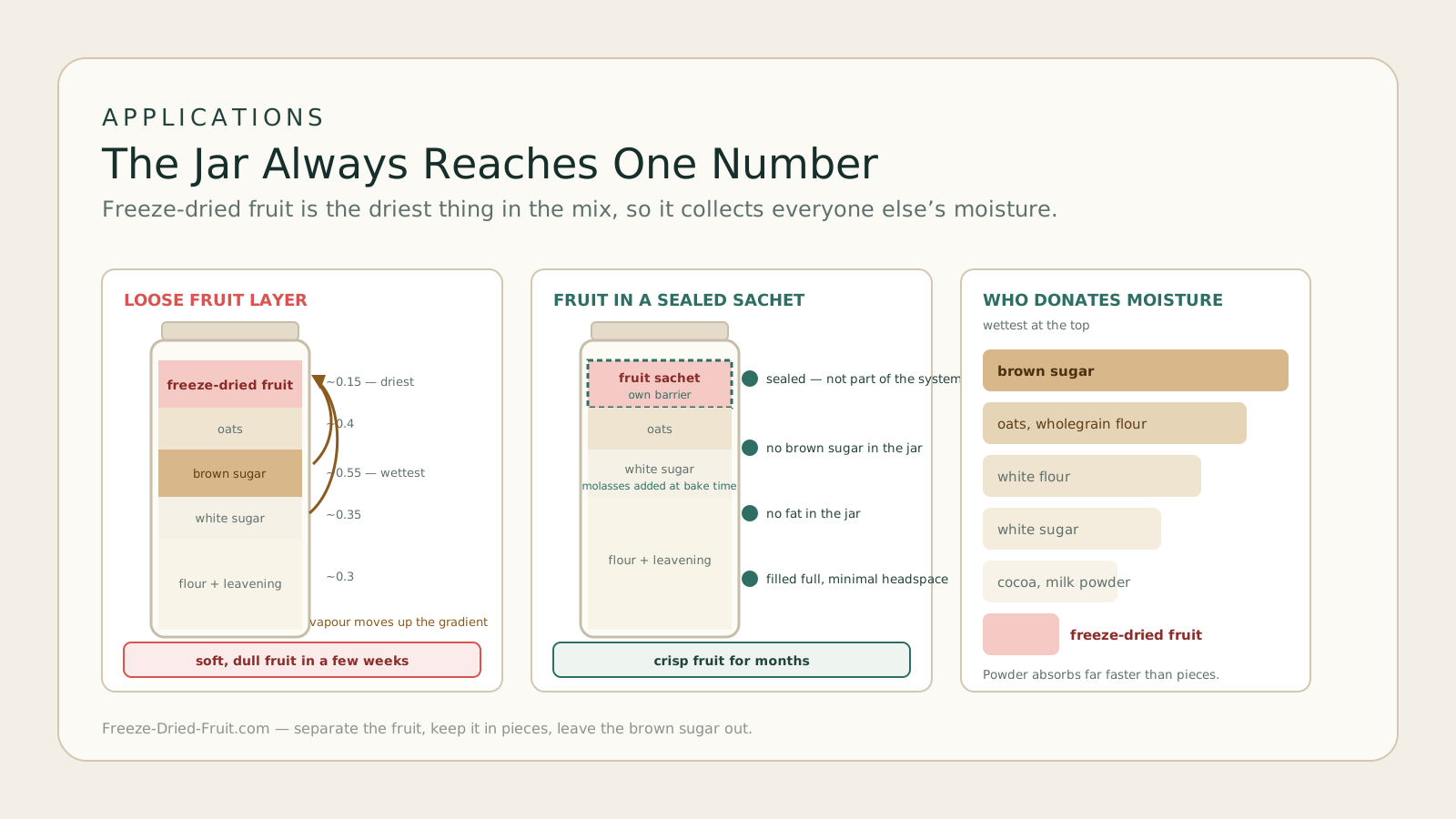
- Everything in a sealed jar drifts toward one water activity. Freeze-dried fruit is the driest thing in most mixes, so it absorbs from everything else and goes soft first.
- Brown sugar is the usual culprit. Its moisture content is far higher than flour's, and it will feed the fruit even through a well-sealed lid.
- Keep fruit as whole pieces rather than powder when the mix will be stored. Powder has vastly more surface area and cakes long before pieces soften.
- Bag the fruit separately inside the jar. It costs a small sachet, keeps the visual layers intact, and roughly doubles the useful life of the gift.
The layered jar mix is a fixture of holiday gifting: flour, sugar, oats, chocolate, and a bright stripe of freeze-dried raspberry, sealed under a ribbon. It photographs beautifully in December. By February the raspberry stripe has gone dull, slightly tacky, and lost its snap, while everything above it looks unchanged.
Nothing spoiled. The jar simply did what sealed jars do.
The direct answer
Put several dry ingredients in a sealed container and they do not stay at their individual moisture levels. Water vapour moves through the headspace from the ingredients at higher water activity to the ones at lower water activity, and continues until the whole system reaches one shared value. This is standard moisture-migration behaviour and it is what makes multi-component products with different water activities so prone to texture change.
Freeze-dried fruit is almost always the driest thing in a baking mix. Properly dried and properly stored, it sits somewhere in the low 0.1s to around 0.2 water activity — well below flour, well below oats, and dramatically below brown sugar. In a jar, that makes it the sink. Every other ingredient contributes moisture and the fruit collects it.
The fruit does not get wet in any dramatic sense. It only needs a small rise in water activity to lose the crispness that comes from a glassy, brittle matrix. That is why the failure shows up as dullness and a slight chew rather than anything visibly damp.
What is actually wet in your mix
Ranked roughly from wettest to driest, for typical pantry ingredients:
Brown sugar is the problem child. Its softness comes from retained molasses moisture, and the same property that keeps it from setting like a brick in the bag makes it a moisture donor to anything drier nearby. If your mix contains brown sugar and loose freeze-dried fruit, the fruit is on a clock.
Oats and whole grain flours carry more moisture than white flour and often more residual oil, which brings its own staling behaviour.
Refined flour and white sugar are middling. Sugar is hygroscopic — it binds water readily — but crystalline white sugar in a dry pantry is not usually a significant donor.
Cocoa, milk powder, leavening are relatively dry, though milk powder is hygroscopic enough to clump on its own account.
Freeze-dried fruit is the driest, by a wide margin.
You cannot make the fruit less absorbent. Its porosity and low moisture are the whole point of the product. The only real levers are reducing how much moisture is available to it and reducing how much surface it exposes.
Five things that actually work
1. Seal the fruit separately inside the jar. A small food-safe bag or a heat-sealed sachet nested in the mix, or a second small jar taped to the lid. This is the single highest-impact change and it costs almost nothing. Add a card that says "stir in the fruit with the wet ingredients." The layered look survives if you place the sachet against the glass as its own visible band.
2. Use pieces, not powder. Surface area governs both moisture uptake and caking. A whole freeze-dried strawberry slice has a fraction of the exposed surface of the same mass milled to powder, and powder in a mix will consolidate into a solid disc long before pieces lose their bite. If a recipe needs powder, crush the pieces on the day.
3. Swap brown sugar for white plus a separate molasses instruction. If the recipe genuinely needs brown sugar character, put white sugar in the jar and write "add 1 tbsp molasses with the butter" on the card. This removes the largest moisture donor from the sealed system.
4. Keep fat out of the jar entirely. This is standard practice in shelf-stable mix formulation for a different reason — rancidity rather than moisture — but it applies here too. Mixes built without added fat, where butter or oil is added at bake time, keep dramatically longer than those with shortening cut in.
5. Add a food-grade desiccant, but do not rely on it. A small silica gel packet rated for food contact will absorb the free moisture in the headspace and slow the drift. It will not stop the sugar from continuing to release moisture, and once saturated it stops helping. Treat it as insurance on top of separation, not as a substitute.
Building the mix
A practical structure for a fruited jar mix, assembled bottom to top so the layers stay distinct:
- Dense base: flour with the salt and leavening whisked through it. Putting leavening in the flour layer rather than as its own stripe keeps it from being poured off unevenly.
- Sugar layer, packed lightly so it does not sift into the flour in transit.
- Oats or other bulky dry ingredients.
- Chocolate, nuts or seeds if used.
- The fruit sachet, placed against the glass at the top where it is visible and easy to remove.
Fill the jar to genuinely full. Headspace is not just air — it is a reservoir of vapour and a space in which layers can shift and mix during shipping. A tight fill keeps the strata intact and reduces the volume that has to equilibrate.
Getting the ratios right
Freeze-dried fruit is extremely light for its volume, which is where most homemade mixes go wrong. A cup of freeze-dried strawberry slices weighs very little and carries the flavour equivalent of a much larger quantity of fresh fruit. Two rules of thumb:
Work by weight, not volume, when you write the recipe card. Volume measures of freeze-dried fruit vary enormously with piece size and how firmly they were packed.
Account for the liquid the fruit will take back. Dried fruit stirred into a batter rehydrates from the batter, and in a stiff formula that can noticeably tighten the dough. For pancake and muffin batters, the effect is usually negligible. For scones or a thick cookie dough, adding an extra tablespoon or two of liquid per cup of fruit keeps the texture where you expected it.
What "shelf stable" does and does not mean here
Dry baking mixes at these moisture levels are microbiologically stable. Nothing in a jar of flour, sugar and freeze-dried fruit is going to grow. Well-formulated dry mixes are commonly described as holding functionality for several months at room temperature, and a fat-free mix kept sealed and cool can go considerably longer.
The limit you will hit is sensory, not safety: leavening loses potency over time, fruit colour fades under light, and the fruit texture softens through migration. When you write a "best used by" on a gift tag, you are describing when it stops being good, not when it becomes a problem.
Store the finished jar somewhere cool and dark. Light fades anthocyanin-pigmented fruit — raspberry, strawberry, blueberry — faster than most people expect, and a jar on a sunny kitchen shelf will lose colour long before it loses crunch.
The one-line version
Fruit in a jar mix fails because it is drier than everything sharing the jar with it. Give it its own sealed bag, keep it in pieces, and keep the brown sugar out — and the mix that looked good in December will still bake properly in spring.
Frequently Asked Questions
Why does the fruit in my jar mix go soft after a few weeks?
Because the other ingredients are wetter than it is. In a sealed container, moisture moves from higher water activity to lower until everything equalises. Freeze-dried fruit typically sits well below the rest of the mix, so it is the destination for every stray gram of water in the jar.
Can I just add a desiccant packet?
A food-grade desiccant slows the drift and is worth including, but it does not change the direction. The other ingredients keep releasing moisture, and once the desiccant saturates the equalisation resumes. Separating the fruit is more effective than drying the whole jar.
How long will a mix with fruit actually keep?
With the fruit sealed separately and the jar kept cool and out of light, several months is realistic. With the fruit loose among brown sugar, expect noticeable softening within a few weeks. Neither is a food safety limit — dry mixes are microbiologically stable at these moisture levels — it is a texture and appearance limit.
Should I use freeze-dried fruit powder or pieces?
Pieces for anything that will be stored. Powder has far more surface area per gram and will cake into a solid puck long before pieces lose their snap. If you want fruit flavour distributed through the batter, mill the pieces at the moment you bake rather than months ahead.
Does the fruit need rehydrating when I use the mix?
In most batters, no. Pancake, muffin and quick-bread batters carry enough free liquid that the fruit rehydrates during mixing and baking. For very stiff doughs like shortbread or scones, either soak briefly or accept that the fruit will stay crisp in the finished bake.
Primary sources & further reading
- The shelf life balancing act Baking Business Referenced for moisture migration between components of differing water activity and its effect on texture in multi-component baked products.
- Make a Great Shelf Stable Baking Mix The Off Grid Gourmet Referenced for the practice of keeping fats separate from dry components to extend the storage life of a homemade baking mix.
- Homemade Chocolate Cake Mix (by a Food Scientist) Scientifically Sweet Referenced for the hygroscopic behaviour of sugar in dry mix formulation and its interaction with liquid in the finished batter.
- Shelf Stable Baker Guide BAKERpedia Referenced for general water activity and shelf-stability principles in bakery product formulation.
External links open in a new tab. We do not receive compensation from any organization listed; sources are referenced because they are primary, current, and publicly verifiable.