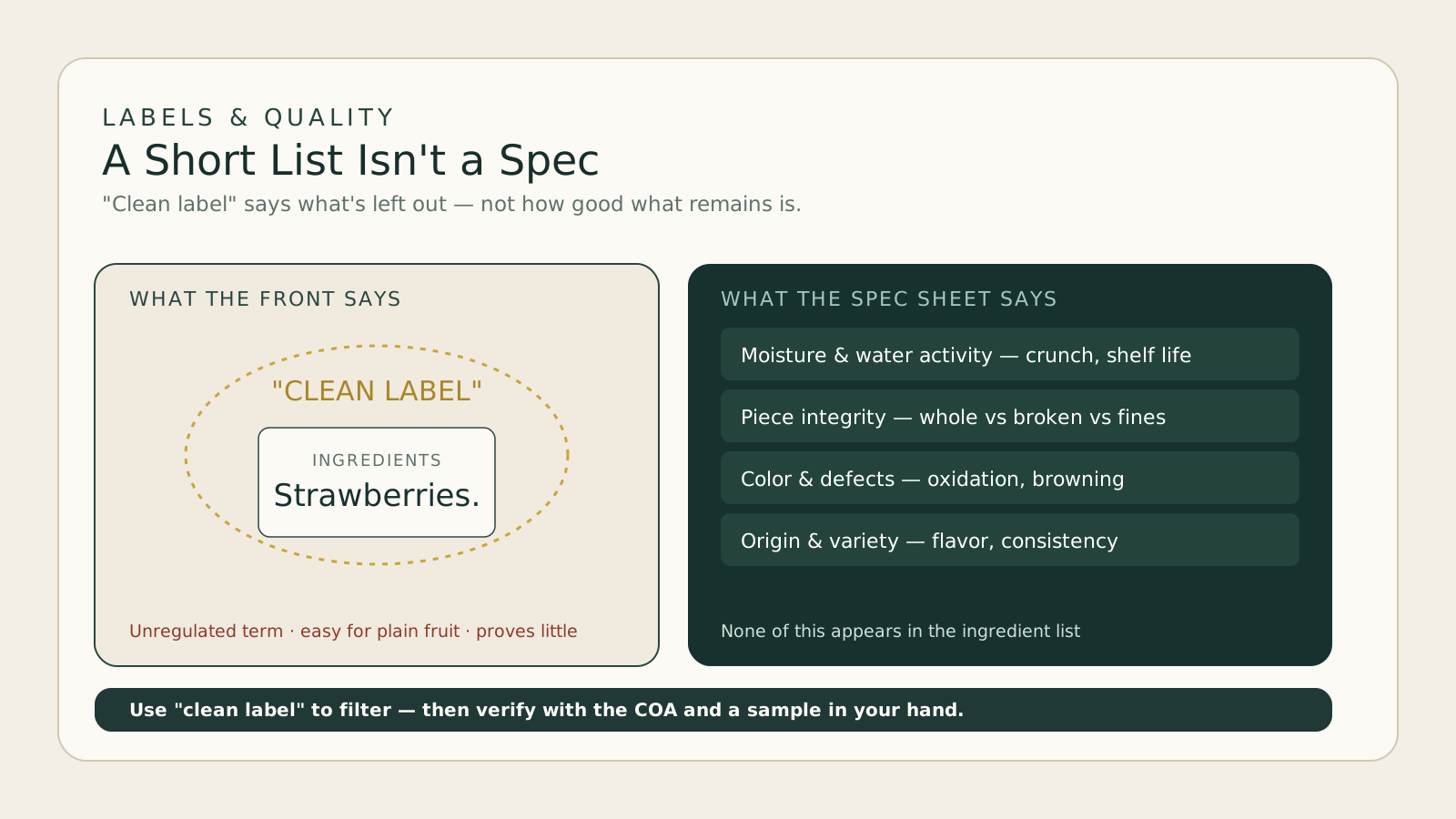
- 'Clean label' has no legal definition — it is a marketing shorthand for a short, recognizable ingredient list, and different brands draw the line in different places.
- For plain freeze-dried fruit, a one-ingredient list is genuinely common and easy to achieve, so it is a weak point of differentiation, not proof of quality.
- The things that actually determine quality — moisture and water activity, piece integrity, color, and origin — do not appear in the ingredient list at all and live on the spec sheet instead.
- Use 'clean label' as a starting filter, then judge the product on the certificate of analysis and a physical sample, not on the shortness of the list.
"Clean label" is one of the most effective phrases in food marketing, and one of the least precise. It sounds like a quality standard. It is really a promise about a short ingredient list. For freeze-dried fruit — a category where a short list is the norm, not the exception — the phrase is doing less work than it appears to, and a buyer who leans on it can miss the things that actually matter.
This is worth unpacking, because the gap between what "clean label" implies and what it verifies is exactly where quality problems hide.
The direct answer
There is no legal or regulatory definition of "clean label." Unlike "organic," which is certified, or the allergen declarations that are mandatory, "clean label" is an informal marketing concept. In practice it means a short list of recognizable ingredients with no artificial colors, flavors, or preservatives. Where each brand draws that line is up to the brand.
For plain freeze-dried fruit, the ingredient list is often just the fruit. So a "clean label" claim on freeze-dried strawberries is usually confirming something that was already true and easy to achieve. It tells you nothing was added — useful, but a low bar — and nothing about the quality of the fruit itself.
Why a short list is a weak signal here
In heavily formulated foods, a short ingredient list genuinely reflects a formulation choice: the maker declined to use stabilizers, dyes, or preservatives they could have used. That is a real signal.
Plain freeze-dried fruit is different. The process — freeze the fruit, sublimate the water under vacuum — does not require additives. Single-ingredient freeze-dried fruit is the default, not an achievement. Two products can both show a one-word ingredient list and differ enormously in moisture, crunch, color, breakage, and origin. The clean label is identical; the products are not.
Not all "clean label" fruit snacks are plain. Some are infused with fruit juice or lightly sweetened, and a brand may still call that clean because the added ingredient is fruit-derived. The phrase on the front does not override the ingredient list and nutrition panel on the back. If added sugar matters to you, read the added-sugar line — the marketing term will not flag it.
What actually determines quality
The attributes that separate good freeze-dried fruit from mediocre freeze-dried fruit do not appear in the ingredient list at all. They live on the specification and certificate of analysis:
- Moisture content and water activity. These drive crunch, shelf life, and stability. A piece at the right water activity stays crisp and keeps; one that is too high goes leathery and risks a shorter life. No ingredient list shows this.
- Piece integrity and breakage. Whole pieces, broken pieces, and fines behave and price differently. A spec sets the acceptable ratio; the ingredient statement is silent on it.
- Color and defects. Bright, uniform color signals good handling and low oxidation. Browning, spotting, and off-color pieces are quality signals — invisible on the label, visible in the bag.
- Country of origin and variety. Where and from what cultivar the fruit came affects flavor, sweetness, and consistency. It is a sourcing fact, not an ingredient.
A "clean label" claim speaks to none of these. That is not a criticism of the fruit — it is a mismatch between what the phrase promises and what the buyer needs to know.
How to use the phrase without being misled
"Clean label" is not worthless. Used correctly, it is a first-pass filter: it screens out products carrying additives you want to avoid. The mistake is treating it as the finish line.
A more useful sequence:
- Read the full ingredient list, not the front-of-pack phrase. Confirm it really is just fruit — or understand exactly what else is in there.
- Check the nutrition panel's added-sugar line if sweetening matters, since "clean" does not guarantee unsweetened.
- Ask for the specification and certificate of analysis — moisture, water activity, breakage, color, origin. This is where quality is defined.
- Judge a physical sample. Crunch, color, aroma, and how much powder settles at the bottom of the bag tell you things no document or slogan can.
For a business buyer, the same discipline scales up: a supplier who can support a clean ingredient statement is table stakes; a supplier who can hit a tight moisture and breakage spec, consistently, batch after batch, is the one worth signing.
The takeaway
"Clean label" on freeze-dried fruit is a marketing shorthand for a short ingredient list, and for a product that is usually just fruit, that is an easy and largely uninformative claim. It tells you what was left out, not how good what remains actually is. The quality lives on the spec sheet — moisture, water activity, breakage, color, origin — and in the sample in your hand. Use the phrase to filter, then verify with the numbers that the label will never print.
Frequently Asked Questions
Is 'clean label' a regulated or defined term?
No. Unlike 'organic' or the required allergen declarations, 'clean label' has no legal definition or standard behind it. It is an informal marketing concept, usually meaning a short list of ingredients a shopper would recognize, with no artificial additives. Where a brand draws that line is up to the brand.
Does a one-ingredient label mean the fruit is high quality?
Not necessarily. Plain freeze-dried fruit is often just the fruit, so a single-ingredient list is common and easy to achieve. It confirms nothing was added, which is useful, but it says nothing about moisture, breakage, color, or how the fruit was grown and processed.
What should I look at instead of the ingredient list?
The specification and certificate of analysis: moisture content and water activity, piece-size and breakage limits, color and defect standards, and country of origin. Those numbers, plus a physical sample, tell you far more about quality than the length of the ingredient statement.
Can a 'clean label' product still have added sugar or coatings?
Yes, depending on how the brand defines the term. Some clean-label fruit snacks are infused with fruit juice or lightly sweetened. Always read the full ingredient list and the nutrition panel's added-sugar line rather than trusting the phrase on the front of the bag.
Primary sources & further reading
- Food Labeling & Nutrition U.S. Food and Drug Administration Referenced for what is actually regulated on a food label — ingredient lists, nutrition facts, and allergen declarations — in contrast to unregulated marketing terms.
- Use of the Term Natural on Food Labeling U.S. Food and Drug Administration Referenced as an example of a widely used marketing term that lacks a formal regulatory definition, illustrating the same gap that applies to 'clean label.'
External links open in a new tab. We do not receive compensation from any organization listed; sources are referenced because they are primary, current, and publicly verifiable.