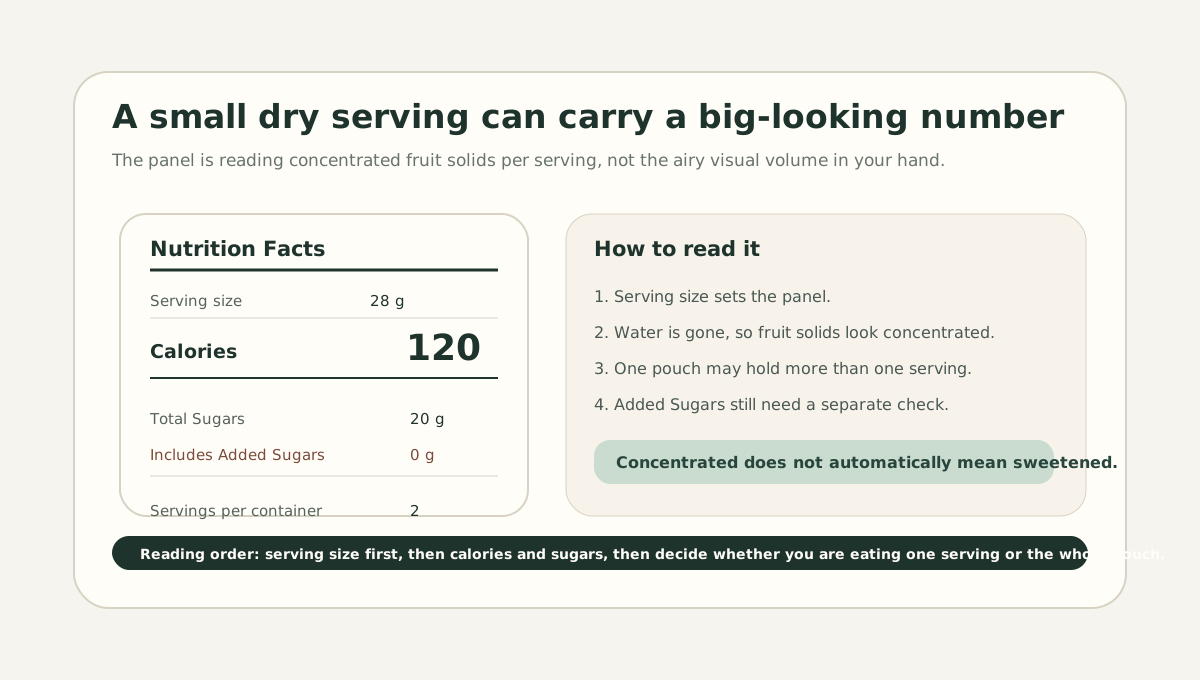
- Freeze-drying removes water, so the calories from the fruit's solids are packed into a lighter and smaller serving than the fresh version.
- The Nutrition Facts panel is based on the labeled serving size, not on the casual visual impression of how much fruit seems to be in your hand.
- Comparing calories without comparing serving size and servings per container is one of the easiest ways to misread freeze-dried fruit.
- A high-looking calorie number does not automatically mean added sugar, but the ingredient list and Added Sugars line still matter.
Freeze-dried fruit can surprise people on the Nutrition Facts panel because the bag looks airy while the numbers look concentrated.
That mismatch is real, but it is usually a format effect before it is a quality problem. The label is describing dry fruit solids in a small serving, not trying to pretend the product is nutritionally identical to the same visible volume of fresh fruit.
The direct answer
Freeze-dried fruit calories look high because water has been removed, leaving the fruit's sugars, fiber, acids, and other solids concentrated into a lighter and smaller serving. The number on the Nutrition Facts panel is tied to the labeled serving size, not to how physically large the pieces look in the bowl or in your hand.
That is why a crisp handful can seem more calorie-dense than people expect.
The visual serving is not the labeled serving
FDA's serving-size guidance is the first thing to read because Nutrition Facts values are based on the labeled serving, and serving sizes reflect what people typically consume rather than what the product looks like it should weigh.
Freeze-dried fruit is unusually easy to misread visually because it is:
- full of air spaces
- light in the hand
- much smaller than the fresh fruit that produced it
So a serving may look modest while still representing a meaningful amount of fruit solids. If a person eats two labeled servings from a pouch, the calories and sugars are doubled even if the snack still feels light.
Removing water changes size more than it changes the fruit's energy story
This is the heart of the confusion.
Fresh fruit carries a lot of water. Freeze-drying removes most of that water, but it does not remove the fruit solids that contribute the food's calories. The result is a product that looks smaller and lighter for the same underlying fruit material.
That means freeze-dried fruit often reads more like a concentrated form of fruit than a direct volume-for-volume equivalent of fresh fruit.
The practical consequence is simple:
- same fruit identity
- far less water
- smaller serving footprint
- calories appearing more concentrated per ounce or per handful
That is normal for the format.
A high-looking calorie number does not automatically mean added sugar
This is another common jump.
Plain freeze-dried fruit can look calorie-dense without any added sugar at all. The right way to check is not to guess from calories alone. It is to read:
- the ingredient list
- the Total Sugars line
- the Added Sugars line when present
FDA's label guidance is useful here because it separates naturally occurring sugars from Added Sugars on the panel. That makes the interpretation cleaner. A bag can show meaningful calories and total sugars because fruit naturally contains sugar, while still showing zero Added Sugars.
If added sweeteners are present, the label should say so. If they are not, the concentrated calorie read may still be entirely consistent with plain fruit.
Serving size and servings per container do most of the work
Many label misunderstandings happen because the eye goes straight to the bold calorie number and skips the lines above it.
For freeze-dried fruit, those top lines do most of the interpretation work:
- serving size
- servings per container
If the serving is small and the pouch contains more than one serving, the package can look like a single snack while carrying more calories than a quick glance suggests.
That does not make the product misleading by default. It means the panel is doing exactly what it is designed to do: describe one serving clearly and let the reader scale up if more is eaten.
Compare products on the same basis
FDA's comparison advice matters here. If you compare two freeze-dried fruit products, match the serving sizes before deciding that one is "higher calorie."
Otherwise you may be comparing:
- a larger serving to a smaller serving
- a whole-piece snack format to a powder format
- a plain-fruit product to a sweetened fruit crisp
Those are not fair one-line comparisons.
A better read asks:
- How many grams is the serving?
- How many servings are in the pouch?
- Is the product plain fruit?
- Are Added Sugars present?
- How much of the bag do I usually eat in one sitting?
That framework is much more useful than reacting to the calorie line in isolation.
Why this matters for buyers and product teams too
This is not only a consumer question. Retail buyers and private-label teams should understand the same label dynamic because front-of-pack positioning can easily create the wrong expectation.
If a product is sold on "just fruit" simplicity, then the panel should be explained in that context: concentrated fruit, small dry serving, no casual visual equivalence to fresh volume. If the product includes added ingredients, that should be equally clear.
The stronger commercial move is honesty:
- explain the concentrated format
- keep the ingredient story clear
- avoid using fresh-fruit imagery in a way that hides serving reality
That makes the label easier to trust.
Bottom line
Freeze-dried fruit calories look high on the Nutrition Facts panel mainly because the product is dry, light, and concentrated. Water is gone, but the fruit solids remain, so a small serving can carry more visible calorie density than people expect.
Read the label in this order: serving size, servings per container, ingredient list, then calories and sugars. That sequence turns a surprising number into a readable one.
Frequently Asked Questions
Why does freeze-dried fruit seem high in calories?
Because most of the water has been removed. The fruit solids that carried the fresh fruit's energy are still present, but they now fit into a much smaller and lighter portion.
Does a higher calorie number mean sugar was added?
Not necessarily. Plain freeze-dried fruit can look calorie-dense simply because it is concentrated. The way to tell whether sugar was added is to read the ingredient list and the Added Sugars line on the Nutrition Facts panel.
Why is the serving size so important on freeze-dried fruit labels?
Because the Nutrition Facts panel is built around the labeled serving. A small dry serving can look modest in the hand while still representing a meaningful amount of fruit solids.
Should I compare freeze-dried fruit by calories alone?
No. Compare serving size, servings per container, ingredient list, total sugars, Added Sugars when present, and how the product is actually being used.
Can one bag contain more than one serving?
Yes. FDA's label system allows many packaged foods to show more than one serving per container, so a bag that looks snack-sized may still carry multiple servings on the panel.
Primary sources & further reading
- Serving Size on the Nutrition Facts Label U.S. Food & Drug Administration Referenced for FDA's explanation that Nutrition Facts values are based on the labeled serving size and that serving sizes reflect amounts typically consumed.
- How to Understand and Use the Nutrition Facts Label U.S. Food & Drug Administration Referenced for FDA's guidance on comparing foods by serving size, calories, total sugars, and Added Sugars.
- Daily Value on the Nutrition and Supplement Facts Labels U.S. Food & Drug Administration Referenced for FDA's explanation of percent Daily Value as a per-serving context tool rather than a whole-package judgment by default.
External links open in a new tab. We do not receive compensation from any organization listed; sources are referenced because they are primary, current, and publicly verifiable.