- The packaging section should name the film structure, thickness, seal specification, and barrier performance, not just the pouch's appearance or material family.
- Barrier numbers (WVTR and OTR) are meaningless without the test conditions and the unit of area they were measured against.
- Case, liner, and pallet details belong in the packaging section too, because most transit damage to freeze-dried fruit happens above the pouch level.
- If the packaging section is a single line, ask for the film specification, the seal-strength method, and whether the pouch has been drop- and compression-tested with the actual product inside.
Ask a supplier for a specification and you will usually get two pages of care about the fruit — moisture, water activity, color, piece size, microbiological limits, allergens — followed by a packaging section that reads like a product listing. "Resealable stand-up pouch, aluminum foil laminate, 100g."
That sentence contains no information you can hold anyone to.
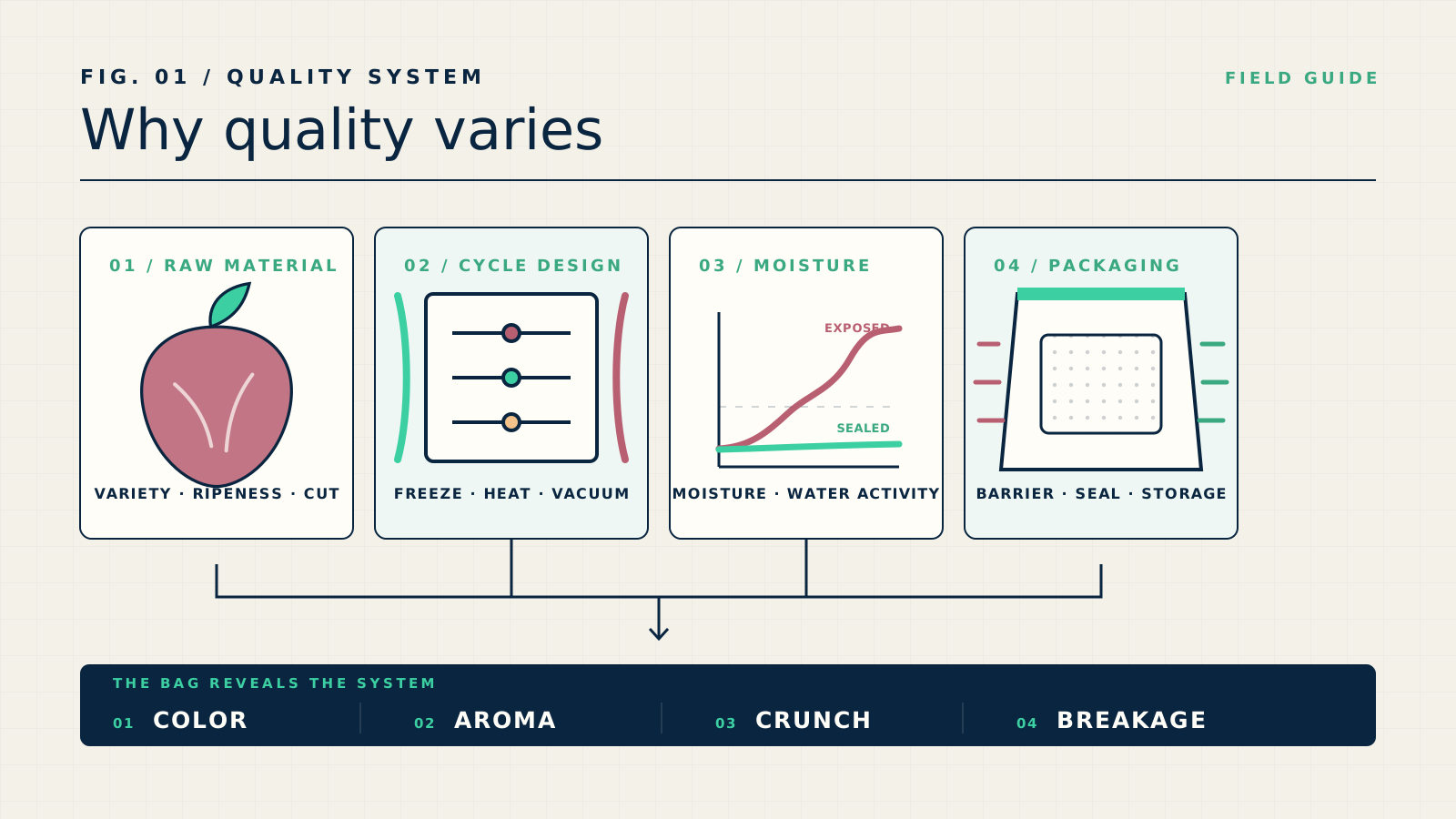
For a product whose entire shelf life is a function of how well it is sealed away from water vapor, the packaging section deserves the same rigor as the moisture spec. Here is what a complete one contains, and what to ask for when it is missing.
The direct answer
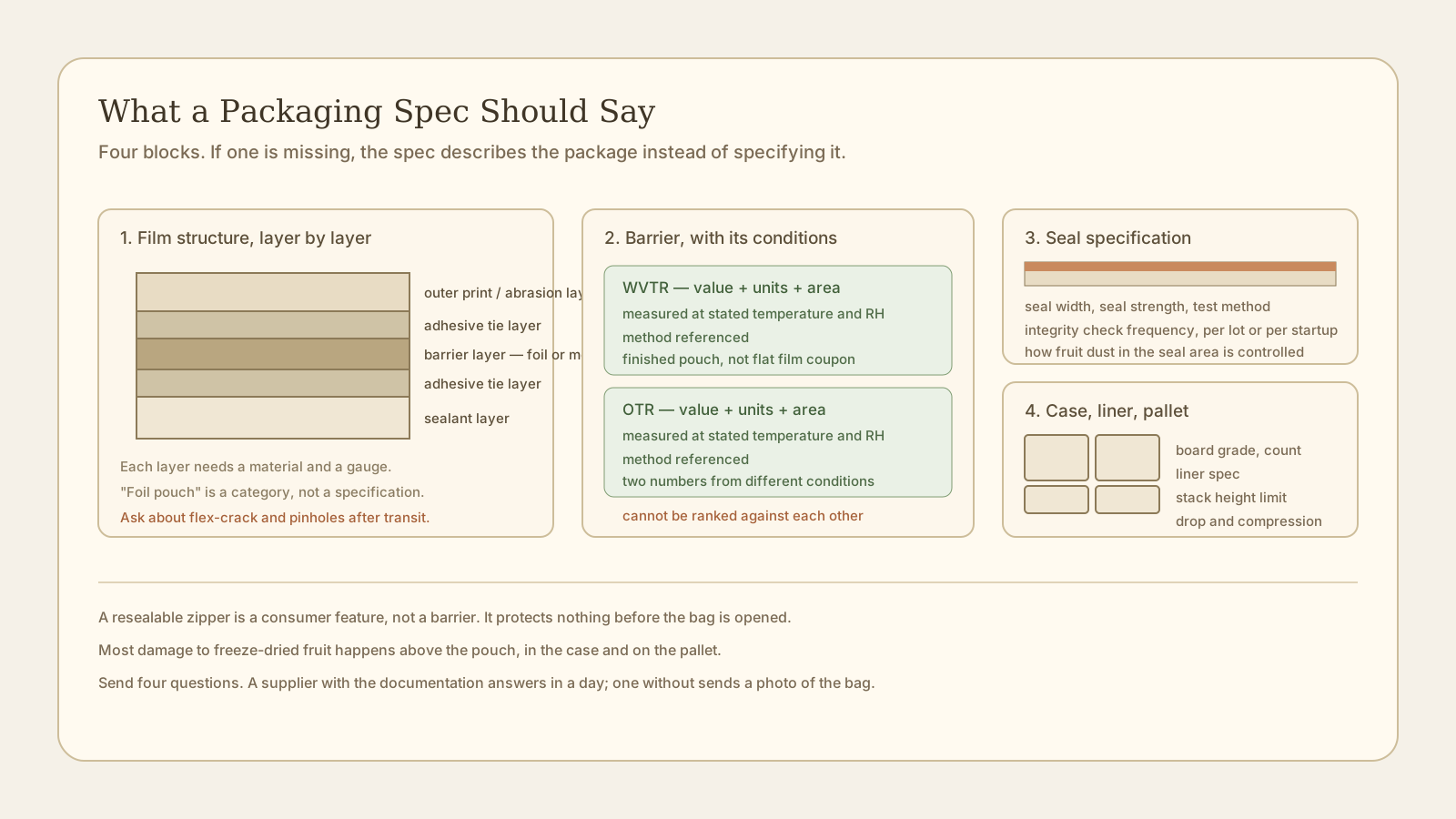
A usable packaging specification answers four questions: what the film is made of, how it is sealed, how much moisture and oxygen it lets through under stated conditions, and how the package is protected above the pouch level in cases and on pallets. If any of those four is absent, the spec is describing the package rather than specifying it.
1. Film structure, not film adjectives
"Metallized," "foil," and "high barrier" are categories, not specifications. What you need is the layer stack.
A properly written structure names each layer, its material, and its thickness. A typical high-barrier pouch might list an outer printed polyester layer for durability and print, a middle barrier layer (foil or a metallized or coated film), and an inner sealant layer, each with a stated gauge.
Why this matters practically:
- The barrier layer is the one doing the work. Foil and metallized films behave very differently, and metallized films vary a great deal among themselves.
- The sealant layer determines seal reliability, particularly in the presence of fruit dust, which is a real contaminant in freeze-dried lines.
- Layer thickness affects flex-crack resistance. A thin foil layer that develops pinholes in transit has excellent barrier numbers on a flat coupon and poor barrier performance in a case.
Foil laminates test extremely well and can lose that advantage when they are flexed, creased, or abraded. If a spec sheet quotes flat-film barrier values and says nothing about post-flex performance, it is describing the film as delivered, not the pouch as shipped.
2. Barrier numbers need their test conditions
WVTR (water vapor transmission rate) and OTR (oxygen transmission rate) are the two numbers most often quoted and most often quoted incompletely.
Both are strongly dependent on the conditions they were measured under. A WVTR figure measured in a warm, humid test environment and one measured in cooler, drier conditions can differ by a large factor for the same film. Without the temperature and relative humidity, the number cannot be compared to anything.
What to require:
- The value, with units, including the area basis
- The test temperature and relative humidity
- The test method referenced
- Whether the value is for the film or for the finished, formed, and sealed pouch
The last point is the one buyers skip. Film barrier is not pouch barrier. A finished pouch has seals, gussets, a zipper track, and folds. Its real-world performance is what the fruit experiences.
3. Seals are the failure point that specs ignore
A perfect barrier film with a bad seal is a bad package. The spec should state:
- Seal width and the location of seals
- Seal strength, with the test method used
- The integrity test method used in production, and its frequency
- How product dust in the seal area is controlled, since freeze-dried fruit generates fines that migrate to exactly the wrong place during filling
Ask specifically whether integrity testing is done on every lot or only at line startup. The answer distinguishes a controlled packaging operation from one that assumes.
4. Zippers and closures are convenience, not barrier
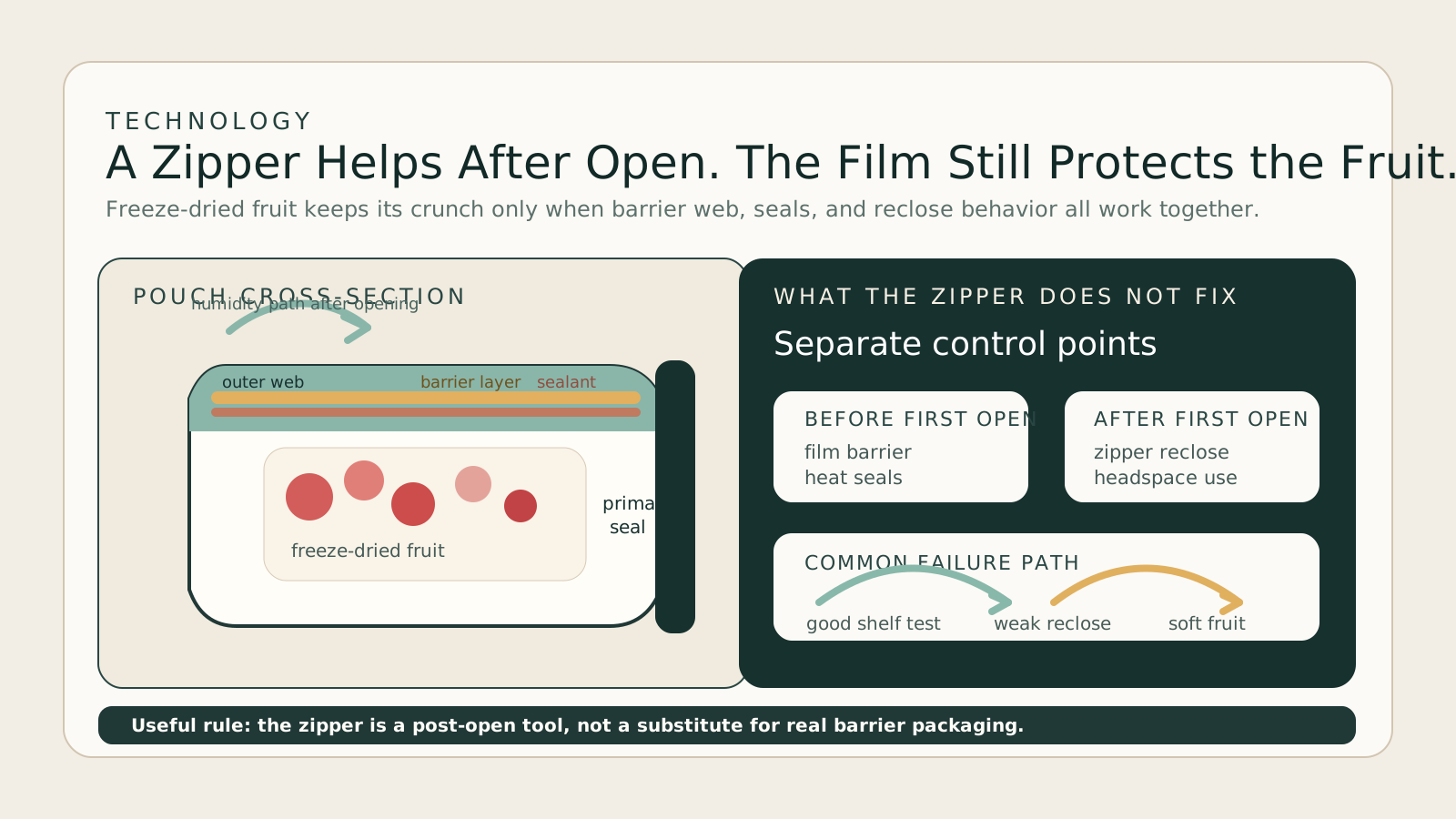
A resealable zipper is a consumer feature. It is generally not a moisture barrier, and once the pouch is opened, the product is exposed to room humidity every time the customer reaches in. Nothing about a zipper protects the unopened package beyond what the film already provides.
If the spec sheet leans on the zipper as a quality claim, treat that as a signal about the rest of the document.
5. Case, liner, and pallet: the part nobody reads
Freeze-dried fruit is light, bulky, and fragile. Most of the damage it suffers between the dryer and the consumer happens at the case and pallet level, not inside the pouch.
The packaging section should therefore also give:
- Case material and board grade, with dimensions and count per case
- Whether an inner liner or bulk bag is used, and its specification
- Cases per layer and layers per pallet
- Maximum stack height and any do-not-double-stack instruction
- Whether cases have been drop- and compression-tested with the actual filled product inside
That last item is the one that separates a packaging spec that has been engineered from one that has been copied.
What to do when the section is thin
Send four questions, and judge the supplier by how quickly the answers come back:
- Please provide the full film structure with materials and gauges.
- Please provide WVTR and OTR with the test conditions and method, for the finished pouch.
- What is your seal specification and how is seal integrity verified in production?
- Have the case and pallet configuration been transit-tested with product?
A supplier who has this documentation at hand will send it within a day. A supplier who has never assembled it will send a picture of the pouch. Both answers are useful.
The takeaway
The fruit specification describes a moment. The packaging specification describes everything that happens after that moment. Reading the second one as carefully as the first is the difference between buying a product that met spec at the plant and buying one that still meets it when the bag is opened.
Frequently Asked Questions
Why does the packaging section matter if the fruit spec is good?
Because the fruit spec describes the product at the moment it was packed. The package determines whether it still meets that spec when the customer opens it. Moisture, oxygen, light, and mechanical damage all arrive through the package.
What is a film structure and how should it be written?
It is the ordered list of layers in a laminate with their materials and thicknesses, for example an outer print layer, a barrier layer, and a sealant layer. A usable spec names each layer and its gauge rather than describing the pouch as 'metallized' or 'foil-lined.'
Are WVTR and OTR numbers comparable across suppliers?
Only when the test conditions match. Water vapor transmission rate depends heavily on the temperature and relative humidity it was measured at, and oxygen transmission rate depends on temperature and humidity as well. Two numbers measured under different conditions cannot be ranked against each other.
What packaging details do buyers most often forget to ask for?
Seal specification and testing. A film with excellent barrier properties still fails if the seal is weak, contaminated by product dust, or inconsistently applied. Seal width, seal strength, and the method used to verify integrity should all appear.
Should case and pallet information be on the spec sheet?
Yes, if the spec sheet is meant to govern what arrives. Case dimensions, cases per pallet, liner type, and stacking limits determine whether whole pieces stay whole. Damage that occurs in the case is still a quality failure.
Primary sources & further reading
- Standard Test Method for Water Vapor Transmission Rate Through Plastic Film and Sheeting Using a Modulated Infrared Sensor (ASTM F1249) ASTM International Defines the standard method and the requirement to state test temperature and relative humidity alongside any WVTR value.
- Standard Test Method for Determining Gas Permeability Characteristics of Plastic Film and Sheeting (ASTM D1434) ASTM International Standard approach to measuring gas transmission through films, underpinning the OTR values quoted on packaging specifications.
- Food Additives Permitted for Direct Addition to Food, and Indirect Food Additives - Food Contact Substances Electronic Code of Federal Regulations The regulatory basis for food-contact material compliance, which a packaging specification should reference.
External links open in a new tab. We do not receive compensation from any organization listed; sources are referenced because they are primary, current, and publicly verifiable.