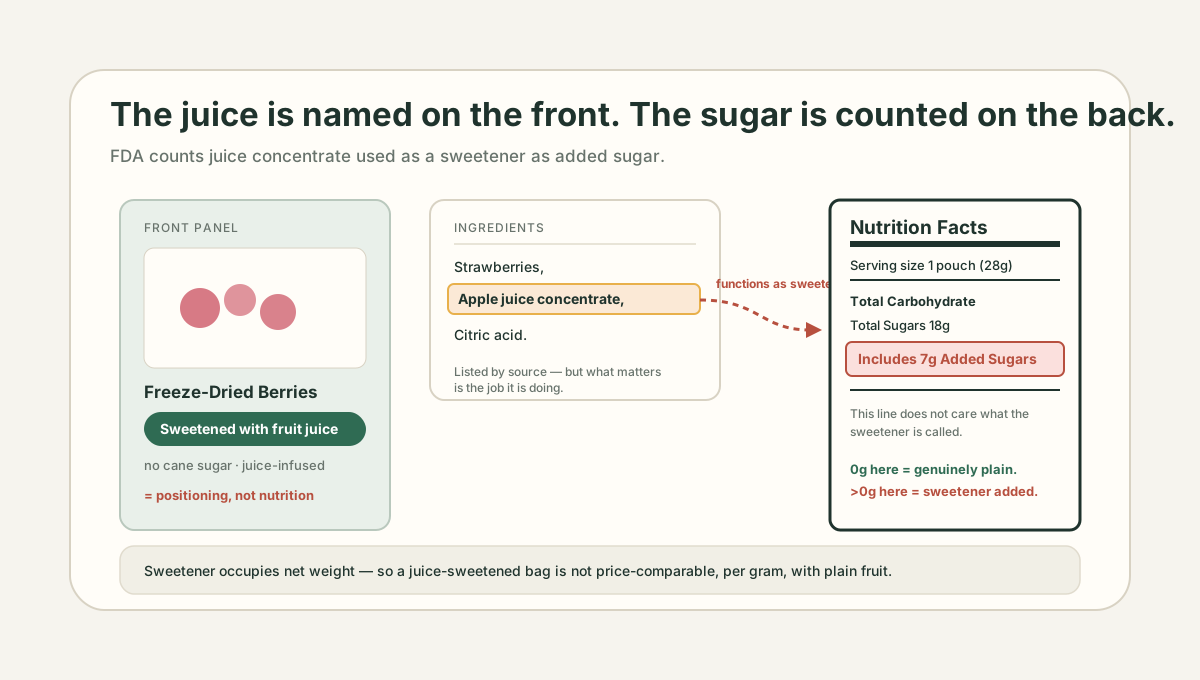
- Concentrated fruit juice used to sweeten a food counts as added sugar under FDA's Nutrition Facts rules, even though the sugar originally came from fruit.
- The Added Sugars line on the Nutrition Facts panel is the fastest way to check the claim — it does not care what the sweetener is called.
- 'Juice-infused' or 'juice-sweetened' dried fruit is a real product category, common in cranberries and some berries, where the fruit is too tart to sell plain.
- A juice-sweetened product is not automatically worse; it is simply not the same product as plain fruit, and it should not be price-compared against plain fruit per gram.
Some label phrases work by association rather than by definition. "Sweetened with fruit juice" is one of the best examples in the dried-fruit aisle. It puts two comforting words next to each other — fruit and juice — and lets the shopper conclude that whatever sugar is in the bag arrived by natural means and therefore does not count.
The labeling rules are less poetic. They care about what an ingredient is doing, not where it came from.
The direct answer
If a concentrated fruit juice is used to sweeten a freeze-dried fruit product, the sugar it contributes is added sugar under U.S. Nutrition Facts rules. FDA's added-sugars definition explicitly captures sugars from concentrated fruit or vegetable juices that exceed what you would expect from the same volume of 100 percent juice of the same type.
So "sweetened with fruit juice" is not a loophole around added sugar. It is a description of which added sugar was used. The Added Sugars line on the Nutrition Facts panel is where the truth lands, and that line does not care whether the sweetener is called apple juice concentrate, cane sugar, or syrup.
Why juice-sweetened dried fruit exists at all
It would be easy to read this as a marketing trick, and sometimes it is. But there is a real product-development reason behind the category.
Some fruits are simply too tart or too low in sugar to sell plain to a snack audience:
- Cranberry is the archetype. Plain dried cranberry is aggressively sour; almost the entire retail category is sweetened in some form.
- Tart cherry, some currants, and certain berry varieties sit in similar territory.
- Some apple and pear processing streams are sweetened to standardize a flavor target across a variable crop.
Apple juice concentrate and white grape juice concentrate became the workhorses here because they are cheap, relatively neutral in flavor, and let the finished ingredient list stay fruit-derived. For a brand that wants a "no cane sugar" story, that is attractive.
Note that this is much more common in infused/osmotic dried fruit than in freeze-dried fruit. Freeze-dried fruit is usually sold on the strength of being plain. But sweetened freeze-dried crisps, coated pieces, and juice-infused berries do exist, and the label language migrates across categories.
Front panel: marketing. Ingredient list: what is in it. Nutrition Facts: how much. Read them in that order and in reverse importance — the Added Sugars line settles the question that the front panel is trying to blur.
What the label will and won't tell you
A juice-sweetened freeze-dried fruit product will typically show:
| Label element | What you'll see | What it means |
|---|---|---|
| Front panel | "Sweetened with fruit juice," "juice-infused," "no cane sugar" | A positioning claim, not a nutritional one |
| Ingredient list | Fruit, apple juice concentrate (or white grape juice concentrate) | A sweetener is present, listed by its source |
| Total Sugars | A high number | Includes both the fruit's own sugars and the added ones |
| Added Sugars | Greater than 0 g | The part the front panel is not advertising |
| "No sugar added" claim | Usually absent | Because the juice concentrate generally disqualifies it |
The last row is the useful cross-check. If a product genuinely added no sweetener, the brand has every commercial incentive to say "no sugar added," because that is a defined claim with real marketing value. A brand that instead reaches for "sweetened with fruit juice" is, in a sense, telling you the truth — just gently.
The pricing consequence buyers miss
This matters beyond nutrition. Sweetener occupies net weight.
If you buy a 100 g bag of plain freeze-dried strawberry, you have bought 100 g of strawberry. If you buy a 100 g bag of juice-sweetened berries, some meaningful portion of that weight is sweetener and the moisture it carried in. On a price per gram of actual fruit basis, the sweetened bag is more expensive than its shelf price suggests.
That is not an accusation of bad faith. It is arithmetic. But it means:
- Do not benchmark a juice-sweetened SKU against a plain SKU on simple price-per-gram.
- If you are an ingredient buyer, specify plain versus sweetened explicitly in your RFQ, because a supplier quoting a sweetened product will always look cheaper.
- If a quote comes back surprisingly low for a tart fruit, check whether it is sweetened before celebrating.
Is juice-sweetened fruit "bad"?
That is not really the question a label reader should be asking. The label's job is to let you know what you are buying, and on this point it does its job — as long as you read past the front panel.
A fair summary:
- Juice-sweetened fruit contains added sugars, and the Nutrition Facts panel will declare them.
- For fruits like cranberry, sweetening is close to a category norm rather than a shortcut.
- It is a different product from plain fruit, not a naturally sweeter one.
- Whether the added sugar matters to you is a dietary judgment, not a labeling one.
The failure mode worth avoiding is the one the phrase is designed to produce: assuming that because the sugar came from fruit, it is not really sugar. FDA's rule is clear that the origin does not grant an exemption when the ingredient is doing a sweetener's job.
The 10-second check
Turn the bag over. Find the Added Sugars line.
If it says 0 g, the product is plain, regardless of what the front panel says. If it says anything above 0 g, sweetener was added — and "sweetened with fruit juice" is simply naming which one.
Frequently Asked Questions
Is fruit juice concentrate considered added sugar?
When it is used to sweeten a food, yes. FDA's definition of added sugars includes sugars from syrups and honey, and sugars from concentrated fruit or vegetable juices that are in excess of what would be expected from the same volume of 100 percent juice of the same type. The origin of the sugar does not exempt it; its function does.
Does 'sweetened with fruit juice' mean the same thing as 'no sugar added'?
No, and in most cases they are mutually exclusive. If a juice concentrate is functioning as a sweetener, it generally disqualifies a 'no sugar added' claim. A product that leans on the juice-sweetened description is usually telling you, in a friendly way, that sweetener was added.
Why do some dried fruits need to be sweetened at all?
Some fruits are very tart or very low in sugar, cranberry being the classic case. Left plain, they can be unpleasantly sharp for most snack buyers. Sweetening with apple or white grape juice concentrate is a long-standing way to make those fruits palatable while keeping the ingredient list fruit-derived.
Is juice-sweetened freeze-dried fruit less healthy than plain?
It contains added sugars that plain fruit does not, and the Nutrition Facts panel will say so. Whether that matters depends on your own diet and goals. The important point for label reading is that it is a different product from plain fruit, not a naturally sweeter version of it.
How does this affect price comparison?
It matters a lot. If part of the net weight is sweetener rather than fruit, then price per gram of the bag is not price per gram of fruit. Comparing a juice-sweetened product against a plain single-ingredient product on a simple per-gram basis will make the sweetened one look better than it is.
Primary sources & further reading
- Added Sugars on the New Nutrition Facts Label U.S. Food & Drug Administration Referenced for FDA's explanation that added sugars include sugars from concentrated fruit or vegetable juices in excess of what would be expected from the same volume of 100 percent juice of the same type.
- 21 CFR 101.9 — Nutrition Labeling of Food Electronic Code of Federal Regulations Referenced for the Nutrition Facts panel requirements, including the declaration of total sugars and added sugars.
- 21 CFR 101.60 — Nutrient Content Claims for the Calorie Content of Foods Electronic Code of Federal Regulations Referenced for the conditions on 'no sugar added' claims, including the treatment of concentrated fruit juices functioning as sweetening ingredients.
External links open in a new tab. We do not receive compensation from any organization listed; sources are referenced because they are primary, current, and publicly verifiable.