- Freeze-dried fruit itself is usually free of the major allergens, so the real risk is cross-contact from other products made on the same equipment or in the same facility.
- A 'may contain' advisory statement is a signal about the plant, not the recipe — and buyers who sell into allergen-sensitive channels need to know why it is there before they commit.
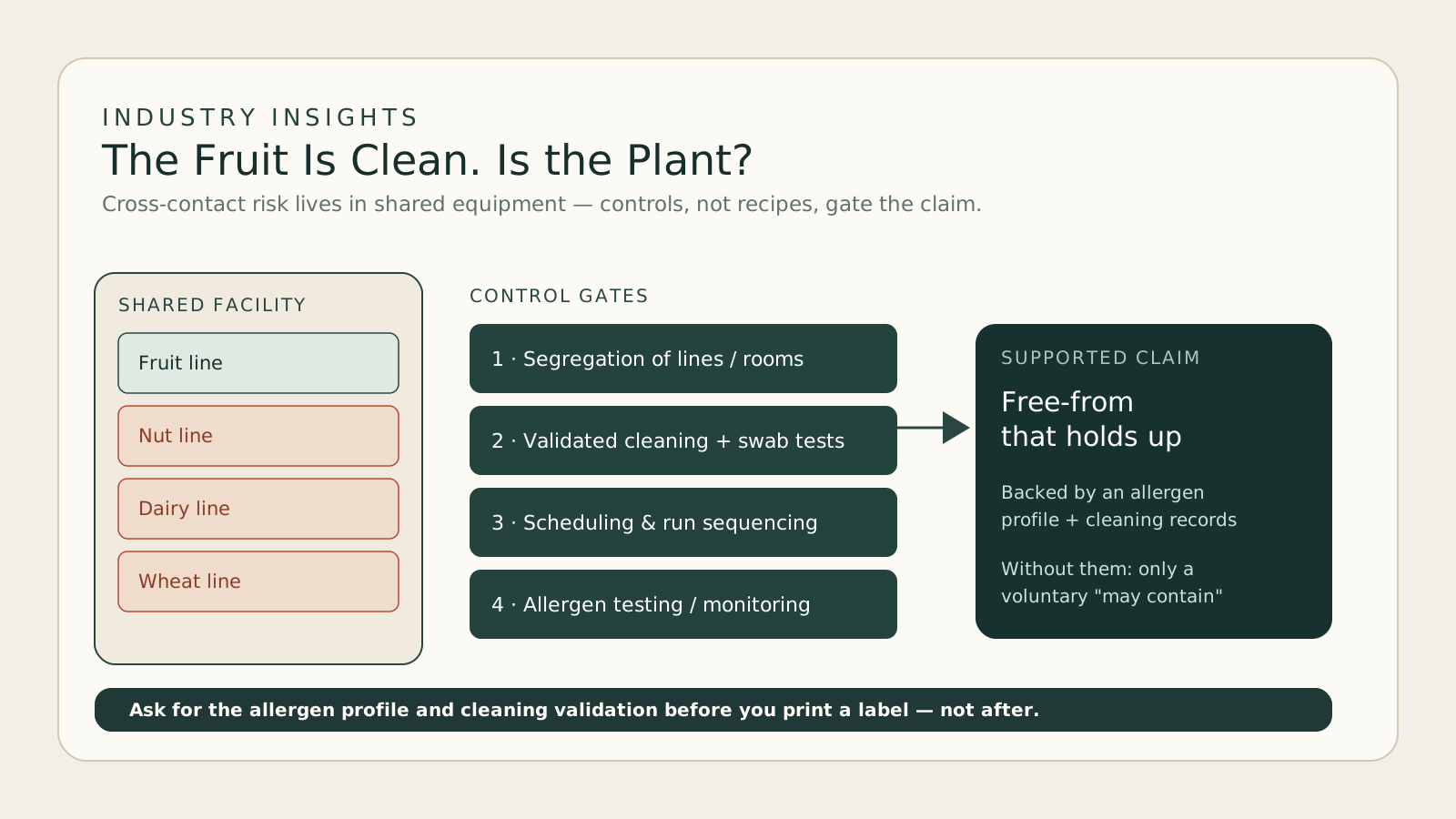
- Segregation, validated cleaning, scheduling, and testing are the controls that separate a supplier who can support an allergen claim from one who cannot.
- Ask for the facility's allergen profile and cleaning validation early; it is far cheaper than discovering the mismatch after a label is printed or a recall is triggered.
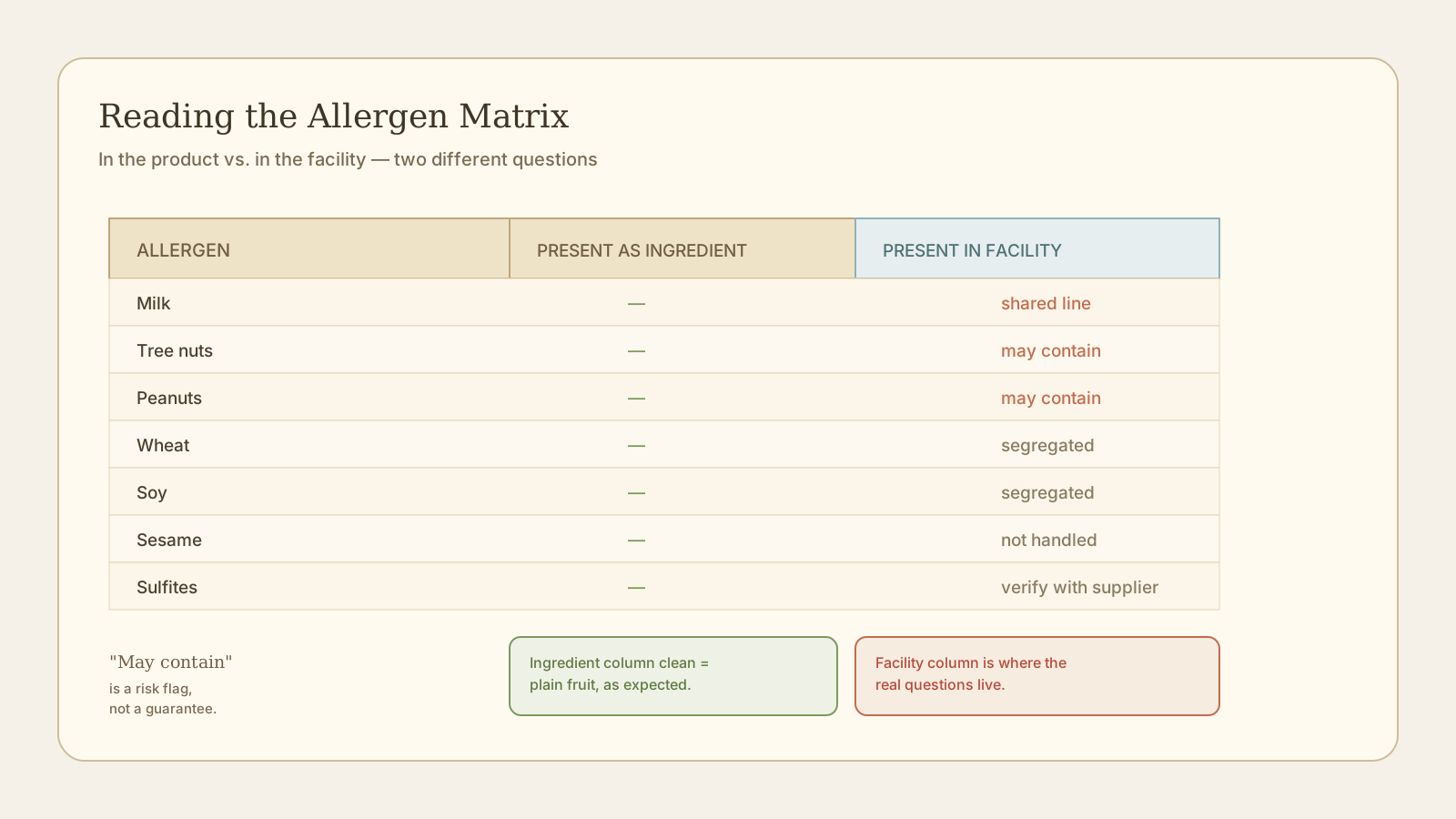
A snack founder samples two freeze-dried strawberry suppliers. Same fruit, same moisture spec, similar price. One bag reads "strawberries" and nothing else. The other reads "strawberries" plus a line in smaller type: "Made in a facility that also processes tree nuts, milk, and wheat." On the recipe, the two are identical. On the risk profile, they are not remotely the same.
For a buyer selling into schools, allergen-friendly retail, or any channel where a "free-from" claim is part of the pitch, that second line can be a deal-breaker — or at least the start of a much longer conversation. Understanding allergen cross-contact is one of the more consequential parts of choosing a freeze-dried fruit supplier, and it is easy to overlook because the fruit itself looks so clean.
The direct answer
Plain freeze-dried fruit almost never contains one of the major food allergens as an ingredient. The risk is not in the recipe; it is in the plant. If a facility also runs products containing nuts, dairy, wheat, soy, or other allergens, residues can transfer to the fruit through shared equipment, shared airflow, or shared handling. That transfer is called cross-contact, and it is what an advisory statement like "may contain" is trying to communicate.
So when you evaluate a supplier, you are not really evaluating whether the fruit is allergen-free. You are evaluating whether the environment it is processed in keeps it that way — and whether the supplier can prove it.
Why the facility matters more than the ingredient
Cross-contact does not require sloppiness; it requires proximity. A few of the common pathways:
- Shared equipment. Trays, conveyors, hoppers, mills, and packaging lines that also run allergen-containing products can carry residue from one run to the next if cleaning is not validated.
- Airborne transfer. Fine powders — nut flours, dairy powders, wheat dust — travel. Open handling in a shared space can deposit allergen on nearby fruit even without direct contact.
- People and tools. Scoops, gloves, and staff moving between allergen and non-allergen areas can carry residue if there is no discipline around it.
None of this shows up in a taste test or a moisture reading. It is a property of how the plant is laid out and run, which is why two chemically identical products can carry very different risk.
In the United States, declaring an allergen that is part of the recipe is mandatory. A precautionary "may contain" or "made in a facility with" statement is voluntary. That means its absence does not prove a plant is allergen-free, and its presence does not tell you how large the risk is. It is a prompt to ask questions, not an answer in itself.
What separates a supplier who can support a claim
If your product needs to make or protect a free-from position, you are looking for evidence of control, not just the absence of a warning label. The controls that matter:
Segregation. The strongest position is physical separation — dedicated lines, dedicated rooms, or ideally a dedicated allergen-free facility. Where full separation is not possible, spatial and procedural barriers reduce airborne and contact transfer.
Validated cleaning. Between allergen and non-allergen runs, the plant should clean to a standard that has been validated to actually remove allergen residue, not just look clean. Validation usually means allergen-specific testing (such as swab or rinse tests) confirming residue is below a defined threshold. "We wash the line" is not the same as "we have shown the line is clean to X."
Scheduling and sequencing. Running allergen-free products first, before allergen-containing runs, limits how often a full changeover is needed and reduces the number of high-risk transitions. A supplier who thinks about run order is a supplier managing the risk deliberately.
Testing. A monitoring program — periodic allergen testing on finished product or shared equipment — turns an assumption into data. It also gives the buyer something concrete to reference.
Documentation. All of the above should be captured in an allergen control plan the supplier can share, along with the facility's allergen profile: exactly which allergens are handled on site and on which lines.
The commercial trade-off
Tighter allergen control is not free. A dedicated allergen-free facility typically means higher prices, higher minimums, or less flexibility, because the supplier gives up the efficiency of running many product types through shared equipment. A shared facility with strong controls may cost less and offer more flexibility, but leaves you managing an advisory statement and the questions it raises with your own customers.
This is the real decision: how much allergen assurance does your channel actually require, and what are you willing to pay — in price, minimums, or flexibility — to get it? A bulk ingredient buyer blending fruit into a product that already carries a "may contain nuts" statement may not care. A brand whose entire positioning is "safe for the nut-allergic lunchbox" cares enormously and should probably pay for segregation.
How to build it into supplier selection
The efficient move is to surface allergen posture early, before price and samples pull the decision in a direction that later collapses. A short set of questions does most of the work:
- What allergens are handled in the facility, and which are on lines shared with the fruit?
- Is there segregation — dedicated lines, rooms, or a dedicated site — for allergen-free products?
- How is changeover cleaning validated, and can you share the method and a recent result?
- Do you run an allergen testing or monitoring program, and can you share the plan?
- Why does (or doesn't) the finished product carry a precautionary statement?
If a supplier can answer these clearly and back them with documents, they can support an allergen claim. If the answers are vague, the claim is a liability waiting to surface — and it is far cheaper to learn that during selection than after a label is printed, a customer complains, or a recall is on the table.
The takeaway
For freeze-dried fruit, allergen risk lives in the facility, not the fruit. A clean ingredient statement tells you nothing about the nut, dairy, or wheat products running down the hall. The suppliers worth trusting with a free-from claim are the ones who can show segregation, validated cleaning, sensible scheduling, and testing — and the buyers who ask about all of that during selection are the ones who never have to explain a cross-contact surprise to their own customers.
Frequently Asked Questions
If freeze-dried fruit has no allergens, why does the bag say 'may contain tree nuts'?
Because the advisory describes the facility, not the ingredient. If the same lines or building also run nut, dairy, or wheat products, residues can transfer through shared equipment, airflow, or handling. The statement flags that possibility even though the fruit recipe is clean.
Is a 'may contain' statement a legal requirement?
In the United States, precautionary advisory statements like 'may contain' are voluntary, while declaring allergens that are actually part of the recipe is mandatory. The advisory is a risk-communication choice, which is exactly why buyers need to understand the reasoning behind it rather than take it at face value.
What should a buyer request to evaluate cross-contact risk?
The facility's allergen profile (what allergens are handled on site and on shared lines), the segregation and scheduling approach, cleaning validation records, and any allergen testing program. Together these show whether a clean claim is actually supported.
Does a dedicated allergen-free facility always cost more?
Often, yes, or it comes with higher minimums. That is the trade-off: tighter allergen control usually means less flexible, more expensive supply. Whether it is worth it depends on the channel you sell into and the claims you need to make.
Primary sources & further reading
- Food Allergies U.S. Food and Drug Administration Referenced for the major food allergens and the distinction between required allergen declarations and voluntary advisory statements.
- Current Good Manufacturing Practice, Hazard Analysis, and Risk-Based Preventive Controls for Human Food (21 CFR Part 117) U.S. Electronic Code of Federal Regulations Referenced for allergen preventive controls, including sanitation and preventing cross-contact in facilities that handle allergens.
External links open in a new tab. We do not receive compensation from any organization listed; sources are referenced because they are primary, current, and publicly verifiable.