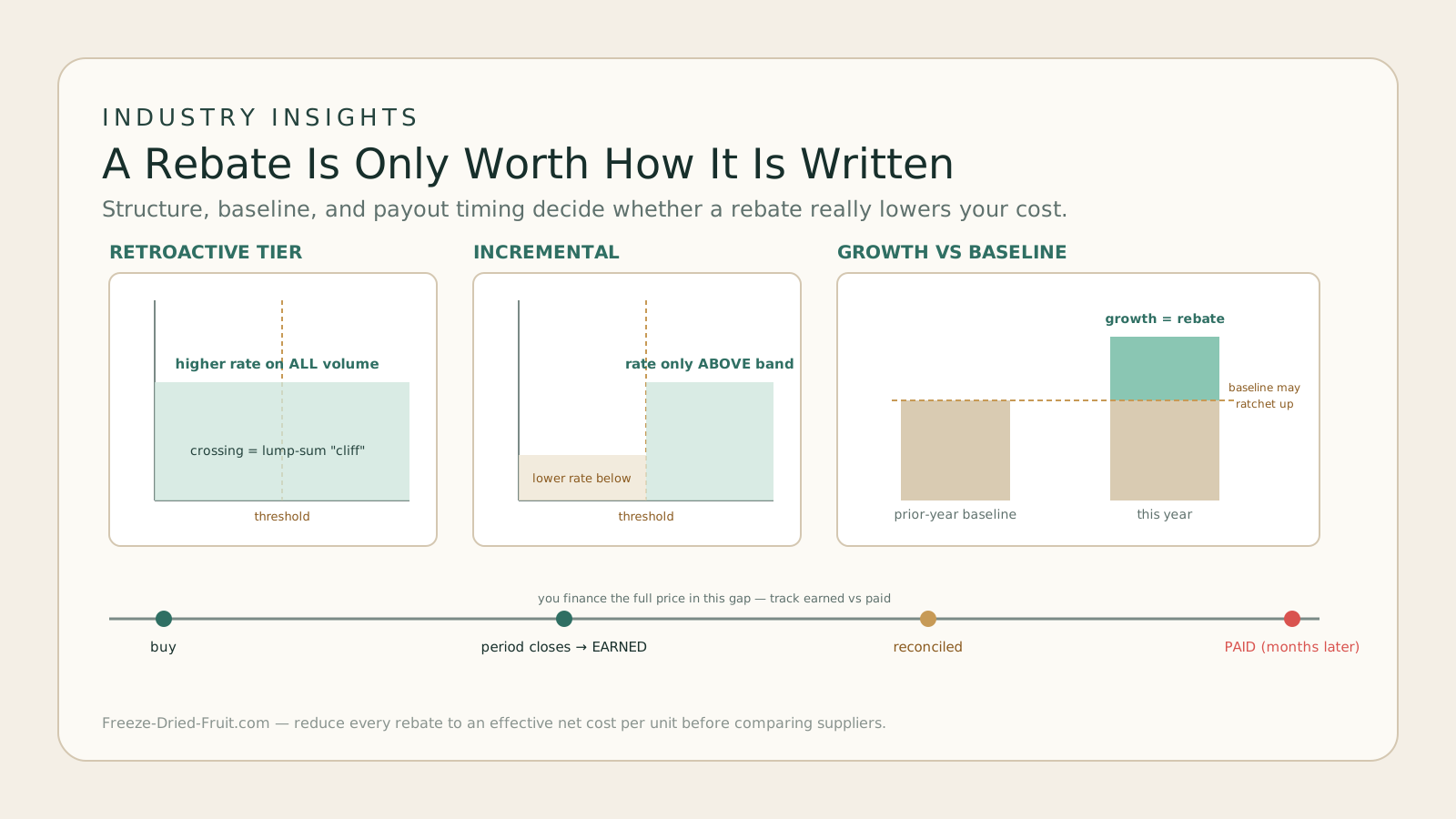
- A rebate is money returned after the fact for hitting a volume or growth target, so unlike an upfront price break it does not lower your invoice — it changes your effective cost only once it is earned, calculated, and actually paid, which can be months later.
- The structure matters more than the headline percentage: whether a tier rebate pays on all volume or only the volume above a threshold, whether growth is measured against a fair baseline, and what happens if you miss the target by a little all change how much you really save.
- Rebates can distort buying behavior — pulling forward orders, over-committing to one supplier, or accruing income you have not been paid — so treat the rebate as one line in a total-cost comparison, and reconcile earned versus paid rebates rather than assuming the credit will arrive.
Rebates and growth incentives are among the most common tools suppliers use to reward larger freeze-dried fruit programs, and among the easiest for buyers to misread. The appeal is obvious: buy more, get money back, lower your cost. The reality is that a rebate only lowers your cost once it is earned, correctly calculated, and actually paid — and the structure that sits between "buy more" and "get money back" decides how much you really save. Understanding those structures is the difference between a rebate that improves your economics and one that just steers your ordering.
The direct answer
A rebate returns money after the fact for meeting a volume or growth target, so it does not reduce your invoice the way a discount does; it changes your effective cost only when the credit lands, often months after the period closes. The two structures you will meet most are the retroactive tiered rebate, where crossing a threshold applies the higher rate to all your volume, and the incremental rebate, where each rate applies only to the volume in its band. Growth incentives layer on top, paying for buying more than a baseline — and the fairness of that baseline is where much of the value is won or lost. Treat every rebate as one line in a total effective-cost comparison, model it against a realistic forecast, and reconcile what you earn against what you are paid.
Rebate versus discount: timing and certainty
The cleanest way to keep rebates honest is to remember what they are not. A discount lowers the price now; a rebate returns money later, if you qualify. That introduces two costs a headline percentage hides. You finance the full purchase price in the meantime, and you carry the risk of missing the target and earning less than you expected — or nothing. In a category like freeze-dried fruit, where volumes swing with crop years, demand, and shelf-life limits on how much you can hold, that timing-and-certainty gap is real money. A five percent rebate is not equivalent to a five percent discount, and pretending otherwise flatters the supplier's offer.
Tiered versus incremental: read which one you signed
The single most consequential detail in a rebate program is what volume the rate applies to.
In a retroactive tiered rebate, once your purchases cross a threshold, the higher rate is applied to everything in the period — including the units you bought below the threshold. Crossing a tier can therefore be worth a large lump sum, which sounds great but creates a cliff: buying one more case near period end can unlock a rebate on your entire volume, and suppliers know it. That incentive to "buy to the number" is exactly the behavior a retroactive tier produces.
In an incremental, or marginal, rebate, each rate applies only to the volume inside its band. Units above a threshold earn the higher rate; units below keep the lower one. There is no cliff and much less temptation to game the period end, but the total payout at any given volume is usually smaller than a retroactive tier would give. The same headline numbers produce very different settlements under the two designs, so the structure — not the percentage — is what you are really negotiating.
A retroactive tier can make it look rational to place a large order at period end just to cross a threshold and trigger a rebate on your whole volume. Before doing that, check what you would actually earn against the carrying cost, storage, and shelf-life risk of the extra inventory. Freeze-dried fruit does not keep forever, and a rebate you unlock by overbuying can be smaller than the cost of holding the stock.
Growth incentives and the baseline problem
A growth incentive pays for buying more than a reference amount, usually the prior year or prior period. Everything depends on that baseline. If it is set to your genuine prior-year volume, a strong previous year makes growth harder to hit; a soft one makes it easy. Baselines can be negotiated, reset when programs change, or scoped to include or exclude certain products — all of which change how much growth you appear to deliver. The trap to watch is a baseline that ratchets: this year's stretch target becomes next year's starting line, quietly raising the bar every cycle. Model any growth incentive against a realistic forecast, not an optimistic one, and confirm precisely which purchases count toward both the baseline and the growth measurement before you rely on the payout.
Earned is not paid
Two words in a rebate program are easy to conflate and expensive to confuse. Earned means you met the conditions for the period. Paid means the credit has actually reached you. Rebates are typically calculated after the period closes, reconciled against volume records, and then settled on the supplier's schedule — sometimes an annual true-up, sometimes a credit note on net terms. The gap costs you cash while you wait, and it invites leakage: rebates that were earned but never claimed, reconciled, or chased are a well-known source of lost value. Track earned rebates as receivables, match them against what the supplier actually pays, and follow up on discrepancies rather than assuming the money will simply appear.
Putting a rebate in its place
The way to keep rebates from distorting your buying is to reduce every offer to the same currency: effective net cost per unit under a realistic volume. A rich rebate can mask a high base price, so a supplier with a worse true cost can win on the strength of a rebate that feels tangible. A generous tier can pull orders forward or concentrate your spend with one supplier, eroding leverage and resilience. Once you have converted the rebate to a net cost and compared it across suppliers, you can see whether it is genuinely lowering what you pay or mostly steering how you buy. And because vague rebate language almost always resolves in the seller's favor at settlement, the last step is the most important: nail down the thresholds, the structure, the baseline, the payout timing, and exactly what counts — because a rebate is worth roughly as much as it is precisely written to be.
Frequently Asked Questions
What is the difference between a rebate and a straight discount?
A discount lowers the price on the invoice at the time of purchase — you pay less immediately. A rebate returns money after the fact once you have met a condition, usually a volume or growth target over a defined period. The practical consequences are different. A rebate does not improve your cash position at purchase; you carry the full invoice cost and only recover the rebate later, sometimes a quarter or more after the period closes. It also introduces risk: if you fall short of the target, you may earn a smaller rebate or none at all, whereas a discount is certain. For freeze-dried fruit, where order timing and volumes fluctuate with crop years and demand, that timing and certainty gap is worth pricing in rather than treating a rebate percentage as equivalent to the same discount.
What is the difference between a tiered rebate and an incremental rebate?
It comes down to what volume the rebate rate applies to. In a retroactive tiered rebate, once you cross a volume threshold the higher rate is applied to all the volume in the period, including the units below the threshold — so crossing a tier can be worth a large lump sum. In an incremental (or marginal) rebate, each rate applies only to the volume within that band, so units above a threshold earn the higher rate while units below keep the lower one. Retroactive tiers are more generous to the buyer at the moment of crossing but create a cliff — buying one more case can unlock a rebate on everything — which can lead to end-of-period ordering purely to hit the number. Incremental structures are smoother and less prone to gaming. Read the contract carefully, because the same headline percentages produce very different payouts under the two designs.
How are growth incentives measured, and why does the baseline matter?
A growth incentive rewards buying more than some reference amount, typically the prior year's or prior period's volume. The entire value hinges on how that baseline is set. If the baseline is your actual prior-year purchases, a strong previous year makes growth harder to achieve; a weak one makes it easy. Baselines can also be negotiated, reset when programs change, or defined to include or exclude certain products, which shifts how much growth you appear to deliver. Watch for baselines that ratchet upward each year, so last year's stretch becomes this year's starting point, steadily raising the bar. Before signing, model the incentive against a realistic forecast rather than an optimistic one, and confirm exactly which purchases count toward both the baseline and the growth measurement.
When is a rebate actually earned versus paid, and why does that gap matter?
Earned means you have met the contract's conditions for the measurement period; paid means the money or credit has actually reached you. The two can be far apart. Rebates are usually calculated after the period closes, subject to reconciliation of volumes, and then paid on the supplier's schedule — which might be net terms after an invoice or credit note, or an annual settlement. That gap creates two problems for buyers. First, cash: you finance the full purchase price in the meantime. Second, accounting and collection: it is easy to assume a rebate you earned will simply arrive, when in practice unclaimed or unreconciled rebates are a common source of leakage. Track earned rebates as receivables, reconcile them against what the supplier pays, and chase discrepancies.
Can rebates distort buying decisions in ways that cost more than they save?
Yes, and this is the main reason to treat them cautiously. A retroactive tier can tempt you to overbuy at period end to unlock a rebate on your whole volume, leaving you holding inventory — and freeze-dried fruit still has a finite shelf life and storage cost. A growth incentive can push you to concentrate spend with one supplier to hit a target, reducing your leverage and supply resilience. And a rich rebate can mask a high base price, so a supplier with a worse net cost wins because the rebate feels tangible. The discipline is to convert every offer to an effective net cost per unit under a realistic volume, compare that across suppliers, and only then judge whether the rebate is genuinely lowering your cost or just steering your behavior.
What terms should a buyer nail down before agreeing to a rebate program?
Get specificity on the mechanics: the exact volume or growth thresholds, whether the rate is retroactive or incremental, the measurement period and how partial periods are handled, and precisely which products and purchases count. Pin down the baseline for any growth incentive and whether it resets or ratchets. Clarify the payout — form (credit note versus payment), timing, and any conditions like account being current. Ask what happens if you miss a tier narrowly, whether there is any proration, and how disputes over volume counts are resolved. Finally, confirm how returns, cancellations, and off-spec lots affect counted volume. Vague rebate language almost always resolves in the seller's favor at settlement, so the value of a rebate is largely set by how tightly it is written.