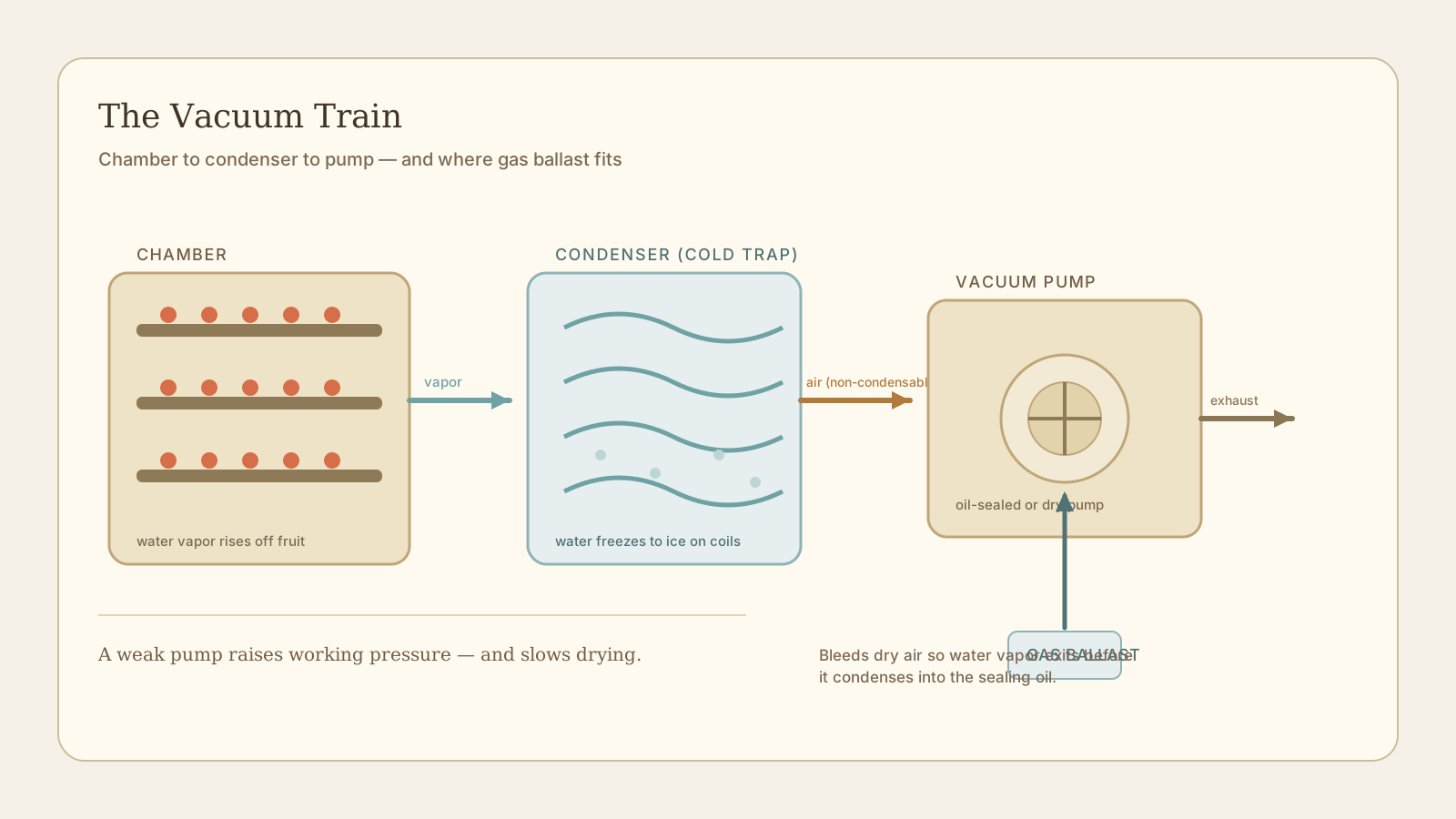
- The vacuum pump removes the non-condensable gas the condenser cannot freeze out, so its condition directly affects working pressure and drying speed.
- Water vapor is the pump's enemy: without gas ballast or a well-sized cold trap, moisture condenses inside oil-sealed pumps and degrades performance.
- Gas ballast deliberately bleeds a little dry air through the pump to carry water vapor out before it condenses, trading a slightly higher base pressure for cleaner oil and steadier vacuum.
- Buyers rarely see pump data, but a supplier who talks about ballast use, oil changes, and trap defrost is usually running a more predictable operation.
Most conversations about freeze dryers stop at the chamber and the condenser. The chamber holds the trays, the condenser is the cold trap that turns water vapor back into ice, and the process feels like it happens between those two. The vacuum pump sits behind them, out of sight, doing a job that only becomes visible when it starts to fail.
For freeze-dried fruit, that hidden job matters more than it looks. The pump sets how deep the vacuum goes, how steadily it holds, and how much a machine drifts over a season of sugary, moisture-heavy loads.
The direct answer
The vacuum pump's role is to remove the gas the condenser cannot. A freeze dryer runs at very low pressure because sublimation needs a large pressure gap between the frozen fruit and the cold condenser. The condenser handles the water vapor by freezing it onto its coils. But air and other non-condensable gases do not freeze out. They have to be pulled away mechanically, and that is the pump's work.
If the pump weakens, that non-condensable gas builds up, working pressure rises, and the pressure gap that drives water out of the fruit shrinks. The cycle does not stop. It slows, and its endpoint gets harder to trust.
Why water vapor is the real challenge
The awkward part of freeze-drying is that the main thing coming off the fruit, water vapor, is exactly what a traditional oil-sealed pump handles worst.
In an oil-sealed rotary vane pump, gas is compressed against a film of sealing oil. Air compresses and leaves through the exhaust without trouble. Water vapor is different: as it is compressed, it can reach the point where it condenses back into liquid, and that liquid ends up in the oil. Water in the oil destroys the oil's ability to seal, raises the pump's base pressure, and over time promotes corrosion and sludge.
This is why a freeze dryer's condenser is sized to catch the vast majority of the water vapor before it ever reaches the pump. The pump is meant to see mostly non-condensable gas. When the condenser is undersized, overloaded, or iced up, more water slips past to the pump, and the trouble starts.
What gas ballast does
Gas ballast is the classic answer to the water-vapor problem in oil-sealed pumps. A ballast valve lets a measured amount of dry air into the pump partway through its compression stroke.
That added air raises the total pressure in the compression space so that water vapor is swept out with the exhaust before it reaches the pressure where it would condense. In effect, the ballast keeps the water moving through the pump rather than letting it settle into the oil.
The trade-off is straightforward: with ballast open, the pump cannot pull quite as deep an ultimate vacuum, because that bleed of dry air is itself a small gas load. Many operators run ballast during the wettest part of a cycle, or as a warm-up and cool-down practice, and close it when they need the deepest pressure. The point is to protect the oil during the moisture-heavy phase without giving up vacuum depth when it counts.
A pump that reaches a low base pressure on a clean, dry test can still perform poorly on a wet fruit load if its oil is already carrying water or its ballast is never used. Ultimate vacuum on a dry bench tells you the pump's ceiling. How it behaves under a real, moisture-laden cycle tells you what the fruit actually experiences.
Dry pumps change the trade-off
Newer food freeze dryers increasingly use oil-free, or dry, vacuum pumps. Without sealing oil, there is no oil for water to contaminate, so these pumps tolerate the moisture load of fruit better and remove the routine oil-change burden.
They are not free of trade-offs. Dry pumps generally cost more up front, and they still depend on a healthy condenser to keep the bulk of the water vapor from reaching them. They shift maintenance from oil management toward different service intervals rather than eliminating maintenance. But for a fruit operation running heavy, sugary, high-moisture loads day after day, the tolerance for water vapor is a real operational advantage.
Where this shows up in the fruit
None of this is visible in a finished bag, but it shapes what ends up there.
A pump in good condition, paired with a condenser that is doing its job, keeps working pressure where the recipe expects it. Sublimation proceeds at the assumed rate, and the endpoint the operator checks lines up with the endpoint the recipe promised.
A pump that is tired, running on water-loaded oil, or never given ballast during the wet phase lets working pressure drift upward. Primary drying then runs slower than the recipe assumes. If the cycle still ends on its old schedule, the densest pieces can finish late and carry extra residual moisture into the pouch, narrowing the margin the packaging is supposed to protect.
What buyers can reasonably ask
Buyers will never receive pump logs, and they should not expect them. But the topic is a useful probe during a supplier review:
- Do they use gas ballast, or run dry pumps, to handle the moisture load of fruit?
- How often is pump oil checked and changed, and what triggers a change?
- How do they keep the condenser from being overloaded so water does not reach the pump?
- Do they track base pressure and cycle times to catch slow drift?
A supplier who can answer these in operational terms is usually running a more controlled process. One who treats the vacuum system as a box that either works or does not is more likely to ship the occasional drifting lot without knowing the cause.
Bottom line
The vacuum pump is the quiet third partner in every freeze-drying cycle, and its handling of water vapor is the part that most affects freeze-dried fruit. Gas ballast on an oil-sealed pump, or a dry pump built to tolerate moisture, keeps water out of the mechanism so vacuum stays deep and steady across a long, wet load.
Buyers cannot see any of this directly, but a supplier who talks fluently about ballast, oil, and trap capacity is describing the kind of discipline that keeps working pressure, and therefore fruit texture, predictable from batch to batch.
Frequently Asked Questions
What does the vacuum pump actually do in freeze-drying?
It removes the non-condensable gas, mostly air, that the condenser cannot trap as ice. The cold condenser handles the water vapor coming off the fruit, and the pump keeps chamber pressure low by pulling out everything the trap cannot freeze. If the pump weakens, working pressure creeps up and primary drying slows.
Why is water vapor a problem for the pump?
In an oil-sealed pump, water vapor that reaches the pump can condense into the sealing oil instead of passing through. Water in the oil ruins its sealing ability, raises base pressure, and can cause corrosion. That is why a properly sized, cold condenser upstream and gas ballast on the pump both matter.
What is gas ballast in plain terms?
Gas ballast is a valve that lets a controlled amount of dry air into the pump partway through its compression stroke. That extra gas keeps water vapor from reaching the pressure where it would condense, so it gets pushed out with the exhaust instead of collecting in the oil. The cost is a modestly higher ultimate pressure while the ballast is open.
Do dry pumps change the picture?
Oil-free (dry) vacuum pumps avoid the oil-contamination problem entirely and tolerate water vapor better, which is why many newer food freeze dryers use them. They shift the trade-off toward higher purchase cost and different maintenance rather than routine oil changes, but they do not remove the need for a well-run condenser.
Can a tired pump cause soft centers in the fruit?
Indirectly, yes. If a weak pump lets working pressure drift upward, sublimation runs slower than the recipe assumes, and the densest pieces can finish primary drying late. If the cycle still ends on its old clock, those pieces can carry extra moisture into the bag.
Primary sources & further reading
- Freeze Drying / Lyophilization Information: Basic Principles SP Scientific Overview of the roles of chamber, condenser, and vacuum pump in a freeze-drying system and how vacuum level influences sublimation.
- Gas Ballast in Rotary Vane Vacuum Pumps Leybold Vacuum fundamentals describing how gas ballast handles condensable vapors such as water in oil-sealed rotary vane pumps.
- Current Good Manufacturing Practice, Hazard Analysis, and Risk-Based Preventive Controls for Human Food Electronic Code of Federal Regulations FDA rule requiring equipment suitable for its intended use and adequate process control during food manufacturing.
External links open in a new tab. We do not receive compensation from any organization listed; sources are referenced because they are primary, current, and publicly verifiable.