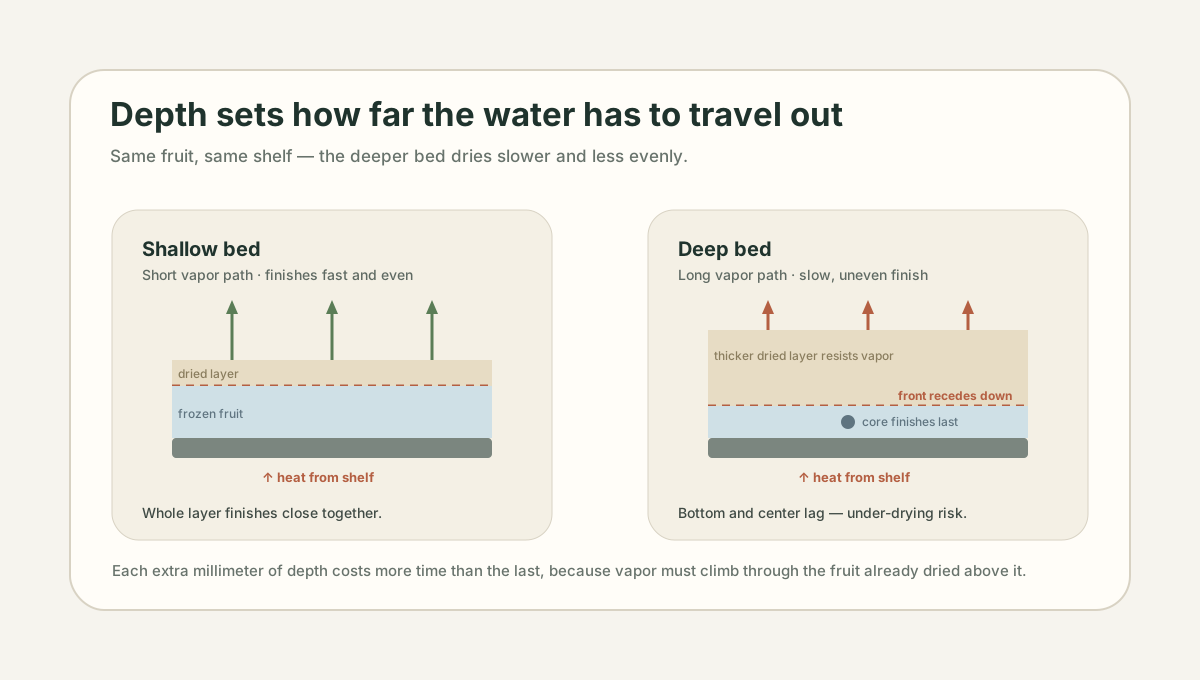
- Bed depth is how thick the layer of fruit sits on the tray, and it sets how far water vapor must travel out of the load before the batch is dry.
- Deeper beds lengthen primary drying because the sublimation front has to work down through already-dried fruit, and the dry layer above resists vapor flow.
- The bottom and center of a deep bed finish last, so uneven loading or overfilling shows up as pieces that are crisp on top and still moist underneath.
- Buyers can ask whether a processor validates cycles at a defined fill weight per tray rather than letting load depth drift with demand.
Ask a processor how long a fruit takes to freeze-dry and you will usually get an answer in hours. Ask what happens to that number when the trays are loaded twice as full, and the answer gets more careful. Bed depth, the thickness of the fruit layer on the tray, is one of the least glamorous variables in freeze-drying and one of the most decisive. It quietly sets how far water has to travel to leave the load, and that distance shapes both cycle time and how evenly a batch finishes.
The temptation is obvious. A dryer chamber is expensive to run, so filling every tray a little deeper looks like free capacity. Sometimes it is. Often it is the hidden reason two lots of the same fruit come out of the same machine with different texture.
The direct answer
Bed depth shapes freeze-dried fruit drying by controlling how far the sublimation front, and the vapor it releases, must travel before the load is dry. A shallow bed lets vapor escape quickly and finishes evenly. A deeper bed forces vapor to climb up through fruit that has already dried, which slows primary drying and widens the gap between the pieces that finish first and the pieces that finish last.
In short, loading deeper does not just add more fruit to dry. It changes the path each water molecule has to take to get out, and that path is where time and uniformity are decided.
Why depth changes the physics, not just the quantity
Freeze-drying removes water from frozen fruit by sublimation: under vacuum and with controlled heat, ice turns straight to vapor. FDA's lyophilization guidance frames the process as freezing, then vacuum, then heat for sublimation, with the emphasis on validated, repeatable cycles.
The important detail is where the drying happens. Reviews of plant-based freeze-drying describe a sublimation front that starts at the surface of the load and recedes inward as ice leaves. Above that front sits a growing layer of dried fruit. Every bit of vapor released at the front has to travel up through that dry layer to reach the chamber.
That dried layer is not a clear highway. It resists vapor flow. So as the front moves deeper into a thick bed:
- The vapor has a longer path to travel out.
- The resistance of the dry layer above keeps rising.
- Each additional millimeter of depth takes longer to dry than the millimeter before it.
This is why drying time does not scale politely with load. Doubling the bed depth can more than double the primary drying time, because the deepest fruit is working against the thickest dry layer.
Shallow beds finish fast and even
A thin, well-spread load gives every piece a short, similar escape path for its vapor. The front reaches the bottom of the bed quickly, and the difference between the first pieces to dry and the last is small. That evenness is the real prize. It means a single cycle endpoint leaves the whole tray in roughly the same condition, rather than some pieces crisp and others still holding moisture.
The cost is capacity. Shallow loading uses more tray area and more cycles to move the same tonnage, which is exactly the pressure that pushes operators to load deeper.
Deep beds stretch time and split the batch
A deeper bed puts more fruit in the chamber per cycle but makes the coldest, deepest pieces finish much later than the surface pieces. If the cycle ends on the top layer's condition, the bottom of the load can still be under-dried.
In a deep bed, heat comes mainly from the shelf below and the surroundings, but the last ice to leave often sits in the center and lower portion of the load, where the vapor path out is longest. Those pieces are the stragglers. If a cycle is ended when the top layer looks and feels done, the stragglers can leave the machine with more residual moisture than intended.
Under-dried pieces do not always announce themselves. They can look fine, then soften the rest of the pack over time as moisture equalizes, or they can push a lot's water activity above the target that keeps it shelf-stable. A batch that is 90 percent crisp and 10 percent slightly moist is still a batch with a problem.
What makes depth effects worse
Bed depth never acts alone. Several factors sharpen its penalty:
- Piece size and packing. Large or tightly packed pieces leave narrower channels for vapor, raising the resistance of the dried layer at any given depth.
- Sugar and moisture load. High-sugar, high-moisture fruit has more water to remove and less structural margin, so a deep bed both takes longer and risks softening in the slow-drying core.
- Uneven spreading. A load that is thin at the edges and mounded in the middle dries at two different speeds on the same tray, which is uneven loading disguised as a full tray.
- Chamber and condenser limits. A deep, heavily loaded chamber releases a lot of vapor at once. If the system cannot pull that vapor away fast enough, drying slows regardless of how the trays are set.
This is why a cycle proven on a light, even load should not be trusted at a heavier fill without revalidation. The recipe that worked at one depth is describing a different physical situation at another.
How this shows up for buyers
Buyers never see the trays, but they feel bed depth as texture consistency and as under-dried surprises. A few questions separate processors who control the load from those who let it drift:
- Do you validate cycles at a defined fill weight or bed depth per tray?
- Do you check moisture or water activity across the load, including the bottom and center, rather than a single top sample?
- How do you keep load depth from creeping up when demand is high?
- If a lot runs deeper than standard, does the cycle change to match?
A processor who can answer these is treating bed depth as a controlled parameter. One who loads "as full as it fits" and runs a fixed time is leaving uniformity to chance, and the chance lands in the buyer's pack.
The practical takeaway
Bed depth is easy to ignore because it looks like a loading choice rather than a process setting, but it is one of the strongest levers over cycle time and uniformity in freeze-drying. A shallow, even bed finishes quickly and lands the whole tray in the same condition. A deeper bed buys chamber capacity but stretches primary drying and leaves its coldest, deepest pieces finishing last, which is where under-dried stragglers hide. The reliable approach is not the fullest possible tray or the thinnest, but a defined fill that has been validated for the specific fruit and cut, then held steady and checked across the whole load rather than judged from the top.
Frequently Asked Questions
What is bed depth in freeze-drying?
Bed depth is the thickness of the fruit layer loaded onto a dryer tray, often expressed as a fill weight per unit area or a target depth in millimeters. It describes how much product sits between the heated shelf and the top of the load.
Why does a deeper bed take longer to dry?
Because water vapor released deep in the load has to travel up through the fruit that has already dried before it can leave the tray. That dry layer resists vapor flow, so as the drying front moves down, each additional millimeter of depth costs more time than the last.
Does loading trays fuller increase output?
It increases how much fruit is in the chamber per cycle, but not always how much finished product you get per hour. If the deeper load needs a much longer cycle or produces uneven pieces that must be sorted or re-dried, the extra fill can erase the apparent gain.
Why do the bottom pieces stay moist?
In a deep bed, the shelf heats the tray from below, but the last ice to leave is often in the center and lower portion of the load, where vapor has the hardest path out. Those pieces finish last and are the ones most likely to be under-dried if the cycle ends on the top layer's condition.
What should buyers ask about loading?
Ask whether cycles are validated at a defined fill weight per tray, whether the processor checks moisture or water activity across the load rather than a single top sample, and how they prevent load depth from creeping up when demand is high.
Primary sources & further reading
- Lyophilization of Parenteral (7/93) U.S. Food & Drug Administration Referenced for the description of freeze-drying as freezing followed by vacuum and controlled heat to drive sublimation, and the need for validated, repeatable cycles.
- Freeze-Drying of Plant-Based Foods Foods / PubMed Central Referenced for the way a receding sublimation front and the resistance of the already-dried layer govern the rate of primary drying.
External links open in a new tab. We do not receive compensation from any organization listed; sources are referenced because they are primary, current, and publicly verifiable.