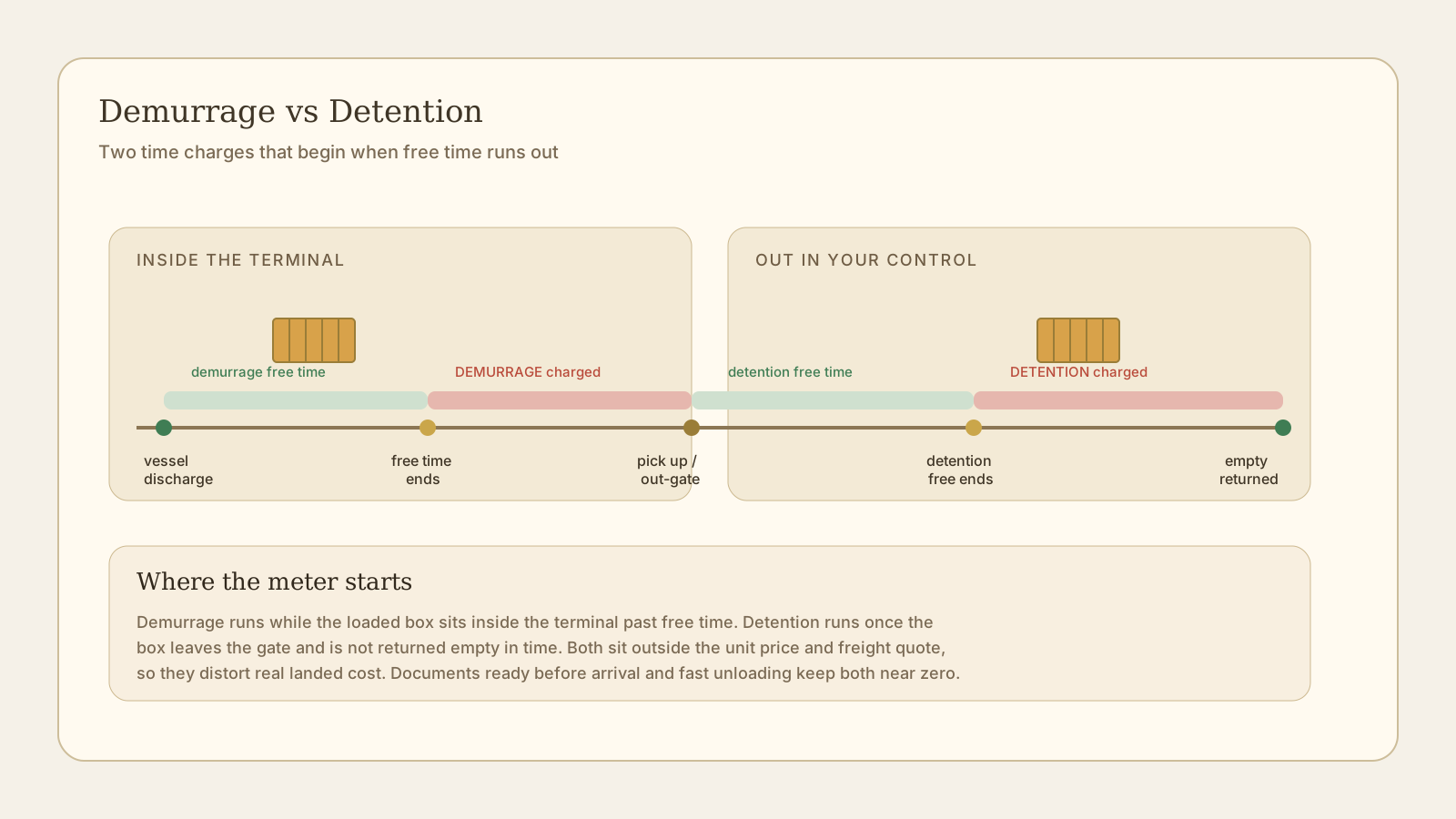
- Demurrage is charged when a loaded container sits inside the terminal past its free time; detention is charged when an out-gated container is held outside the terminal past its free time before the empty is returned.
- Free time is short, often only a handful of days, so customs holds, paperwork gaps, and warehouse delays can start the meter quickly.
- These charges are not in the unit price or the freight quote, so they land as separate invoices that distort the real landed cost of a lot.
- Most demurrage and detention is avoidable with documents ready before arrival, fast customs clearance, and a plan to unload and return the container promptly.
Two freeze-dried fruit shipments can be quoted at exactly the same price per kilogram and still land at very different real costs. One clears customs the day it arrives and the empty container is back at the depot within the week. The other sits at the terminal waiting on a document, then sits at the warehouse waiting for a dock, and arrives with a stack of extra invoices that were never part of the negotiation.
Those extra invoices are usually demurrage and detention. They are not part of the unit price, and they are not in the ocean freight quote. They are time charges that begin the moment the container's free time runs out.
The direct answer
Demurrage and detention are both charges for keeping a container longer than the time the carrier and terminal allow for free.
- Demurrage is charged when a loaded container stays inside the terminal past its free time, waiting to be picked up.
- Detention is charged when a container has been taken out of the terminal but is not returned empty within its free time.
The simplest way to keep them straight: demurrage is time the box spends stuck inside the gate, detention is time the box spends out in your control before it comes back empty.
Why free time is the variable that matters
Free time is the grace window the carrier and terminal give you to move the container without a charge. It is short. Demurrage free time is often only a handful of days from when the container is discharged or made available, and detention free time is often only a few days from when the container leaves the terminal until the empty is returned.
The exact number of days depends on the carrier, the port, and the contract, which is exactly why it should be confirmed in writing rather than assumed. The trouble is that the events most likely to cause delay are common ones:
- a customs hold or exam
- a missing or incorrect document at clearance
- an import-safety verification gap
- a backed-up warehouse with no open dock
- a trucking shortage at the destination port
Any one of these can eat through a few days of free time before anyone notices the meter is running.
Why these charges hit freeze-dried fruit buyers harder than expected
Freeze-dried fruit is usually a considered purchase. Buyers compare suppliers on landed cost, track margins lot by lot, and build pricing around a number they believe is locked in once the deal closes.
Demurrage and detention break that assumption because they arrive after the deal is priced. The unit cost was agreed. The freight was quoted. Then a separate invoice shows up, tied not to the value of the fruit but to days a steel box sat idle. On a single container, that can be enough to turn a comfortable margin into a thin one.
Because the charge is unrelated to the product itself, it is also easy to leave out of a landed-cost model entirely. Many buyers only discover the gap when the accounting does not match the plan.
A realistic landed-cost model for imported freeze-dried fruit leaves room for time-based risk: demurrage, detention, storage, and exam fees. Treating these as occasional surprises rather than budget lines is how a clean quote turns into an over-budget lot.
Who pays depends on the terms
Responsibility for demurrage and detention is not automatic. It follows the Incoterms and the contract.
Under terms where the buyer controls inland movement and customs clearance, the buyer generally carries this risk, because the buyer is the one whose actions decide how fast the container clears and returns. Under terms where the seller delivers all the way to the buyer's door, more of this risk sits upstream. The party named on the bill of lading and handling clearance is usually the one fielding the invoices in practice.
This is one more reason the choice of Incoterms is a cost decision and not just a logistics formality. The same shipment can carry very different time-charge exposure depending on who is responsible for the steps that consume free time.
How regulation has changed the landscape
Demurrage and detention have drawn enough complaints that they are now actively regulated in U.S. ocean trade. The Federal Maritime Commission has issued rules on how these charges must be billed, aimed at giving importers and exporters clearer information and a basis to dispute charges that are not properly documented.
For a buyer, the practical takeaway is twofold. First, an invoice for these charges should be itemized and explainable, not a lump sum with no detail. Second, charges that are vague, undocumented, or billed to the wrong party can be questioned rather than simply paid. Knowing that the billing has rules attached changes the posture from accepting every invoice to reviewing it.
How to keep these charges near zero
Most demurrage and detention is avoidable, because most of it comes from delay rather than from anything inherent to the cargo. The levers are practical:
- Have customs entry and import-safety documents complete and accurate before the vessel arrives, so clearance is not waiting on paperwork.
- Clear customs quickly and resolve any hold or exam without sitting on it.
- Book trucking in advance so a container is not stranded at the terminal for lack of a chassis or driver.
- Confirm the warehouse has a dock window and labor to unload on arrival.
- Return the empty container before detention free time expires, not on the last possible day.
None of these are exotic. They are coordination problems, which is precisely why they are solvable with planning and why a disorganized import process pays for the disorganization in time charges.
What buyers should ask before the container ships
A short set of questions, asked early, prevents most surprises:
- How many days of demurrage and detention free time apply to this shipment?
- Who is responsible for these charges under our Incoterms?
- Are all clearance and import-safety documents in hand before arrival?
- Is trucking and warehouse capacity confirmed for the expected arrival window?
- If an invoice appears, will it be itemized enough to verify?
These questions do not change the price of the fruit. They protect the price you already agreed to.
Bottom line
Demurrage and detention are time charges that sit outside the unit price and outside the freight quote, which is exactly why they distort the true landed cost of freeze-dried fruit. Demurrage is the container stuck inside the terminal; detention is the container out in your control and not yet returned.
Both run on short free-time clocks, both are largely avoidable with documents and logistics ready in advance, and both are now billed under rules that give importers room to question charges that are not properly supported. Treating them as a planned line in the landed-cost model, rather than a recurring surprise, is what keeps a good quote from quietly becoming an expensive one.
Frequently Asked Questions
What is the difference between demurrage and detention?
Demurrage applies while a loaded container is still inside the terminal past its free time, waiting to be picked up. Detention applies after the container has been picked up and taken out of the terminal, and continues until the empty container is returned. One is time inside the gate; the other is time outside it.
How much free time is normal?
It varies by carrier, port, and contract, but demurrage free time is often only a few days from discharge, and detention free time a few days from when the container leaves the terminal. The exact days should be confirmed in writing rather than assumed.
Why do these charges matter for freeze-dried fruit specifically?
Freeze-dried fruit is a high-value, often imported product where buyers track landed cost closely. A demurrage or detention invoice that arrives after the deal is priced can erode the margin the buyer thought they had locked in.
Who is responsible for paying them?
It depends on the Incoterms and the contract. Under terms where the buyer controls inland movement and clearance, the buyer usually carries this risk. The party named on the bill of lading and the customs clearance often ends up dealing with the invoices.
How can importers avoid these charges?
Have customs and FSVP documents ready before the vessel arrives, clear quickly, schedule the truck and warehouse to unload promptly, and return the empty container before detention free time runs out. Most charges come from delays in one of those steps.
Primary sources & further reading
- Demurrage and Detention Billing Requirements (Final Rule) U.S. Federal Maritime Commission FMC resources on demurrage and detention oversight, billing practices, and importer protections under the Ocean Shipping Reform Act.
- How EXW, FOB, CIF, and DDP Change Freeze-Dried Fruit Quotes Freeze-Dried-Fruit.com Companion article on how Incoterms decide who controls inland movement and clearance, which drives who carries demurrage and detention risk.
- How FSVP Changes Freeze-Dried Fruit Import Buying Freeze-Dried-Fruit.com Companion article on import supplier verification, where missing documents can delay clearance and trigger demurrage.
External links open in a new tab. We do not receive compensation from any organization listed; sources are referenced because they are primary, current, and publicly verifiable.