- Volume breaks exist because larger orders spread fixed costs and reduce handling per unit, so the real question is which of your costs and the supplier's costs actually move with volume.
- The biggest savings often come from changing how you buy, such as fewer larger lots or committed annual volume, rather than simply asking for a lower number at the same order pattern.
- Chasing a deeper tier can backfire if it forces excess inventory, ties up cash, or pushes you into specs and formats you do not need.
- Strong negotiation pairs a clear demand forecast with questions about what drives the supplier's price, so both sides trade on cost reality instead of pressure.
A freeze-dried fruit price list with neat volume tiers can read like a fixed menu: order this much, pay this price. It is more useful to read it as a summary of the supplier's cost structure at different order sizes. Once you see it that way, the negotiation stops being about pressing for a lower number and starts being about which costs actually move when you change how you buy.
That shift matters because the cheapest unit price is not always the best deal, and the best deal is not always found by ordering more.
The direct answer
Negotiate volume breaks by understanding what makes the breaks possible, then matching your buying pattern to it. The savings in larger orders come mostly from spreading fixed and semi-fixed costs, a freeze-drying run, a changeover, testing, documentation, and packaging setup, across more units. So the strongest position is one where you can genuinely give the supplier something that lowers their per-unit cost: committed volume, fewer and larger lots, a reliable forecast, or simpler specs.
Pushing for a deeper tier without changing anything on your side just asks the supplier to give up margin. Sometimes that works. More often, the durable wins come from restructuring the order so both sides actually save.
Why the breaks exist in the first place
Volume pricing is not generosity. It reflects how cost behaves.
Some costs are fixed per run or per order regardless of size. Setting up and validating a freeze-drying cycle, cleaning and changeover between products, lot testing, certificates and documentation, and packaging-line setup all cost roughly the same for a small lot as a large one. Spread over a small order, those costs land heavily on each unit. Spread over a large order, they shrink per unit.
Other costs scale more directly with volume, like the raw fruit itself, labor, and the freeze-drying capacity consumed. Those do not fall much per unit just because you order more.
This is the heart of the negotiation. The breaks come almost entirely from the fixed-cost side. So your leverage is strongest wherever you can help dilute or remove those fixed costs, and weakest when you are simply asking the variable costs to be cheaper.
Read the tier table as a cost map
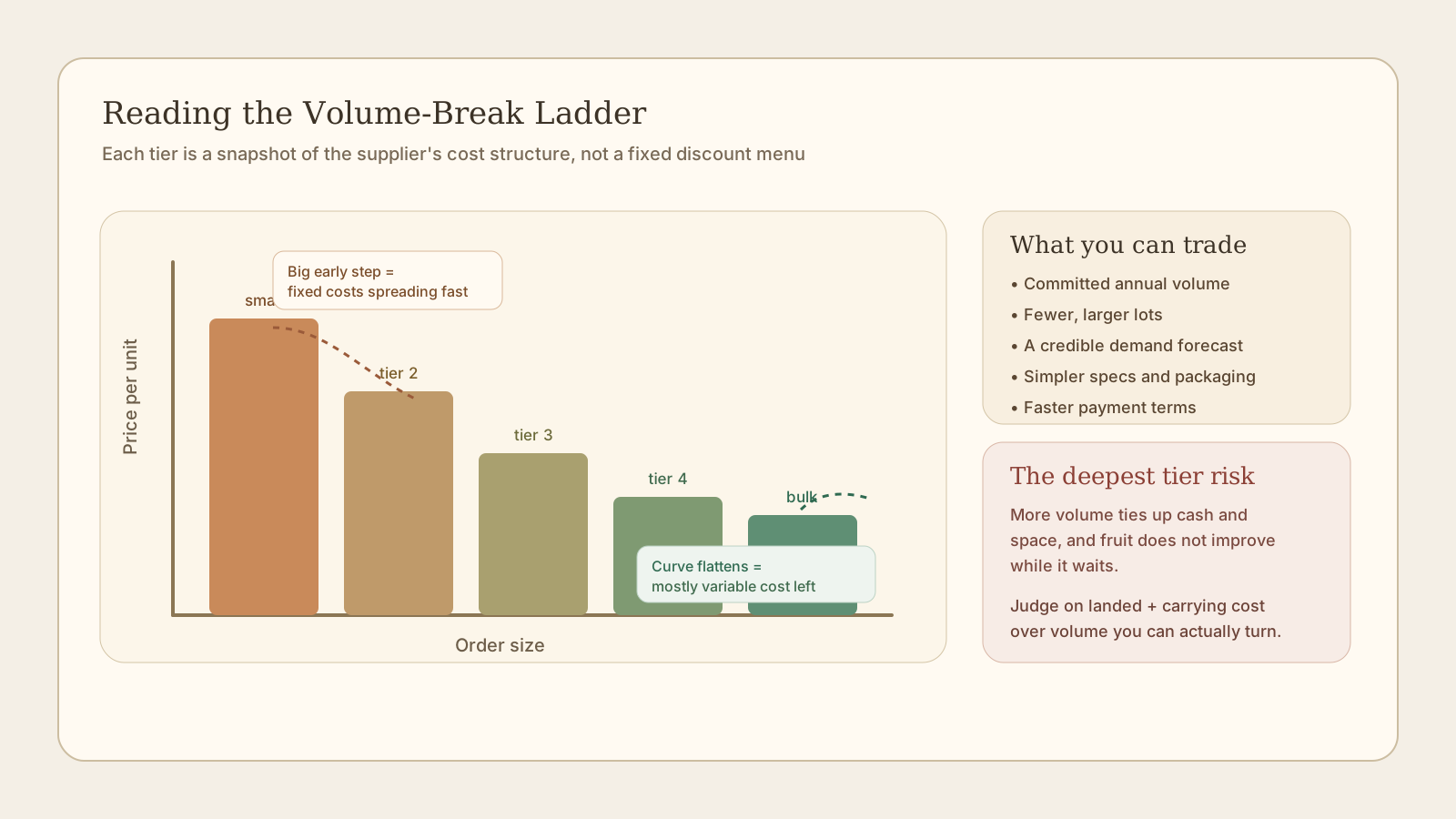
Before negotiating, treat the published tiers as data. The size of the step between tiers tells you something about how fixed-cost-heavy the product is.
Large gaps between small and medium tiers usually signal heavy per-run or per-order fixed costs that disappear quickly as volume rises. That is a sign there is real money in consolidating orders. Tiers that flatten out at the top suggest you have reached the point where mostly variable costs remain, and further volume earns little. Pushing hard past that flattening point is often wasted effort.
Knowing where the curve bends helps you aim. The goal is usually to reach the point where fixed costs are well diluted, not to chase the very last tier for a marginal gain.
What you can trade besides raw volume
The most effective negotiations bring something other than "give me a lower price."
A credible forecast is valuable. A supplier who can plan production around your committed annual volume can run more efficiently, and that efficiency is something they can share. A vague "we might need a lot" is worth far less than a scheduled, realistic plan.
Order consolidation is valuable. Fewer, larger lots cut changeovers, setups, and per-order handling. If you can combine SKUs, align delivery windows, or reduce the number of separate runs, you are removing real cost rather than just asking the supplier to absorb it.
Spec and format simplicity is valuable. Tight specs, custom packaging, and unusual formats add cost and reduce flexibility. Where your real requirement allows a more standard grade, piece size, or pack, you free the supplier to produce more efficiently, which is negotiable value.
Payment and commitment terms matter too. Faster payment, an annual commitment, or a blanket order with scheduled releases can earn tier pricing while spreading your cash outlay and delivery.
When a deeper tier is the wrong move
A lower unit price is only a win if you actually realize it. Chasing the next break can quietly raise your total cost in several ways.
Excess inventory ties up cash and warehouse space, and freeze-dried fruit does not improve while it waits. If you cannot turn the volume before quality drifts or the best-by window tightens, the savings evaporate. A deeper tier can also lock you into a format or spec you do not need, or into a single supplier at a size that weakens your fallback options if quality slips or supply tightens.
The cleaner comparison is landed cost plus carrying cost over the period you will actually use the fruit. A slightly higher unit price on a volume you can turn cleanly often beats a deeper tier on a volume that sits.
Before accepting a deeper tier, ask: will we use this quantity within the quality window, can we fund the cash it ties up, and does it commit us to anything we would not otherwise choose? If any answer is shaky, the headline discount may not be a discount at all.
How to run the conversation
Come prepared and trade on cost reality rather than pressure. Bring a realistic forecast, your true ordering pattern, and the specs you genuinely need. Ask what drives the supplier's price at your volume, which costs are fixed per run, and what would let them lower the unit cost. Those questions often surface options you would not have thought to request, such as combining runs, adjusting lot sizes, or a commitment structure.
Then match the structure of the deal to your real demand. The strongest outcome is usually a buying pattern that lowers cost for both sides, not a one-time win extracted under pressure that leaves the supplier looking to recover margin elsewhere.
Bottom line
Volume breaks on freeze-dried fruit are built from the supplier's fixed costs, so the real savings come from helping dilute or remove those costs, through committed volume, consolidated orders, simpler specs, and credible forecasts, rather than from pressing for a lower number at the same order pattern. Read the tier table as a cost map, aim for the point where fixed costs are well spread, and judge every break by total landed and carrying cost over the time you will actually use the fruit. The cheapest unit price only counts if you can turn it cleanly.
Frequently Asked Questions
Are freeze-dried fruit volume breaks negotiable or fixed?
Published tiers are usually a default, not a hard ceiling. They reflect the supplier's typical cost structure at different order sizes. Where your situation changes that cost structure, for example a committed annual volume, a single large lot instead of many small ones, or simpler packaging, there is usually room to negotiate beyond the printed tier.
What actually causes the price to drop at higher volumes?
Fixed and semi-fixed costs get spread over more units. A freeze-drying run, a changeover, quality testing, documentation, and packaging setup cost roughly the same whether the lot is small or large. Bigger orders dilute those per-unit, and they reduce per-order handling, freight inefficiency, and administrative overhead.
Is the deepest tier always the best deal?
No. A deeper unit price can still be a worse total outcome if it forces you to hold inventory you cannot turn, ties up cash, risks product aging before use, or commits you to a format you do not need. Compare landed cost and carrying cost over the period you will actually use the fruit, not just the headline per-kilogram price.
What should I bring to a volume-break negotiation?
A realistic demand forecast, your true ordering pattern, the specs and formats you genuinely need, and a few clarifying questions about what drives the supplier's cost. A credible forecast lets the supplier plan production and is often worth more to them than a hard push on price alone.
Can I get volume pricing without committing to one big order?
Often yes. Mechanisms like annual volume commitments with scheduled releases, blanket orders, or consignment and vendor-managed stock can earn tier pricing while spreading delivery and cash outlay. These shift the conversation from a single large purchase to a committed relationship.