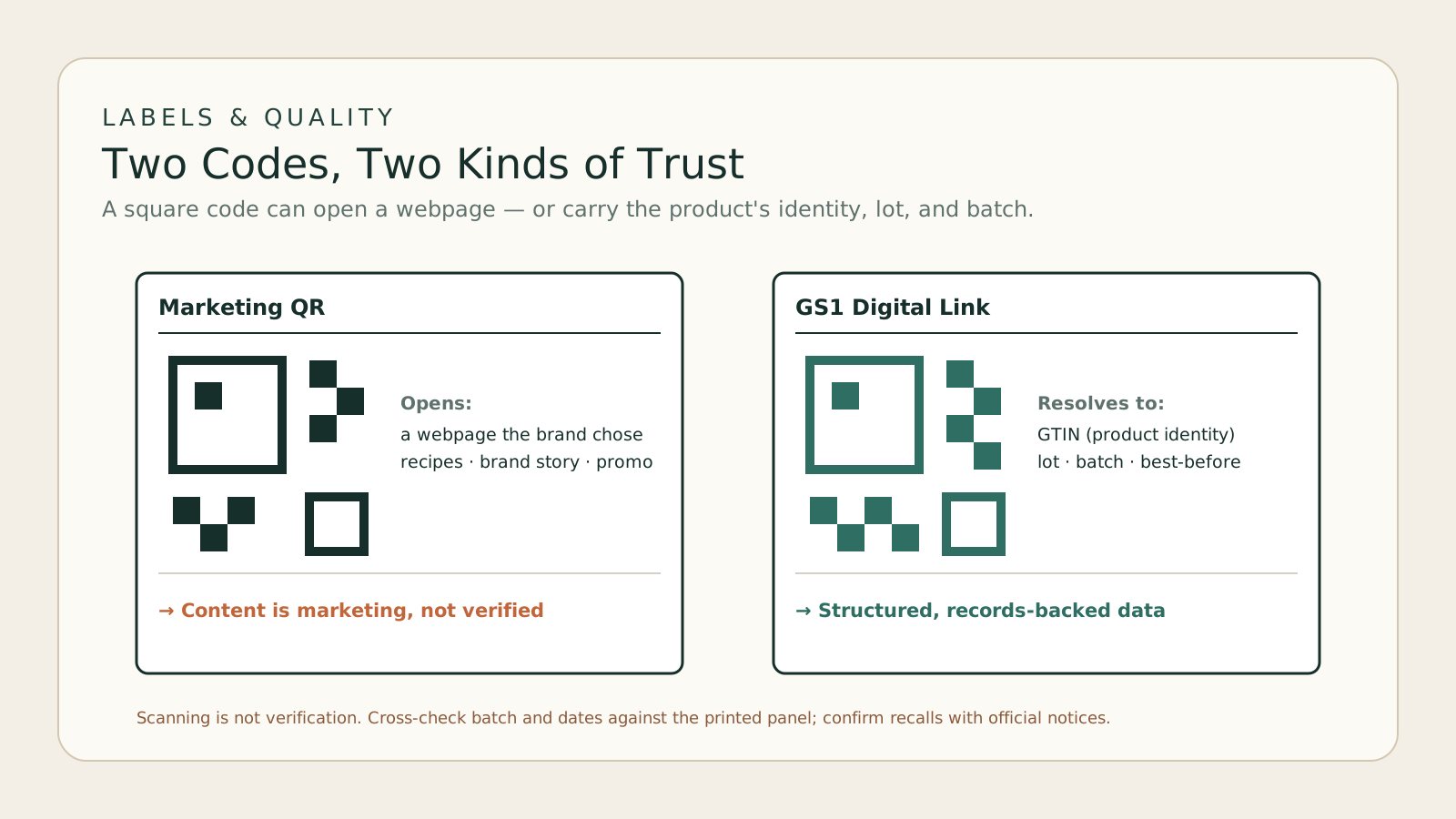
- A QR code on a freeze-dried fruit pack can be one of two very different things: a plain marketing link that opens a website, or a GS1 Digital Link that encodes the product's GTIN — and sometimes its lot and batch — in a structured, standardized way.
- A GS1 Digital Link is designed to do double duty as the product barcode and a consumer link, which is why some brands are moving toward a single scannable code that a checkout scanner and a phone can both read; the data it carries is tied to the product identity, not just a URL a marketer chose.
- Treat what a code opens as manufacturer-provided information, not independent verification: batch and traceability data can be genuinely useful for recalls and freshness, but marketing pages behind a QR code are still marketing, so cross-check important claims against the printed label and specs.
More freeze-dried fruit pouches now carry a QR code somewhere on the back, and it is easy to assume they all do the same thing. They do not. One square code might open a recipe page a marketing team built; another might encode the product's identity, lot, and best-before date in a standardized structure that a checkout scanner and your phone can both read. The two look nearly identical, and the difference matters for how much you should trust what appears after you scan.
The direct answer
A QR code on a freeze-dried fruit pack is either a plain marketing link — an ordinary web address chosen by the brand — or a GS1 Digital Link, a code whose underlying URL is built to a standard and carries the product's Global Trade Item Number and, often, its batch or lot and a date. The first just opens a page. The second ties the scan to the product's actual identity. Knowing which one you scanned tells you whether you are looking at structured, records-backed product data or at marketing copy behind a square.
What a GS1 Digital Link adds
The identifier behind a retail barcode is the GTIN — the number that rings a product up at checkout. A GS1 Digital Link embeds that same GTIN inside a QR-style code, in a defined format, so software can reliably pull out which product it is rather than simply loading whatever URL a marketer typed. When the brand includes them, the same structure can carry batch or lot and a best-before date in specified fields.
That standardization is the point. Because the product identity is encoded consistently, a single code can do two jobs: act as the product identification a register reads and as the link a shopper's phone opens. The retail world is gradually moving toward these two-dimensional codes precisely so one symbol can replace the old barcode while also connecting shoppers to product information. On a fruit bag, that can mean the code connects to authoritative data about the exact item and lot in your hand rather than a generic campaign page.
Marketing link versus real data
The catch is that a code opening a webpage shows exactly what the brand chose to put there. A recipe, a brand story, a sustainability page — all legitimate, all marketing, and none of it independently verified simply because it lives behind a scan. Scanning a claim does not make it true. Useful batch traceability and promotional copy can sit behind codes that look the same, so the destination has to be judged on its merits.
A QR code is a convenience, not an audit. Structured identity and batch data are as good as the brand's records; a marketing page is still a marketing page. When a claim matters — an allergen statement, a certification, a best-before date — confirm it against the printed panel and, for buyers, the spec sheet, rather than treating whatever the code opens as proof.
Where the codes genuinely help
Used well, these codes earn their place. When a code carries or resolves to batch and lot data, it lets you connect a specific bag to a specific production run, which is exactly what traceability and recall handling depend on. If a manufacturer keeps the linked page current, scanning can point you to information tied to your lot — more precise than a broad notice that names a product but not a batch. For freshness, a code that reflects the pack's dating can be a quick cross-check against what is printed.
The limit is that the code reflects what the brand publishes, not an independent registry. For a confirmed recall you should still consult the manufacturer's official notice and the relevant food-safety authority rather than rely solely on a package scan. The code narrows the search; it does not replace the authoritative source.
What to do at the shelf
After scanning, notice first what it resolves to. Structured product data — identity, batch or lot, dating — signals a GS1 Digital Link and something records-backed. A general marketing page signals a plain link, useful for context but not for verification. If batch and best-before details appear, check that they match what is printed on the pack; a mismatch is worth a question. Lean on any lot-status or traceability page as a supplement to the physical label, never as a substitute for it.
And apply ordinary caution to the destination itself. A printed code is only as safe as where it leads, so be wary of links that ask for personal information or head somewhere unrelated to the product. Read the code for what it is — a fast route to whatever the brand connected — and keep the printed label and the spec sheet as your anchors for anything that actually matters.
Frequently Asked Questions
What is the difference between a normal QR code and a GS1 Digital Link?
A normal QR code just stores a web address — whatever URL the brand chose, often a campaign or recipe page. A GS1 Digital Link is a QR code whose URL is structured to a standard: it contains the product's Global Trade Item Number (GTIN), the same identifier behind the retail barcode, and can also carry data like batch or lot and a best-before date in defined fields. Because the identity is encoded in a standardized way, systems can reliably extract the product and, where present, its batch — not just open a page. Visually the two look similar; the difference is in how the underlying link is built.
Why are some brands putting GS1 Digital Links on packs?
The retail industry is moving toward two-dimensional codes that can serve as both the checkout barcode and a consumer-facing link in a single symbol. A GS1 Digital Link can, in principle, be read at the register as product identification and by a shopper's phone as a gateway to product information. That consolidation is why you are starting to see richer scannable codes on food packaging. For a shopper, the practical upshot is that a single code may connect to authoritative product data rather than just a marketing microsite.
Can a QR code tell me if a lot has been recalled?
It can help, but only if the brand's linked system is set up to surface that. When a code carries or resolves to batch and lot information, and the manufacturer maintains a page that reflects recall or hold status, scanning can point you to current information tied to your specific lot. That is more precise than a generic recall notice. But the code is not an independent registry — it shows what the brand publishes. For a confirmed recall you should still check the manufacturer's and the relevant food-safety authority's official notices rather than rely solely on what a package code displays.
Is the information behind a QR code trustworthy?
Distinguish two kinds of content. Structured identity and batch data encoded in a GS1 Digital Link are as reliable as the brand's own records, and are useful for traceability and freshness. But a QR code that simply opens a webpage shows whatever the brand put there — including marketing claims that are not independently verified. Scanning does not make a claim true. Useful traceability data and promotional copy can live behind codes that look identical, so treat the destination's content on its merits and cross-check anything important against the printed panel and spec sheet.
What should I actually check after scanning a code on a fruit bag?
First, see whether it resolves to structured product data (product identity, batch or lot, dating) or to a general marketing page — that tells you which kind of code it is. If it carries batch and best-before information, confirm it matches what is printed on the pack; a mismatch is worth questioning. Use any traceability or lot-status page as a supplement to, not a replacement for, the physical label. And be cautious with links that ask for personal information or lead somewhere unrelated to the product, since a printed code is only as safe as its destination.
Do I need a special app to read these codes?
Usually not. Most modern phone cameras open the URL inside any standard QR code, including a GS1 Digital Link, because the link is an ordinary web address underneath. A GS1 Digital Link is built so that a plain scan lands somewhere useful while specialized systems can also parse the structured fields. Dedicated apps can extract and display the encoded batch or identity data more explicitly, but for a shopper the built-in camera is generally enough to reach whatever page the brand has connected.