- Freeze-dried fruit is hygroscopic, so ambient humidity during filling and packing can change texture before the pouch ever leaves the line.
- FDA current good manufacturing practice rules require food and food-packaging materials to be protected from contamination, condensate, and deterioration during processing and storage.
- Short exposure windows, controlled room conditions, disciplined staging, and fast sealing usually matter more than one dramatic packaging add-on.
- Buyers should ask how the supplier controls packing-room conditions, open-product dwell time, and moisture pickup between drying and final seal.
A freeze-dried fruit pouch can be made from respectable barrier film and still start from a weakened position if the fruit sat too long in humid room air before the seal was made.
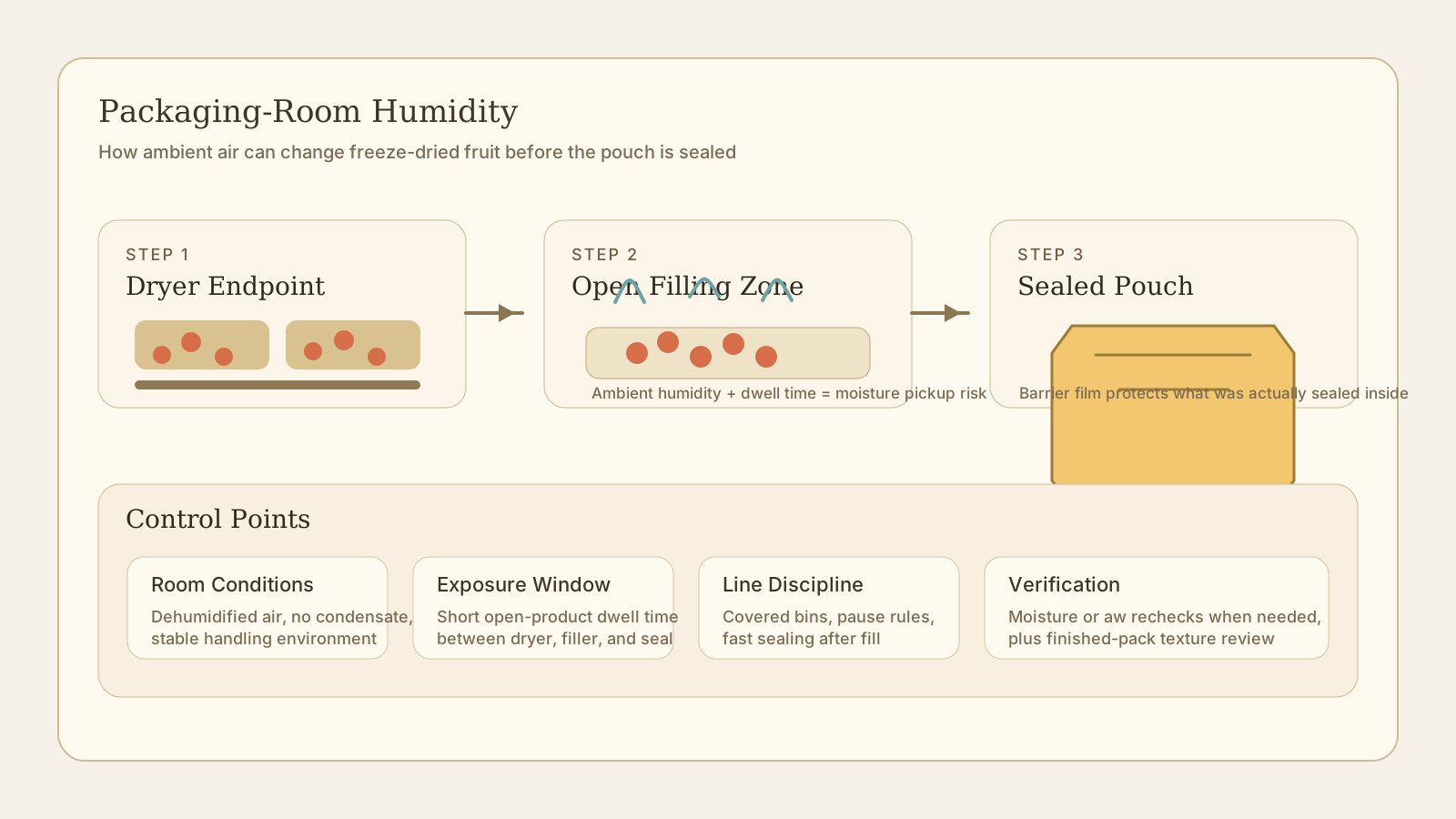
That is the part many packaging discussions skip. They focus on the pouch after sealing and treat the packing room as neutral space. For freeze-dried fruit, it is not neutral. The air between the dryer, the hopper, the filler, and the final seal is part of the product's moisture story.
The direct answer
Packaging-room humidity matters because freeze-dried fruit is hygroscopic. Once the finished fruit is exposed to room air, it can begin absorbing moisture before the pouch is closed. If the room is humid, if product sits open too long, or if the line pauses, the fruit may lose part of its crisp margin before barrier film and desiccants even get a chance to help.
In practical terms, the room is part of the packaging system.
Why this step is easy to underestimate
Teams often talk about moisture pickup as if it starts only after the consumer opens the bag. In reality, there are multiple exposure windows:
- post-drying discharge
- transfer to bins or hoppers
- staging before filling
- pauses during filling or changeover
- partially filled or unsealed pouches waiting on the line
Each window may be short, but freeze-dried fruit is unusually sensitive to short windows because the product is dry, porous, and quick to exchange moisture with its surroundings.
FDA's water-activity guidance explains the underlying mechanism clearly: food and the surrounding air move toward equilibrium, and water activity is tied to equilibrium relative humidity. That is the science underneath the practical observation that crisp fruit softens when room exposure is poorly controlled.
The room can become an invisible ingredient
The wrong mental model is "the fruit is finished once it leaves the dryer."
The better mental model is:
- the dryer sets the starting endpoint
- the room either protects that endpoint or erodes it
- the pouch has to preserve whatever condition was actually sealed inside
That is why packaging-room control often shows up later as a texture problem instead of a visibly obvious process failure. The bag may seal fine. The film may test fine. The fruit may still feel slightly flatter than the spec promised because it arrived at the pouch already a little wetter than intended.
FDA's current good manufacturing practice logic supports this
FDA's current good manufacturing practice rules do not use freeze-dried-fruit language specifically, but the direction is clear.
21 CFR 117.20 requires facilities to be constructed and maintained so that drip or condensate does not contaminate food or food-packaging materials. 21 CFR 117.80 goes further by requiring adequate sanitation, quality control, and conditions that prevent contamination or deterioration during packing and holding. 21 CFR 117.93 extends the same protection logic into storage and distribution.
That does not mean FDA publishes one universal relative-humidity target for all freeze-dried fruit lines. It means the operator is responsible for controlling the conditions that keep the food and the package from drifting into deterioration.
Which products are least forgiving
Not every freeze-dried fruit reacts identically.
The least forgiving formats are usually:
- powders and fine crumble
- thin slices with high surface area
- small berry fragments
- products that are already near the upper end of their target moisture range
The more forgiving formats are usually denser, larger pieces with less exposed surface per unit weight. Even then, "more forgiving" does not mean immune. It only means the room may show up more slowly in the finished bite.
What strong operations usually control
Serious operators usually do not rely on one single fix. They treat humidity pickup as a chain issue.
Common control points include:
- dehumidified or otherwise controlled packing rooms
- short open-product dwell times
- covered transfer bins and disciplined staging
- rapid sealing once pouches are filled
- clear line-pause rules when product is left exposed
- rechecks of moisture or water activity when the process warrants it
The exact system differs by plant and product. The broader principle is stable: the operator should know where exposure happens and how long the fruit can tolerate it.
Why the pouch cannot rescue everything
Barrier film is still critical. So are seal integrity, desiccants, and storage discipline. But those tools defend the product from future exposure. They do not fully reverse past exposure.
If the fruit enters the pouch already softened at the edges, a premium pouch may slow further decline without restoring the original snap. That is why some complaints sound confusing at first:
- the packaging spec looked strong
- the shelf-life target looked realistic
- the product still opened flatter than expected
Sometimes the missing variable is not the pouch structure. It is the air the fruit saw before the pouch was closed.
What buyers should ask suppliers
Useful questions sound operational, not decorative:
- How long is product exposed between final drying and sealing?
- Is the packing room humidity-controlled?
- What happens during pauses, downtime, or changeovers?
- Are finished goods ever repacked in less controlled rooms?
- When moisture or water activity drift appears, where is it usually found first?
These questions matter because they reveal whether the supplier treats packaging as a full system or only as a bag specification.
If a supplier can explain film structure in detail but cannot explain open-product exposure control, the packaging review is incomplete.
What this means for buyers and operators
For buyers, packaging-room humidity is a useful hidden variable when sample quality looks good but commercial lots feel less consistent.
For operators, it is a reminder that "finished dry product" is still vulnerable product. The room between the dryer and the seal deserves the same discipline as the dryer endpoint and the pouch itself.
Bottom line
Packaging-room humidity matters for freeze-dried fruit because the product can pick up moisture before the seal is made. That exposure narrows the texture margin that the pouch is supposed to protect.
The best systems treat the room, the dwell time, and the final pack as one moisture-control chain. That is a more reliable way to protect crunch than assuming the barrier film can clean up every earlier mistake.
Frequently Asked Questions
Why does packaging-room humidity matter for freeze-dried fruit?
Because freeze-dried fruit is dry and porous. If it sits in humid air during filling, staging, or packing, it can start absorbing moisture before the pouch is sealed, which can reduce crunch and narrow the packaging system's safety margin.
Can a high-barrier pouch fix moisture pickup that happened before sealing?
Not fully. A strong pouch helps protect the product after sealing, but it does not reverse every texture change that happened while the fruit was exposed in the room.
Is this only a warehouse issue?
No. Warehouse conditions matter, but the packing room is a separate exposure point because the product may be open, moving, and waiting to be sealed.
Does room humidity affect all fruits the same way?
No. Piece size, sugar level, porosity, surface area, and how fragile the fruit is all change how quickly it picks up moisture. Powders and thin slices are usually less forgiving than dense, larger pieces.
What should buyers ask suppliers about this?
Ask how long product stays exposed between dryer discharge and sealing, whether the filling room is humidity-controlled, how moisture or water activity is rechecked after packing when needed, and what happens if the line pauses.
Primary sources & further reading
- 21 CFR 117.20 - Plant and Grounds Electronic Code of Federal Regulations FDA current good manufacturing practice rule covering building conditions, including protection against drip or condensate contaminating food or food-packaging materials.
- 21 CFR 117.80 - Processes and Controls Electronic Code of Federal Regulations FDA rule requiring adequate sanitation, appropriate quality control, and handling conditions that prevent deterioration or adulteration during packing and holding.
- 21 CFR 117.93 - Warehousing and Distribution Electronic Code of Federal Regulations Referenced for the requirement that storage and transportation conditions protect food and containers against contamination and deterioration.
- Water Activity (aw) in Foods U.S. Food & Drug Administration Referenced for FDA's explanation of equilibrium relative humidity, sorption behavior, and the need to maintain acceptable water activity during storage.
External links open in a new tab. We do not receive compensation from any organization listed; sources are referenced because they are primary, current, and publicly verifiable.