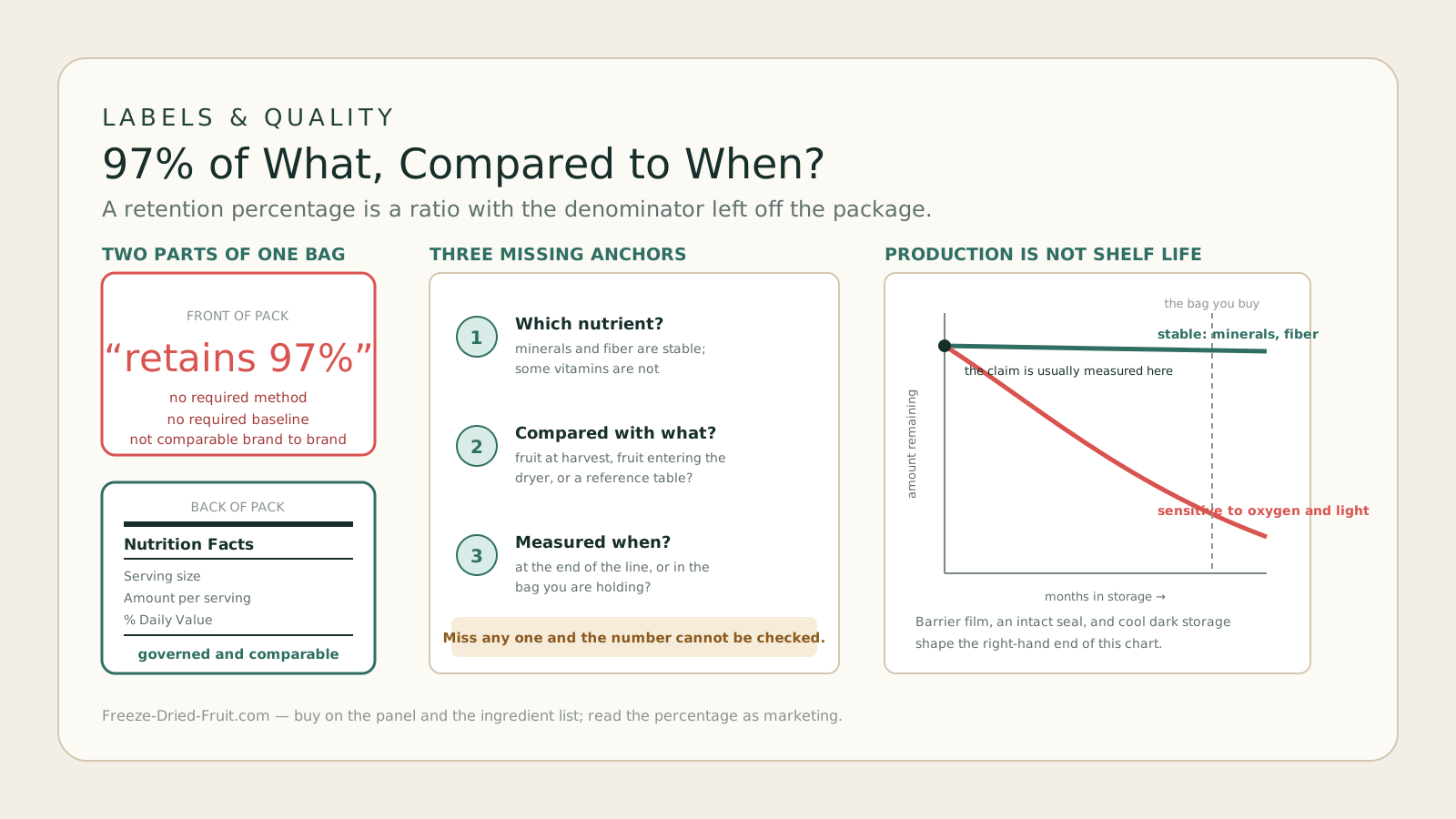
- Retention percentages are unregulated marketing phrases, unlike Nutrition Facts values and defined nutrient content claims — a number on the front of the bag carries no standard method behind it.
- A retention claim is meaningless without three anchors: which nutrient, compared with what baseline, and measured at what point in shelf life; a claim missing any of the three cannot be verified or compared across brands.
- The Nutrition Facts panel is the part of the package that is actually governed and comparable, so use the declared per-serving amounts and percent Daily Values rather than the front-of-pack percentage when deciding what you are buying.
Walk down any snack aisle and the freeze-dried fruit packages will tell you something about nutrients. "Retains up to 97% of nutrients." "Locks in vitamins." "All the nutrition of fresh fruit." The numbers vary; the structure of the claim does not. And almost none of these statements come with the information you would need to evaluate them.
The direct answer
Retention percentages on freeze-dried fruit packaging are unregulated marketing language. Unlike the Nutrition Facts panel and defined nutrient content claims such as "good source of," a retention figure has no standardized calculation method, no required baseline, and no required timepoint. To mean anything, such a claim needs three anchors — which nutrient, compared with what, and measured when — and most front-of-pack versions supply none of them. The governed, comparable part of the package is the Nutrition Facts panel, and that is where a shopper's attention belongs.
Why the number alone cannot be checked
Retention is a ratio. Every ratio needs a numerator and a denominator, and the denominator is what these claims tend to leave out.
Consider what "retains 97 percent" could be comparing. Retained relative to the fruit at harvest? Relative to the fruit as it entered the dryer, after washing, cutting, and freezing have already occurred? Relative to a laboratory reference value for that fruit? Each of these produces a different percentage from the same physical product, and none of them is wrong in isolation — they are simply different questions.
The nutrient is equally unclear. "Nutrients" is a category containing substances with completely different stability. Minerals do not degrade. Fiber does not degrade. Some vitamins are notably sensitive to oxygen, light, and warmth. Averaging across all of them, or quietly reporting the most flattering one, produces a headline number that describes nothing in particular.
Then there is timing. A measurement at the end of the production line is a measurement of the process. A measurement after several months in the pack is a measurement of the product you would actually eat. For stable nutrients the two are similar. For fragile ones they may not be.
The Nutrition Facts panel, the ingredient statement, the net weight, and defined nutrient content claims operate under specific labeling rules. A percentage on the front of the bag describing how much of something was "retained" does not. General prohibitions on false or misleading labeling still apply, but there is no standard method behind the figure, which is why two brands' retention claims cannot be compared with each other.
What is true about the process
None of this means freeze-drying is being oversold in principle. The process removes water at low temperature under vacuum rather than by sustained heating, and avoiding prolonged heat exposure is a genuine and well-understood difference from hot-air drying. It is reasonable to describe the process as gentle in that specific respect.
What does not follow is a portable number. Outcomes depend on the fruit and variety, ripeness at processing, any pretreatment dip, the drying cycle, the interval between the dryer and the seal, the barrier properties of the packaging, and the conditions the pack experiences afterward. A brand with real analytical data on its own product may be reporting something accurate about that product. It is not a property of the category.
The concentration effect people misread
Freeze-dried fruit labels sometimes show impressive-looking per-serving amounts, and there is a straightforward reason: the water is gone. A given weight of freeze-dried fruit represents substantially more fresh fruit than the same weight of fresh fruit does, so everything that is not water — sugars, fiber, minerals — is more concentrated by weight.
That is arithmetic, not preservation. It is also why comparing a gram of freeze-dried fruit against a gram of fresh fruit misleads in both directions. The comparison worth making is against the quantity of fresh fruit that went into the serving, which some packages state and many do not.
How to read the package instead
Start with the Nutrition Facts panel. It gives declared amounts per serving and percent Daily Values under defined rules, and it uses a stated serving size you can compare against the net weight to see how many servings the bag actually contains. This is the part of the label that permits comparison across products.
Read the ingredient statement. A retention claim says nothing about what else is in the bag. Added sugar, a coating, an anti-caking carrier, or a blend with cheaper fruit all change the nutritional picture no matter what the front of the package says.
Treat the percentage as context, not data. If the figure is accompanied by the nutrient, the baseline, and the timepoint, it is at least a checkable statement. If it is a bare number, it is a slogan.
Note the storage guidance. For the nutrients that are sensitive to oxygen and light, packaging integrity and storage conditions do real work over shelf life. Keeping the pack sealed, cool, and dark is within your control in a way the manufacturing process is not.
If the claim actually matters to your decision
For a shopper choosing a snack, the practical answer is to buy on ingredient quality, price per gram of actual fruit, and taste, and to ignore the retention percentage entirely.
For a brand or ingredient buyer, the claim can matter — particularly if it will appear on your own packaging. In that case ask the supplier, in writing, for the specific nutrient measured, the baseline used, the analytical method, and the timepoint, and expect a technical document rather than a marketing line. A supplier that can answer precisely is telling you something useful. A supplier that repeats the slogan is telling you something too.
Frequently Asked Questions
Is a claim like 'retains 97% of nutrients' regulated?
Not in the way the Nutrition Facts panel and defined nutrient content claims are. Terms such as 'good source' or 'high in' have specific regulatory definitions tied to declared amounts, and the Nutrition Facts values themselves must be determined and presented according to established rules. A percentage retention statement sits outside that framework. There is no standardized method a brand must follow to calculate it, no required disclosure of what was measured, and no requirement to state the baseline. General rules against false or misleading labeling still apply, but that is a much looser constraint than a defined claim. In practice this means retention percentages from two different brands are not comparable to each other, and neither is verifiable from the package alone.
What are the three things a retention claim needs to be meaningful?
Which nutrient, which baseline, and when. Nutrients behave very differently under processing and storage — some are heat- and oxygen-sensitive while others are robust — so a single figure covering 'nutrients' collapses substances that should be discussed separately. The baseline matters because retention is a ratio: retained compared with fresh fruit at harvest, with fruit at the moment it entered the dryer, or with some other reference produces different numbers from the same product. And timing matters because a measurement taken at production says nothing about the value after months on a shelf, particularly for the more fragile nutrients. A claim that omits any of the three cannot be checked.
Does freeze-drying preserve nutrients better than other drying methods?
Freeze-drying operates at low temperature under vacuum, which avoids the sustained heat exposure of hot-air drying, and that is a real and well-understood difference in process conditions. It is fair to say the process is gentler in that specific respect. What does not follow is a universal retention figure. Outcomes depend on the fruit, the variety and ripeness, any pretreatment, the cycle, how long the product sat before packing, the packaging barrier, and the storage conditions afterward. A brand may have solid data for its own product and still not be describing yours. Treat process gentleness as a plausible directional advantage, not as a guarantee attached to a number.
Why do freeze-dried fruit labels sometimes show high nutrient amounts per serving?
Because water has been removed, so a given weight of freeze-dried fruit represents considerably more fresh fruit than the same weight of fresh fruit does. Everything that is not water becomes more concentrated by weight, including sugars, fiber, and minerals. That is a concentration effect, not evidence that the process created or preserved anything unusual. It is also why comparing a serving of freeze-dried fruit against a serving of fresh fruit by weight is misleading in both directions — the honest comparison is against the amount of fresh fruit that went into the serving, which the label may or may not tell you.
Which nutrients are most likely to decline, and what does that mean for shopping?
Nutrients that are sensitive to oxygen, light, and warmth are generally the ones that decline during storage, and vitamin C is the classic example discussed in food science for exactly that reason. Minerals and fiber are structurally stable and do not degrade in the same way. Practically, this means a retention claim about a fragile nutrient measured at production tells you less about what is in the bag you are holding than a claim about a stable one would. It also means packaging and storage matter to the outcome: a good barrier film, an intact seal, and cool, dark storage are doing real work on the shelf-life side, which is why storage guidance on the pack is worth following.
So what should I actually look at on the package?
Start with the Nutrition Facts panel, because that is the governed, comparable part of the label: it gives the declared amounts per serving and the percent Daily Values, and it uses a defined serving size you can check against the net weight. Then read the ingredient statement to confirm what is actually in the bag, since added sugar, coatings, or blended ingredients change the nutritional picture regardless of any retention claim. Treat front-of-pack percentages as marketing context rather than data. If a retention figure genuinely matters to your purchasing decision — for example in an ingredient or private-label context — ask the supplier in writing for the nutrient, the baseline, the method, and the timepoint, and expect a technical answer rather than a slogan.