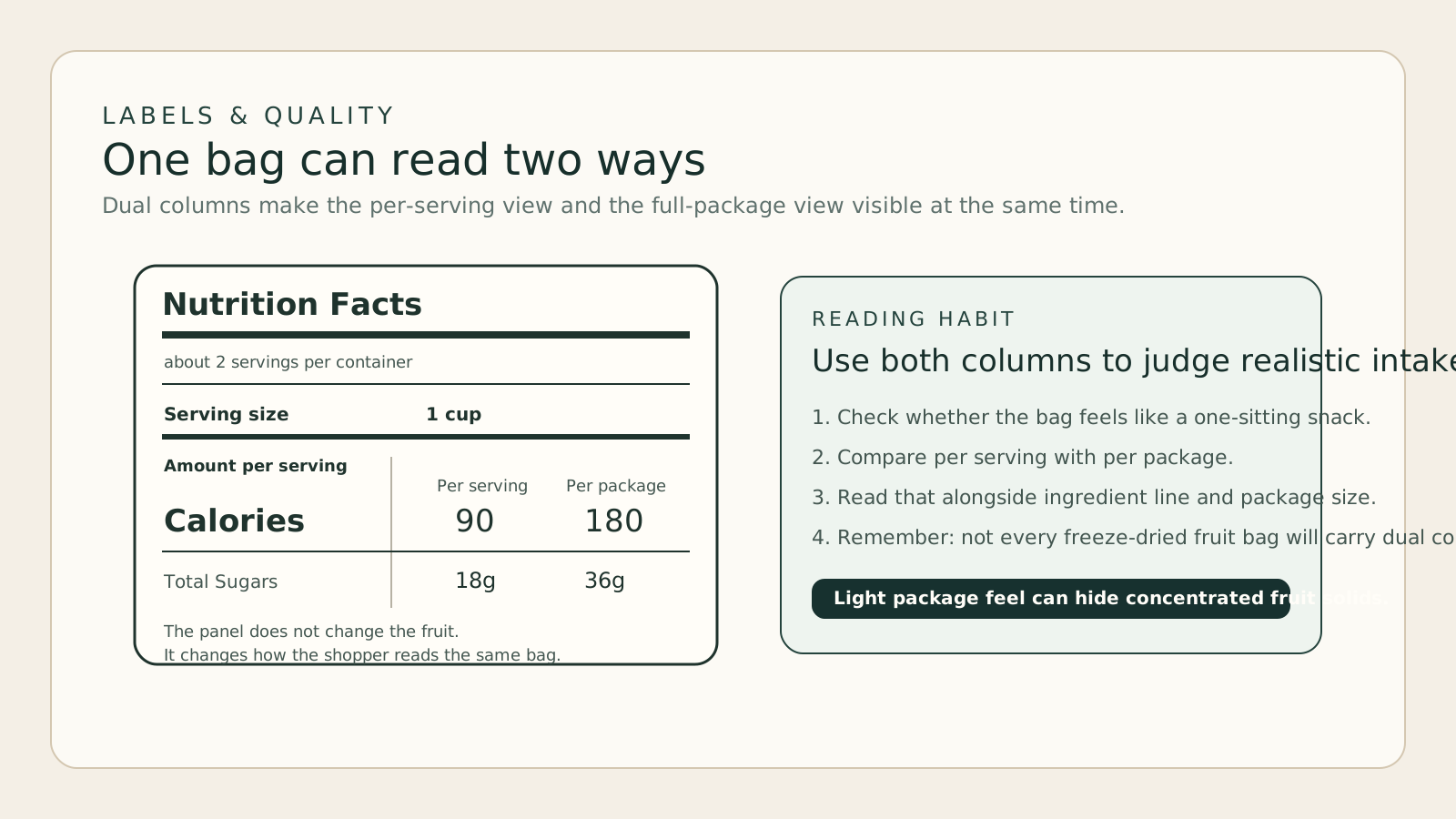
- Dual-column labels add a second nutrition reading frame: per serving and per package or per unit.
- For freeze-dried fruit, that can make calorie and sugar concentration easier to understand in realistic eating situations.
- The label does not mean the product changed; it changes how the shopper sees the same product.
- Not every freeze-dried fruit bag will carry a dual-column label, so shoppers still need to compare package size, serving size, and ingredient line together.
Nutrition panels are easiest to misread when the package feels smaller than the numbers it contains.
Freeze-dried fruit creates exactly that risk. The food is light, airy, and visually modest, but the fruit solids are concentrated because most of the water is gone. That does not make the product misleading by itself. It does mean serving interpretation matters.
The direct answer
Dual-column Nutrition Facts labels change the way to read freeze-dried fruit bags by showing two views at once: one for the listed serving and one for the full package or unit. For products that fit FDA's dual-column rule, that makes it easier to see the nutritional impact of eating the whole bag rather than only the suggested serving.
For freeze-dried fruit, that can be a more realistic reading frame than per serving alone.
Why freeze-dried fruit is easy to underestimate
Freeze-dried fruit often looks less substantial than chewy dried fruit or a dense snack bar.
That changes shopper behavior:
- the bag feels light
- pieces look airy
- the eating pace can feel casual
- one pouch may be finished more quickly than expected
The product itself has not done anything wrong. The reading mistake happens when a shopper sees only the per-serving panel and mentally treats the package as one informal snack anyway.
What FDA means by dual-column labeling
FDA explains that certain products larger than a single serving, but that could reasonably be consumed in one sitting or in multiple sittings, must provide dual-column labels showing calories and nutrients on both a per-serving and per-package or per-unit basis.
That is useful for freeze-dried fruit because the package can sit in an awkward middle ground:
- larger than one formal serving
- small enough to finish casually
- concentrated enough that the full bag matters nutritionally
The dual-column format helps close that gap between formal serving language and real eating behavior.
What changes and what does not
The label format changes the reading. It does not change the food.
If a freeze-dried strawberry bag carries a dual-column panel, the fruit has not suddenly become sweeter, less sweet, better, or worse. The format simply makes two interpretations visible at once:
- what one listed serving contributes
- what the full package contributes
That can be especially clarifying when the bag is marketed as a simple fruit snack and many shoppers expect the whole pouch to be one straightforward occasion.
Why this matters for plain fruit and sweetened fruit alike
Dual-column reading matters even more when shoppers compare products loosely.
For example:
- one bag may be plain fruit
- another may include added sugar or flavor support
- one may have a smaller serving size
- another may be packed in a way that encourages full-bag eating
Without reading per serving and per package together, a shopper can misjudge value and intensity quickly.
This is why the nutrition panel should still be read with:
- serving size
- servings per container
- ingredient line
- product positioning
What shoppers and buyers should ask
When reading a freeze-dried fruit bag with or without dual columns, ask:
- How much product is one serving?
- How many servings are actually in this bag?
- Would a typical person finish the package in one sitting?
- Is the product plain fruit or a more formulated fruit snack?
- Does the per-package read change how I compare it to another brand?
Those questions are more useful than reacting to one number in isolation.
A practical reading habit
If the bag has a dual-column label, start by scanning the full-package side first. Then step back to the per-serving side to understand the manufacturer's serving frame.
If the bag does not have a dual-column label, do the same math mentally:
- check servings per container
- multiply when needed
- compare that result with how the bag is likely to be eaten
That is the fastest way to keep a light, concentrated fruit snack from being read as smaller than it really is.
Bottom line
Dual-column Nutrition Facts labels matter because they help shoppers read freeze-dried fruit bags the way people often actually eat them, not only the way the serving line is written.
For concentrated fruit snacks, that second column can be the difference between a technically correct read and a realistic one.
Frequently Asked Questions
What is a dual-column Nutrition Facts label?
It is a format that shows calories and nutrients both per serving and per package or per unit on certain products that are larger than a single serving but could be eaten in one sitting or multiple sittings.
Why does this matter for freeze-dried fruit?
Because freeze-dried fruit is light and concentrated. A suggested serving can look small next to how much people actually eat from a pouch.
Does a dual-column label mean the product is less healthy?
No. It means the label gives another reading frame so shoppers can see what happens if they consume the full package rather than only the listed serving.
If a bag does not have a dual-column label, what should I check?
Check serving size, servings per container, calories, sugars, and the ingredient list together. The absence of a dual-column format does not remove the need to read the full panel carefully.
Primary sources & further reading
- Changes to the Nutrition Facts Label U.S. Food & Drug Administration Referenced for FDA's explanation that certain products larger than a single serving but potentially consumed in one sitting or multiple sittings require dual-column labeling.
- Guidance for Industry: Food Labeling Guide U.S. Food & Drug Administration Referenced for FDA's broader food-labeling framework and panel-reading context.
External links open in a new tab. We do not receive compensation from any organization listed; sources are referenced because they are primary, current, and publicly verifiable.