- A high-barrier pouch and an easily recyclable pouch are often in tension, because the layers that protect freeze-dried fruit are what make recycling hard.
- Recyclable, store-drop-off, and compostable mean different things with different real-world conditions attached.
- Qualified claims and recognized standards carry more weight than an unbranded leaf icon or a vague 'eco' label.
- Sustainability claims describe the package, not the quality or safety of the fruit inside.
Sustainability language is now part of the freeze-dried fruit aisle. Pouches carry recyclable arrows, store drop-off icons, compostable claims, and leaf graphics that imply something good is happening at the end of the pack's life. For a category whose whole purpose is keeping a fragile, moisture-hungry product crisp, these claims sit in an awkward spot, because the packaging that does the protecting is often the packaging that is hardest to recycle.
Reading the claims accurately matters for two audiences. Shoppers want to dispose of the pouch correctly. Buyers and brands want to avoid printing a promise they cannot substantiate. In both cases the trick is the same: separate what the symbol literally requires from what it seems to suggest.
The direct answer
A sustainability claim on a freeze-dried fruit pouch describes the packaging material and how it should be handled at end of life. It does not describe the fruit. "Recyclable," "store drop-off," and "compostable" each carry specific, different conditions, and a vague leaf or "eco-friendly" graphic with no qualifier carries the least information of all. The most credible labels name a recognized standard or program and tell you what to actually do with the pouch.
Why protection and recyclability pull against each other
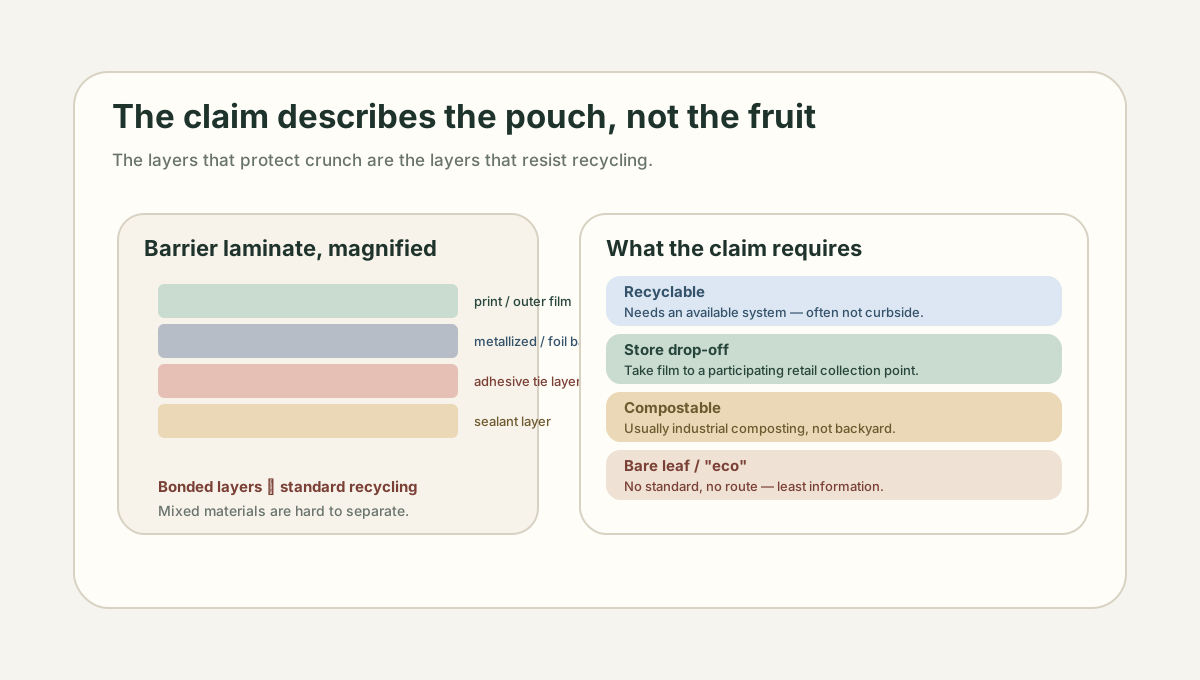
Freeze-dried fruit needs a strong moisture and oxygen barrier, and that barrier usually comes from layering materials together: a structural plastic film, a metallized or foil layer for barrier performance, sometimes a sealant layer and a print layer. Bonded into a single laminate, these layers do their job beautifully and resist separation almost as well.
That is the core tension. Recycling systems generally want clean, single-material streams. A multi-layer laminate is a mixed-material object that most municipal programs cannot process, which is why so many high-barrier pouches are not curbside-recyclable even when they look like ordinary plastic. A pouch can be genuinely excellent at preserving crunch and genuinely difficult to recycle at the same time, and a claim that ignores that tension deserves a second look.
Decoding the common claims
The phrases on the pack are not synonyms. Each one points to a different end-of-life path with different requirements.
Recyclable
"Recyclable" means the material can be collected and reprocessed into new material through an available system. The catch is "available." A pouch can be technically recyclable in some specialized stream while being unacceptable in standard curbside collection. Guidance on environmental claims generally expects "recyclable" to be qualified when recycling is not available to a substantial majority of consumers, so a bare recyclable symbol without a qualifier is weaker than one that explains the route.
Store drop-off
Flexible film often relies on store drop-off rather than curbside. The pouch is taken back to a participating retail collection point that gathers film for specialized processing. Standardized labeling schemes use a specific store drop-off designation precisely because these materials do not belong in the home bin. The claim is real, but it depends on the consumer actually carrying the pouch to a participating location, and on that program accepting the specific material.
Compostable
"Compostable" is a different promise entirely: the material breaks down into compost under defined conditions. The conditions are the fine print. Many compostable packaging materials require industrial composting facilities with controlled heat and time, not a backyard pile, and standards exist specifically to define those conditions. Compostable is not interchangeable with recyclable, and a compostable pouch put in a recycling stream can be a contaminant rather than a help.
Degradable, biodegradable, and bare "eco" graphics
These are the softest claims. Unqualified "degradable" or "biodegradable" language, and generic leaf or globe icons with no standard behind them, tell you very little about what will actually happen to the pouch. Guidance on environmental marketing treats broad, unqualified claims skeptically because almost any material degrades eventually under some conditions. Without a defined timeframe, condition, or program, the graphic is closer to decoration than information.
The useful part of a recyclability label is rarely the arrows. It is the small text next to them: a named program, a store drop-off instruction, a standard reference, or a "check locally" note. A symbol with a clear instruction is doing its job. A symbol floating alone is asking you to assume the best.
What a credible claim looks like
Stronger sustainability labeling tends to share a few features. It is specific about the disposal route, telling the consumer to recycle at store drop-off, check locally, or compost industrially, rather than implying the pouch fits any bin. It references a recognized labeling scheme or standard rather than an in-house graphic. And it qualifies the claim where access is limited, instead of stating "recyclable" as if every household could do it.
Weaker labeling does the opposite: a lone arrow loop with no instruction, an undefined "eco-friendly" or "green" descriptor, or compostable and recyclable language used loosely as if they meant the same thing. None of these are necessarily dishonest, but they ask the reader to fill in gaps the brand should have closed.
What buyers and brands should check
For a brand putting a claim on a pouch, the discipline mirrors any other label statement: substantiate it, qualify it, and match it to reality. A recyclable claim should reflect the systems actually available to the brand's customers, not just laboratory recyclability. A store drop-off designation should be earned against the relevant program's material rules. A compostable claim should name the conditions required. Guidance on environmental claims exists precisely because vague or overstated green claims invite scrutiny.
For a buyer evaluating a supplier's stock packaging, two questions cut through quickly: what is the pouch's actual material structure, and what disposal route does the claim depend on? A mono-material recyclable film and a foil-laminate "recyclable" pouch are telling very different stories, and the structure usually reveals which.
Keep the fruit and the pouch separate
The most important habit is also the simplest. Sustainability claims are about the package. They say nothing about the freeze-drying process, the fruit grade, the moisture or water-activity spec, or food safety. A pouch can be compostable and hold mediocre fruit, or be hard to recycle and protect excellent fruit. Read the green claims as packaging information, and judge the product on its own specs.
Bottom line
Recyclable, store drop-off, and compostable claims on freeze-dried fruit pouches each carry specific conditions, and the barrier structure that keeps the fruit crisp is frequently what makes recycling difficult. Treat the qualifier text as the real message, favor labels that name a program or standard, and be wary of lone leaf icons and unqualified "eco" language. Above all, remember that a sustainability claim describes the pouch, not the fruit inside it.
Frequently Asked Questions
Does a recyclable symbol on a freeze-dried fruit pouch mean I can put it in my curbside bin?
Not necessarily. Many flexible pouches are not accepted in curbside recycling because they are multi-layer laminates or films that most municipal programs cannot process. The claim may rely on store drop-off or a special program, which a qualifier near the symbol should explain.
Why are high-barrier pouches hard to recycle?
The barrier performance that keeps freeze-dried fruit crisp usually comes from combining several materials, such as a plastic film with a metallized or foil layer. Those bonded layers are difficult to separate, and mixed-material laminates are generally not recyclable in standard streams.
What is the difference between recyclable and compostable?
Recyclable means the material can, under the right system, be reprocessed into new material. Compostable means it can break down into compost under defined conditions. Compostable packaging often requires industrial composting, not a backyard pile, and the two claims are not interchangeable.
Does store drop-off recycling actually work for these pouches?
It can, but only for materials the program accepts, and only if the consumer takes the pouch to a participating location. The claim depends on real access and correct sorting, which is why a credible label points to a specific program rather than implying universal recyclability.
Do sustainability claims tell me anything about the fruit's quality?
No. Recyclability, compostability, and similar claims describe the packaging material and its end-of-life, not the freeze-drying process, the fruit grade, or food safety. Read them as packaging information, separate from quality specs.
Primary sources & further reading
- Guides for the Use of Environmental Marketing Claims (Green Guides, 16 CFR Part 260) U.S. Federal Trade Commission Referenced for how recyclable, compostable, degradable, and qualified environmental claims should be substantiated and qualified.
- How2Recycle Label Guidelines How2Recycle (GreenBlue) Referenced for standardized on-pack recyclability labeling, including store drop-off designations for flexible film.
- ASTM D6400 Standard Specification for Labeling of Plastics Designed to be Aerobically Composted in Municipal or Industrial Facilities ASTM International Referenced for the conditions under which compostable-plastic claims are defined, typically industrial composting.
External links open in a new tab. We do not receive compensation from any organization listed; sources are referenced because they are primary, current, and publicly verifiable.