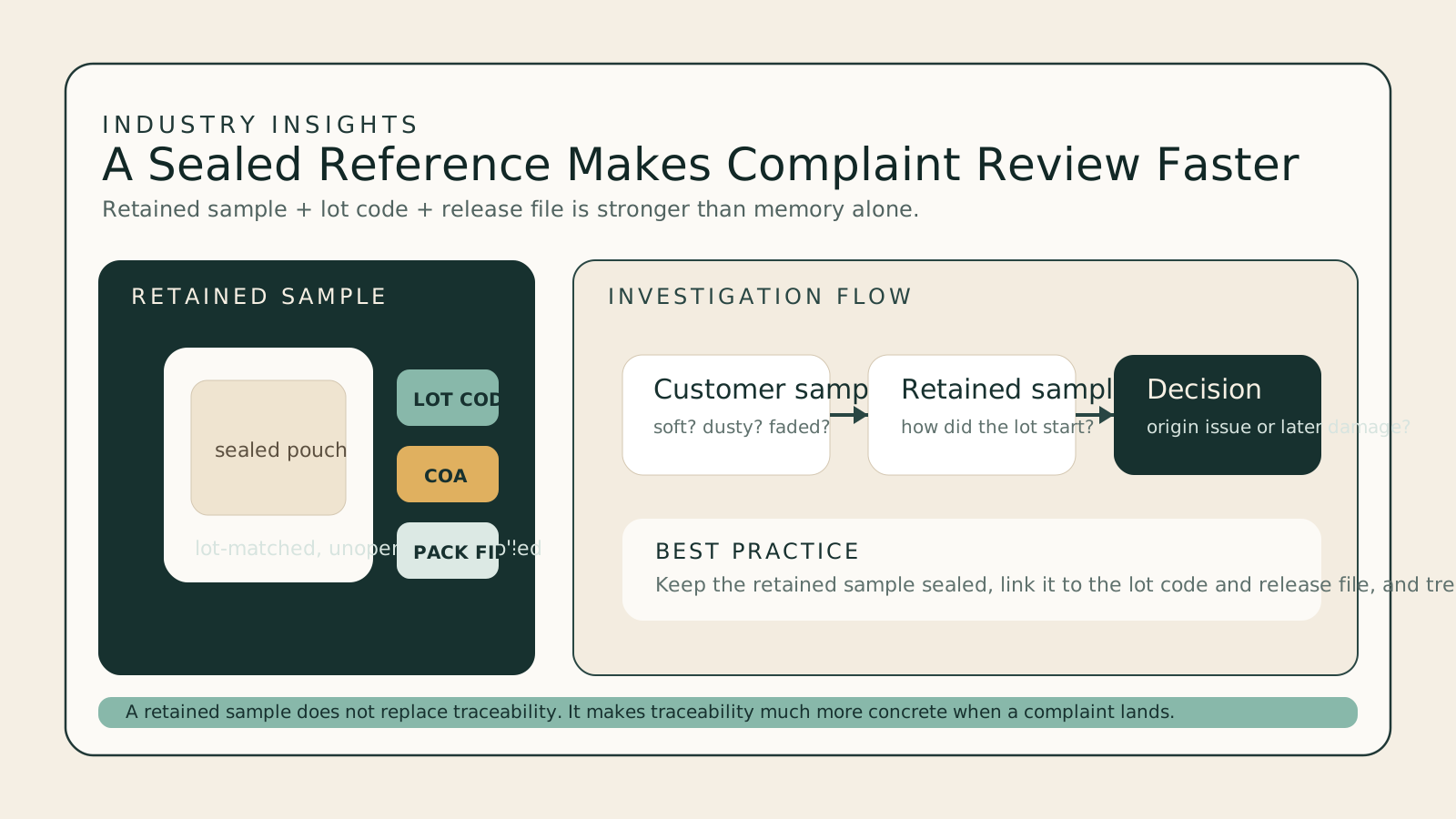
- A retained sample links the complaint back to a real sealed reference from the same lot instead of relying only on supplier recollection or a top-of-bag visual check.
- The sample is most useful when it is tied to the lot code, release records, package format, and storage assumptions from the original shipment.
- Retained samples help separate production drift from later damage caused by storage, transit, or repeated opening.
- They are an operational best practice that strengthens traceability and complaint handling; they do not replace records, lot coding, or root-cause work.
When a complaint lands, the first version of the story is usually verbal.
The fruit felt soft. The pouch looked dusty. The color seemed weak. The aroma was gone. The buyer says the approved sample was better. The supplier says the lot released correctly. None of that is enough by itself.
The direct answer
Retained samples matter because they give a freeze-dried fruit complaint investigation a sealed, lot-matched reference tied to the real lot code and release records. That lets the team compare what the product likely looked like at release against what the customer actually received or opened later.
They do not replace traceability. They make traceability more usable.
Retained samples are an operational best practice, not magic
FDA's framework is built around lot identification, traceability, testing, and record availability. It does not hand every freeze-dried fruit company one universal retained-sample template. The operational inference is still strong: if the business expects to investigate complaints quickly and defend lot decisions cleanly, keeping a representative sealed sample makes the rest of the system work better.
Without one, teams often fall back on weaker substitutes:
- someone's memory of the release lot
- a photo of a strong top layer
- a COA with no physical comparison
- a new production sample that is not the same lot
Those can inform the investigation. They rarely settle it.
1. Keep a sealed lot-representative sample
The retained sample should represent the finished product the customer actually bought or received.
That usually means the final packaged format, not only loose fruit from the line and not a hand-picked beauty sample. If the customer bought a resealable retail pouch, the retained sample should be that pouch. If the customer bought a bulk liner inside a corrugated case, the retained sample should mirror that finished configuration.
The question to ask is simple: if a complaint appears six months later, does this sample still show what the shipped lot was supposed to be?
If the answer is no, the retained sample is only half-built.
2. Store it the way the product was meant to live
A retained sample is only meaningful if its storage conditions are documented and defensible.
If it sat opened in the QA office, the comparison is weak. If it sat in a humid corner with no record, the comparison is weak. If it was exposed to repeated informal checks before the complaint ever arrived, the comparison is weak.
For freeze-dried fruit, the sample should normally stay:
- sealed
- clearly labeled
- tied to the lot and pack date
- stored under defined conditions that fit the product program
This is especially important for products sold on crisp texture. A poorly handled retained sample can mimic the same moisture drift the team is trying to investigate.
3. Link the sample to the lot code and release records
The physical pouch is useful. The physical pouch plus the records are what turns it into evidence.
At minimum, the retained sample should connect back to:
- the lot code
- the pack date
- the COA or release data
- the packaging format used on that lot
- any relevant deviation or hold notes
That linkage matters because complaints rarely stop at "is this fruit soft?" They move quickly into:
- was the correct pack used?
- did the lot meet release criteria?
- was the same lot shipped to multiple customers?
- did the problem affect one shipment or the whole lot?
Without the records, the sample is isolated. Without the sample, the records can stay too abstract.
4. Use it to separate production drift from later damage
This is where retained samples often save time and arguments.
Suppose a buyer reports that a strawberry lot arrived powdery and soft. A sealed retained sample from the same lot may show one of two broad patterns:
- The retained sample is also soft, dusty, faded, or otherwise weak.
- The retained sample looks materially stronger than the complaint sample.
The first pattern points back toward production, release, or packaging at origin. The second shifts more attention toward transit abuse, customer storage, repeated opening, humidity exposure, or other downstream handling.
That does not end the investigation by itself. It changes where the next questions belong.
5. Treat the sample as evidence, not as the whole case
A retained sample is powerful. It is still only one line of evidence.
Serious complaint review should also consider:
- shipment and storage history
- complaint photos and timing
- package integrity
- COA and analytical data
- whether the issue appears in other customers from the same lot
- whether the lot had any release or packaging deviations
That is why retained-sample work pairs well with mock-recall discipline and lot-code clarity. The sample shows the product. The records show the system behind it.
What a good retained-sample routine looks like
A practical freeze-dried fruit retained-sample program usually has four traits:
- it keeps a sealed finished-product sample from each lot or defined lot family
- it logs the sample against the lot code and release file
- it stores the sample under defined conditions
- it defines who may open it and when
That sounds basic. In practice, it prevents a common complaint-investigation failure: by the time the issue escalates, the best physical reference has already been opened casually, mixed up, or discarded.
Conclusion
Retained samples matter because they turn complaint review from a memory contest into a comparison.
For freeze-dried fruit, where texture, color, and package behavior can drift in subtle ways, that comparison is often the fastest route to deciding whether the problem was already in the lot or developed later in the chain. The sample does not replace traceability and records. It gives those systems something concrete to point at.
Frequently Asked Questions
What is a retained sample in freeze-dried fruit quality work?
It is a sealed reference sample kept from a produced lot so the team can later compare that lot's original condition against complaints, returns, or other investigation questions.
Are retained samples the same as lot-traceability records?
No. Traceability records show where the lot moved and how it was coded. A retained sample is the physical product reference that helps interpret what those records mean in practice.
What problem do retained samples solve best?
They help answer whether the lot likely left the facility already weak or whether the complaint looks more consistent with later handling, distribution, or post-open exposure.
Should the retained sample be opened routinely?
Usually no. A retained sample is most useful when it stays sealed and representative until there is a real reason to review it.
Do retained samples replace a COA or mock recall exercise?
No. They work best alongside lot coding, COAs, complaint records, and traceability drills. The sample is evidence, not the entire system.
Primary sources & further reading
- Traceability Lot Code U.S. Food & Drug Administration Referenced for FDA's explanation that lot coding and traceability lot code source information are central to identifying where a food lot was assigned and how it moves through the chain.
- Frequently Asked Questions: FSMA Food Traceability Rule U.S. Food & Drug Administration Referenced for FDA's explanation of record availability, transformation and repacking questions, and how traceability records are maintained.
- Food Recalls: What You Need to Know U.S. Food & Drug Administration Referenced for FDA's emphasis on product identification details such as lot codes, pack information, and distribution information during recalls.
- Full Text of the Food Safety Modernization Act (FSMA) U.S. Food & Drug Administration Referenced for FSMA's requirement to maintain records documenting monitoring, verification, testing, corrective actions, and related food-safety evidence for at least two years.
External links open in a new tab. We do not receive compensation from any organization listed; sources are referenced because they are primary, current, and publicly verifiable.