- Freeze-dryers are expensive, slow, batch machines, so most brands rent time on a co-manufacturer's chambers rather than own them — which means your lots compete for the same shelves against every other customer's lots.
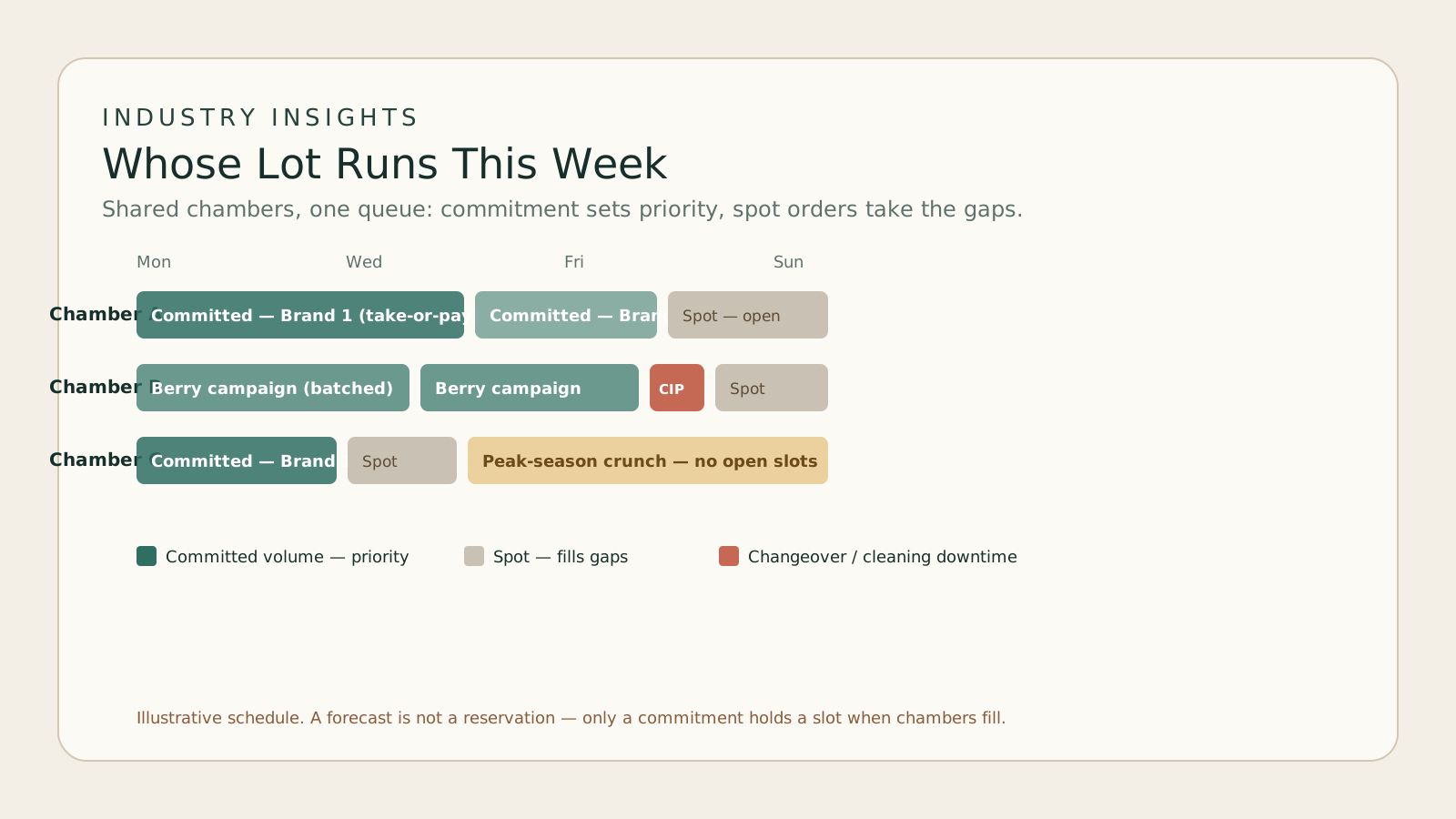
- Allocation usually follows a mix of committed volume (forecasts and take-or-pay contracts get priority), changeover efficiency (similar products are batched to avoid cleaning downtime), and spot availability, so buyers without a commitment sit lowest in the queue when capacity tightens.
- The way to protect supply is to convert a forecast into a real commitment, agree on lead times and a capacity reservation in writing, and understand the co-manufacturer's peak-season pinch points before you need them, rather than negotiating from a stockout.
The freeze-dryer that turns your strawberries into shelf-stable crisps is almost certainly not yours. It belongs to a co-manufacturer running dozens of brands through the same chambers, and the schedule that decides whose lot dries this week is one of the least visible but most consequential facts about your supply. When a brand is surprised by a stockout, the reason often traces back not to a shortage of fruit but to a shortage of chamber time — and to where that brand sat in the queue.
Why the chambers are shared
Industrial freeze-drying is capital-heavy and slow. A chamber is an expensive vacuum vessel with refrigeration and a condenser, and a fruit cycle can occupy it for the better part of a day or more. To justify that investment you have to keep the machine busy, and few fruit brands have the steady volume or the technical staff to do so on their own. The economical answer is to rent time from a co-manufacturer that pools demand from many customers and keeps its chambers full year-round.
That pooling is efficient, and it is also the source of the tension. The moment your fruit shares a plant with other brands' fruit, your lots are competing for the same finite shelf-hours. The plant's problem is a scheduling problem: how to slot everyone's runs into a limited number of chambers, week by week, in a way that keeps the machines full and the customers supplied. How it solves that problem is what determines your lead times.
The three forces that set the queue
Allocation is rarely a single rule. In practice it is a blend of three pressures. The first and strongest is committed volume. A customer who has forecast their needs and backed the forecast with a contract — especially a take-or-pay arrangement, where they pay for reserved time whether or not they use it — hands the plant predictable revenue. Predictability is what a capital-intensive operation values most, and it buys priority in the schedule.
The second is operational fit. Every switch between different products costs the plant a changeover: downtime to clean the line, control allergen and flavor carryover, and set up the next run. Because that downtime is chamber time earning nothing, schedulers group similar products into campaigns and prefer lots that batch cleanly with what is already planned. A run that forces an awkward cleaning break is harder to insert at short notice.
The third is whatever is left. Spot orders with no standing commitment fill the gaps around the committed and the convenient. In a quiet month that is perfectly workable. When chambers fill, the spot buyer is the one who waits.
Sharing a demand forecast is useful to a co-manufacturer, but on its own it does not hold a slot. Only a commitment the plant can schedule around — agreed volumes, lead times, or reserved capacity — actually reserves time. Buyers get into trouble when they assume a forecast shared months ago guarantees availability during a busy window. It signals intent; it does not book the chamber.
Peak season is where the logic bites
Freeze-dried fruit sits at the intersection of two seasonalities: consumer demand and raw-fruit harvest. Both cluster, and the result is windows when every chamber in a plant is spoken for. During those windows the allocation logic stops being academic. Committed customers run on schedule; everyone else joins a queue that may stretch past their reorder point.
This is when the difference between a scheduled customer and a hopeful one becomes stark. A brand that mapped the plant's busy periods and reserved capacity ahead of them keeps flowing. A brand that treats capacity as always-on, and tries to drop a large order into a full plant, discovers that goodwill does not manufacture chamber-hours. The uncomfortable truth is that the time to negotiate access is well before you need it, not during the shortage.
What a buyer can actually do
The protective moves are not exotic. Convert your forecast into something the plant can schedule around: committed run volumes over a defined horizon, a stated lead time, and where your volume justifies it, a reserved-capacity or take-or-pay arrangement that puts you ahead of spot demand. Get lead times and change-notice terms in writing so an urgent run does not hinge on a favor. Ask directly how the co-manufacturer prioritizes when capacity tightens, and where that leaves you.
It is also worth aligning your runs with the plant's natural campaigns where you can, so your product is easy rather than costly to slot in, and worth qualifying a backup co-manufacturer so you are not captive to one plant's queue. None of this requires owning a freeze-dryer. It requires understanding that the chamber is shared, that the schedule is a negotiation, and that the brands with reliable supply are the ones who treated capacity as something to secure in advance rather than assume.
Frequently Asked Questions
Why don't brands just buy their own freeze-dryers?
Industrial freeze-dryers are costly to buy, install, and run, and they are slow batch machines — a single cycle for fruit can take the better part of a day or longer, so throughput per chamber is limited. A brand would need enough steady volume to justify the capital and to keep the machine busy, plus the technical staff to run cycles and maintain vacuum systems. For most fruit brands the volume and expertise are not there, so renting time from a co-manufacturer that keeps its chambers full across many customers is far more economical. The trade-off is that you no longer control the schedule.
What gives one brand priority over another?
Committed volume is the biggest lever. A customer who has forecast and contractually committed to a certain number of runs — especially on take-or-pay terms, where they pay whether or not they use the slot — gives the co-manufacturer predictable revenue, and predictable revenue earns priority in the schedule. After that comes operational fit: lots that batch cleanly with what is already scheduled, avoiding extra cleaning and changeover, are easier to slot in. Spot orders with no commitment fill whatever gaps remain, which is fine in slow periods and precarious when chambers are full.
What is changeover and why does it affect my place in line?
Changeover is the downtime and cleaning between different products — clearing one fruit, cleaning to control allergen and flavor carryover, and setting up the next. Every changeover is time the chamber is not drying anything, so a co-manufacturer schedules to minimize them, often by grouping similar products or running campaigns of one item before switching. If your product is an outlier that forces a cleaning break, it can be harder to slot in at short notice, because it costs the plant productive time. Aligning your runs with the plant's natural campaigns can improve your access.
How does peak season change the math?
Freeze-dried fruit demand and raw-fruit harvests are both seasonal, so co-manufacturers hit periods when every chamber is spoken for. During those windows, committed customers run and everyone else waits. A forecast you shared casually months earlier does not hold a slot; only a firm commitment does. The buyers who struggle are the ones who treat capacity as always available and try to place a large order into a full plant. Mapping the co-manufacturer's busy windows in advance, and reserving capacity before them, is what separates reliable supply from a scramble.
What should a buyer negotiate to protect supply?
Turn your forecast into a commitment the plant can schedule around: agreed run volumes over a defined period, a stated lead time, and where volume justifies it, a reserved capacity or take-or-pay arrangement. Put lead times and change-notice terms in writing so a rush does not depend on goodwill. Discuss how the plant prioritizes when capacity is tight, and whether you have any standing versus spot buyers. Qualifying a backup co-manufacturer in advance also reduces the risk of being single-sourced into one plant's queue. The goal is to be a scheduled customer, not a hopeful one.
Is a co-manufacturer that runs competitors a red flag?
Not by itself — shared plants are the norm, and running many brands is how a co-manufacturer keeps chambers full and costs reasonable. What matters is that the plant manages the shared environment well: documented changeover and cleaning to prevent flavor and allergen carryover between customers, confidentiality around your specs, and a fair, transparent scheduling logic. The concern is not that competitors share the plant; it is whether allocation and segregation are handled professionally. Those are reasonable things to audit and to ask about before you commit volume.