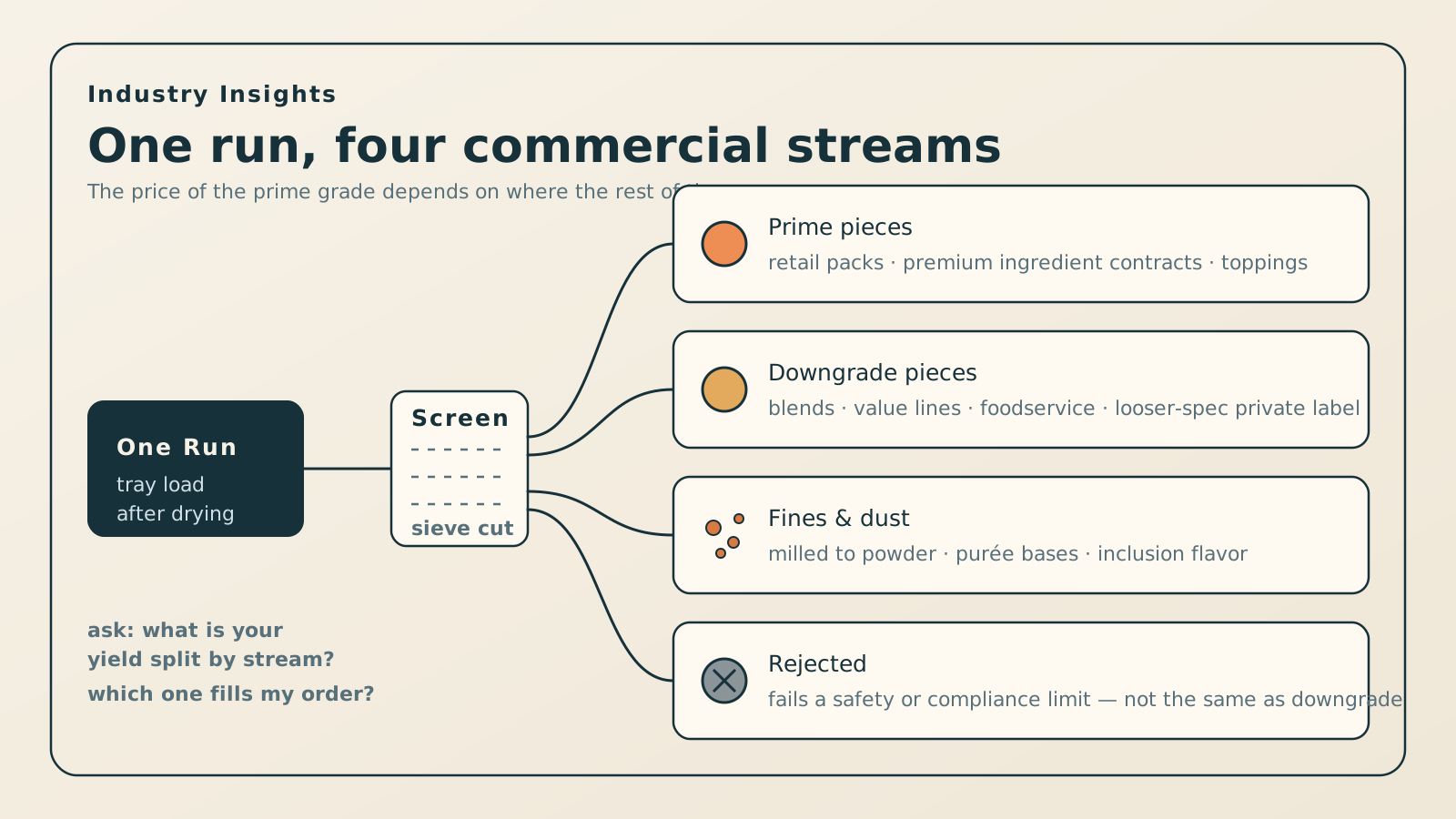
- A single production run yields several commercial streams: prime pieces, downgraded pieces, fines and dust, and occasionally rework — and the economics of the prime grade depend on where the rest goes.
- Fines are not waste. They are a real product with real buyers, and a supplier who can sell them well can quote the prime grade lower.
- Buyers of powder, blends, and inclusion-grade material are often buying secondary streams by design, which is fine when disclosed and a problem when it is not.
- The question to ask a supplier is not whether downgrade exists, but what their yield split is and which stream your order is being filled from.
Ask a freeze-dried fruit supplier what their yield is and you will usually get a fresh-to-dried ratio: how many kilos of fruit went in, how many came out. That number is real, but it hides something more interesting.
The material that comes out is not one thing.
The direct answer
A freeze-drying run splits into several commercial streams. Prime pieces meet the primary size, color, and integrity spec. Downgrade pieces are intact but off — undersized, off-color, softer, more variable. Fines are the crumbs and dust generated by every point of handling. A small fraction is genuinely rejected. Each of those streams has a different buyer, a different price, and a different destination — and the price you are quoted for the prime grade depends heavily on how well the supplier monetizes the rest.
Understanding the split is the difference between reading a quote and understanding it.
Where the material comes from
Downgrade and fines are not an indictment of a facility. They are structural.
- Fruit variability. Incoming fruit differs in ripeness, sugar, size, and cell structure even within a single lot. Pieces at the edges of that distribution dry differently.
- Tray position. Edge and corner positions on a shelf see different heat load than the center. The result is a spread in final texture, not a single value.
- Mechanical handling. Unloading trays, screening, conveying, blending, and filling all generate breakage. Freeze-dried fruit is porous and brittle by design; that is the same property that gives it its crunch.
- Screening itself. The moment you define a prime grade by sieve cut, you have defined everything below the cut as something else.
A facility with excellent process control does not eliminate these streams. It narrows them, and it knows their size.
The four destinations
Prime pieces go to retail snack packs, premium ingredient contracts, and anywhere the piece itself is the product — visible in a bag, a cereal, a topping.
Downgrade pieces go to blends, value lines, private-label programs with looser specs, and buyers who care about flavor and moisture but not appearance. This is a legitimate, well-established market. A slightly pale strawberry that hits every safety and moisture spec is a perfectly good strawberry inside a granola.
Fines and dust go to powder. This is the most important stream to understand, because it is the one buyers most often encounter without realizing it. Freeze-dried fruit powder is frequently milled from fines, sometimes exclusively. That is not a scandal — a fine is chemically identical to the piece it broke off from. But it means the powder market and the piece market are economically linked, and it means "powder" and "milled prime pieces" are not the same product even though they can look identical in a spec sheet.
Rejected material — anything failing microbiological limits, foreign-material limits, residue limits, or showing spoilage or contamination — is destroyed or diverted to non-food uses. This stream should be small and it should be documented. It is not the same as downgrade, and a supplier who blurs that line is telling you something.
Downgrade material meets safety and compositional requirements and misses an appearance or size grade. Reject material fails a safety or compliance requirement. Confusing the two — in either direction — is one of the more common misunderstandings in freeze-dried fruit sourcing conversations.
Why the split drives price
Consider two suppliers with identical costs, identical fruit, and identical cycle times. Supplier A has an established powder customer and a blend program that absorbs downgrade at a reasonable price. Supplier B sells only whole pieces and treats everything else as loss.
Supplier A can quote prime pieces lower — sometimes materially lower — because the run's total cost is recovered across all its output. Supplier B has to load the full cost onto the fraction that sells.
This is why a suspiciously good price on prime pieces is not automatically a red flag. It may simply mean the supplier has a well-developed secondary market. It is equally why a supplier with no answer for their fines may be structurally expensive in a way that has nothing to do with their quality.
The questions that actually surface this
Most buyers never ask about secondary streams, which means most suppliers never volunteer them. The useful questions are direct and unembarrassing:
- What is your typical yield split by stream? Prime, downgrade, fines, reject, as percentages. A supplier who tracks this will answer quickly. One who does not will improvise.
- Which stream is my order filled from? Especially critical for powder, dice, and blend purchases.
- Do downgrade and fines get the same COA testing as prime? They should. Confirm it rather than assuming it.
- Is downgrade ever blended back into prime lots? Ask this plainly. There are contexts where it is acceptable and disclosed, and contexts where it is spec drift.
- Where do your fines go? The answer tells you whether their prime pricing is structurally sustainable.
- Do you segregate by run, or do fines accumulate across runs? Accumulated fines across multiple lots complicate traceability and lot-code integrity.
What this means for different buyers
If you buy whole pieces for retail: the risk is receiving a lot quietly topped up with downgrade to hit volume. This is what breakage specs, defect scorecards, and retained samples exist to catch.
If you buy powder: you are very likely buying fines, and that is usually fine. What matters is particle-size distribution, water activity, and whether the fines were segregated by lot and by fruit. Ask about cross-fruit carryover in the mill.
If you buy blends or inclusions: downgrade is often the right material at the right price. The question is whether you are paying a downgrade price for it.
If you buy for foodservice: appearance tolerance is usually wider than retail, which means downgrade may be the most cost-effective grade available to you. Many foodservice buyers pay prime prices out of habit rather than need.
The underlying point
Freeze-drying is a batch process applied to a biological input. It will never produce a single uniform grade, and pretending otherwise is what leads buyers to be surprised by variation they should have expected and priced for.
The suppliers worth working with are not the ones who claim their runs come out perfect. They are the ones who can tell you, without hesitating, exactly how their output splits — and which part of it is going in your box.
Frequently Asked Questions
Is it normal for a freeze-dried fruit supplier to produce off-spec material?
Yes. Screening, handling, and natural fruit variability guarantee that some portion of any run misses the primary size, color, or integrity spec. A supplier claiming zero downgrade is either not measuring it or not telling you.
What are 'fines' in freeze-dried fruit?
Fines are the small fragments, crumbs, and dust generated by breakage during drying, unloading, screening, conveying, and packing. They fall through the size screens used to define the prime grade.
Is buying fines or downgrade a bad idea?
Not inherently. For powder, purée bases, baked inclusions, and some blends, fragment size is irrelevant or even preferable. It becomes a problem when a buyer pays a whole-piece price and receives material selected from a secondary stream.
Does downgrade material meet food safety requirements?
It should — food safety limits and the primary quality grade are different questions. Downgraded material that fails microbiological, foreign-material, or residue specs is rejected, not sold. But you should confirm that the same COA testing applies to whatever stream you are buying.
How does this affect price?
Strongly. A supplier who can monetize fines and downgrade recovers cost across the whole run and can price prime pieces more competitively. One who cannot must load all of the run's cost onto the prime grade.