- Freeze-dried fruit is intensely hygroscopic and will pull water out of a dough over a long ferment, tightening the crumb unless you compensate with added hydration.
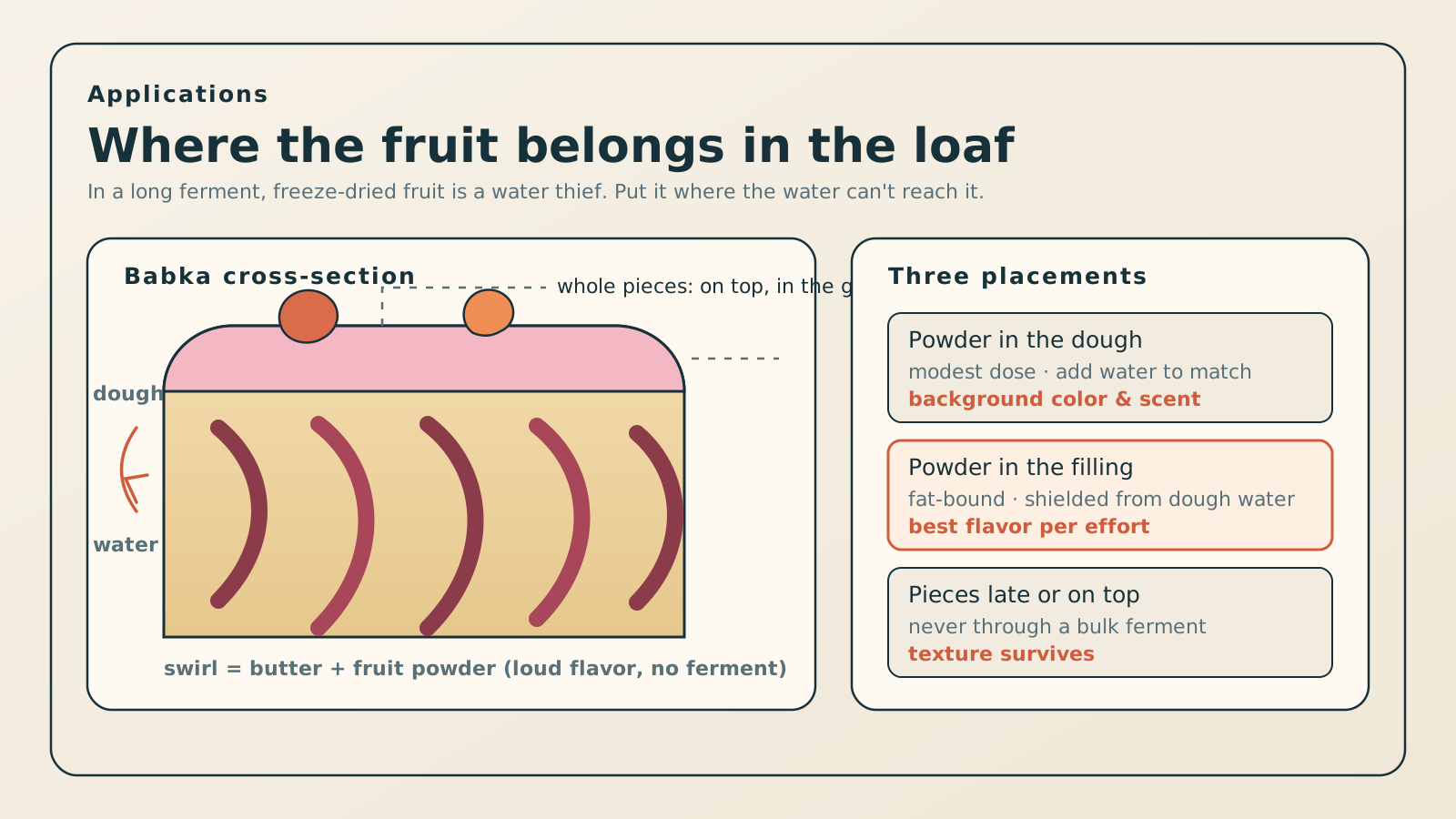
- Powdered freeze-dried fruit belongs in the dough or the filling; whole pieces belong in a swirl, a topping, or a late lamination — not scattered through a long bulk ferment.
- Fruit acidity can slow yeast activity and weaken gluten, so keep the powder dose modest in the dough itself and push the loud flavor into fillings and glazes.
- The best flavor-per-effort move in most enriched doughs is a freeze-dried fruit powder mixed into the sugar-and-butter filling, not into the flour.
Freeze-dried fruit has become a reliable trick in quick breads and muffins, where the batter goes into the oven within minutes of mixing. Yeasted doughs are a different problem, because the fruit gets hours with a wet dough before any heat arrives.
That hold time is where things go wrong — and where, handled properly, freeze-dried fruit does something that fresh or dried fruit cannot.
The direct answer
In a yeasted or enriched dough, freeze-dried fruit acts as a desiccant. Its pore structure is designed to take up water, and over a bulk ferment and proof it will do exactly that — pulling moisture out of the surrounding crumb, tightening it, and rehydrating into a soft, dull fragment.
The fix is not to abandon it. The fix is to decide where in the loaf it lives:
- Powder in the dough, at a modest dose, with added water — for background flavor and color.
- Powder in the filling, at a high dose — for the loud, concentrated flavor most people actually want.
- Whole pieces late or on top — for texture and appearance, where they never spend hours against wet dough.
Why it steals water
A freeze-dried strawberry is a rigid sponge of fruit solids with the water removed and the structure intact. Its internal surface area is enormous, and the sugars in it are hygroscopic. Put it against a 65% hydration dough for four hours and it will find equilibrium — at the dough's expense.
The result is a specific, recognizable failure: the crumb immediately around each piece is dense and dry, and the piece itself is a wet, flavorless smear. You get the worst of both.
Raisins and other conventionally dried fruits do not do this nearly as aggressively, because they arrive with meaningful residual moisture and a much lower drive to absorb more. This is why raisin bread works and "freeze-dried strawberry bread" made the same way disappoints.
If you add freeze-dried fruit powder to a dough, you have added a dry ingredient with a high water demand. Ignoring that gives you a stiffer dough that proofs slowly and bakes tight. Add water alongside the powder — start at roughly equal weight and calibrate.
Powder in the dough: the restrained approach
Freeze-dried fruit powder in the dough itself gives you a tinted, subtly flavored crumb. It is beautiful in a milk bread or a brioche. But it needs discipline:
- Keep the dose modest. A small percentage of flour weight is enough to color and scent a crumb. Push it much higher and you start fighting the gluten.
- Add water to match. Weigh the powder, add roughly that weight in water, and note the result for next time.
- Expect a slightly slower ferment if you have gone heavy, and give it time rather than more yeast.
- Accept that the color will soften. Maillard browning in the crust and the general heat of baking will mute an anthocyanin pink toward a beige-rose. That is normal.
The reason to stay restrained is structural. Fruit powders are acidic, and dough pH matters: enough acidity will weaken gluten and slow yeast. A brioche is already a fragile dough — high fat, high sugar, high enrichment. It does not need another handicap.
Filling: where the flavor should actually go
For babka, cinnamon-roll-style swirls, kouign-amann-adjacent laminations, and any filled enriched dough, the filling is the right home for freeze-dried fruit.
A simple, reliable structure:
- Cream soft butter with sugar.
- Beat in freeze-dried fruit powder generously — this is where you can be aggressive, because there is no gluten to protect and no ferment to survive.
- Add a pinch of salt and, if the fruit is very sweet, a small amount of acid (lemon) to keep it from going flat.
- Spread on the rolled dough and shape as usual.
The filling protects the fruit from the dough's water because the fat coats it. That is the whole trick. A butter-bound fruit powder is not sitting in a wet environment for four hours; it is suspended in fat, and it delivers its flavor at the moment you bite the swirl.
Raspberry and strawberry are the obvious candidates. Passion fruit and mango powders work beautifully with a brown-butter base. Blackberry is underrated and holds its color better than most.
Whole pieces: texture, not filling
Whole freeze-dried pieces have one job in an enriched dough, and it is not to be inside it.
- On top, after baking, pressed into a glaze while it is still tacky. This is where the crunch survives.
- On top, before baking, if you accept that they will soften and darken but want the visual.
- Folded in at the very end of shaping, if you want fruit distributed through a loaf and are willing to lose some crunch. Coat them lightly in flour or melted butter first to slow the water transfer.
What does not work is scattering them into a dough at the start of bulk fermentation. They will not be recognizable pieces by the time it bakes.
A glaze that keeps the fruit loud
The single easiest upgrade to a fruit babka or sweet roll is putting the freeze-dried fruit in the glaze rather than only in the bread.
Whisk freeze-dried fruit powder into powdered sugar, then add liquid — milk, cream, or a splash of lemon juice — until it pours. There is no heat and no water time, so the fruit's flavor and color arrive completely intact. It is by some distance the highest-impact use of the ingredient in the whole loaf.
Storage after baking
A finished loaf with freeze-dried fruit inside it behaves like a normal enriched bread — the fruit is hydrated now and no longer doing anything unusual. But any crunchy pieces on top will soften within hours in a sealed container, because they will pull moisture from the bread itself.
If the crunch matters, add the pieces to the slice, not to the loaf.
Frequently Asked Questions
Can I just add freeze-dried fruit to my bread dough like raisins?
Not directly. Raisins arrive already hydrated and near equilibrium with the dough. Freeze-dried fruit arrives at essentially zero moisture and will aggressively pull water from the surrounding dough, leaving a tight crumb around each piece and a soft, wet fruit fragment inside it.
How much extra water do I need if I add freeze-dried fruit powder?
As a working starting point, add roughly the same weight of water as the powder you add, then adjust by feel on the next bake. Powders vary in how much they take up, so treat the first loaf as calibration.
Does freeze-dried fruit slow down the yeast?
It can, at higher doses. Fruit powders carry acidity that lowers dough pH, and enough of it will slow fermentation and soften gluten structure. Keeping in-dough powder modest — a small percentage of flour weight — avoids most of this.
Should the fruit go in the dough or the filling?
Filling, in most cases. A swirl or filling gives you concentrated color and flavor without a long exposure to the dough's water, and it does not have to survive bulk fermentation.
Will the fruit color survive baking?
Partially. Anthocyanin-rich fruits like raspberry and strawberry hold color better in a filling than dispersed through a browning crumb. Expect some dulling; the flavor holds better than the color.